
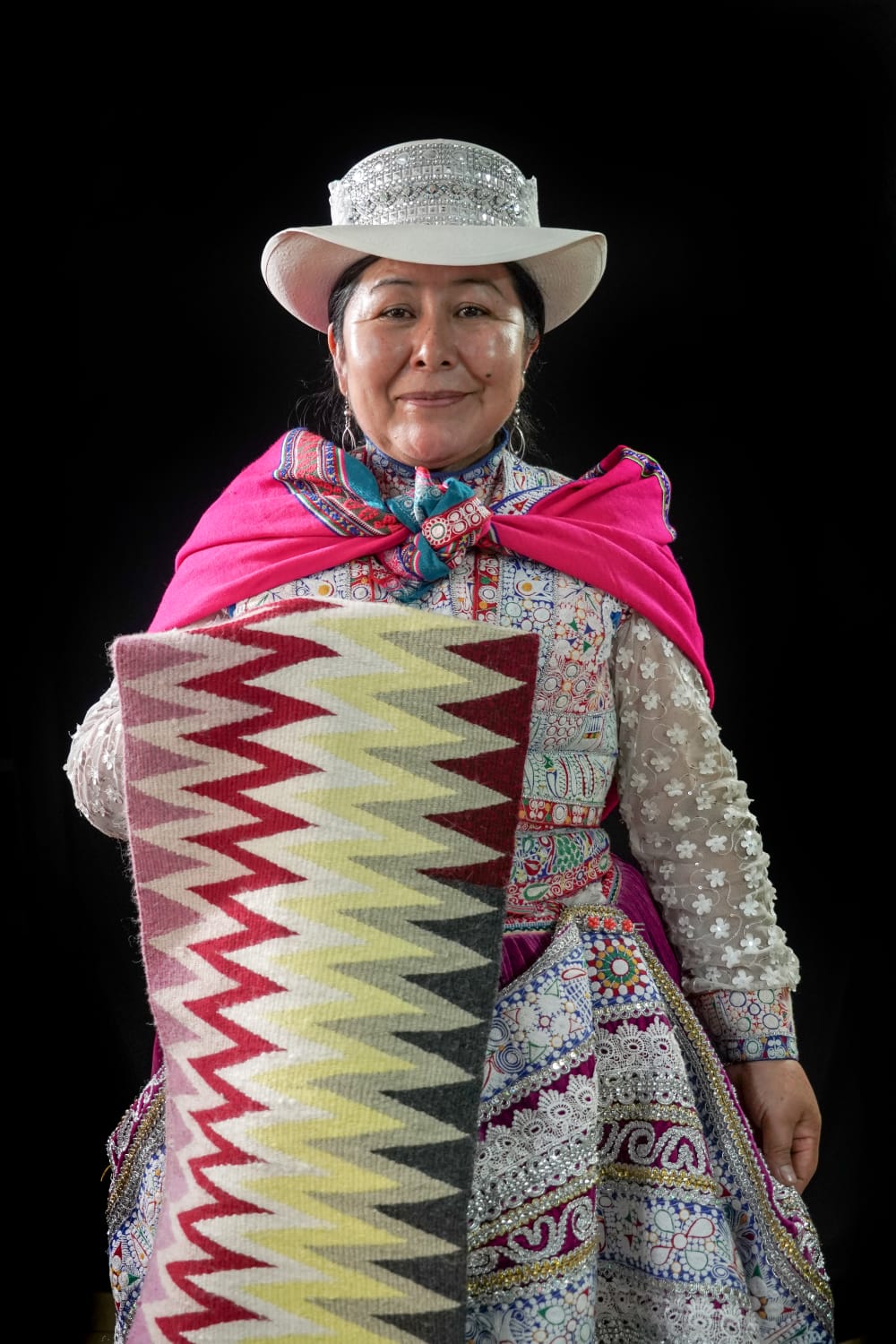
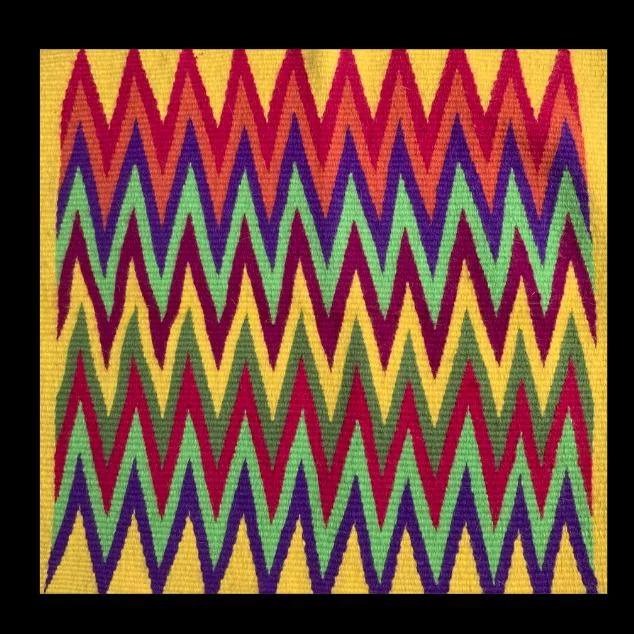
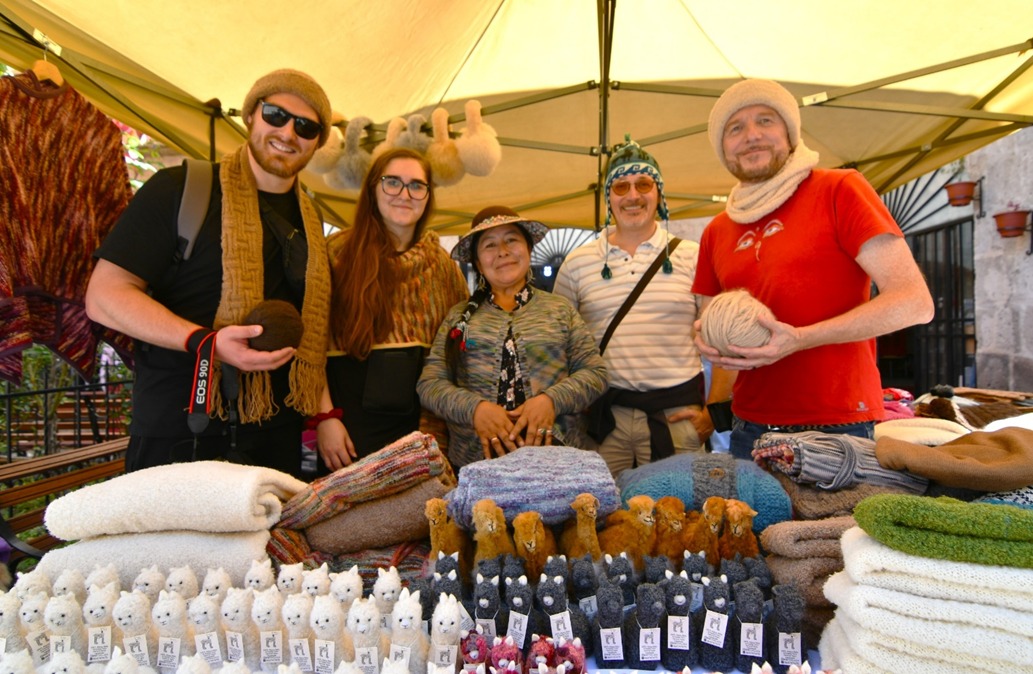
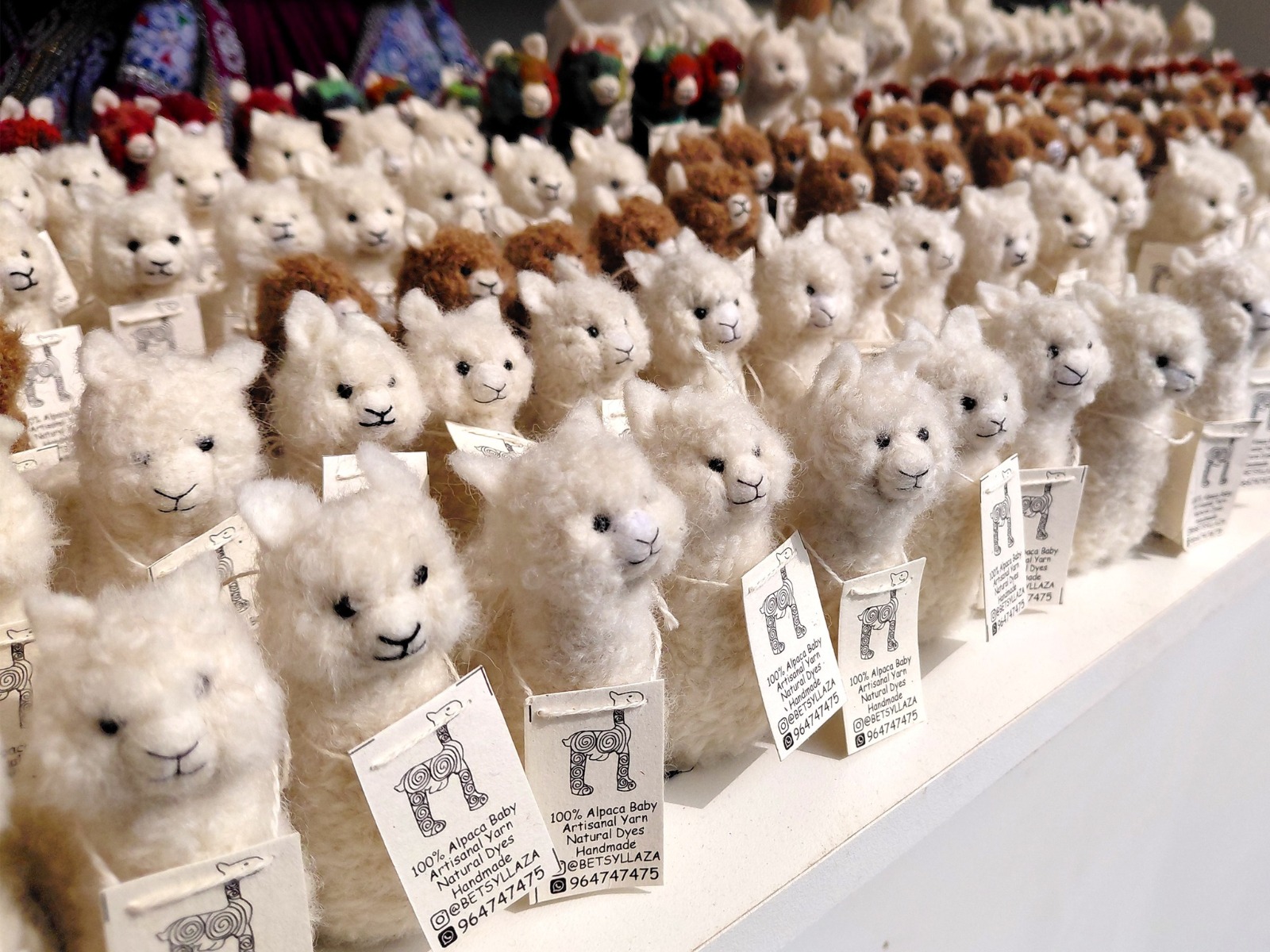
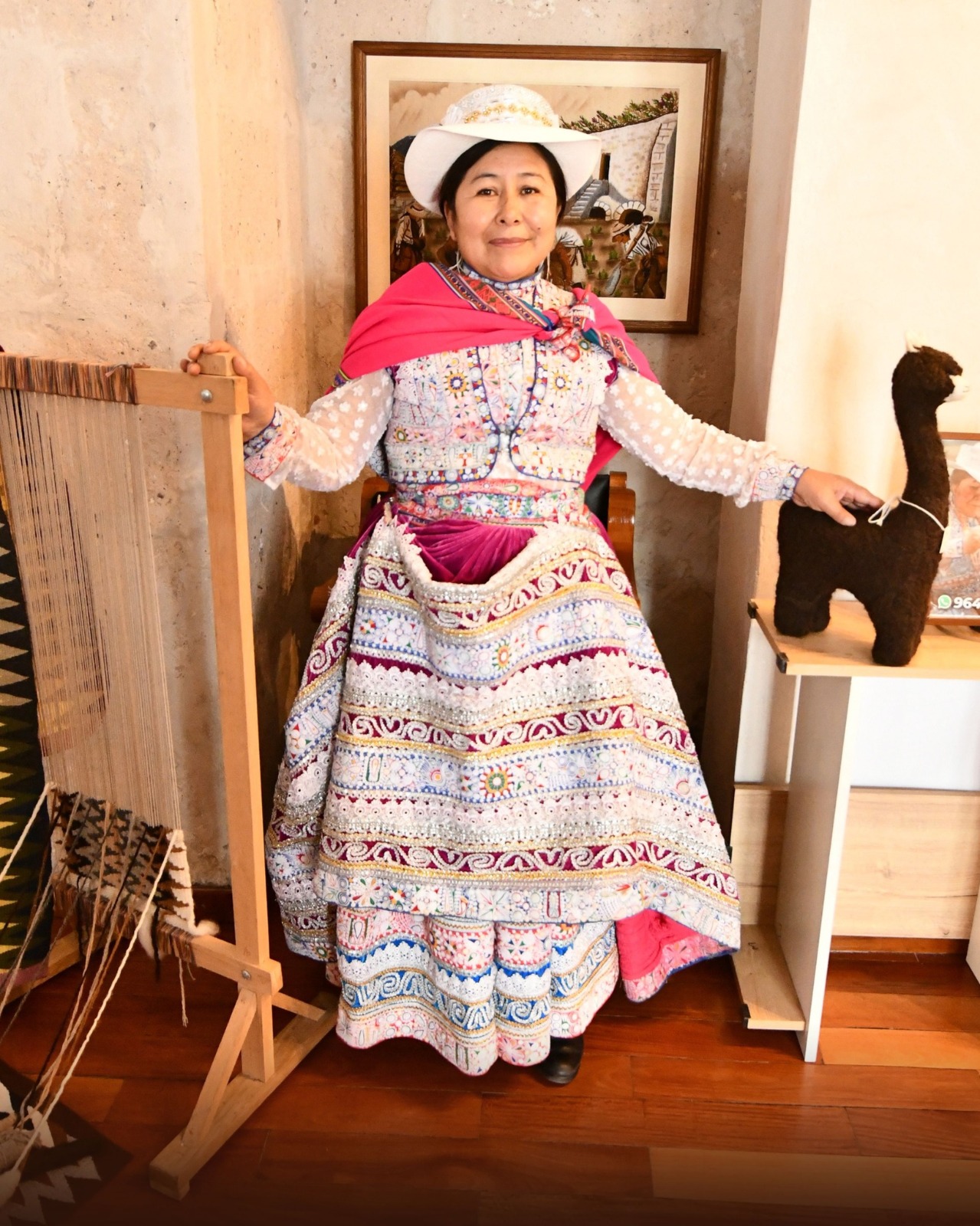
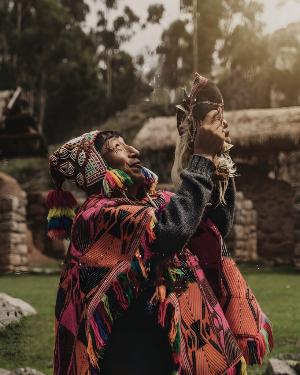
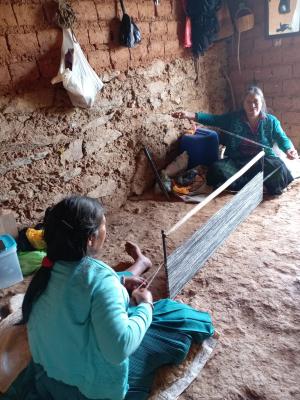
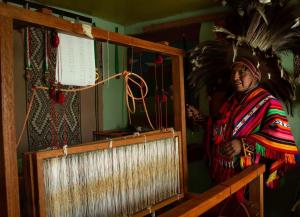
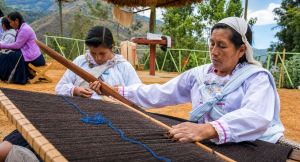
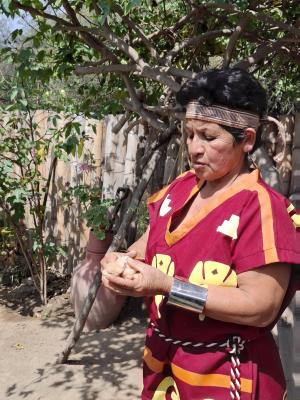
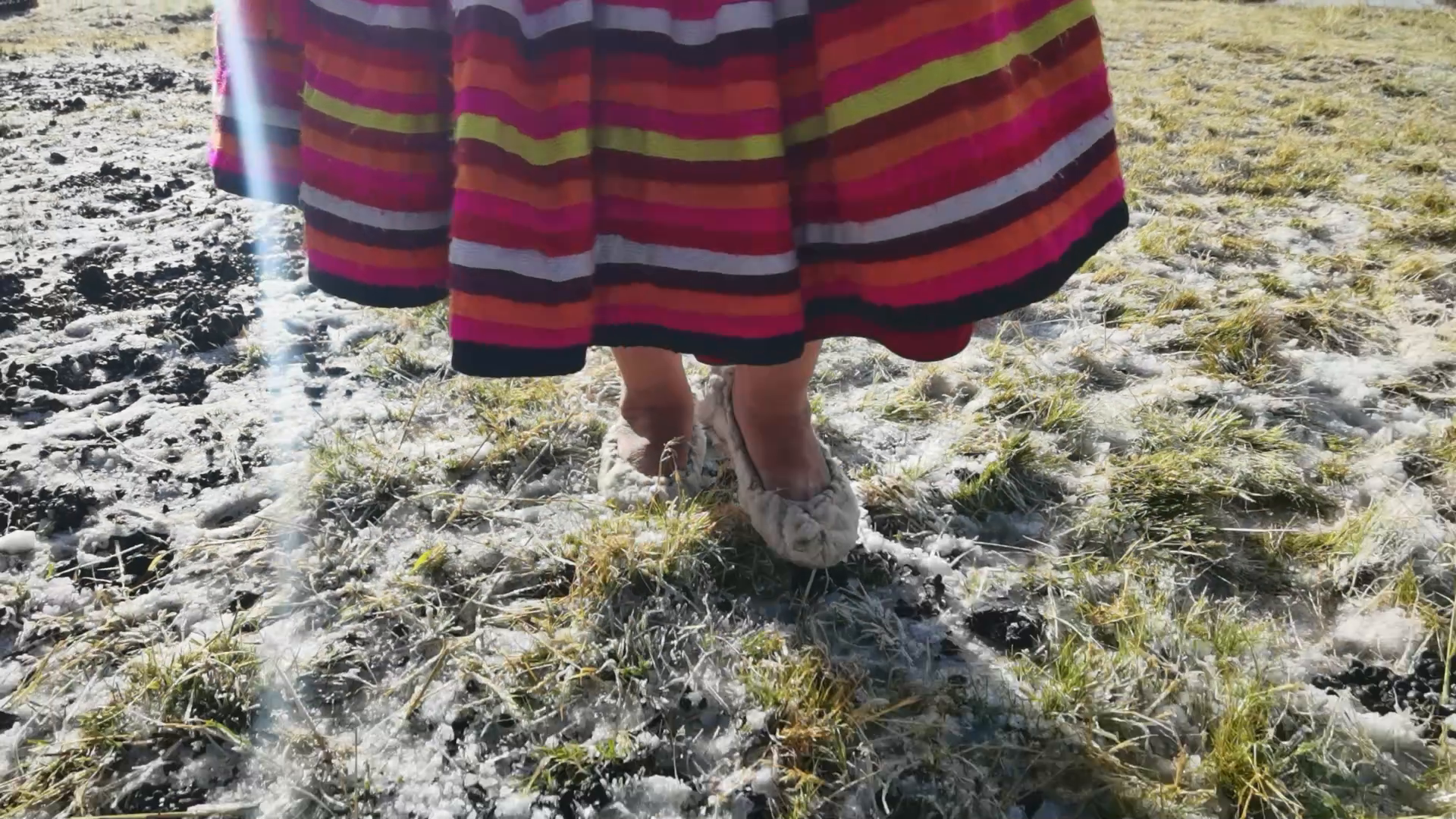
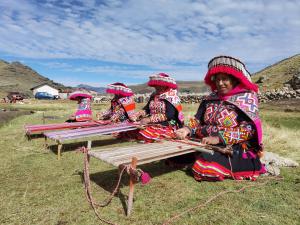
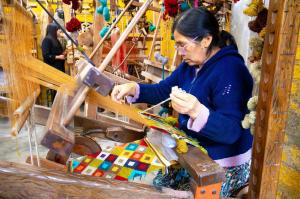
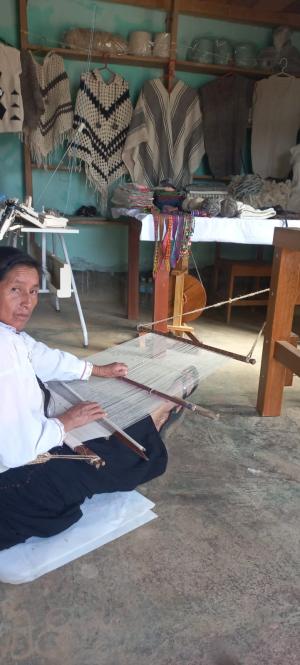
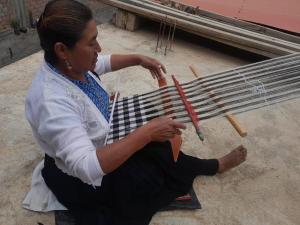
Betsi Yovana Llaza Andia is a bearer of ancestral knowledge from the Colca Valley (Arequipa, Peru), linked to the intangible cultural heritage of Andean textile traditions. Her practice focuses on the preservation of hand-spinning, natural dyeing, and traditional weaving with alpaca fiber, transmitted intergenerationally through observation, hands-on practice, and oral tradition.
Her work contributes to the continuity of Andean indigenous knowledge systems, strengthening cultural identity, collective memory, and a worldview based on the relationship with nature, Pachamama, reciprocity, and community life.
She also actively promotes the safeguarding of living heritage through community teaching, the participation of younger generations, and the transmission of knowledge within family and cultural spaces in the Colca Valley.
05-28-2026
| Institutional and human capacities | She has extensive experience as a master artisan and cultural bearer recognized within her community. She has participated in training programs such as the PROMPERÚ Women Entrepreneurs Program, the TINKUY Textile Gathering organized by the Ministry of Foreign Trade and Tourism of Peru, and training courses conducted by the Ministry of Education of Peru. She has been recognized by the Regional Government of Arequipa and the Congress of the Republic of Peru for her contribution to the preservation of Andean textile heritage. Her community leadership is grounded in practical teaching, oral memory, and the intergenerational transmission of ancestral knowledge. | |
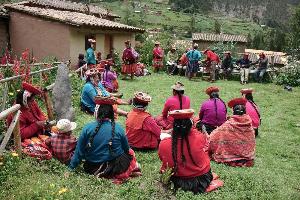
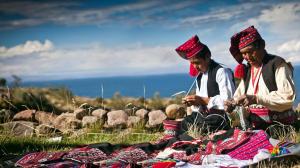
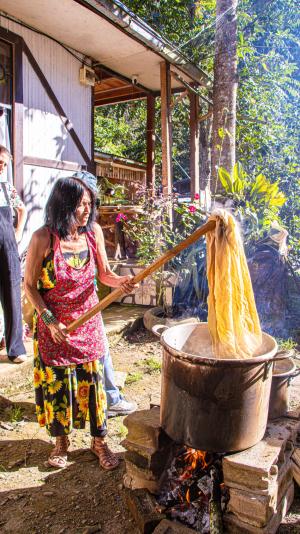
| Transmission and education | Her main form of transmission is direct practical teaching within the family and community environment in Yanque, Colca Valley. She teaches traditional techniques such as hand-spinning, natural dyeing, and weaving with alpaca fiber. Learning takes place through observation, repetition, and hands-on practice, following traditional Andean methods. In addition to technical skills, she transmits cultural meanings, textile symbolism, and the values of the Andean worldview. | |
| Inventorying and research | Her practice integrates traditional knowledge with respectful innovation processes, such as wet and dry felting using alpaca fiber and the creation of her own handmade artisanal tools. These innovations preserve the continuity of cultural heritage without altering its cultural essence, demonstrating the adaptability of Indigenous knowledge within contemporary contexts. | |
| Policies as well as legal and administrative measures | Her work is framed within the recognition of Peru’s Intangible Cultural Heritage, indirectly contributing to its protection through the living practice of traditional knowledge. She has been recognized by public institutions such as the Regional Government of Arequipa and the Congress of the Republic of Peru, which supports her role as a cultural bearer within the heritage safeguarding system. | |
| Role of intangible cultural heritage and its safeguarding in society | Her work keeps Andean textile heritage alive as a cultural, ecological, and spiritual system. Her practice strengthens values of sustainability, respect for nature, and cultural continuity. Intangible cultural heritage is expressed through her practice as a living system that connects identity, history, spirituality, and the relationship with the territory. | |
| Awareness raising | She promotes the appreciation of Andean textile traditions, the sustainable use of natural resources, and the recognition of Indigenous women as bearers of ancestral knowledge. Her work contributes to respect for cultural diversity and raises awareness about the importance of preserving traditional knowledge systems. | |
| Engagement of communities, groups and individuals as well as other stakeholders | She actively participates in her community in Yanque, Colca Valley, working alongside her family and younger generations. She also takes part in artisan fairs, cultural exhibitions, and intercultural exchange spaces with national and international visitors. | |
| International engagement | Her work contributes to the international visibility of Andean textile heritage, promoting intercultural dialogue and the recognition of Indigenous knowledge systems as valid and contemporary forms of knowledge. | |
| References |
|
|




.jpeg)

.png)

.jpeg)
.jpg)

.png)
.jpg)


_(31711258567).jpg)