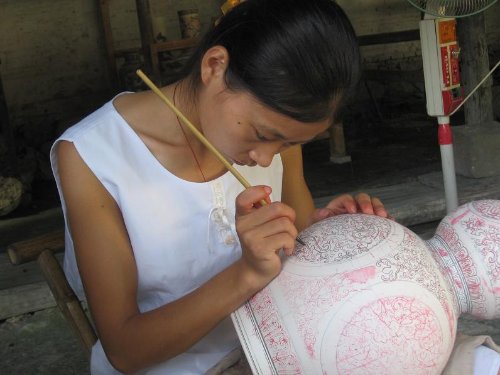

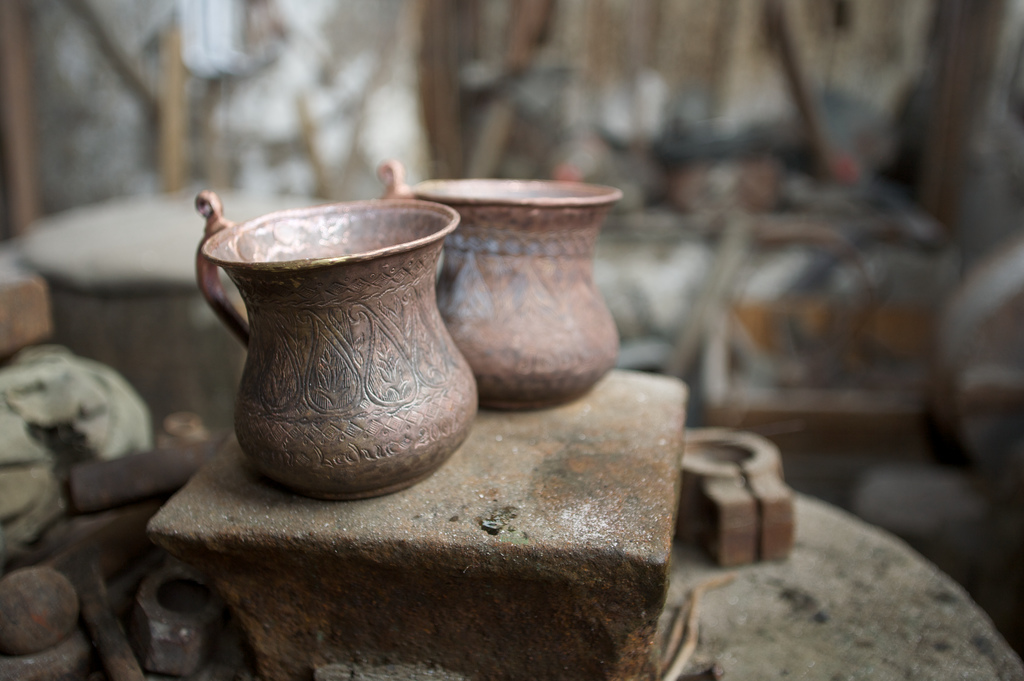
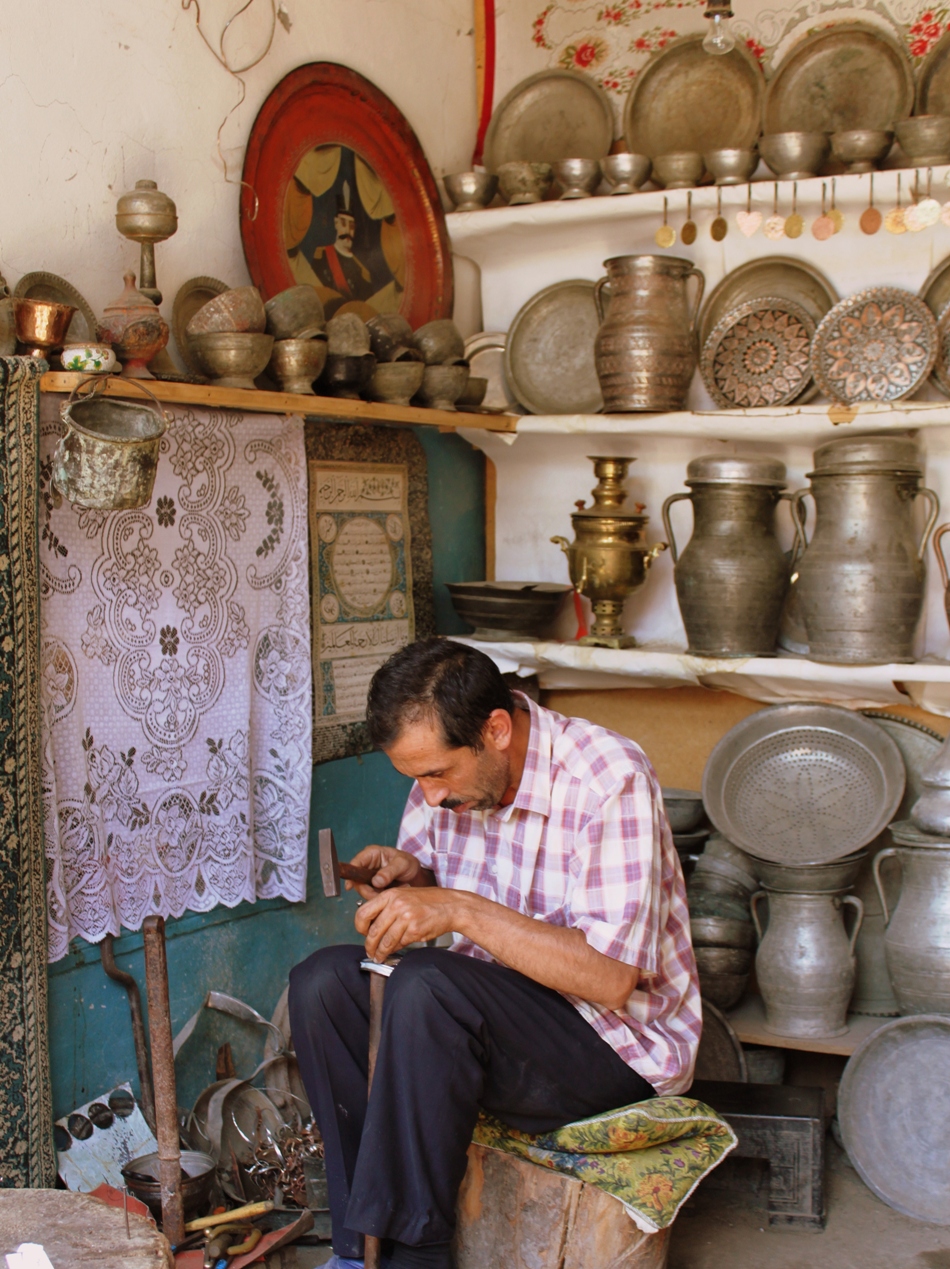
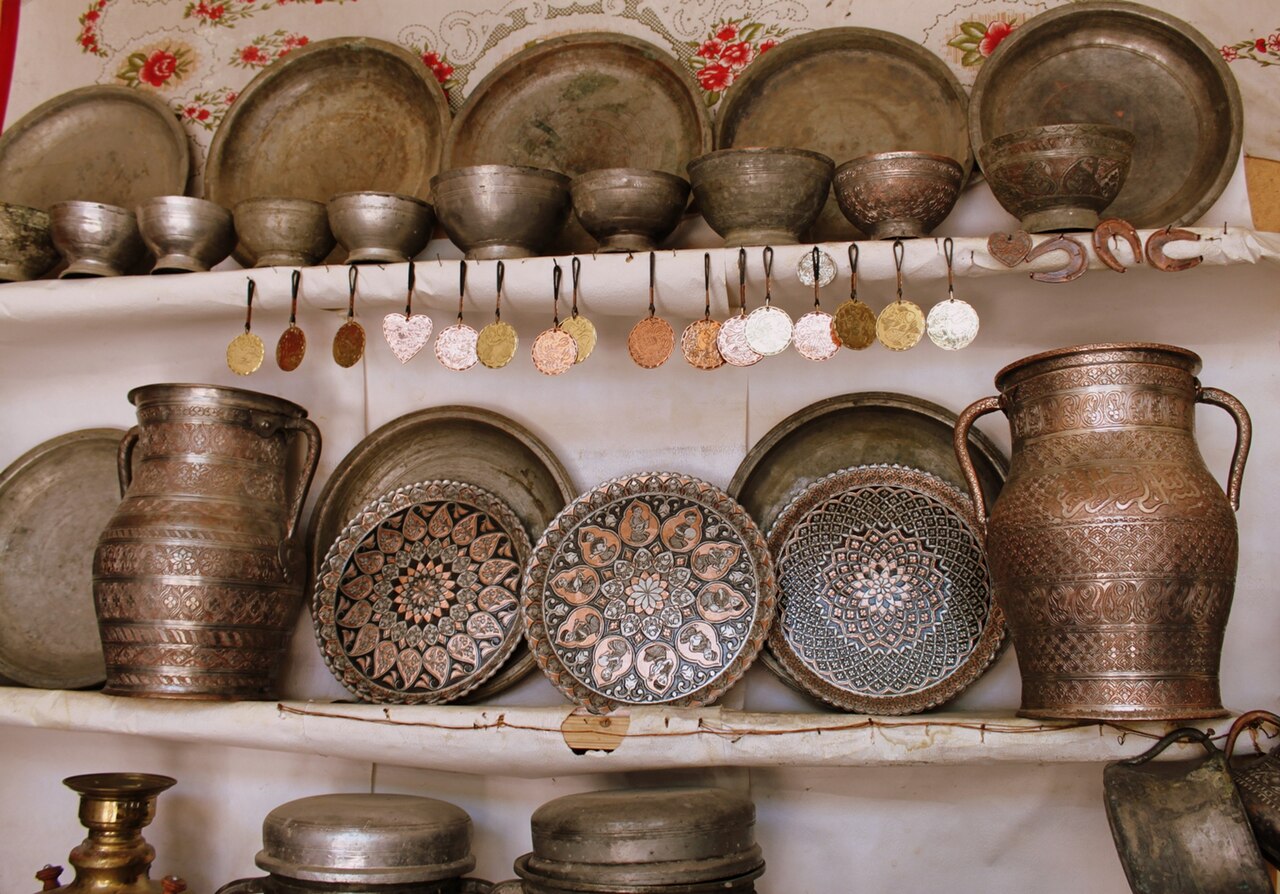
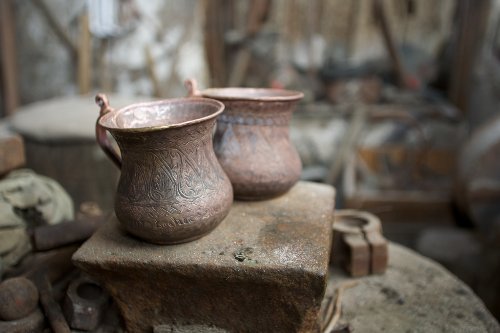
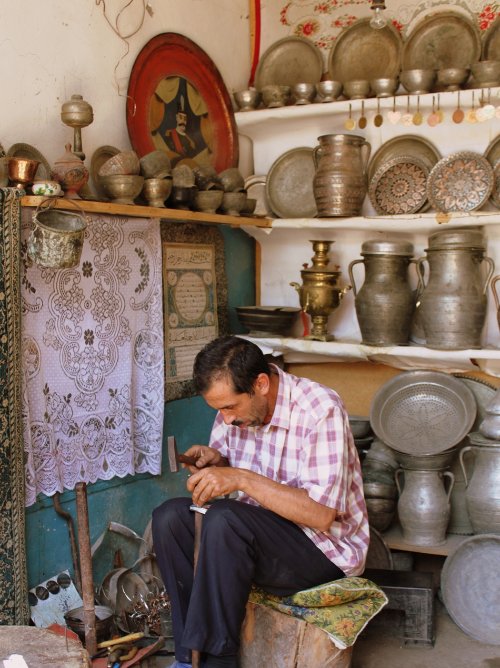
Copper craftsmanship in Lahij is the traditional practice of making and using copperware concentrated in the Lahij community of the Caucasus. The process involves smelting copper, hammering it into thin plates, soldering, polishing and decorating finished vessels with engraved designs. Different craftspeople contribute to the process, including the master craftsman, apprentice, hammerer, polisher and decorator. The engraved motifs often draw on the surrounding environment and traditional knowledge.
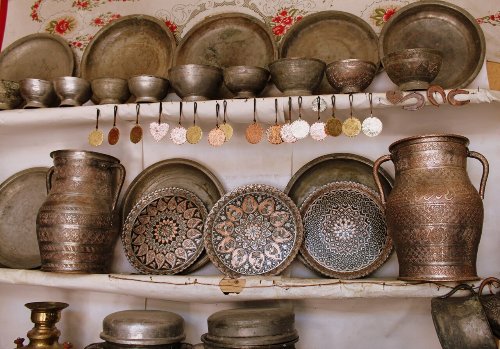
Copperware includes jugs, pots, trays, bowls, cups, colanders, lamps and other household objects. The craft therefore connects technical knowledge with the production and everyday use of material objects within and beyond Lahij.
11-25-2026
| Institutional and human capacities | The practice is organized around the misger, or master craftsman, who coordinates the production process and works with apprentices and other specialists. Apprentices learn by assisting the master, while experienced craftspeople carry specialized knowledge of hammering, polishing and engraving. The workshop itself is an important setting for maintaining this knowledge. The craft is closely connected to the Lahij community and provides artisans with a source of livelihood as well as a strong sense of identity and community pride. Copper craftsmanship is also described as reinforcing family relationships and serving as a marker of Lahij identity. | |
| Transmission and education | Knowledge of copper craftsmanship is traditionally transmitted within families and through apprenticeship. Young learners observe the master's movements, memorize materials and techniques, and gradually practice them under supervision. Apprentices may also acquire knowledge needed to manage a family workshop in the future. This transmission is highly practical: mastery develops through repeated work with copper, beginning from an early age and advancing through experience. The relationship between master and apprentice therefore remains central to the continuity of the craft. | |
| Inventorying and research | Copper craftsmanship of Lahij was included in Azerbaijan's national Inventory of Intangible Cultural Heritage in 2014, with the element recorded under Traditional Crafts and Applied Arts. The official registration number is FT010100057. The practice was subsequently documented through UNESCO's 2015 nomination file, which included the Azerbaijani inventory record, community-consent documentation, photographs and a documentary film. UNESCO's documentation records the craft process, transmission system, community role and safeguarding measures. | |
| Policies as well as legal and administrative measures | Azerbaijan's inclusion of Lahij copper craftsmanship in its national inventory provided the basis for its nomination to UNESCO. In 2015, UNESCO inscribed the element on the Representative List of the Intangible Cultural Heritage of Humanity under Decision 10.COM 10.b.7. The safeguarding measures accompanying the nomination addressed transmission, research, community organization, media promotion, sustainable recycling of copper and monitoring. UNESCO noted that their implementation was supported by the Azerbaijani government through funding and human resources. | |
| Role of intangible cultural heritage and its safeguarding in society | Copper craftsmanship is more than an economic activity in Lahij. It contributes to community identity, intergenerational relationships and continuity, while connecting intangible knowledge with the material objects produced through the craft. The workshops and their production practices have also influenced the physical and economic character of the village. The use of Lahij copperware extends beyond the community, with families from elsewhere in Azerbaijan purchasing vessels for everyday use. This creates an ongoing connection between the Lahij workshops and wider Azerbaijani households. | |
| Awareness raising | The workshops of Lahij provide a visible setting where visitors can encounter the craft through its tools, production processes and finished objects. Copperware is displayed and sold directly at workshops, keeping production, presentation and commerce closely connected. UNESCO inscription has also brought international visibility to the practice. UNESCO's documentation includes photographs and a film showing craftsmen, apprentices, workshops and the production of copperware, allowing the living practice to be presented beyond Lahij itself. | |
| Engagement of communities, groups and individuals as well as other stakeholders | Community participation was central to the nomination process. Tradition bearers, craftspeople, experts, a local NGO and the municipality collaborated in preparing the nomination, and the concerned parties provided their free, prior and informed consent. UNESCO also records the community's support and engagement in the national inventory process. Within Lahij, continuity depends on the participation of masters, apprentices and families who maintain workshops and pass on knowledge. The wider public also participates through the continued purchase and use of copperware in everyday life. | |
| International engagement | Copper craftsmanship of Lahij was inscribed on the UNESCO Representative List in 2015 as Azerbaijan's national element. The inscription has connected a locally rooted craft tradition with the international framework of intangible cultural heritage safeguarding. UNESCO's nomination also recognized Lahij copper craftsmanship as an example of how traditional craftsmanship can sustain community identity, intergenerational knowledge and livelihoods while remaining a living practice. | |
| References | Documentary Sources
Photographic Credits
|
|