
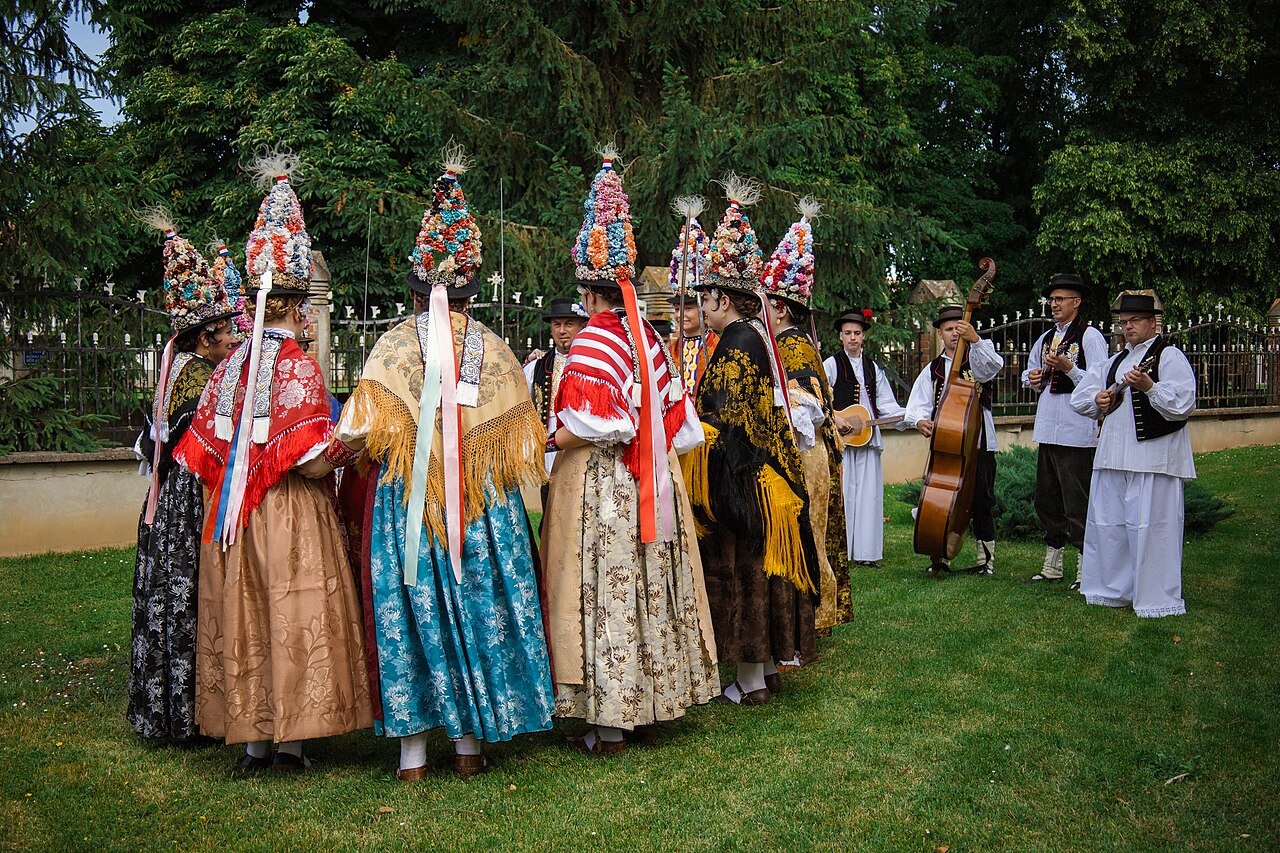
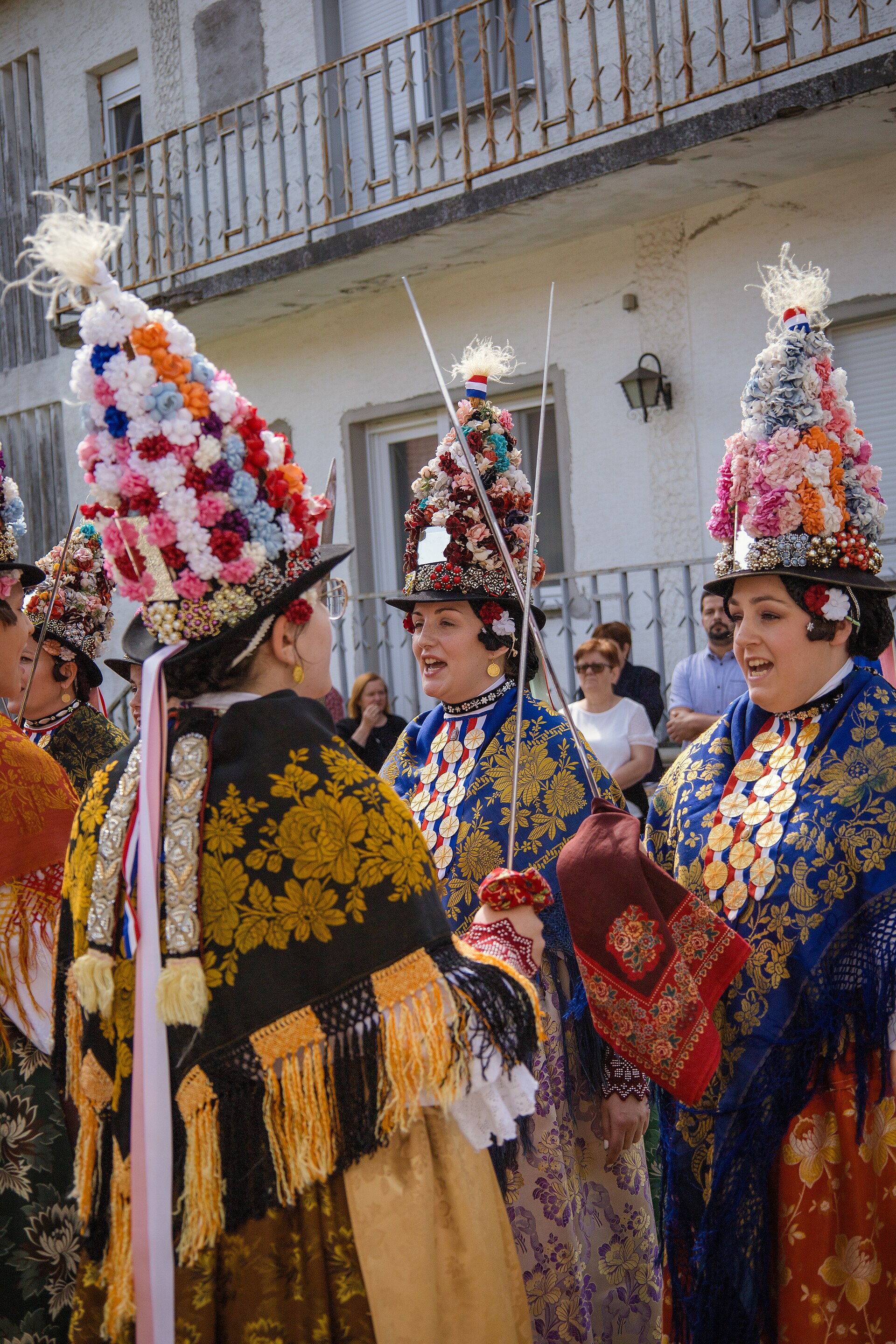
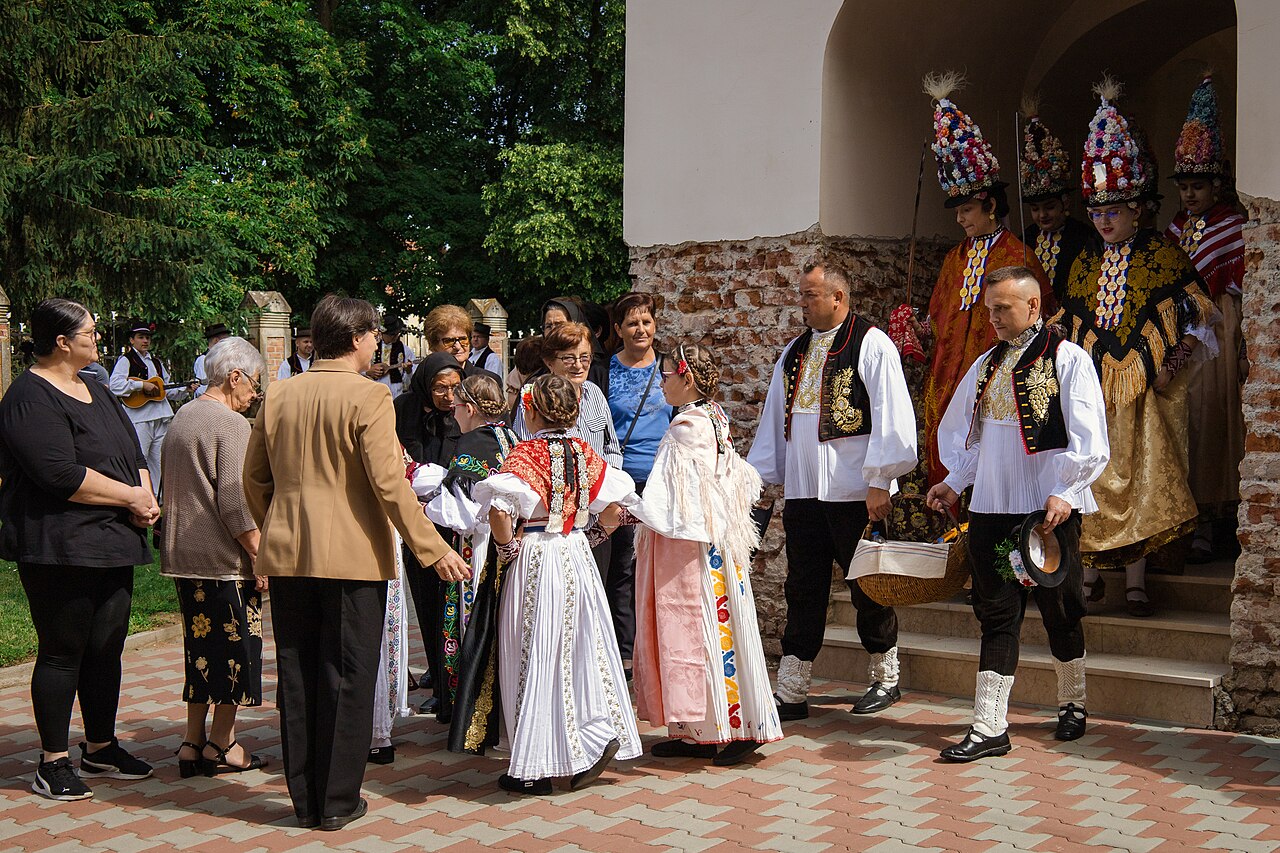
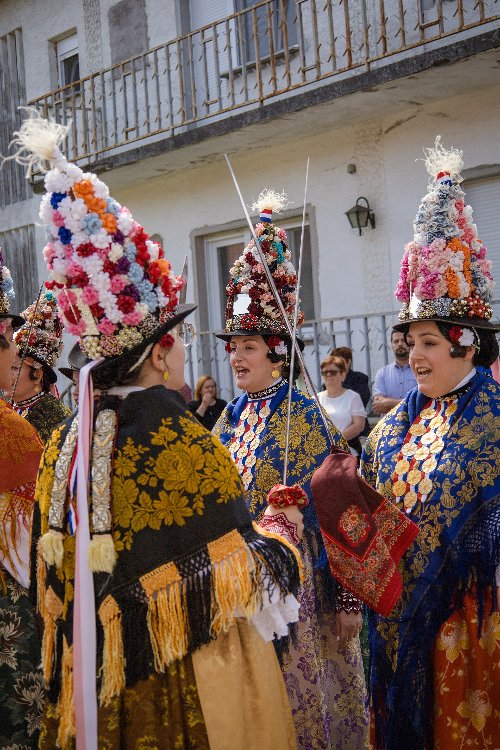
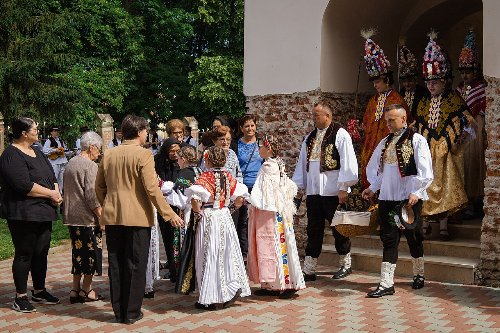
The Spring Procession of Ljelje/Kraljice is an annual village procession in Gorjani, in the Slavonia region of north-eastern Croatia, traditionally held around the Christian feast of Whitsunday (Pentecost). The central participants are girls who take the roles of kraljevi (kings) and kraljice (queens). The kings carry sabres and wear decorated male hats, while the queens wear white head garlands associated with bridal dress. During the procession, the group visits selected households, where the kings perform a sabre dance and the queens sing songs adapted to the household being visited, often addressing a girl, young man or newly married woman. A folk dance follows, joined by household members, before the performers receive food and drink and continue to another home.
The contemporary procession retains this household-to-household structure but is shorter and somewhat adapted from its earlier form. The practice was traditionally conducted over the two days of Whitsunday, including a visit to a neighbouring settlement and a concluding communal feast; after its revival, the village performance was concentrated primarily on the first day. The procession combines singing, sabre dancing, instrumental music, costume, movement through the village and hospitality, making it a composite social and festive practice rather than a single dance or musical performance.
11-23-2026
| Institutional and human capacities | The principal bearers are the girls and young people who perform the roles of queens and kings, together with musicians and other participants who support the procession. In its contemporary form, the practice is closely associated with the Cultural and Artistic Society Gorjanac (KUD Gorjanac), whose members revived the village procession in 2002 and have maintained its annual performance. The Municipality of Gorjani also identifies KUD Gorjanac as responsible for the contemporary organization of the custom. The wider community remains part of the practice: households receive the procession, participate in dancing and provide refreshments, while local institutions have historically supported its preparation. The elementary school, church and families of Gorjani were identified by UNESCO as participating in preparations, and the element was formally entered in Croatia's Register of Cultural Goods in 2007 under the designation Kraljice ili Ljelje – godišnji proljetni ophod iz Gorjana (Z-3318). | |
| Transmission and education | Transmission takes place principally through participation in the procession and through preparation within KUD Gorjanac. Contemporary participants rehearse the songs and dances throughout the year, partly because the group also performs on folkloric stages outside Gorjani. The practice therefore combines direct participation in the annual village procession with organized rehearsal and performance activities. The transmission of associated material knowledge presents a more uneven picture. Traditional costumes and props remain central to the practice, but some skills have become more difficult to maintain. Recent documentation notes that young participants have shown limited interest in making the traditional caps, while existing caps and other props are kept by KUD Gorjanac. Hair arrangements have also been adapted to contemporary participants' shorter hairstyles, with artificial hair sometimes used to reproduce the traditional form. | |
| Inventorying and research | The procession has a substantial documentary record in Croatia. It was entered into the Republic of Croatia's Register of Cultural Goods in 2007, before its inscription on UNESCO's Representative List in 2009. The national register identifies the element as Kraljice ili Ljelje – godišnji proljetni ophod iz Gorjana. Research has drawn on historical ethnological literature, museum collections, archival material, photographs and field interviews. Ivan Lović's Gorjanske ljelje (2012) brought together archival material from the Museum of Đakovština and Museum of Slavonia, as well as field notes based on interviews with Gorjani residents and procession participants. Earlier research by Zdenka Lechner and Lucija Karalić also produced field records and photographic documentation. A 2024 study by Mia Bašić and Emina Berbić Kolar reassessed the tradition using recent literature and ethnological material and explicitly distinguishes its historical form from the post-2002 revival. | |
| Policies as well as legal and administrative measures | Croatia formally recognized the procession as intangible cultural heritage before its UNESCO inscription. The element was entered in the national Register of Cultural Goods in 2007, establishing its protected status at national level. UNESCO's 2009 inscription followed this existing national recognition and noted that the element was already included in the Croatian register maintained by the Ministry of Culture. The safeguarding framework presented for UNESCO included documentation, educational programs, training and increased visibility, with particular attention to children in the region. In practice, safeguarding has also depended heavily on local organization: KUD Gorjanac has maintained the annual procession since its revival in 2002, while the community continues to support its preparation and performance. The contemporary form nevertheless differs in some respects from the historical practice, demonstrating that safeguarding has involved continuity alongside adaptation rather than an unchanged reproduction of the earlier custom. | |
| Role of intangible cultural heritage and its safeguarding in society | The procession functions as a marker of Gorjani's local identity. UNESCO describes it as a source of particular pride for women who have participated and as a symbol of the village, while contemporary Croatian sources likewise identify the ljelje and their costumes and props as recognizable symbols of Gorjani. Its movement through households also connects the performers with families across the village rather than confining the practice to a performance venue. At the same time, the history of the practice demonstrates the fragility of its continuity. The village procession ceased for 36 years after 1966 and was revived in 2002 in a somewhat modified form. Some elements of earlier material and practical knowledge have become difficult to reproduce, including traditional hair arrangements and the making of caps and props. The current safeguarding challenge is therefore not simply preserving a fixed historical form, but sustaining participation and the knowledge needed to reproduce the practice while allowing its contemporary community form to remain viable. | |
| Awareness raising | UNESCO inscription increased the visibility of the Gorjani procession beyond its local setting, while KUD Gorjanac has also presented the tradition outside the village. Since 2006, the society has continuously staged the procession both in Gorjani and on international folkloric stages. This has helped establish the ljelje as a recognizable representation of Gorjani and Slavonian traditional culture. Awareness raising also occurs through local cultural activity. Since 2007, Gorjani has hosted the Legenda o ljeljama folklore gathering, bringing together groups from other communities with related traditions as well as other folklore ensembles. The event connects the local practice with a wider network of traditional performance while keeping Gorjani as its principal setting. | |
| Engagement of communities, groups and individuals as well as other stakeholders | Community participation is integral to the procession itself. Families select whether to receive the procession, participate in the dances and provide food and drink to the performers. The wider village has also contributed to preparations, while the annual event is organized through the local cultural society and supported by community members. UNESCO's inscription decision specifically recognized the enthusiasm and involvement of the community in preparing the nomination and recorded its written consent. The revival likewise emerged from local initiative rather than being created solely through an external heritage program. The 2002 renewal was initiated within KUD Gorjanac with support from its members and Gorjani residents, and the society has subsequently maintained the practice. This community role is particularly significant because the contemporary procession is a revival after a long interruption, requiring local participants to negotiate which elements of the earlier practice could be maintained and how the procession could function in present-day village life. | |
| International engagement | The Spring Procession of Ljelje/Kraljice from Gorjani was inscribed in 2009 on UNESCO's Representative List of the Intangible Cultural Heritage of Humanity as nomination No. 00235, following decision 4.COM 13.34. The inscription recognized the procession as an element combining ritual, performing arts and festive events that contributes to local cultural identity. International engagement has also developed through cultural presentation beyond Croatia. KUD Gorjanac has staged the procession on international folkloric stages, and Croatian documentation records its participation in international cultural events. These activities extend the visibility of the tradition while the annual village procession remains its principal community setting. | |
| References | Documentary Sources
Photographic Credits
|
|