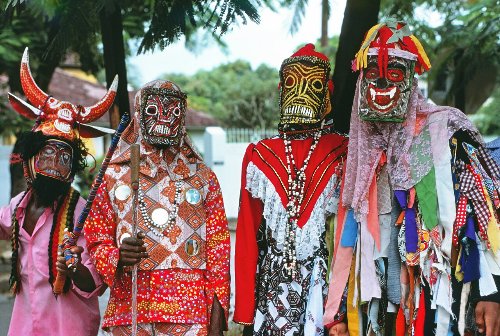

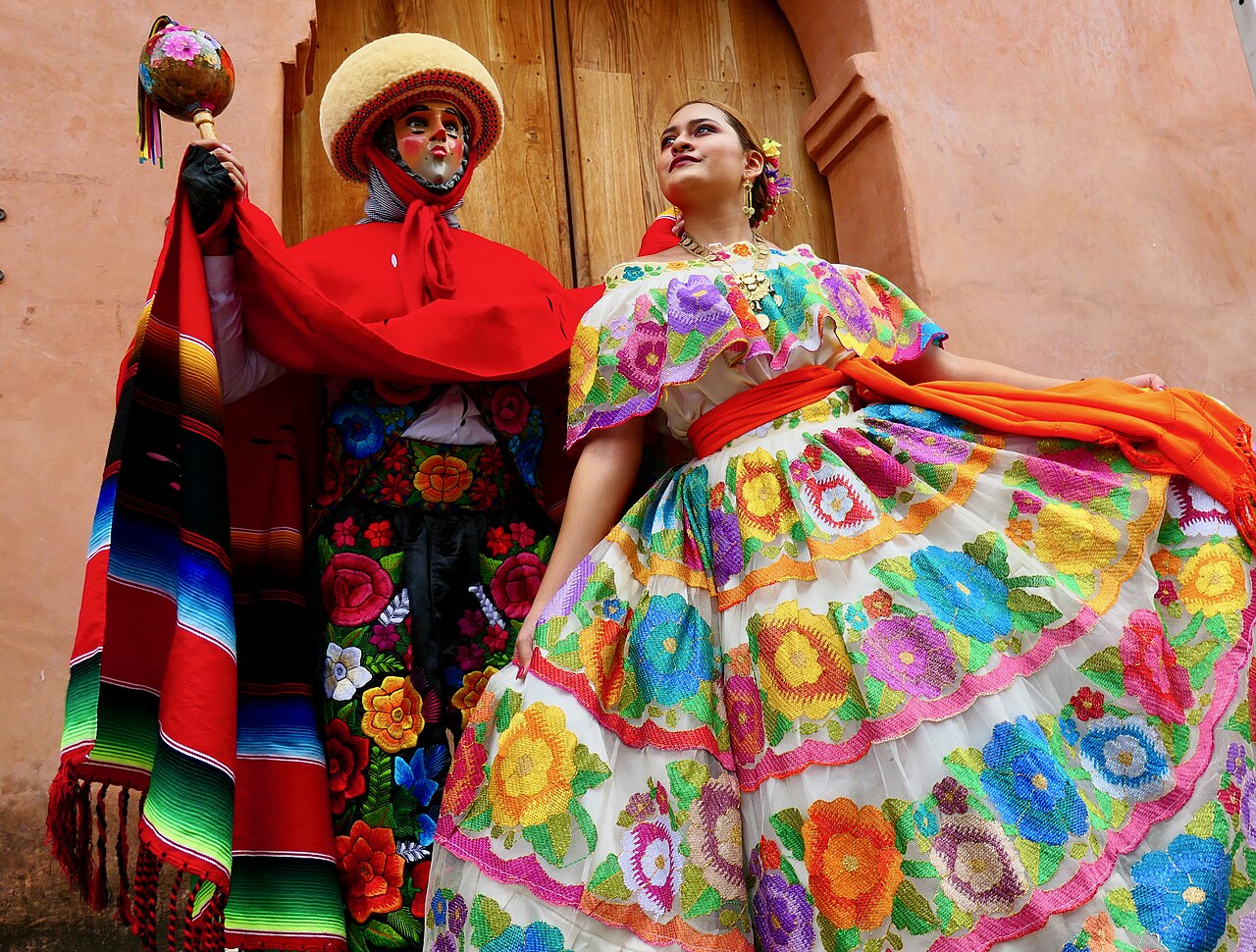
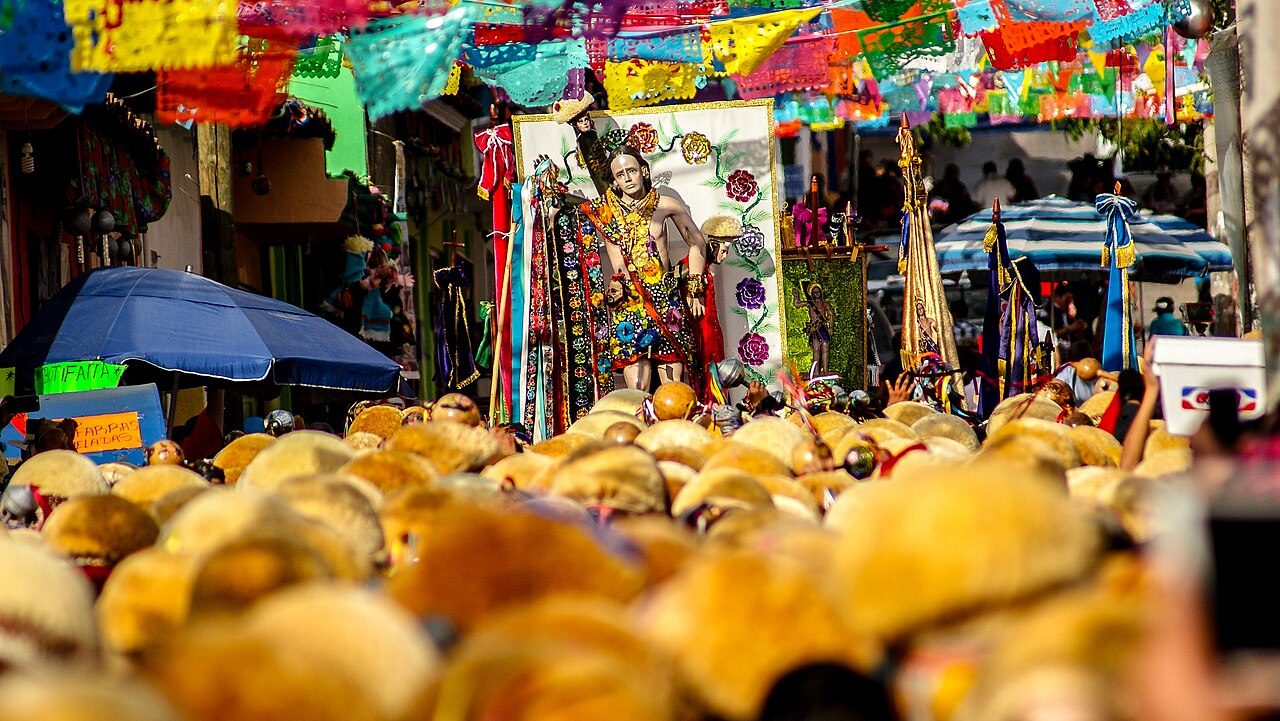
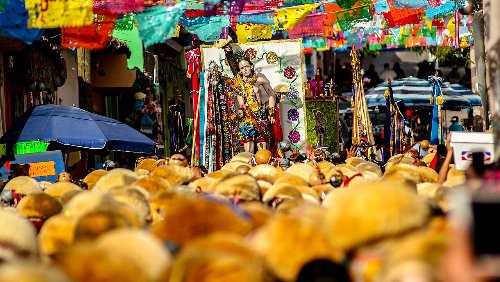
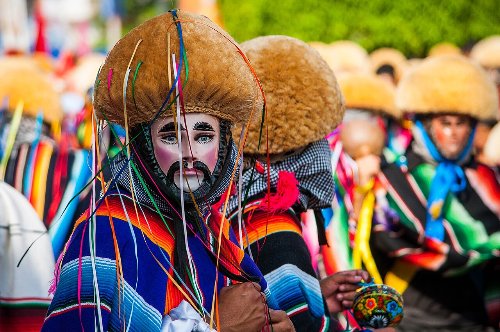
The Parachicos form a central part of the Fiesta Grande of Chiapa de Corzo, held annually from 4 to 23 January in Chiapa de Corzo, Chiapas. The celebration combines dance, music, religious ceremonies, handicrafts, gastronomy and communal festivities in honour of the Lord of Esquipulas, Saint Anthony Abbot and, most prominently, Saint Sebastian. The Parachicos, both the dancers and the dance they perform, make processions through the town carrying the venerated images and visiting churches, chapels and other places of worship. Their dancing is understood within the community as a collective offering to the saints.
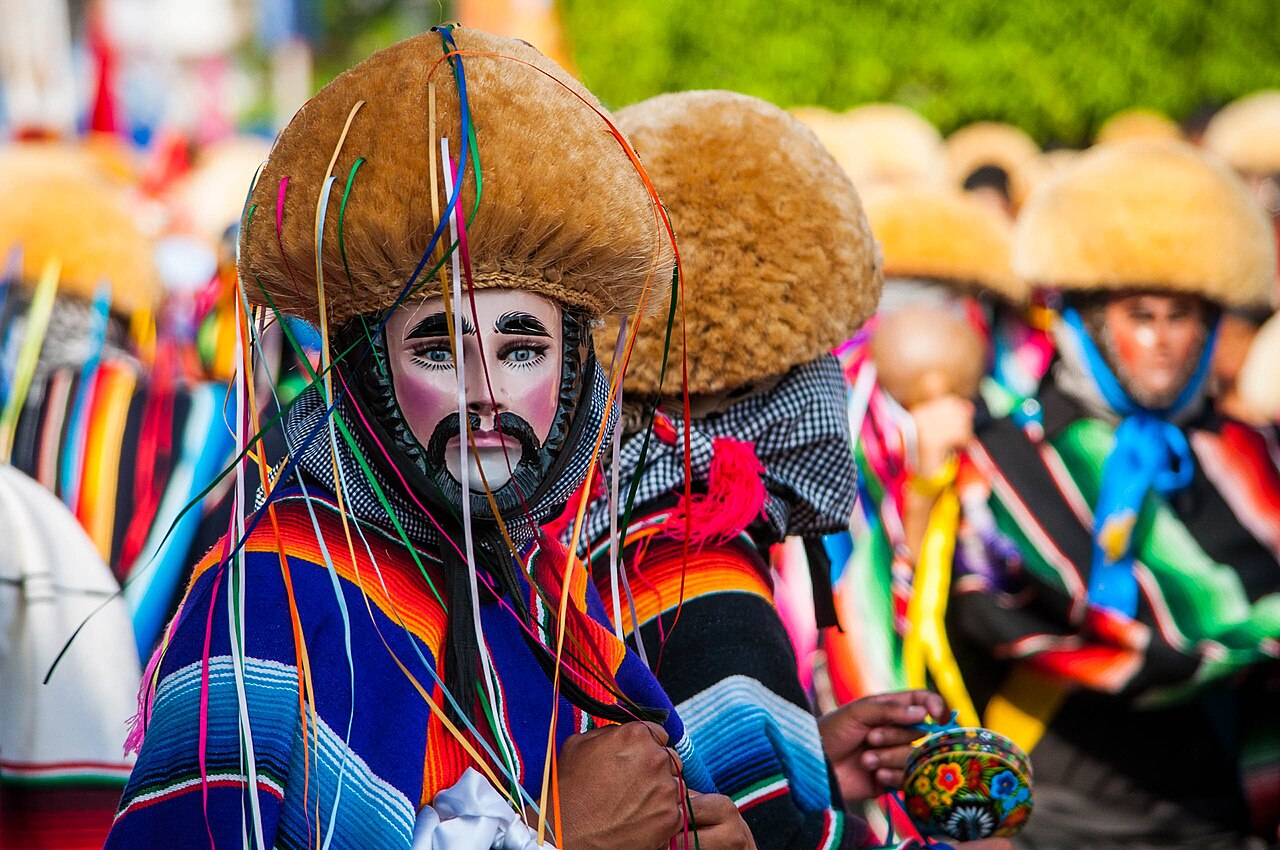
The dancers wear a distinctive ensemble consisting of a carved wooden mask, montera headdress, sarape, embroidered shawl and chinchín rattle. The procession is led by the Patrón, the principal authority of the Parachicos, who directs the dancers, plays the flute with one or two drummers and performs praises to which the dancers respond with cheers. The musical and ritual sequence varies according to the places visited during the procession.
11-20-2026
| Institutional and human capacities | The practice depends on a network of practitioners with differentiated responsibilities. The Mexican national inventory identifies the Patrón, dancers, musicians and artisans among those involved, while Mexico's later UNESCO reporting also identifies priostes responsible for aspects of the celebration, traditional cooks (comideras), artisans and cultural promoters as important participants. Together they maintain the ritual, material and organizational dimensions of the feast. The community itself remains a principal organizational force. Mexico's 2018–2020 periodic report states that many safeguarding activities have been organized and managed by the Patrón and community actors, including cultural events and transmission workshops. It also records the establishment of the Centro de Preservación Cultural Casa Museo del Patrón de los Parachicos, intended to document the manifestation and its material culture while supporting continued transmission. | |
| Transmission and education | Transmission takes place primarily through participation in the festival itself. Children take part alongside adults and learn movements through observation and imitation, while knowledge associated with mask-making is transmitted through practical learning, from preparing and drying the wood through carving and decoration. The Mexican inventory similarly describes dancing as an inherited practice learned through participation in the annual celebrations. Formal and extracurricular educational activities have complemented this community-based transmission. Mexico's periodic report records visits to local schools, talks on the history and value of the tradition, and encounters between university students and bearers concerning the meanings of its symbolic elements. Transmission therefore operates both through embodied participation in the feast and through educational encounters outside it. | |
| Inventorying and research | Parachicos were incorporated into Mexico's Inventory of Intangible Cultural Heritage in 2009, before their UNESCO inscription. The current national inventory record identifies the element as Danza de los Parachicos locates it in Chiapa de Corzo, and documents its ritual cycle, clothing, music, processions, transmission and social functions. Documentation has continued through institutional and community processes. Mexico's 2018–2020 UNESCO report records increased academic research following inscription, covering traditional music, art, crafts, symbolism and food. It also identifies the Chiapa de Corzo Cultural Heritage Council, a community-based civil body, as an important channel through which bearers, including Parachicos, artisans, embroiderers, musicians, traditional cooks and priostes, contributed their perspectives to heritage reporting. | |
| Policies as well as legal and administrative measures | The nomination of the Parachicos included a safeguarding plan developed through an agreement between institutions and the community, and UNESCO's 2010 Committee decision specifically recognized the commitment of both the State and the community to measures aimed at maintaining transmission to younger generations. Later reporting, however, indicates that institutional implementation has been uneven. Mexico reported that administrative changes and reductions in public funding had weakened systematic safeguarding support, leaving much of the practical responsibility with community organization. At the same time, community-led cultural events, transmission workshops, educational activities and documentation initiatives have continued. | |
| Role of intangible cultural heritage and its safeguarding in society | The Parachicos are deeply integrated into the social organization of Chiapa de Corzo. The annual cycle connects religious devotion with music, dance, food, craft production, processions and exchanges among households and community participants. Mexico's national inventory describes the ceremonies as bringing the population together and reinforcing a shared cultural identity, while UNESCO recognizes the practice as contributing to social solidarity and mutual respect. The practice is nevertheless subject to pressures arising from its increasing scale and visibility. Mexico's national inventory identifies mass participation, changes in musical transmission, loss of older musical repertories, commercially produced costume components and the weakening of traditional craft techniques as risks. It also warns that excessive tourism promotion could reduce the feast to entertainment and weaken recognition of its ceremonial significance. | |
| Awareness raising | UNESCO inscription has increased the visibility of the Parachicos beyond Chiapa de Corzo. Mexico's periodic report records increased dialogue with Zoque, Tsotsil and Tseltal cultural groups in Chiapas, as well as exchanges with other Mexican and international bearers. The report also notes that the inscription contributed to greater research and documentation of the tradition by higher-education institutions. At the local level, awareness activities include school programs, public cultural events and talks involving bearers. The community has also used these spaces to distinguish the ceremonial and symbolic dimensions of the tradition from purely commercial representations, reinforcing the cultural meaning attached to the costumes, dance, music and ritual routes. | |
| Engagement of communities, groups and individuals as well as other stakeholders | Community participation extends across virtually every stage of the Fiesta Grande. Mexico's periodic report identifies responsibilities ranging from decorating churches and preparing food to organizing routes, logistics and security. It also records community colloquia held in 2019 to reflect on the cultural manifestation and its development nearly a decade after UNESCO inscription. The community's role also extends to the evaluation and documentation of safeguarding. The Chiapa de Corzo Cultural Heritage Council brought together different categories of bearers and advisers, while the 2018–2020 report was prepared around their perspectives. This provides a documented example of practitioners participating not only in the performance of the heritage but also in discussions concerning its continuity and future. | |
| International engagement | The Parachicos were inscribed in 2010 on UNESCO's Representative List of the Intangible Cultural Heritage of Humanity. UNESCO's decision records that the nomination demonstrated community participation and free, prior and informed consent, and that the Parachicos had already been included in Mexico's national ICH inventory in 2009. Since inscription, the element has served as a point of cultural exchange beyond Chiapa de Corzo. Mexico reported exchanges with other cultural communities in Chiapas, similarities and dialogue with other Mexican traditions, and international interaction with Colombian bearers. The inscription has therefore functioned not only as international recognition but also as a framework through which practitioners have presented, discussed and reflected on their living heritage. | |
| References | Documentary Sources
Photographic Credits
|
|