
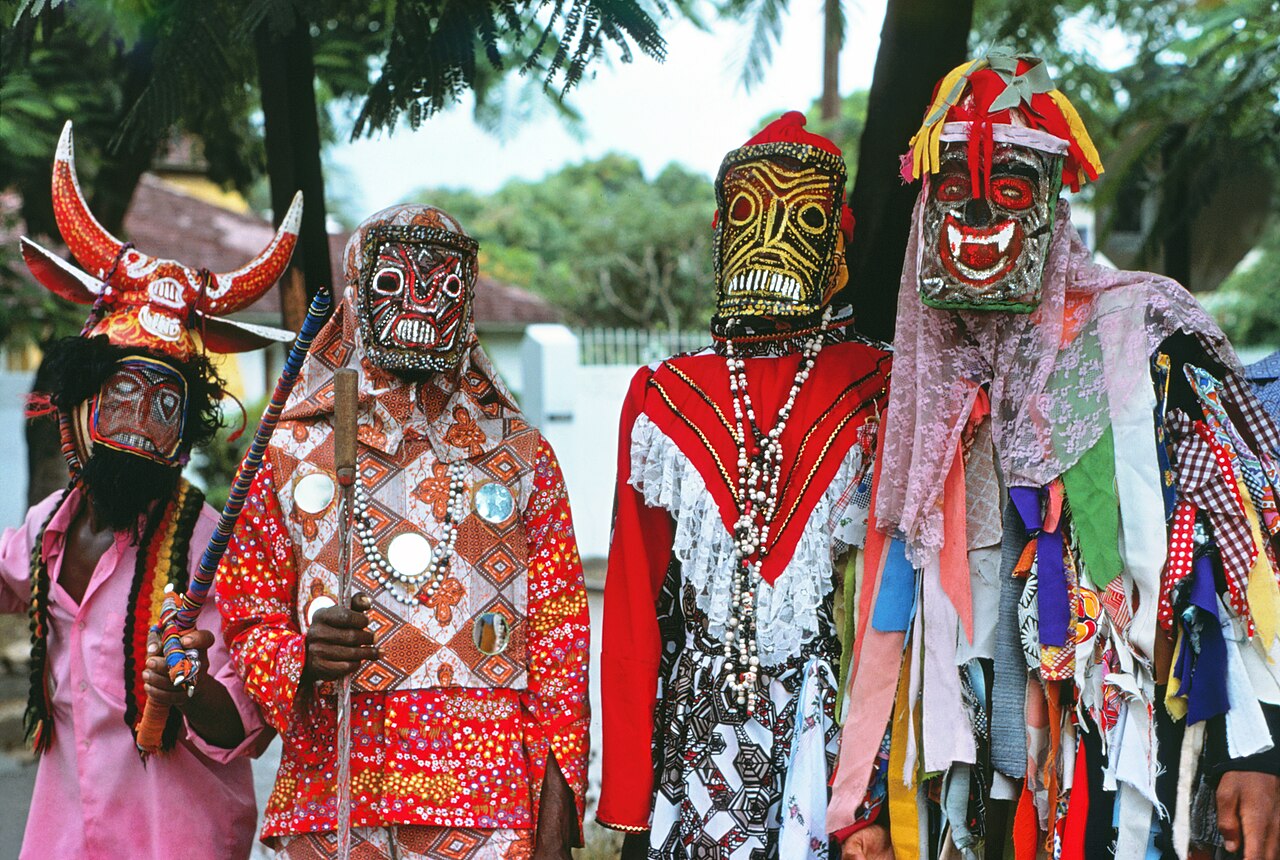
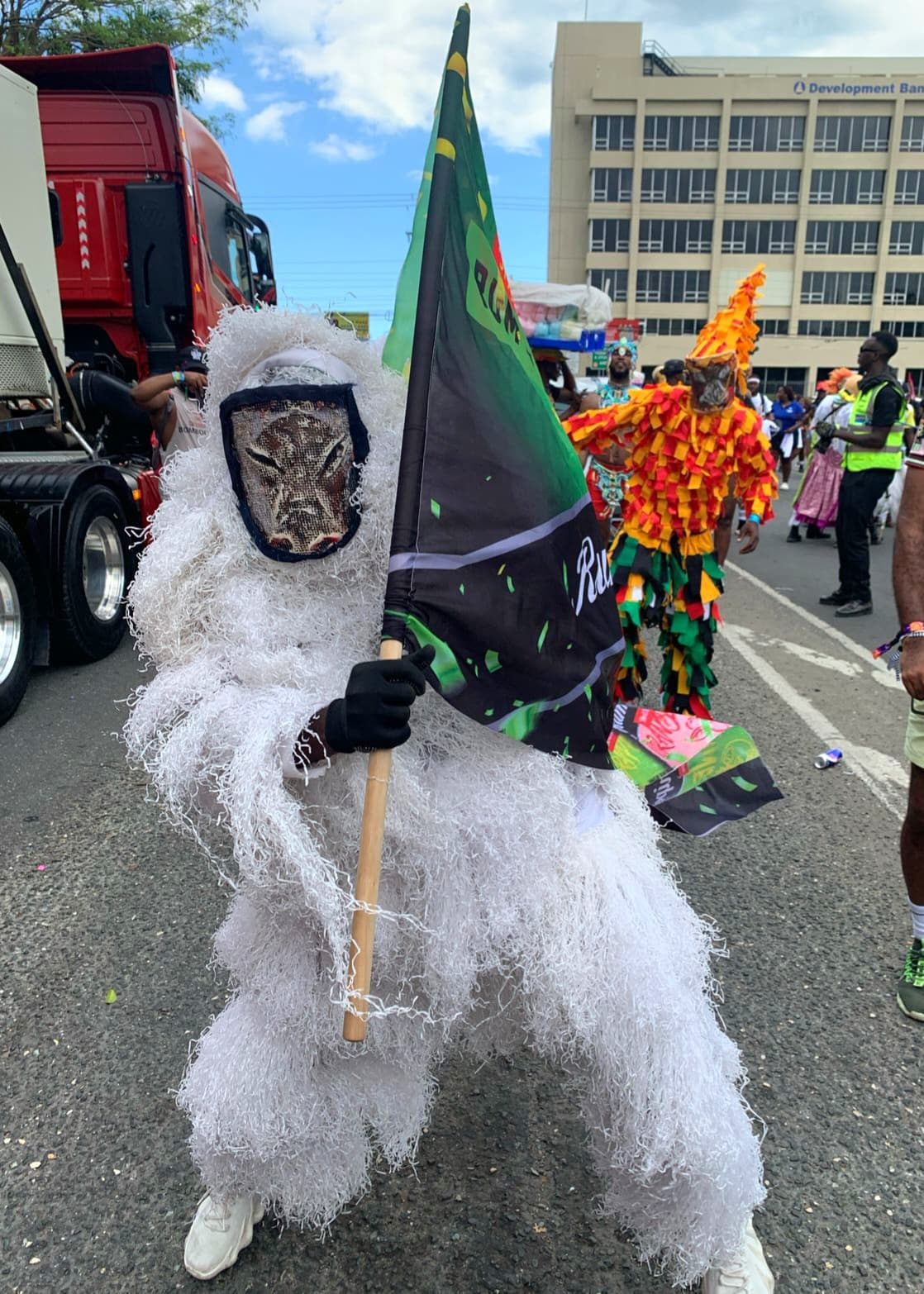
Jonkonnu, also known historically as John Canoe, is a Jamaican masquerade tradition combining costumed procession, dance, music and character performance. Its documented history reaches back to the period of slavery, when masked and costumed bands performed particularly during the Christmas season. The tradition developed through the interaction of African and European cultural forms and became a distinctive Jamaican expression of public festivity and performance.
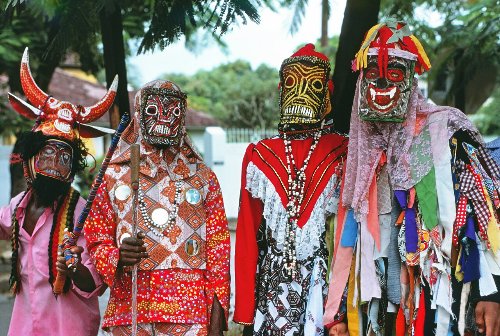
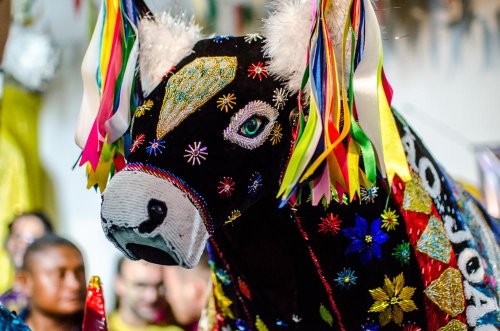
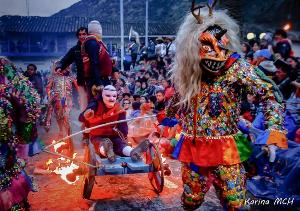
Traditional Jonkonnu bands feature characters whose costumes, movements and props distinguish different performance roles. Common characters include Cow Head, Horse Head, Devil, Pitchy Patchy, Belly Woman, King and Queen, Warriors or Indians, Policeman and other locally varying figures. Performances are accompanied by musicians using instruments including fife, drums, shakers and graters.
11-11-2026
| Institutional and human capacities | Jonkonnu is maintained by masqueraders, musicians, band leaders, costume makers and other practitioners who preserve knowledge of characters, movement, music, masks and performance. The tradition has historically varied between regions, with differences in characters, costumes and performance styles. Contemporary practitioners continue to form bands and perform in local and public settings, although the number of active groups has declined. The Jamaica Cultural Development Commission (JCDC) recognizes Jonkunnu as one of Jamaica's Traditional Folk Forms and includes it in its national performing-arts programme. The JCDC has also organized traditional folk-form workshops addressing Jonkonnu alongside other Jamaican traditional forms. | |
| Transmission and education | Knowledge of Jonkonnu encompasses the preparation of costumes and masks, character movement, dancing, music and the organization of masquerading bands. Historically, these skills were maintained within performance communities through participation in bands and seasonal celebrations. The physical construction of characters such as Pitchy Patchy, Cow Head and Horse Head also requires practical knowledge of materials, costume construction and performance. Recent revival initiatives have sought to strengthen transmission through workshops and practical training. In 2023, the JCDC supported workshops for participants in the Jonkonnu Road March and Competition, while the associated revival programme included training in costume making and maintenance, dancing, stilt-walking, and instrument making and maintenance. The JCDC has continued to include Jonkonnu within its Traditional Folk Forms workshops. | |
| Inventorying and research | Jonkonnu has been documented through Jamaican cultural and archival institutions, particularly the National Library of Jamaica, which maintains historical notes, photographic collections and other documentary material relating to John Canoe/Jonkonnu. The National Library's historical documentation records the regional diversity of Jonkonnu characters, costumes and performance practices and identifies the tradition as a major Creole form combining African and European influences. The tradition has also been examined through historical and academic research on Jamaican masquerade, dance and performance. Archival photographs and historical visual materials document Jonkonnu performances from earlier periods, while contemporary cultural programmes and reports record the activities of surviving bands and current revival efforts. These sources provide evidence of both historical continuity and the significant decline in regular practice. | |
| Policies as well as legal and administrative measures | Jonkonnu is recognized within Jamaica's cultural heritage framework through the work of the Jamaica Cultural Development Commission, which includes it among the country's Traditional Folk Forms and maintains competitions and training programmes for traditional performance. These programmes provide institutional space for the continued presentation and teaching of Jonkonnu. In 2026, Jamaica's Ministry of Culture, Gender, Entertainment and Sport announced that it was preparing a submission seeking inscription of Jonkonnu on UNESCO's List of Intangible Cultural Heritage in Need of Urgent Safeguarding. The initiative responds to concerns over the decline of the practice and is intended to support its revitalization. As of 2026, however, Jonkonnu has not yet been inscribed on a UNESCO list. | |
| Role of intangible cultural heritage and its safeguarding in society | Jonkonnu historically provided an important public space for African-descended Jamaicans to express creativity, performance and communal identity. Its masquerades transformed streets and villages into temporary performance spaces, combining music, movement, humour, spectacle and interaction with audiences. The tradition therefore represents an important expression of Jamaica's creolized cultural history. Its contemporary safeguarding significance is closely connected to the decline of regular performances. Recent reports describe only a small number of active bands and difficulties related to resources, transportation, performance opportunities and public recognition. The continued activity of surviving bands demonstrates that Jonkonnu remains a living practice while also highlighting the need to sustain its practitioners and transmission. | |
| Awareness raising | The JCDC promotes Jonkonnu through its Traditional Folk Forms competitions, workshops and national performing-arts programmes. Public performances provide opportunities for audiences to encounter the characters, music and movement of the tradition outside its historical Christmas setting. Jonkonnu has also appeared in national cultural celebrations, including Jamaica's Independence celebrations. Recent revival activities have additionally sought to address unfamiliarity and fear surrounding the masked characters. The 2023 Jonkonnu Road March and Competition was explicitly intended to contribute to preservation, increase public exposure and reduce the fear of Jonkonnu characters among children and adults. | |
| Engagement of communities, groups and individuals as well as other stakeholders | Jonkonnu depends on the continued involvement of performance bands and the practitioners who create and maintain its costumes, masks, instruments and movement traditions. Contemporary revival initiatives have worked with existing bands while also seeking to create new groups and broaden participation. The 2023 Road March and Competition brought together groups from different parts of Jamaica and incorporated training in several practical aspects of the tradition. The current safeguarding process also reflects growing institutional recognition of practitioners' role in maintaining the tradition. In 2026, the Ministry of Culture described the proposed UNESCO nomination as part of broader efforts to revive and protect Jonkonnu and ensure its continuation for future generations. | |
| International engagement | Jonkonnu forms part of a wider Caribbean family of masquerade traditions historically associated with African-descended communities in the region. Related forms are practiced or have been practiced in Jamaica, The Bahamas and Belize, with historical connections extending to Caribbean migrant communities elsewhere. The Jamaican form nevertheless has its own repertoire of characters, performance practices and historical development. Jamaica's current effort to prepare a nomination for the UNESCO Urgent Safeguarding List represents the most significant contemporary international engagement concerning Jonkonnu. The proposed nomination is intended to obtain international support for safeguarding and revitalization, but it should not be presented as an existing UNESCO inscription. | |
| References | Documentary Sources
Photographic Credits
|
|








.jpeg)



.png)



.jpeg)
.jpg)


.png)
.jpg)