
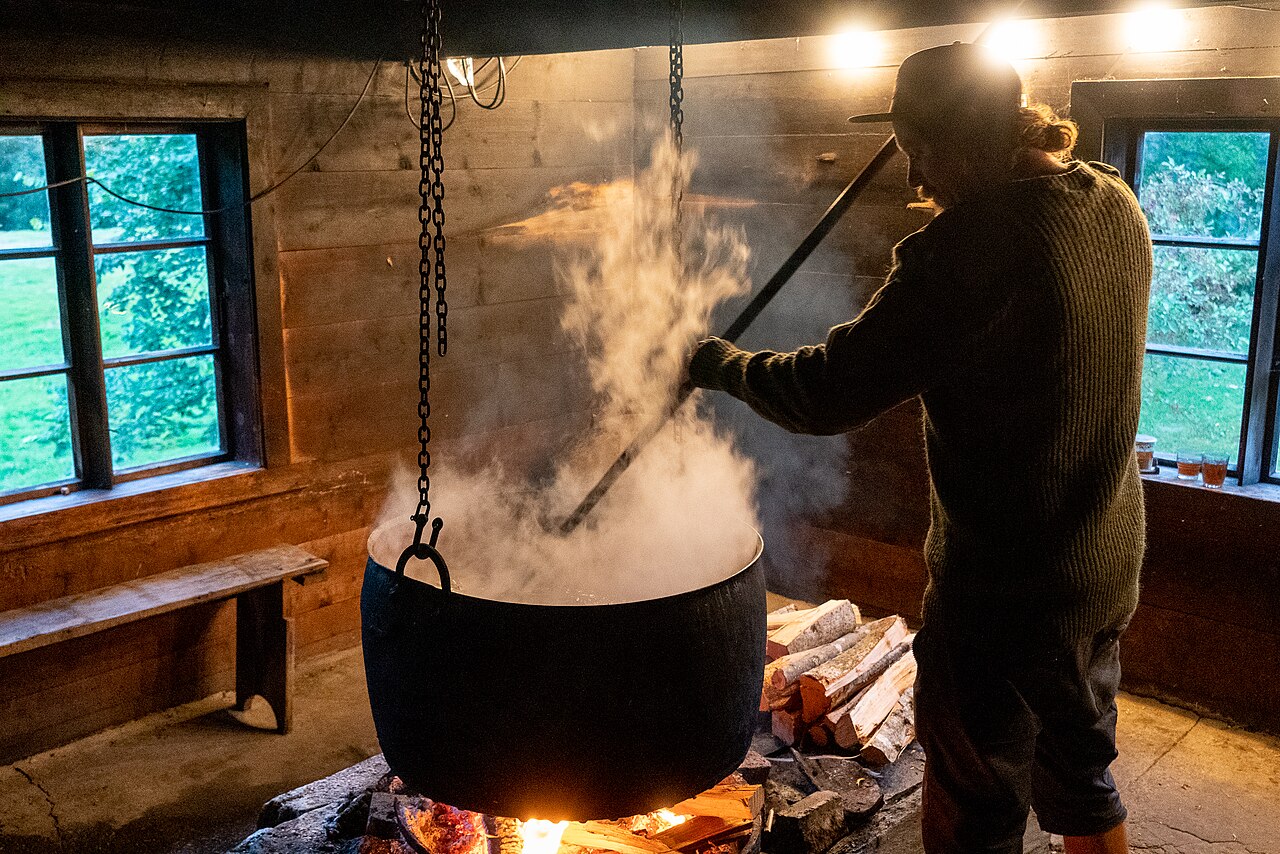
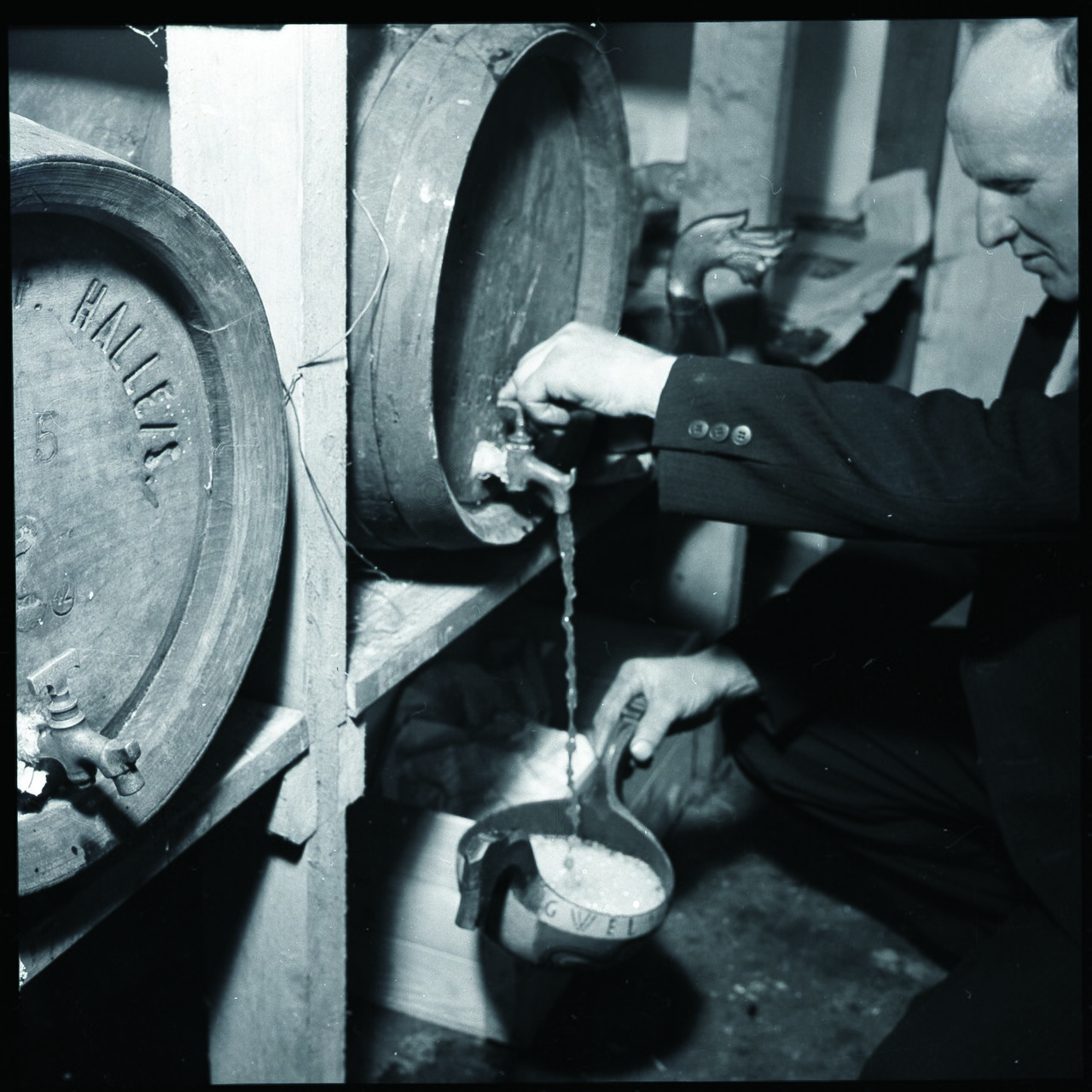
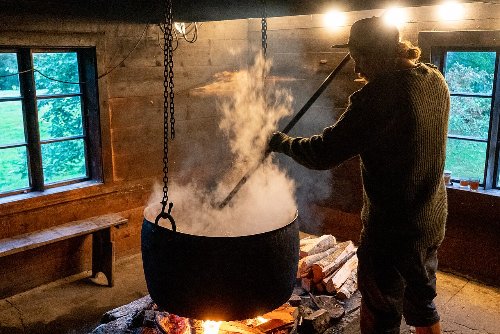
Traditional farmhouse brewing with kveik is a living brewing practice associated particularly with Western Norway and the Inner Vestland region. It combines knowledge of malted barley, juniper, water, hops, brewing equipment and fermentation with the maintenance and reuse of locally preserved kveik yeast cultures. Individual farms traditionally maintained their own brewing methods and yeast cultures, which were passed between generations through practical participation. The Norwegian Intangible Cultural Heritage Knowledge Bank classifies the practice under food traditions and knowledge of nature and the universe.
Brewing traditionally formed part of important social occasions, including weddings, Christmas celebrations, harvests, funerals, communal work and hospitality. The brewing process may involve gathering juniper, preparing the infusion, mashing and lautering, boiling or preparing raw ale, fermenting the wort and preserving yeast for subsequent brews. Local methods differ; for example, traditions north and south of the Jostedalsbreen glacier historically developed different approaches to boiling the wort. The post-brewing Oppskoka gathering provides a social setting in which newly brewed beer is tasted, discussed and evaluated by relatives, neighbours and other brewers.
11-11-2026
| Institutional and human capacities | The practice continues through traditional brewers who possess practical knowledge of brewing, fermentation, yeast preservation, raw materials and local brewing customs. Experienced practitioners contribute to courses, workshops and cultural activities, while cultural heritage institutions and local organisations provide settings in which this knowledge can be shared. The Norwegian Knowledge Bank identifies traditional brewers, researchers, museums and local communities as participants in the continuation and safeguarding of the practice. Since 2019, Vestnorsk Kulturakademi has worked with the preservation of traditional farmhouse brewing and kveik, in cooperation with research and heritage institutions. NIBIO has contributed scientific expertise and genetic-resource preservation. In 2025, NIBIO reported that kveik had received official status as a Norwegian genetic resource—the first microorganism in Norway to receive this status—reflecting the recognition of the biological material underlying the living brewing tradition. | |
| Transmission and education | Historically, brewing knowledge was primarily transmitted within farming families through observation and participation. Children could become familiar with the process from an early age and gradually learn the practical stages of brewing from older generations. Women as well as men contributed to maintaining and transmitting brewing knowledge, although historical patterns of responsibility differed between communities. The preservation of kveik itself was part of this transmission: yeast could be maintained on wooden yeast rings, yeast logs or as dried flakes and reused in later brewing. Contemporary transmission has expanded beyond the household. Courses, workshops, festivals, open brewing activities and cultural-heritage programmes provide opportunities for experienced brewers to demonstrate techniques to younger and newer practitioners. The Norwegian Knowledge Bank notes that safeguarding activities also involve museums, researchers and voluntary organisations. These newer forms of transmission complement rather than replace practical, experience-based learning. | |
| Inventorying and research | Norway does not maintain a single comprehensive national ICH inventory. According to Norway's periodic reporting to UNESCO, existing documentation is distributed among inventories and databases maintained by different bodies, including UNESCO-accredited NGOs, music and sound archives, ethnological and folk-tradition archives, museums and publicly accessible digital databases. Arts Council Norway has been exploring approaches to organising such material at a broader national level. Kveik brewing is documented directly in the Norwegian Intangible Cultural Heritage Knowledge Bank, where the practice has its own contribution describing its geographical distribution, knowledge, transmission, social functions and safeguarding activities. Research has also examined the yeast itself and its relationship to traditional brewing. A 2018 genomic study analysed kveik cultures from nine Norwegian sources, while a 2026 study sequenced 64 isolates from 25 traditional brewing cultures in Western Norway selected using cultural-heritage criteria. The latter study links the genetic diversity of kveik to long-term rural brewing practices and provides a scientific resource relevant to preservation of the strains. | |
| Policies as well as legal and administrative measures | Traditional farmhouse brewing with kveik is not currently inscribed on a UNESCO ICH list. Its safeguarding instead takes place within Norway's broader framework for intangible cultural heritage, in which Arts Council Norway is the principal national competent body. Norway's implementation of the 2003 Convention involves museums, archives, educational institutions, NGOs, voluntary organisations and practitioners, with public funding available for ICH-related activities. A significant recent measure concerns the biological resource itself. In 2025, kveik received official Norwegian genetic-resource status, following work by NIBIO and Vestnorsk Kulturakademi to document and preserve traditional strains. Research funding from the Norwegian Agriculture Agency has supported continued work on securing this resource. This measure complements, but does not replace, safeguarding of the knowledge and social practices associated with brewing. | |
| Role of intangible cultural heritage and its safeguarding in society | Farmhouse brewing historically connected food production with family life, seasonal work, hospitality, ritual and local social relations. Beer was prepared for major celebrations and communal activities, and sharing beer could form part of agreements and social obligations. The Oppskoka gathering continues this social dimension by bringing brewers and members of the local community together around the newly produced beer. Today, the practice additionally functions as a marker of local identity and historical continuity. It connects traditional agriculture, foodways, fermentation knowledge, craftsmanship and biological diversity. The renewed interest in kveik has also brought the tradition to wider national and international attention, while Norwegian safeguarding initiatives seek to retain the connection between the yeast cultures and the cultural practices in which they have traditionally been maintained. | |
| Awareness raising | Awareness of kveik brewing is maintained through cultural events, brewing courses, workshops, festivals and public demonstrations. The annual Norwegian Kornøl Festival in Hornindal and the World Championship in Christmas Ale in Voss provide public settings where traditional brewing knowledge and locally produced beers are presented and discussed. Research and public communication have also increased awareness of the cultural significance of kveik. Norwegian scientific and cultural institutions have presented the yeast as both a living component of farmhouse brewing and a genetic resource requiring preservation. This has helped connect public interest in traditional beer with broader questions concerning cultural continuity, biodiversity and traditional knowledge. | |
| Engagement of communities, groups and individuals as well as other stakeholders | The continuity of the practice depends on the participation of the farmers, brewers and families who have maintained local kveik cultures and brewing knowledge. Traditional brewing cultures used for recent research were selected partly because kveik had remained in families for several generations and the associated intangible cultural heritage was still actively practiced. Researchers documented the brewing traditions through engagement with the practitioners who maintained them. Community participation also occurs through brewing gatherings, courses, festivals and open brewing activities. Safeguarding work has sought to preserve both the biological strains and the knowledge connected to them, while recognising that kveik is meaningful as part of an active cultural practice rather than merely as a laboratory resource. The Norwegian Knowledge Bank presents the practice as living heritage maintained through interaction between practitioners, cultural institutions, researchers and local communities. | |
| International engagement | Kveik has attracted substantial international interest, particularly because traditional Norwegian strains have distinctive fermentation characteristics and have increasingly been used by brewers outside Norway. Scientific research has contributed to international knowledge of the genetic and biological characteristics of kveik, while the wider brewing community has helped bring Norwegian farmhouse brewing to international attention. This international visibility presents both opportunities and challenges. Wider circulation can encourage interest in Norwegian brewing traditions, but the cultural context of the yeast and its traditional use remains important to safeguarding. Current Norwegian efforts therefore place emphasis on documenting and preserving local strains and the knowledge associated with their continued use, ensuring that international interest does not sever the biological resource from the living cultural practice that maintained it. | |
| References | Documentary Sources
Photographic Credits
|
|




























.jpeg)






.png)













.jpeg)

.jpg)



.png)
.jpg)