
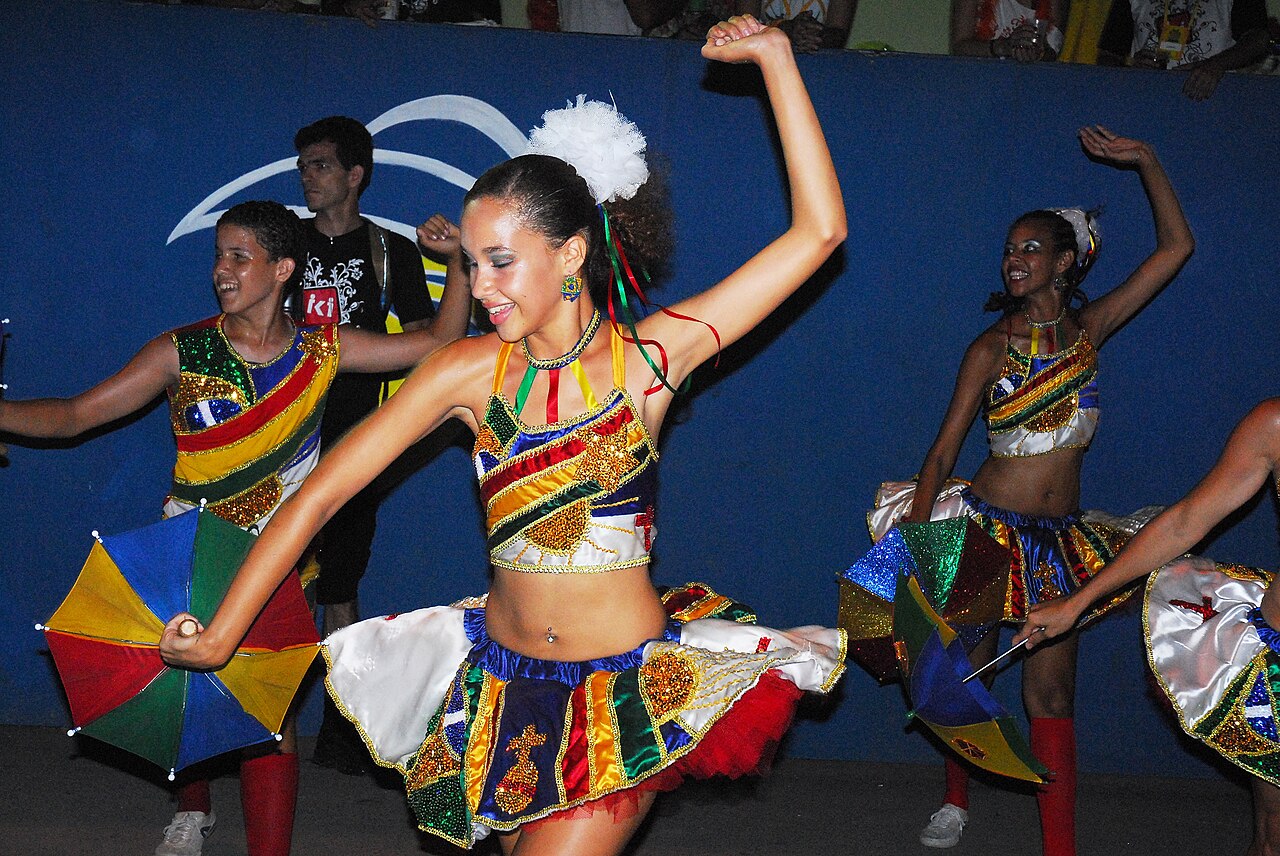
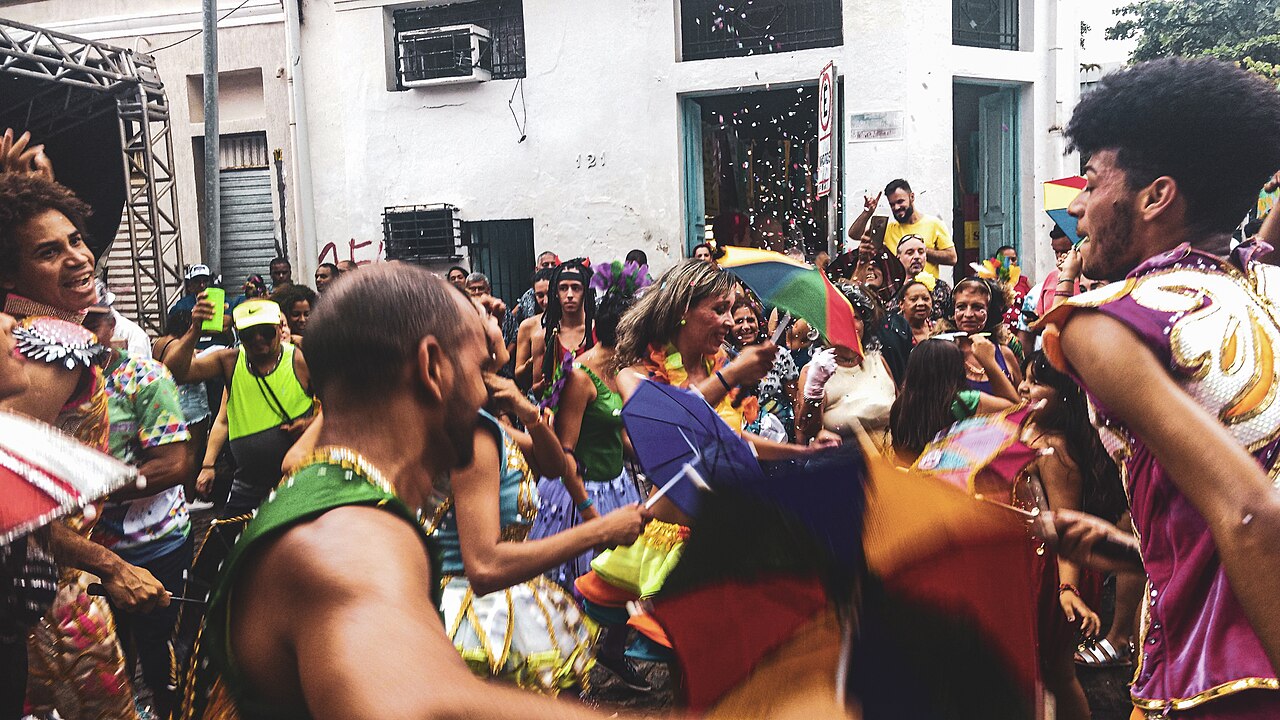
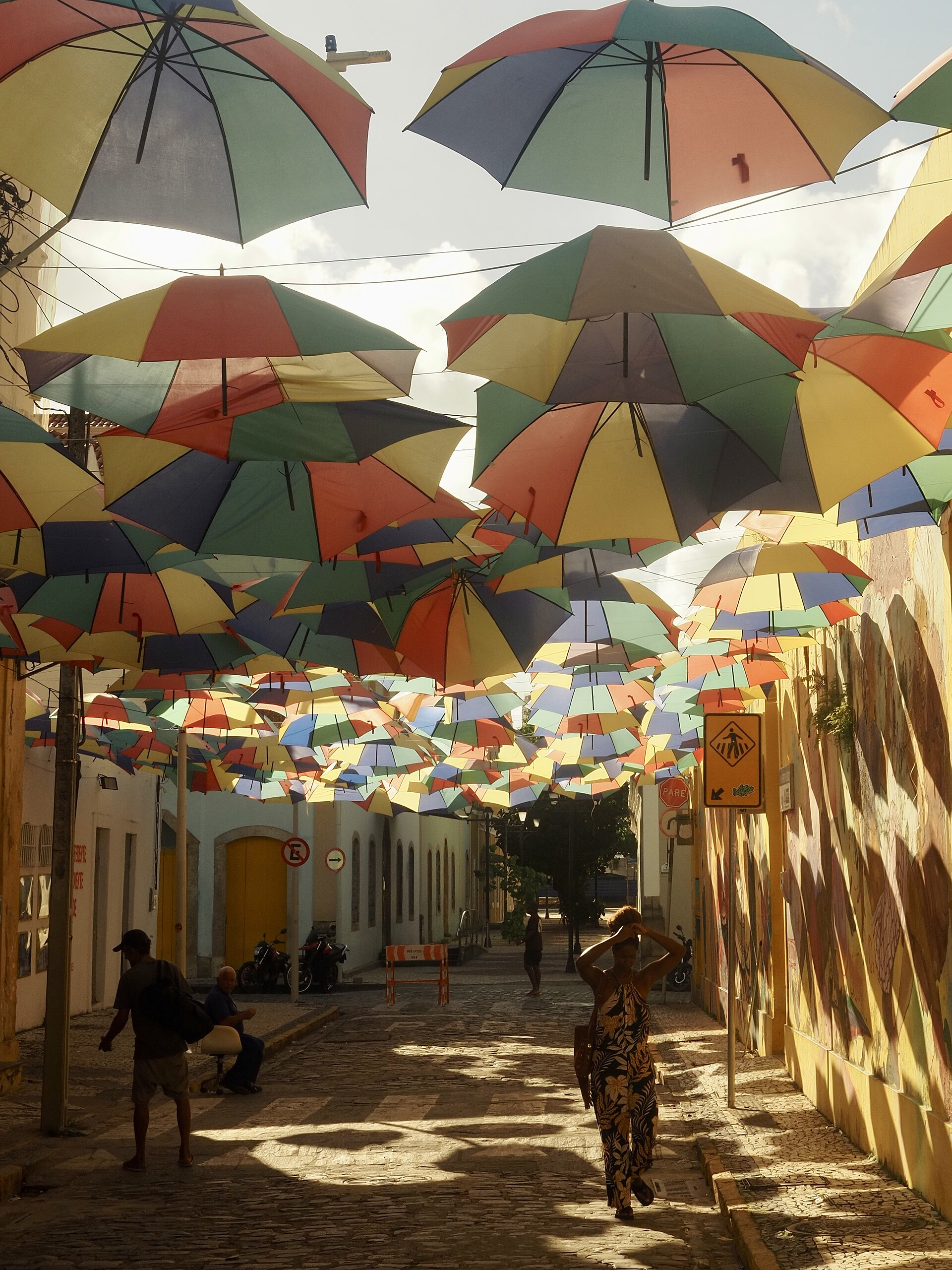
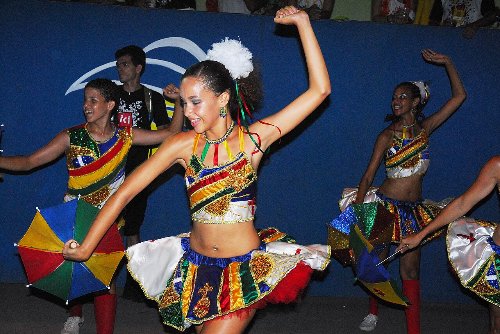
Frevo is a musical and dance tradition deeply associated with the Carnival of Recife and Pernambuco. Its rapid rhythms are performed by brass and percussion bands, while dancers known as passistas interpret the music through an energetic vocabulary of jumps, bends, spins, kicks and acrobatic movements known collectively as Passo. The small, brightly colored umbrella carried by many dancers has become one of its most recognizable symbols.
Frevo is not a single choreography or musical formula. It encompasses different musical forms, dance styles and performance contexts, continually recreated by musicians, dancers and carnival associations. Its sound emerged from the interaction of marches and other musical traditions in the urban environment of Recife, while its dance developed through the creativity and agility of performers, including movements historically associated with capoeira.
11-06-2026
| Institutional and human capacities | Frevo depends on complementary bodies of knowledge. Passistas master a demanding physical vocabulary and develop their own movements through practice and improvisation, while musicians learn the rhythms, arrangements and performance techniques required of Frevo orchestras and fanfares. Masters, composers, conductors, dancers, costume makers, instrument makers and carnival association organizers all contribute to the continuity of the tradition. Carnival clubs and associations are particularly important because they bring these different skills together. Their rehearsals, performances and organizational activities sustain Frevo beyond Carnival itself. The Paço do Frevo and other cultural institutions provide additional spaces for research, training, exhibitions and public programming, while safeguarding actions have increasingly been organized with the participation of the communities who practice Frevo. | |
| Transmission and education | Frevo is learned through the body as much as through formal instruction. Young dancers observe experienced passistas, repeat movements, develop balance and agility, and gradually acquire the ability to improvise within the rhythm of the orchestra. Musicians likewise learn through rehearsals, performance and interaction with more experienced players. Contemporary transmission combines this community-based learning with workshops, dance classes and organized training. In preparation for the revision of the safeguarding plan, masters and practitioners participated in workshops dedicated to exchanging practical and theoretical knowledge, including activities related to Carnival accessories and cultural production. These initiatives complement the year-round rehearsals and performances through which Frevo continues to be learned in its own cultural environment. | |
| Inventorying and research | The recognition of Frevo as Brazilian cultural heritage was preceded by ethnographic mapping, historical research and technical documentation carried out with practitioners and cultural organizations. The process examined the musical, choreographic and organizational dimensions of Frevo and documented its presence within Pernambuco's carnival associations. IPHAN subsequently recognized Frevo as Brazilian Cultural Heritage in 2007. Documentation continues through research into music, dance, associations, costumes, instruments and historical collections. One safeguarding initiative mapped Frevo sheet music held in public and private collections and digitized a catalogue of 120 scores, making them available to researchers and practitioners. Such documentation helps preserve musical memory while keeping it connected to the living performance tradition. | |
| Policies as well as legal and administrative measures | Frevo was registered as Brazilian intangible cultural heritage in 2007 and inscribed by UNESCO on the Representative List in 2012. The UNESCO nomination was supported by broad community participation and demonstrated consent from the associations and groups concerned. UNESCO specifically recognized Frevo as an expression continuously recreated by the people of Recife in response to changing social conditions. Safeguarding is organized through an Integrated Safeguarding Plan and a dedicated Frevo Safeguarding Management Committee. Rather than treating recognition as the end of the process, Brazilian institutions and practitioners have continued to revise the safeguarding framework according to contemporary needs. In 2024, a broad consultation involving practitioners, researchers, associations and public institutions culminated in the validation of an updated safeguarding plan and a new composition of the management committee. | |
| Role of intangible cultural heritage and its safeguarding in society | Frevo is closely associated with the cultural identity of Recife and Pernambuco. Its public performances transform streets and squares into spaces of collective participation, bringing together dancers, musicians, carnival associations, residents and visitors. The tradition creates a shared urban language through which communities celebrate, compete, remember and continually reinterpret their city. Its social importance also lies in its openness. Frevo is not restricted to a fixed professional class of performers; people can participate through dancing, music, association membership, costume-making, organization or simply joining the carnival procession. Its continuing vitality depends on this capacity to incorporate new participants while retaining the distinctive relationship between the passo, the orchestra and the carnival street. | |
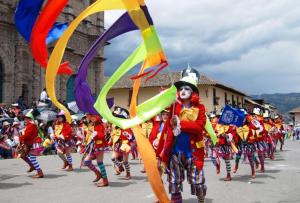
| Awareness raising | During Carnival, Frevo fills Recife's streets with orchestras, dancers, banners, associations and large public gatherings. Major parades and traditional carnival groups provide opportunities for the tradition to be experienced in its original urban environment rather than only on a formal stage. The annual celebrations also introduce younger residents and visitors to different styles of music, dance and association life. Awareness raising extends throughout the year through museums, exhibitions, workshops, performances, publications and educational activities. The Paço do Frevo has become an important reference point for presenting the history and contemporary practice of the tradition, while public programming allows Frevo to remain visible beyond the Carnival season. UNESCO's recognition has further contributed to its international visibility. | |
| Engagement of communities, groups and individuals as well as other stakeholders | Frevo is sustained by a network of carnival associations, musicians, passistas, masters, makers and audiences. Associations organize rehearsals and performances, maintain costumes and instruments, and provide social structures through which practitioners can continue developing their skills. The relationship between performers and the public is particularly important because Frevo's energy is created through movement in shared urban space. Community participation has also become central to formal safeguarding. The recent revision of the safeguarding plan included public consultations and direct listening sessions with musicians, passistas and members of Frevo associations in Recife, Olinda, Paudalho, Camaragibe and other areas of Pernambuco. In 2024, more than 70 participants took part in the process that validated new proposals and restructured the Safeguarding Management Committee. | |
| International engagement | UNESCO's 2012 inscription placed Frevo within the international framework for safeguarding intangible cultural heritage and highlighted its capacity to promote human creativity, cultural diversity and dialogue. The inscription also recognized the active role of Recife's communities in continually recreating the tradition. International visibility has allowed Frevo to be presented to audiences beyond Brazil through cultural exchanges, performances, documentation and heritage programming. Yet its international significance remains grounded in the local cultural ecosystem of Pernambuco. The strongest form of international engagement is therefore one that introduces new audiences to the knowledge of the passistas, musicians and associations while supporting the communities that continue to make Frevo a living expression. | |
| References | Documentary Sources
Photographic Credits
|
|











.jpeg)



.png)



.jpeg)
.jpg)
.png)
.jpg)