
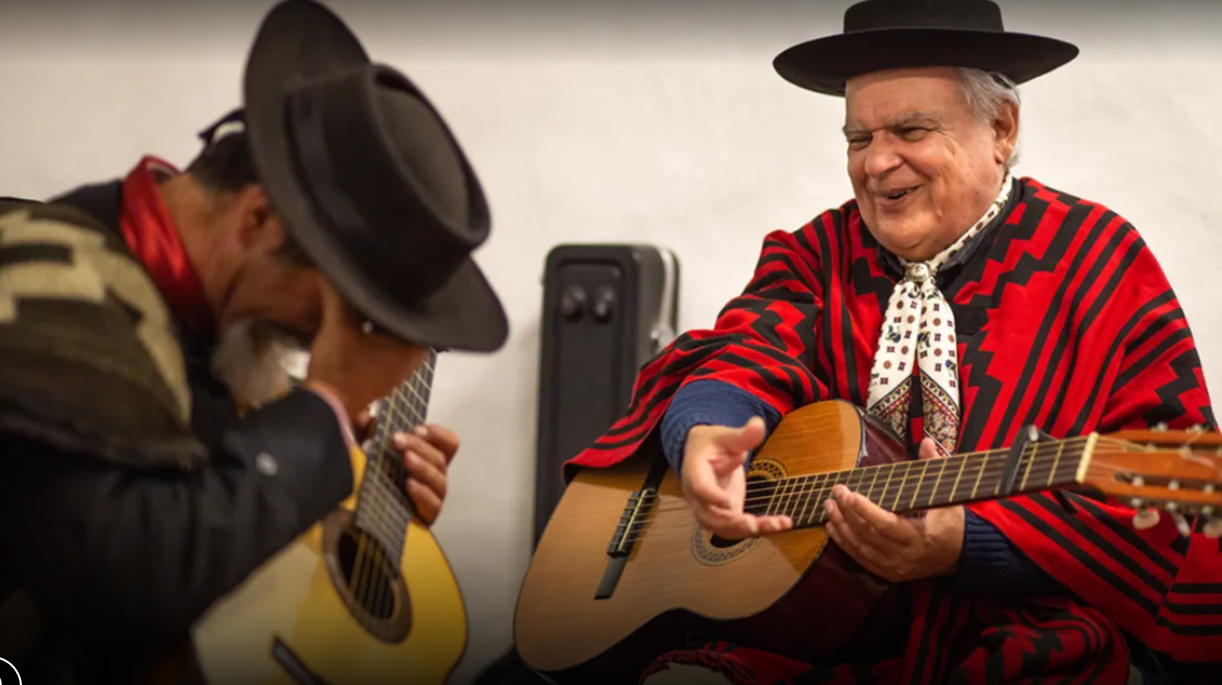
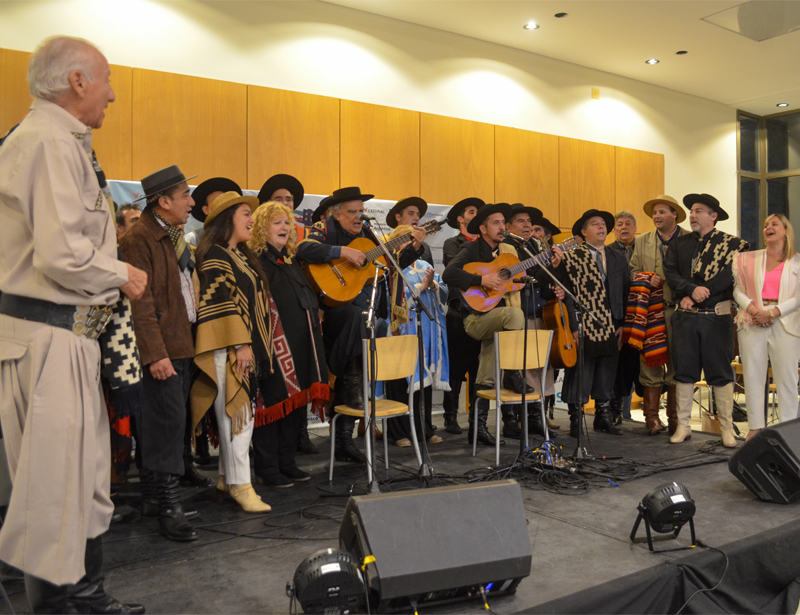
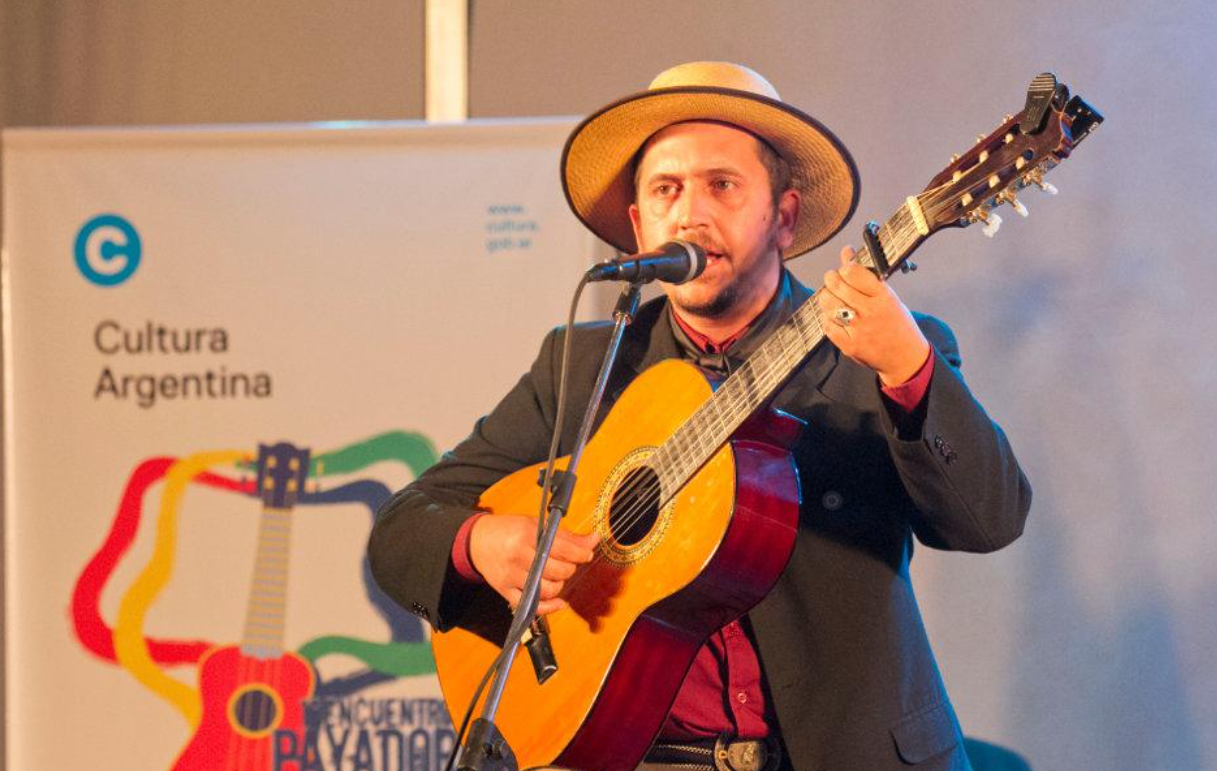
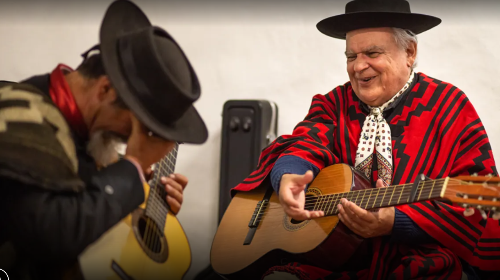
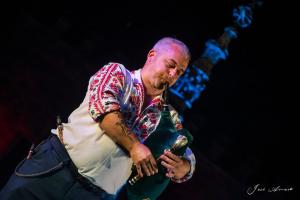
Payada is a traditional form of improvised musical poetry associated with the Pampas of Argentina and Uruguay and the wider Río de la Plata region. At its heart is the payador or payadora, a performer who creates verses spontaneously while singing to the accompaniment of a guitar, commonly using the rhythm of the milonga. One of its most recognizable forms is the contrapunto, a poetic exchange in which two performers respond to each other through successive improvised stanzas. Their verses may address a theme agreed upon beforehand or respond to suggestions from the audience, creating a dialogue shaped by wit, reflection, humour, and the ability to construct a meaningful response in the moment.
Payada commonly employs the Spanish poetic form known as the décima espinela, a ten-line stanza generally composed of eight-syllable lines with a consonant rhyme scheme. Each stanza develops an idea, narrative, or argument, often ending with a concluding statement that answers or sharpens the preceding verses. The practice is performed at festivals, payador gatherings, competitions, peñas (social and musical gatherings), rural events, educational activities, and informal encounters. Its repertoire is not fixed: performers draw on local histories, current affairs, social relationships, and everyday experiences, making each performance a distinct cultural event in which inherited poetic structures meet the circumstances of the present.
10-23-2026
| Institutional and human capacities | The principal bearers of Payada are the payadores and payadoras who maintain the skills required to improvise verses, sing in rhythm, accompany or coordinate with guitarists, and engage in poetic exchange. Their capacities combine oral composition, musical knowledge, memory, linguistic dexterity, timing, and sensitivity to an audience. Although gaucho-inspired clothing remains an important visual association in many performances, especially in Buenos Aires Province, contemporary performers may also wear more urban attire. Women payadoras are active participants in the tradition, and their presence demonstrates that the practice continues to evolve beyond a single historical image of the male gaucho. The wider payador community includes musicians, researchers, cultural managers, presenters, festival organizers, artisans, educators, and audiences who help create the settings in which the art is practised. In Buenos Aires Province, the provincial cultural heritage authorities have identified Payada as a living manifestation and have developed work specifically directed toward its registration and safeguarding. The provincial cultural administration also offers capacity-building activities for cultural managers and public institutions, including initiatives focused on safeguarding Payada with community participation. These structures support recognition and coordination, while the practice itself continues to depend on performers’ knowledge, opportunities to meet, and the relationships through which the art is learned and shared. | |
| Transmission and education | Payada is transmitted principally through listening, observation, practice, and direct interaction with experienced performers. Learning requires more than memorizing poetic forms: aspiring payadores must develop the ability to construct verses quickly, sustain a musical line, respond to another performer, maintain rhyme and metre, and adapt their language to the subject and audience. Encounters with established practitioners, informal exchanges, gatherings, and performances provide opportunities to observe these skills and gradually develop them through practice. The oral nature of the art makes live participation particularly important because each exchange offers a new situation that cannot be reproduced exactly. Educational activities and cultural events can extend transmission beyond informal networks by introducing younger generations and new audiences to the history, poetic structures, guitar accompaniment, and improvisational methods of Payada. The tradition has appeared in educational spaces as well as festivals, competitions, rural gatherings, and cultural meetings. However, the existence of these settings does not by itself establish that formal Payada instruction is consistently available throughout its area of practice. Sustained transmission depends on opportunities for learners to practise with experienced performers, gain confidence before audiences, and participate in a community where their developing skills are recognized and encouraged. | |
| Inventorying and research | Payada has been documented through cultural heritage initiatives in Argentina and Uruguay. In Argentina, the official national portal presents the provincial entry “Arte de la Payada,” identified by the Centre for Intangible Heritage within the Buenos Aires provincial cultural heritage administration. The manifestation was included in the provincial inventory on 7 August 2024. Its documentation describes the form’s musical and poetic characteristics, its performance settings, the role of the guitar and milonga, the structure of the décima, and the broader community associated with the practice. This record situates Payada within both performing arts and oral expression. In Buenos Aires Province, a programme for the registration and safeguarding of Payada provides an institutional framework for further work with the practice. Uruguay has also documented the art through its national intangible cultural heritage processes, including attention to the views of payadores and the conditions required for transmission. These efforts offer complementary perspectives on a tradition that crosses national borders. Nevertheless, public inventory entries and programme descriptions should not be mistaken for evidence of a single, complete transnational archive. Continued documentation can help record performers’ experiences, regional variations, changes in repertoire, transmission pathways, and the challenges identified by practitioners themselves. | |
| Policies as well as legal and administrative measures | Payada received recognition as Cultural Heritage of MERCOSUR in June 2015 through a proposal advanced by Argentina and Uruguay. In 2016, the regional recognition was extended to include Chilean paya, acknowledging a related tradition within the broader family of improvised poetic expression in the Southern Cone. This regional framework recognizes cultural practices that express shared references and contribute to cultural understanding and integration among countries. The recognition is distinct from inscription on UNESCO’s Representative List of the Intangible Cultural Heritage of Humanity: Payada is not listed as a UNESCO-inscribed element. At the national and provincial levels, Argentina’s cultural heritage inventory provides a means of identifying and sharing information about living traditions. The inclusion of Payada in Buenos Aires Province’s inventory, together with the provincial programme for its registration and safeguarding, demonstrates institutional attention to the practice. Uruguay has separately declared the art of Payada as intangible cultural heritage under its own national framework. These measures provide recognition and support for safeguarding, but the available documentation does not establish a single binding legal regime covering all payadores across Argentina, Uruguay, and Chile. Effective protection also depends on sustained cooperation with practitioners and support for the settings in which performances and learning take place. | |
| Role of intangible cultural heritage and its safeguarding in society | Payada serves as a form of public expression through which performers interpret their surroundings, recall shared histories, and comment on contemporary events. The improvised verse can communicate social concerns, personal experiences, political observations, humour, and moral reflection. In a contrapunto, the exchange between performers creates a structured space for disagreement and response without requiring a fixed written script. The audience is not simply a passive observer: its suggestions, reactions, and knowledge of local circumstances can influence the direction of the performance. This relationship gives Payada a social function that extends beyond musical entertainment. The tradition also contributes to the continuity and reinterpretation of cultural identities associated with rural life, the Pampas, the gaucho image, and the wider Río de la Plata region. Its continued practice demonstrates how an inherited poetic form can remain relevant when performers address changing social realities. Safeguarding therefore involves more than preserving examples of past performances or documenting formal poetic rules. It requires maintaining opportunities for improvisation, supporting gatherings where performers can exchange knowledge, recognizing women and men as bearers of the tradition, and enabling younger practitioners to develop their skills. The vitality of Payada rests on its capacity to remain both recognizable as a shared art and open to new voices and subjects. | |
| Awareness raising | Public festivals, payador gatherings, competitions, cultural centres, educational events, and regional meetings provide opportunities to introduce Payada to audiences who may be unfamiliar with improvised poetic performance. These settings can demonstrate how performers build verses in real time, maintain the musical rhythm, and respond to one another through the contrapunto. They also help audiences understand that the tradition involves a combination of poetic technique, musical practice, social interaction, and interpretation of contemporary life rather than a predetermined song or recitation. Cultural heritage institutions in Argentina and Uruguay contribute to awareness by publishing descriptions of the practice and recognizing its regional significance. MERCOSUR’s recognition provides an additional context for presenting Payada as a cultural expression shared across borders. Awareness initiatives are most effective when they give performers space to explain the practice in their own terms and allow audiences to experience its improvisational character directly. Presentations that focus exclusively on gaucho imagery or rural nostalgia risk overlooking the intellectual, creative, and contemporary dimensions of the art, including the active participation of women payadoras and the diversity of subjects addressed in modern performances. | |
| Engagement of communities, groups and individuals as well as other stakeholders | The payador community is central to the practice’s continuity. Performers maintain and develop the art through exchanges, festivals, competitions, informal meetings, and collaborations with musicians and cultural organizers. Audiences contribute by listening, suggesting themes, responding to verses, and recognizing the skill involved in an improvised exchange. Researchers, presenters, educators, and cultural managers can help connect performers with new settings and audiences, while heritage institutions provide opportunities for documentation and dialogue. These relationships support the social environment in which Payada remains an active practice rather than solely an object of historical interest. Community participation is also important in identifying the challenges facing transmission and deciding how safeguarding should be pursued. The provincial cultural authorities in Buenos Aires have explicitly connected their safeguarding work to community participation and the development of coordinated strategies. Such work can help performers express their needs, strengthen networks, and identify opportunities for learning and performance. However, institutional recognition cannot replace the role of practitioners in shaping the tradition’s future. The community’s varied experiences, including those of women payadoras, younger performers, and bearers working in different local contexts, should inform decisions about how the art is documented, taught, presented, and supported. | |
| International engagement | Payada is an example of cultural expression that crosses national borders while retaining strong connections to particular communities and performance settings. Its recognition by MERCOSUR in 2015 as a regional cultural heritage element, followed by the inclusion of Chilean paya in 2016, acknowledges the relationships among related traditions of improvised poetic song in Argentina, Uruguay, and Chile. This regional recognition provides a basis for cultural exchange and comparative understanding while allowing each country’s practice to retain its own terminology, performance conventions, and local histories. International and regional gatherings, including encounters of payadores from MERCOSUR countries, create opportunities for performers to meet, exchange experience, and introduce audiences to different approaches to improvised verse. Such activities can strengthen professional and community networks and contribute to the public visibility of the tradition. The available sources establish regional recognition and examples of cross-border cultural engagement, but they do not demonstrate a comprehensive international safeguarding programme operating continuously across all participating countries. Future cooperation can build on existing exchanges by supporting performer-led meetings, documentation, educational initiatives, and transmission opportunities that respect the distinctiveness of each local tradition. | |
| References |
|
|







.jpeg)


.png)
.jpeg)
.jpg)
.png)
.jpg)