
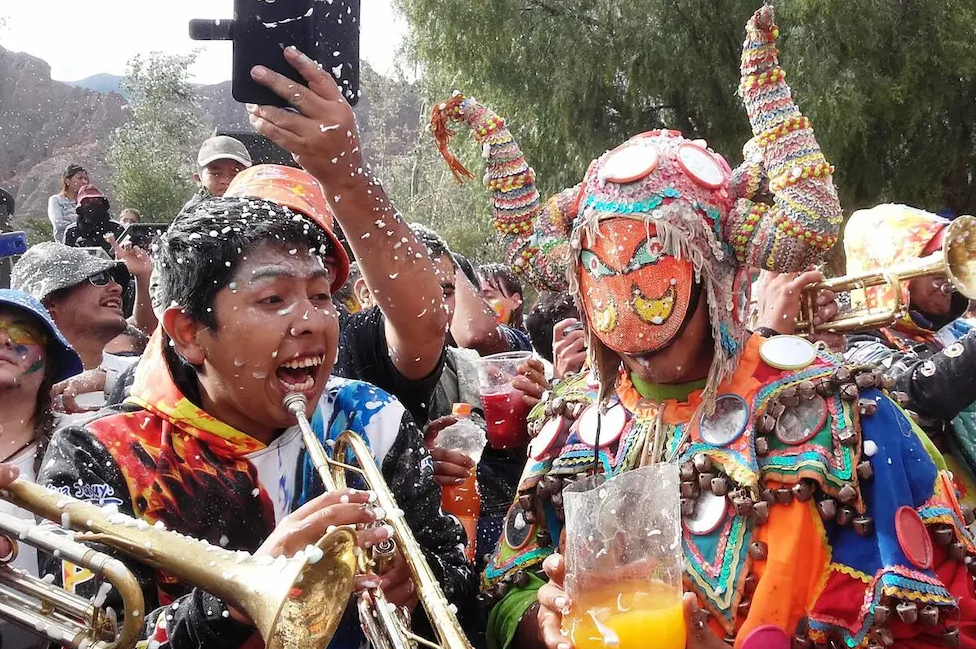
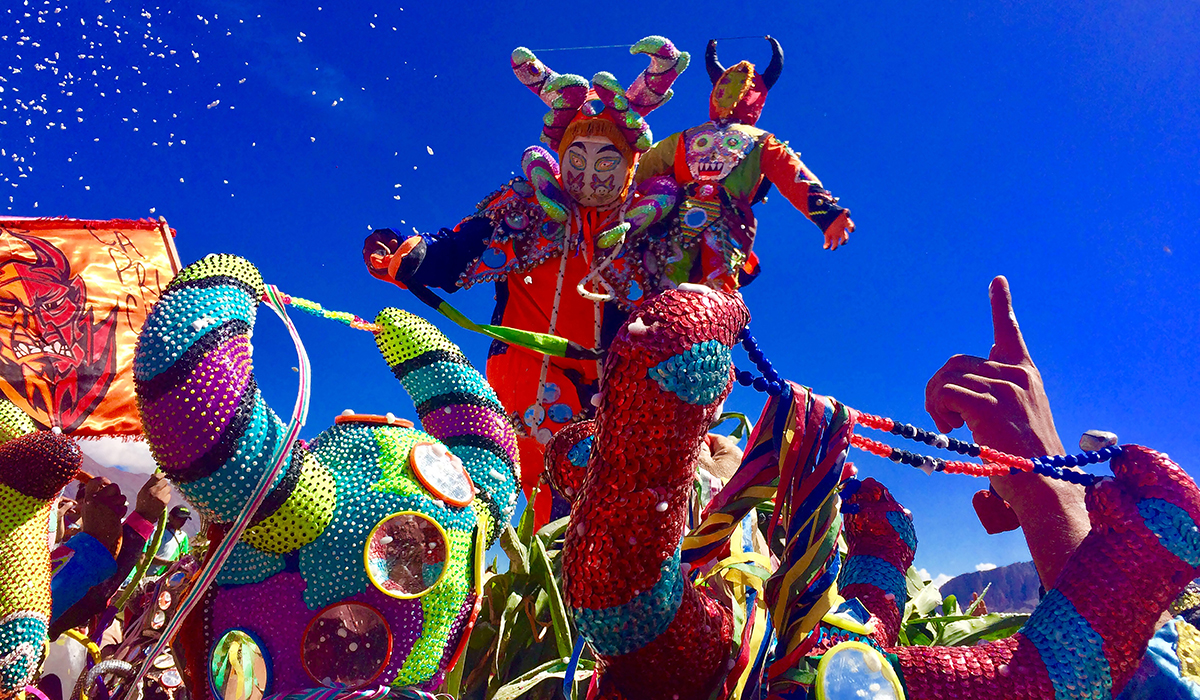
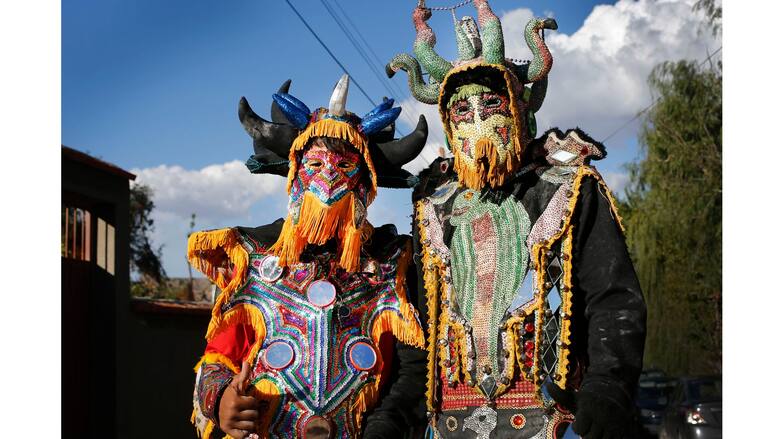
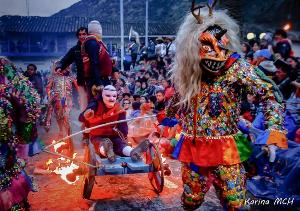
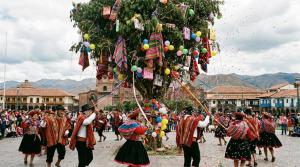
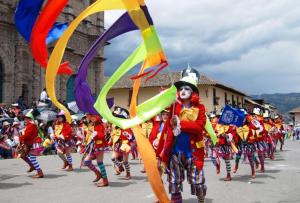
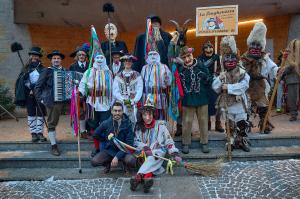
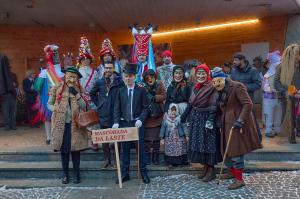
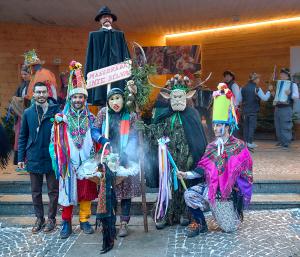
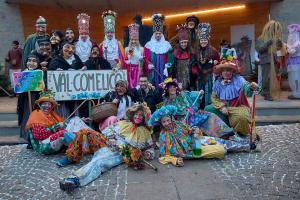
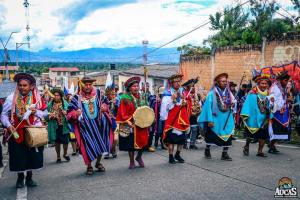
In the Quebrada de Humahuaca, in the Andean province of Jujuy, northwestern Argentina, Carnival is a collective celebration shaped by music, singing, dancing, ritual, and relationships between communities and the land. This inventory focuses particularly on the traditions of the Comparsa Los Caprichosos de Tilcara, a community group founded in 1983 and subsequently organized as a civil association. Its activities include the Carnival’s principal festivities, the gatherings of Compadres and Comadres, the Desentierro del Diablo, invitations between comparsas, Chaya celebrations, and the eventual Entierro del Diablo. Although these practices share features with celebrations throughout Jujuy, their forms and meanings vary among localities and groups.
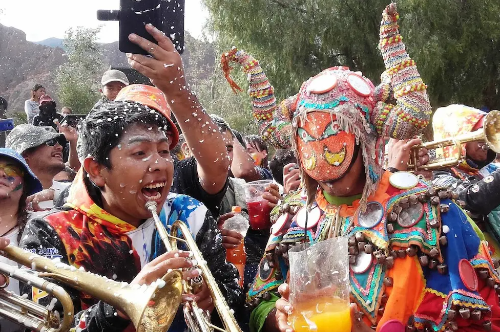
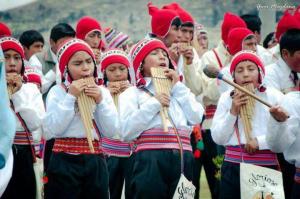
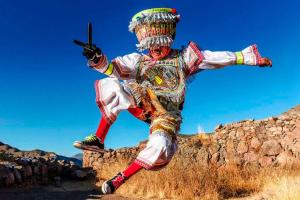
At the heart of the celebration is the symbolic awakening and burial of the devil, often represented by a costumed figure associated with the release of Carnival’s festive energy. Participants gather at a mojón, a ceremonial place where the devil is unearthed and later returned to the earth. Music, coplas (traditional sung verses), dancing, flour, talcum powder, streamers, and basil accompany the festivities. Traditional instruments include the caja, erkencho, anata, charango, and bombo, alongside brass bands. These expressions connect the celebration to Andean cultural practices, agricultural cycles, communal abundance, and gratitude toward Pachamama, or Mother Earth, while also reflecting the historical interaction between Indigenous worldviews and Catholic observances.
10-23-2026
| Institutional and human capacities | The Comparsa Los Caprichosos de Tilcara is a central community-based structure for organizing and maintaining this particular expression of Carnival. Its civil association brings together people who assume different responsibilities, including musicians, performers representing the devils, costume makers, committee members, the president, and godparents responsible for ceremonial elements such as the mojón, flag, devil figure, mixtura, talcum powder, and fireworks. These differentiated roles distribute knowledge and practical responsibilities across the group, allowing the celebration to be prepared and carried out collectively. Human capacities also extend beyond the formal organization. Singers, instrumentalists, families, hosts, visitors, and members of other comparsas contribute to the festive environment and its continuity. Copleros and copleras preserve repertoires and ways of singing, while experienced participants guide preparations and ritual activities. Community members’ knowledge of local customs, ceremonial places, musical practices, and relationships with other groups is essential to the celebration. The participation of people who were not born in Tilcara also demonstrates that belonging can be developed through involvement, provided the community’s practices and relationships are respected. | |
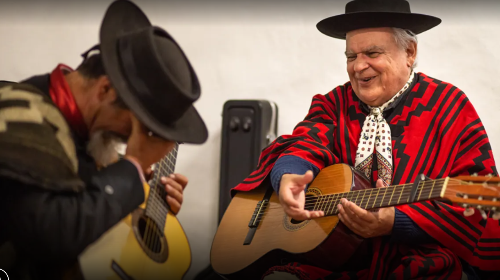
| Transmission and education | Knowledge is transmitted primarily through family and community participation rather than through a single formal educational system. Children and younger participants encounter Carnival by accompanying relatives, observing preparations, listening to music and coplas, helping with collective tasks, and gradually taking on responsibilities. Learning often occurs through repeated participation: becoming familiar with the rhythms of the caja, the structure of sung verses, the making of costumes, the organization of gatherings, and the sequence of ceremonial events. This process allows practical skills and cultural meanings to be learned together. Oral transmission is especially important for copla singing, whose verses can express memories, emotions, everyday experiences, social concerns, and relationships with the land. Community accounts published by the Museo Nacional Terry describe how singers learn from parents, grandparents, teachers, and other practitioners, and how the tradition is sustained through listening and participation from childhood. Transmission is not simply the preservation of an unchanging repertoire; singers can also use coplas to address contemporary experiences. Continued opportunities for young people to participate in singing, music-making, ritual preparation, and community gatherings are therefore important to the tradition’s vitality. | |
| Inventorying and research | The practice has been documented through Argentina’s national survey of intangible cultural heritage, coordinated by the national cultural heritage authorities. The official Jujuy inventory includes the manifestation titled “Música, canto y festejo en el Carnaval de la Quebrada de Humahuaca, Comparsa Los Caprichosos de Tilcara.” Identified by the association itself, the entry was incorporated on 17 September 2019 and updated in 2023. It records the comparsa’s activities, organizational structure, ceremonial roles, and cultural significance, providing an official reference for understanding the practice as living community heritage. Additional documentation includes public cultural reporting and community testimony. In 2021, the Museo Nacional Terry published reflections from Tilcara residents on Carnival, copla singing, agricultural traditions, family participation, and the changing place of the celebration in contemporary society. Such accounts complement formal inventory information by recording practitioners’ interpretations and concerns. Argentina’s national survey is designed as an ongoing identification and dissemination process open to communities, institutions, and individuals. The available public sources establish that the tradition has been inventoried and discussed, but do not demonstrate the existence of a dedicated, continuously updated research programme specifically for this Carnival. | |
| Policies as well as legal and administrative measures | Argentina ratified the 2003 UNESCO Convention for the Safeguarding of the Intangible Cultural Heritage through National Law No. 26,118. Within this framework, the national cultural heritage authorities promote the identification and dissemination of living cultural practices through the Relevamiento del Patrimonio Cultural Inmaterial en Argentina. This ongoing survey provides a means for communities and other interested participants to document manifestations that remain active, are transmitted between generations, and contribute to collective identity. The inclusion of the Los Caprichosos de Tilcara manifestation in the national inventory provides formal recognition within this identification framework. The available public documentation does not establish a dedicated legal protection instrument or safeguarding plan specifically for the Carnival of the Quebrada de Humahuaca or the Los Caprichosos comparsa. National inventory recognition should therefore be distinguished from a specific statutory protection regime or an inscription on a UNESCO list. Relevant safeguarding considerations include maintaining the community’s ability to organize its celebrations, supporting intergenerational transmission, respecting Indigenous cultural contexts, and ensuring that tourism and public presentation do not displace practitioners’ authority over their own tradition. | |
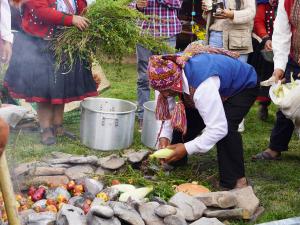
| Role of intangible cultural heritage and its safeguarding in society | Carnival is a time of collective encounter, celebration, and renewal in which relationships between families, neighbours, comparsas, and the wider community are reaffirmed. The celebration has connections to agricultural life and gratitude for the abundance provided by the land. The ritual relationship with Pachamama gives the festivities significance beyond entertainment, linking communal joy to cycles of production, reciprocity, and the well-being of people and their environment. The gathering of participants in shared spaces also provides opportunities to maintain social ties and express a sense of belonging to the Quebrada. The celebration remains meaningful because it can accommodate contemporary social experiences while retaining connections to inherited practices. Coplas may express concerns about inequality, everyday work, violence, and political decisions, making traditional singing a living form of communication rather than merely a performance of the past. Safeguarding must consequently address the conditions that enable communities to practise and reinterpret Carnival on their own terms. It includes supporting local knowledge, ritual relationships, family participation, and the social spaces in which music, singing, and collective celebration continue to be meaningful. | |
| Awareness raising | The Carnival of the Quebrada de Humahuaca attracts visitors from across Argentina and abroad, making it an important point of public contact with the cultural life of Jujuy. Government tourism platforms present the celebration through its comparsas, musical traditions, costumes, and the ritual of the devil’s unearthing and burial. These presentations can help audiences understand the diversity of regional Carnival practices and encourage interest in the cultural knowledge that sustains them. Public cultural institutions also contribute to awareness by sharing community voices and documenting the celebration’s social and historical dimensions. The Museo Nacional Terry’s coverage, for example, presents Carnival through the reflections of Tilcara residents and emphasizes the importance of copla singing, family transmission, and relationships with Pachamama. Awareness raising is most meaningful when it communicates the practice as a living community tradition rather than reducing it to colourful costumes or a tourist spectacle. Community perspectives should remain visible, especially where practitioners express concern about the loss of traditional musical forms or the treatment of their culture as something to be displayed rather than lived. | |
| Engagement of communities, groups and individuals as well as other stakeholders | Community engagement is integral to the organization and continuity of the celebration. The Los Caprichosos comparsa provides a structure through which participants can contribute according to their abilities and responsibilities, from playing instruments and performing as devils to making costumes, organizing events, and supporting ceremonial preparations. Its openness to participants who were not born in Tilcara illustrates the potential for inclusive participation while retaining a shared organizational identity. The participation of families, musicians, singers, hosts, and visitors across the festive calendar helps sustain the relationships on which the celebration depends. Engagement also involves the transmission of local interpretations and the negotiation of change. Community members determine how the celebration is organized, how its rituals are understood, and which forms of music and singing they wish to maintain. The reflections of local practitioners published by the Museo Nacional Terry highlight the importance of preserving spaces for copla and caja music and of recognizing Carnival as a source of social expression and cultural continuity. Continued dialogue among comparsas, families, cultural institutions, and public authorities can help address tourism pressures and changing musical practices without removing responsibility for the tradition from its practitioners. | |
| International engagement | The Carnival of the Quebrada de Humahuaca has visibility beyond Argentina through tourism and public cultural information, and it contributes to international awareness of the region’s living traditions. Its music, ritual practices, and relationship with Pachamama offer opportunities to understand the diversity of cultural expressions in the Andes and the ways communities maintain heritage through collective participation. International visitors can encounter these traditions through the festivities themselves and through cultural institutions that publish information about their history and meaning. The reviewed public sources do not establish a dedicated international safeguarding programme, formal cross-border cooperation arrangement, or UNESCO inscription specifically for the Carnival of the Quebrada de Humahuaca or the Los Caprichosos comparsa. International engagement should therefore be understood primarily in terms of cultural visibility and visitor interest unless further evidence demonstrates more formal cooperation. Any future exchange or safeguarding partnership would benefit from being guided by local practitioners, recognizing the distinctiveness of Jujuy’s traditions, and supporting community-led transmission without turning the celebration into a standardized spectacle. | |
| References |
|
|






.jpeg)


.png)

.jpeg)
.jpg)

.png)
.jpg)