
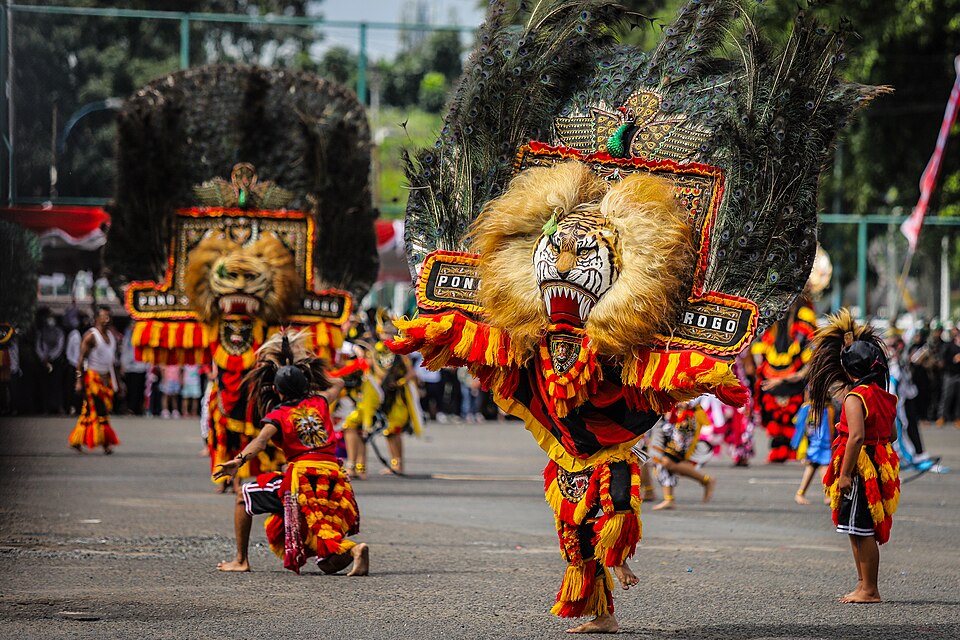
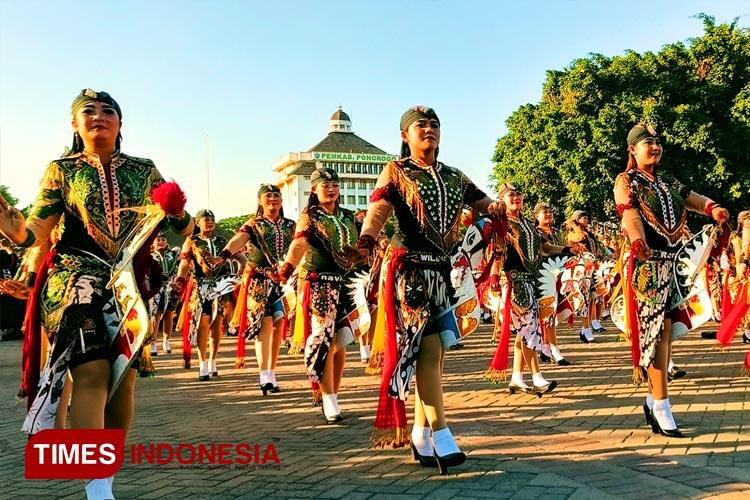
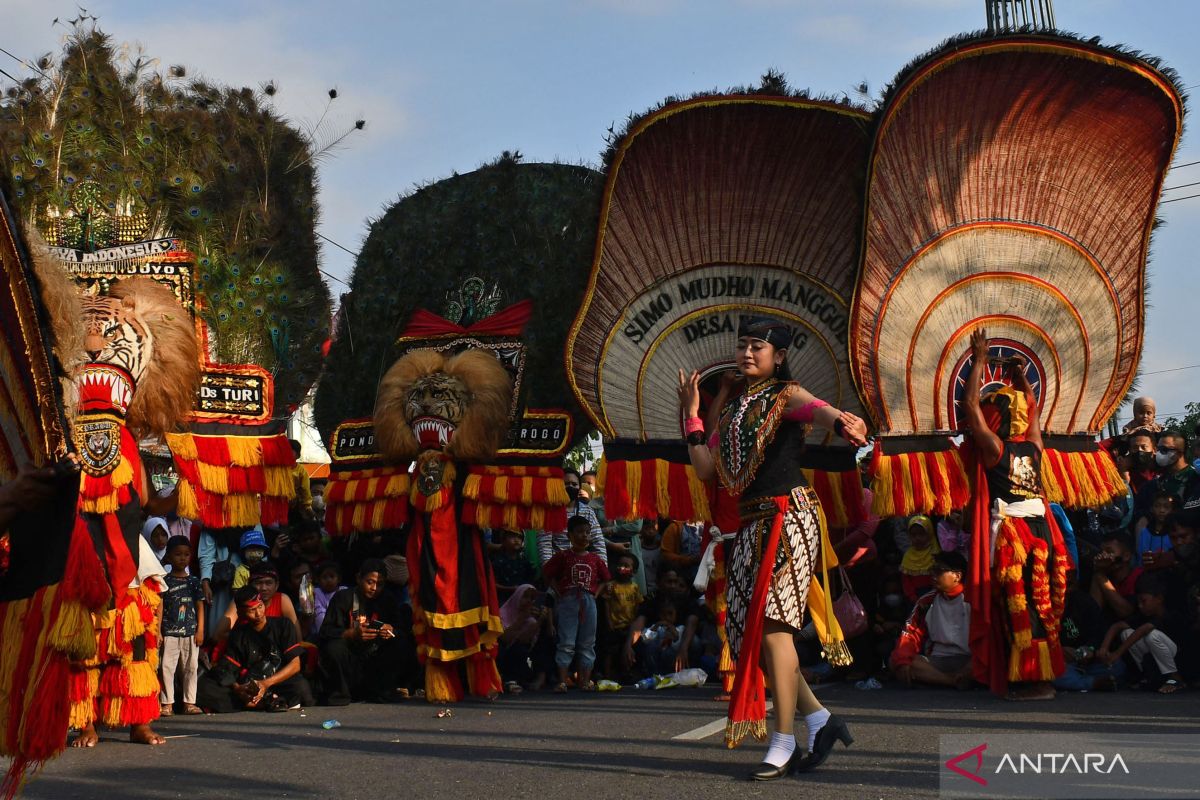
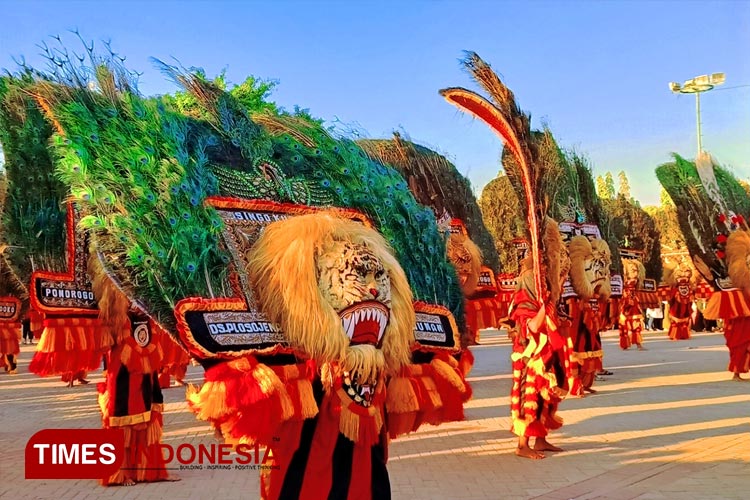
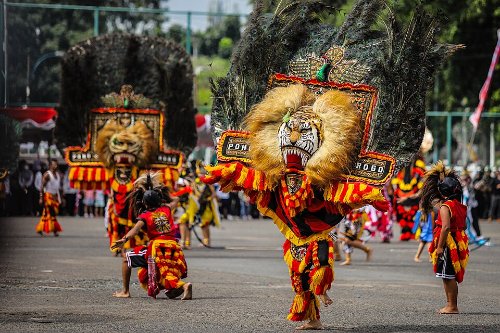
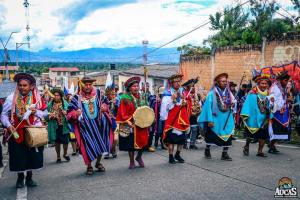
Reog Ponorogo is a traditional theatrical performance from Ponorogo, East Java, in which dance, music, elaborate costumes and storytelling bring local legends into public life. Its most recognizable feature is the Dadak Merak, a monumental mask depicting a tiger-like head crowned with a fan of peacock feathers. Performers also portray kings, commanders, knights and horse-mounted warriors, drawing audiences into the legendary world of the Bantarangin Kingdom.
Reog is performed on many occasions, including weddings, village-cleansing events, thanksgiving ceremonies, public festivities, national and Islamic holidays, and celebrations welcoming guests. It is more than a staged spectacle: the performances bring people together, express local pride and pass cultural values between generations. Its continued presence depends on the combined knowledge of performers, musicians, costume and mask makers, and the communities that organize and support each performance.
10-15-2026
| Institutional and human capacities | Reog depends on an interconnected community of practitioners. Performers develop the strength, coordination and expressive skills required for demanding movements and character roles, while musicians maintain the rhythms that guide the performance. Masters and experienced practitioners hold knowledge of choreography, musical arrangements, character portrayal and the conventions that distinguish Reog from other theatrical traditions. Craftsmanship is equally important. Making and maintaining the Dadak Merak, costumes and musical instruments requires specialized skills and access to suitable materials. UNESCO has identified the declining availability of Reog masters, reduced interest in associated crafts and difficulties obtaining peacock feathers as threats to the tradition. Safeguarding therefore requires support not only for performers, but also for the craftspeople and material knowledge on which the performance depends. | |
| Transmission and education | Reog knowledge is transmitted through family relationships, community groups, informal practice and organized instruction. Younger practitioners learn by observing experienced performers, rehearsing movements, participating in musical ensembles and gradually taking on more demanding roles. Local sanggar, or arts studios and training groups, provide important spaces for this practical learning. Formal education also contributes to transmission. Indonesia's safeguarding efforts include incorporating Reog into school activities and curricula, including extracurricular education at elementary and junior-high-school levels. Ponorogo Regency Regulation No. 35 of 2024 provides a framework for Reog extracurricular education in these schools. These efforts are especially important because UNESCO's assessment identified insufficient interest among younger generations as a major challenge to the continuity of the tradition. | |
| Inventorying and research | Reog Ponorogo is included in Indonesia's national Intangible Cultural Heritage Inventory (Warisan Budaya Takbenda Indonesia), maintained by the Directorate of Cultural Protection and the Directorate General of Culture. Its documentation is also available through UNESCO's 2024 nomination file, which includes the element's inventory record, community-consent documentation, photographs and performance film. The nomination process involved practitioners, cultural groups, civil society representatives and government institutions, with bearers participating in preparing and verifying the file. These records document Reog's performance contexts, cultural significance, transmission practices and the challenges threatening its continuity. The national inventory system draws on information collected from communities and records the current condition of each element, existing safeguarding measures and actions proposed by practitioners. For Reog Ponorogo, the UNESCO documentation highlights declining performance opportunities, difficulties finding new practitioners and masters, and threats to the crafts and materials required for performances. This documentation provides a baseline for monitoring the tradition's condition and assessing safeguarding progress. Indonesia's first periodic report on implementing the 2003 Convention was submitted in 2014; following Reog's inscription on the Urgent Safeguarding List in 2024, Indonesia's next element-specific report is due in 2027. | |
| Policies as well as legal and administrative measures | Reog Ponorogo was inscribed by UNESCO in 2024 on the List of Intangible Cultural Heritage in Need of Urgent Safeguarding. This recognition emphasizes the need for active measures to ensure that the tradition can continue to be practiced and transmitted. The inscription was supported by a safeguarding plan addressing the threats to performances, practitioner regeneration, craft knowledge and the availability of materials. At the local level, Ponorogo Regency has supported transmission through school-based extracurricular education and community training. Effective safeguarding also requires practical support for Reog groups, opportunities for masters to teach, assistance for instrument and costume makers, and regular occasions for performances. Recognition is most meaningful when it strengthens the conditions under which practitioners can continue their work within their own communities. | |
| Role of intangible cultural heritage and its safeguarding in society | Reog is an important expression of Ponorogo's cultural identity. Its performances create occasions for collective participation, bring different generations together and reinforce a shared attachment to the region. The demanding coordination between performers and musicians also makes cooperation visible: each role contributes to a larger performance that no individual can sustain alone. The tradition's social importance extends beyond formal festivals. Weddings, thanksgiving ceremonies, village events and guest receptions allow Reog to remain connected to ordinary community life. Safeguarding should therefore preserve the social settings in which the art has meaning, rather than concentrating exclusively on major public shows. Its vitality depends on communities continuing to find reasons and opportunities to perform it. | |
| Awareness raising | Public performances and cultural events introduce Reog to audiences who may not encounter it in everyday life. Demonstrations, school activities, exhibitions and media documentation can help explain the significance of the Dadak Merak, the characters, the music and the craftsmanship behind the spectacle. Such initiatives can also encourage appreciation for the extensive work required to prepare and maintain a Reog performance. Awareness raising must go hand in hand with opportunities to learn. Seeing Reog on a stage or screen cannot replace the experience of rehearsing with a group or learning from an experienced practitioner. Activities that connect public interest with local training groups, workshops and craft demonstrations can help turn admiration into sustained participation. | |
| Engagement of communities, groups and individuals as well as other stakeholders | The continuity of Reog depends on the people who perform, teach, make, organize and support it. Local arts groups and training studios provide spaces for collective practice, while families and community networks help younger people encounter the tradition. The involvement of craftspeople is equally vital because masks, costumes and instruments are not merely accessories; they are products of specialized knowledge that must also be transmitted. Community engagement also means recognizing that participation can take different forms. Not everyone needs to perform the most physically demanding roles: people can contribute through music, craftsmanship, organization, teaching, documentation and other supporting activities. Broadening opportunities for participation can strengthen the network of people who sustain Reog and create more pathways for younger generations to become involved. | |
| International engagement | UNESCO's 2024 inscription placed Reog Ponorogo within an international framework for safeguarding living heritage. Its placement on the Urgent Safeguarding List draws attention to the challenges faced by the tradition and to the responsibility of supporting its continued practice. The inscription also makes the community's knowledge and safeguarding needs more visible to international heritage audiences. International recognition should complement, not replace, local initiative. The long-term future of Reog depends on whether practitioners can continue to teach, perform and make the objects required for the tradition. Exchanges with other heritage communities, documentation projects and international cultural programming can support this work when they respect local priorities and direct attention toward the people who keep Reog alive. | |
| References |
|
|






.jpeg)



.png)



.jpeg)
.jpg)


.png)
.jpg)