
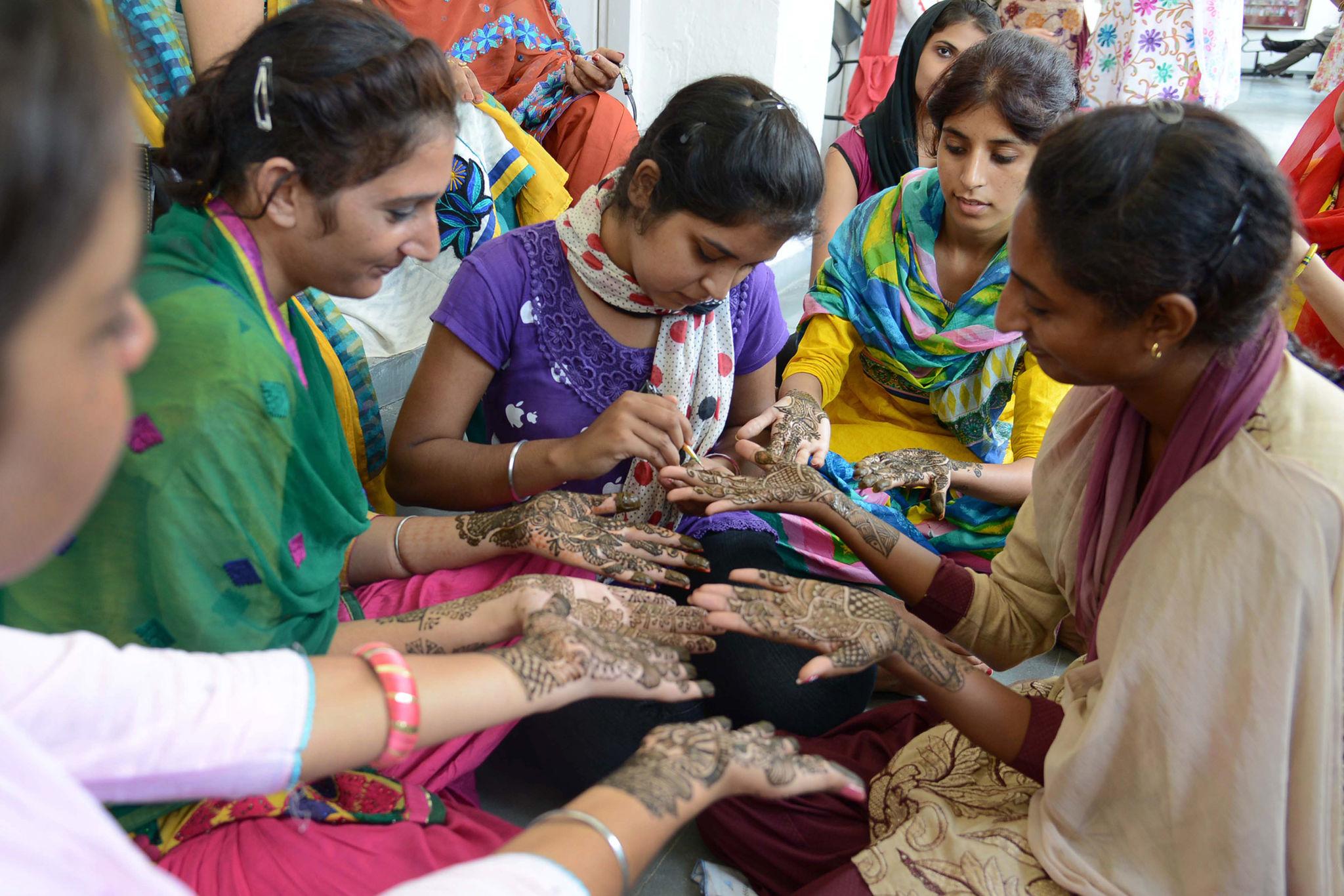
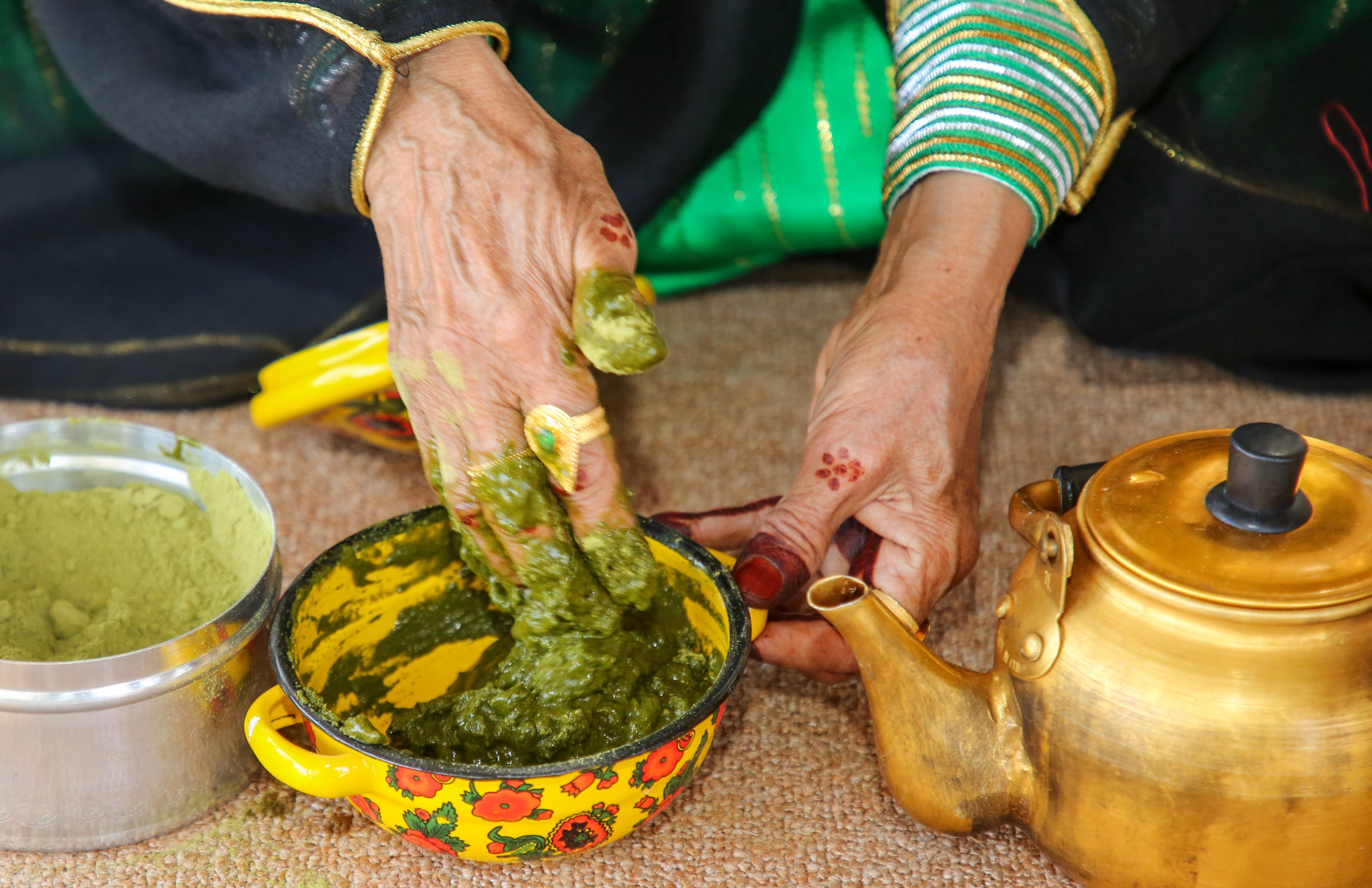
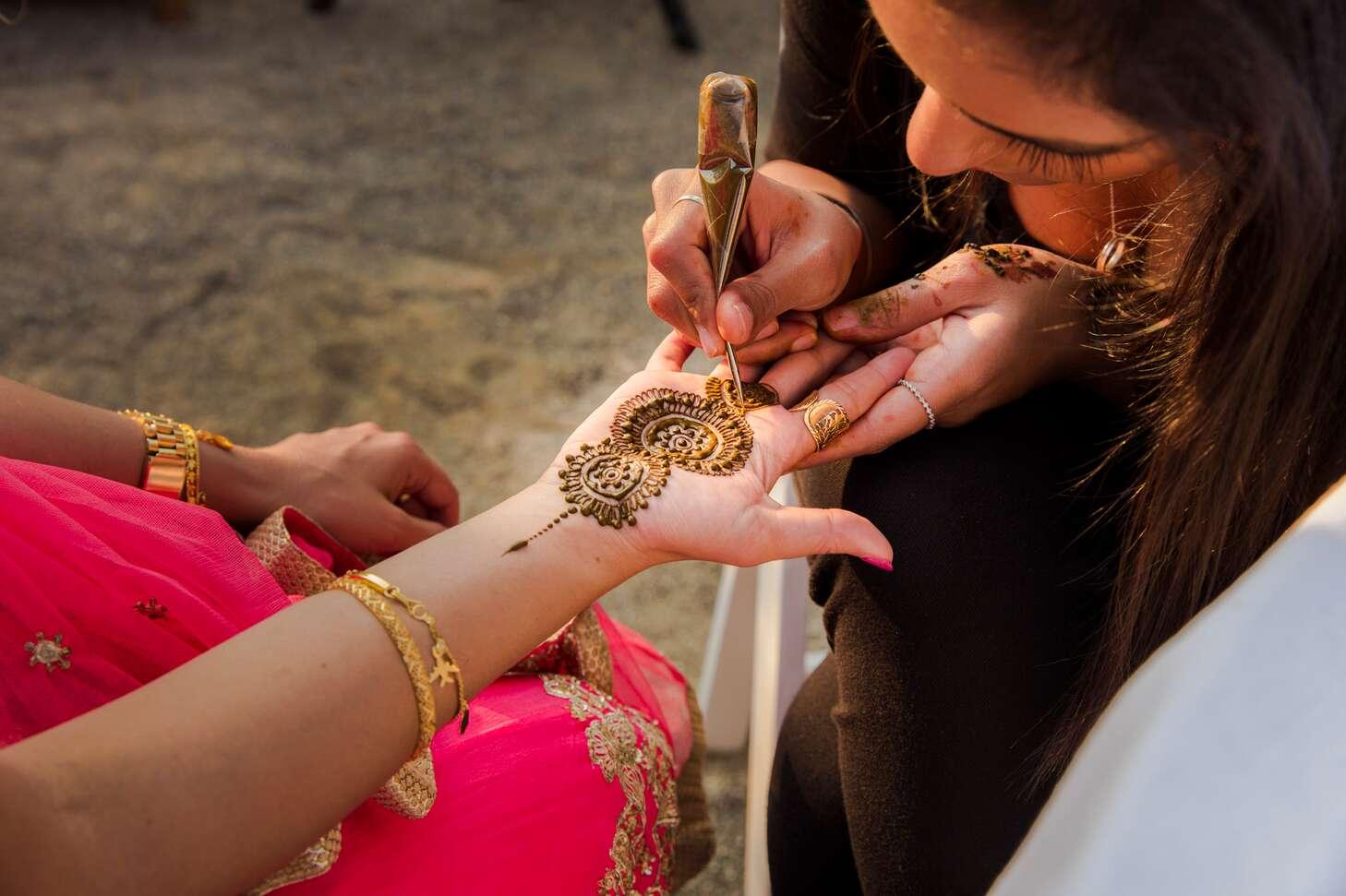
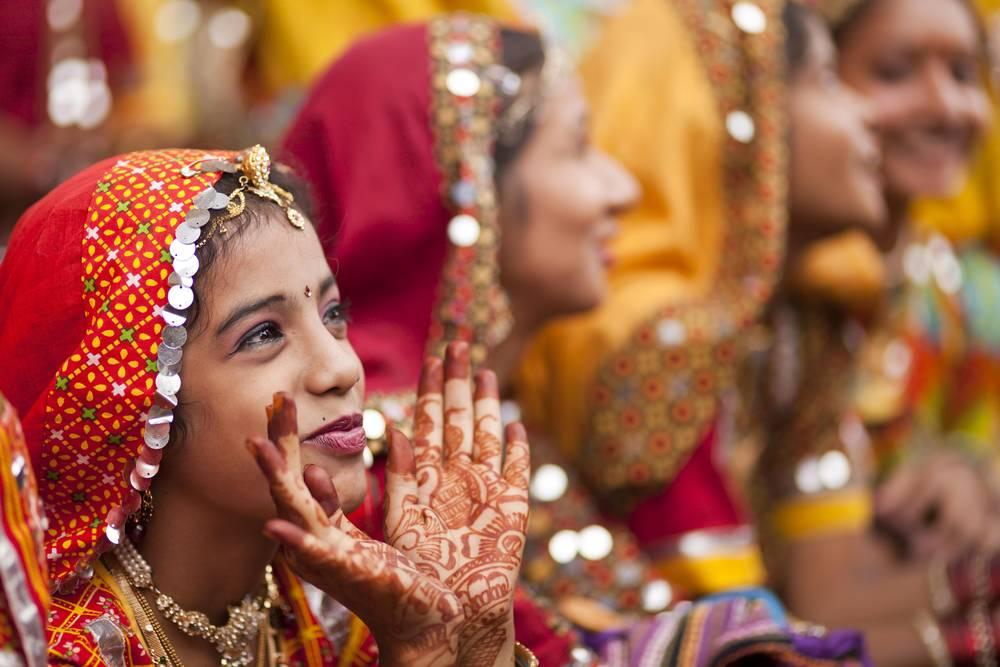
In India, henna, widely known as mehndi, is a living practice of preparing and applying natural henna paste to the hands, feet and other parts of the body. The practice combines botanical knowledge, preparation techniques and artistic application, with designs ranging from fine floral and geometric patterns to motifs associated with particular communities, ceremonies and occasions. Mehndi is especially prominent at weddings and other celebrations, where its application becomes part of the preparation for an important moment in life.
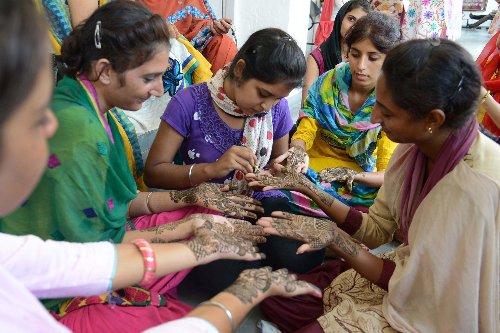
The practice is not limited to the finished design. It includes selecting and preparing henna leaves or powder, producing the paste, preparing the application cone and developing the ability to draw patterns directly onto the skin. The application itself can become a social gathering in which women, relatives, friends and professional mehndi artists interact, exchange songs and conversation, and participate in the preparation for a celebration. India's participation in the current UNESCO nomination recognizes these practices as part of a wider living heritage shared across countries and communities.
09-30-2026
| Institutional and human capacities | The principal bearers of Indian mehndi knowledge include experienced mehndi artists, women who maintain family traditions, wedding specialists, artisans, teachers and younger practitioners learning through direct participation. Their knowledge encompasses the preparation and consistency of the paste, cone handling, line control, composition, traditional motifs and the adaptation of designs to different occasions and clients. Contemporary transmission also involves cultural organizations, educational institutions, beauty centres and professional mehndi networks. India's documentation for the UNESCO nomination includes community organizations and an Indian ICH inventory, while Indian cultural organizations have contributed research, documentation and community support to the multinational nomination process. | |
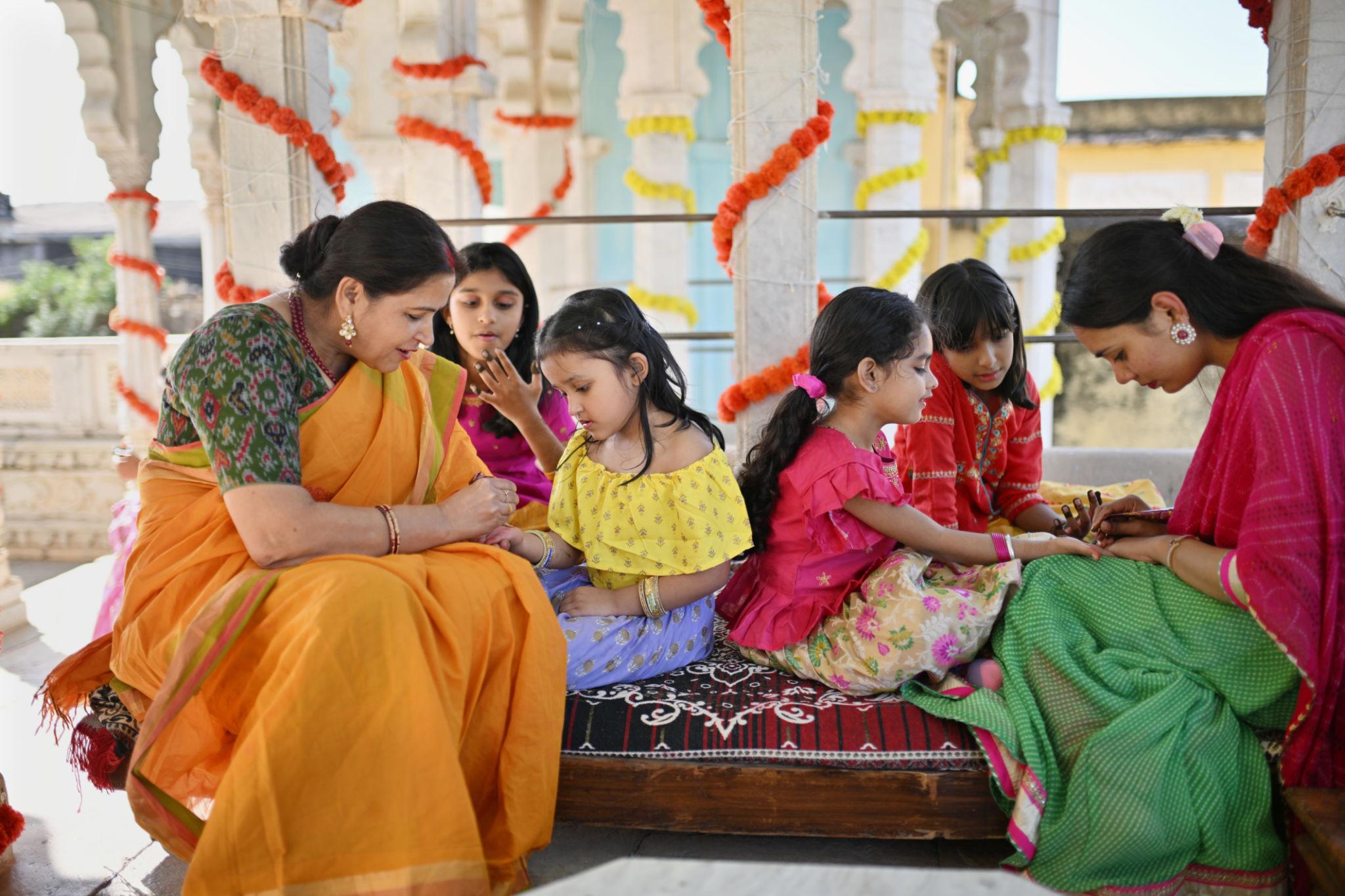
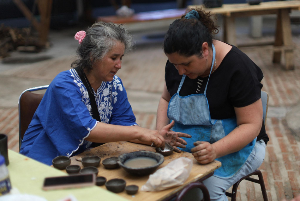
| Transmission and education | Traditionally, mehndi skills have been acquired through observation and repeated practice. Younger women and aspiring artists watch experienced practitioners prepare the paste, hold the cone and construct increasingly complex patterns. Family celebrations provide an important informal classroom because children and young women can encounter the practice directly while older relatives prepare brides and other participants. Today, transmission also occurs through workshops, professional training, beauty centres, cultural organizations and digital media. Contemporary artists can learn regional motifs while also developing new compositions and techniques. This combination of inherited knowledge and experimentation allows Indian mehndi to remain recognizable while responding to changing tastes, wedding styles and new generations of practitioners. The UNESCO nomination specifically identifies observation, imitation and hands-on practice, alongside formal learning through organizations, schools, beauty centres and media, as important pathways of transmission. | |
| Inventorying and research | Documentation of Indian henna has increasingly moved beyond recording decorative designs to considering the wider cultural practice: preparation of the paste, occasions of use, practitioners, community knowledge and transmission. India's contribution to the 2026 UNESCO nomination includes a dedicated ICH inventory and documentation of community organizations involved with the element. The multinational nomination also provides a framework for comparing Indian practices with those of other participating countries while maintaining space for regional diversity. India's contribution includes community consultation and newly documented community participation, helping ensure that the international description does not reduce henna to a single standardized style. The nomination process explicitly emphasizes the importance of presenting the diversity of practices found across participating countries. | |
| Policies as well as legal and administrative measures | Safeguarding Indian mehndi requires attention to the knowledge and relationships surrounding the practice rather than treating the designs simply as commercial beauty products. Documentation, community participation, training opportunities and support for practitioners can help maintain the skills of preparing, applying and interpreting henna. The wider UNESCO safeguarding framework also identifies an important contemporary concern: decontextualization and over-commercialization. As mehndi becomes increasingly available through commercial beauty services and global fashion, safeguarding measures need to ensure that traditional knowledge, community meanings and practitioners remain visible alongside contemporary innovation. UNESCO specifically encouraged participating States to monitor these risks following inscription. | |
| Role of intangible cultural heritage and its safeguarding in society | Mehndi is closely connected with moments when families and communities come together. Wedding ceremonies provide perhaps its most visible setting, but henna can also accompany festivals, births, religious occasions and other celebrations. The time spent preparing and applying the designs creates opportunities for conversation, advice, storytelling and shared anticipation. Its social importance therefore extends beyond bodily decoration. The application of mehndi can reinforce relationships between generations and between friends and relatives, while the knowledge of particular designs and application techniques gives experienced practitioners a valued role within the celebration. UNESCO's broader assessment of the element recognizes henna rituals as a means of social communication and as practices associated with important life events and social cohesion. | |
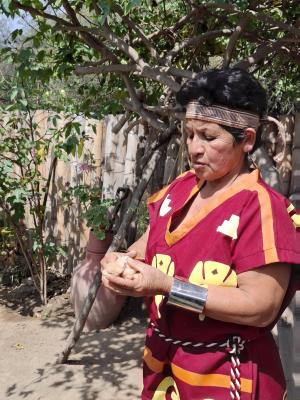
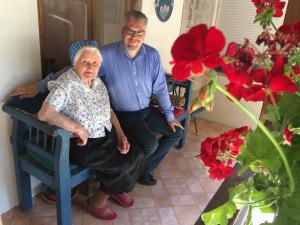
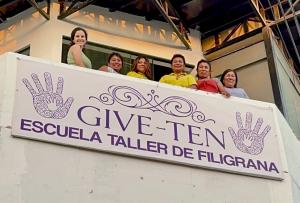
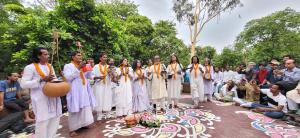
| Awareness raising | Contemporary Indian mehndi is highly visible in weddings, festivals, cultural events and public demonstrations. Professional artists increasingly present their techniques to wider audiences, while cultural organizations and educational institutions can use workshops and exhibitions to explain the preparation, symbolism and artistic knowledge behind the designs. India's participation in the UNESCO nomination itself has created an additional platform for presenting mehndi as living heritage rather than only as a contemporary beauty service. The 2025 UNESCO documentation includes Indian photographs showing institutional support for transmission and the changing boundaries of henna practice, illustrating how the tradition continues to adapt to contemporary contexts. | |
| Engagement of communities, groups and individuals as well as other stakeholders | Community participation is central to the continuity of Indian mehndi. Weddings and other celebrations create spaces in which practitioners, family members, friends and clients interact directly. A mehndi artist may work for many hours while relatives gather around, discuss designs, share stories and help prepare the space and materials. The contemporary practice also includes professional artists and newly emerging practitioners who may operate beyond traditional family settings. Their participation demonstrates how the practice can expand without losing its social foundations. India's contribution to the UNESCO process included community organizations and newly joining communities, reflecting the continuing effort to broaden participation in documenting and safeguarding the practice. | |
| International engagement | Indian mehndi forms part of a much wider cultural tradition extending across South Asia, North Africa, the Middle East and other regions. The 2026 UNESCO nomination brings India together with numerous countries to document common knowledge while recognizing differences in techniques, meanings, occasions and designs. This multinational approach highlights henna as a shared heritage without requiring its diverse regional expressions to become identical. For India, international engagement provides an opportunity to present mehndi through the knowledge of its practitioners rather than through fashion imagery alone. The Indian contribution to the nomination includes community consultation, inventory documentation and photographic and filmed material. Continued exchange between practitioners and cultural organizations can support research, documentation and transmission while allowing Indian artists and communities to maintain their own evolving forms of the tradition. | |
| References |
|
|









.jpeg)


.png)







.jpeg)
.jpg)


.png)
.jpg)


_(31711258567).jpg)