
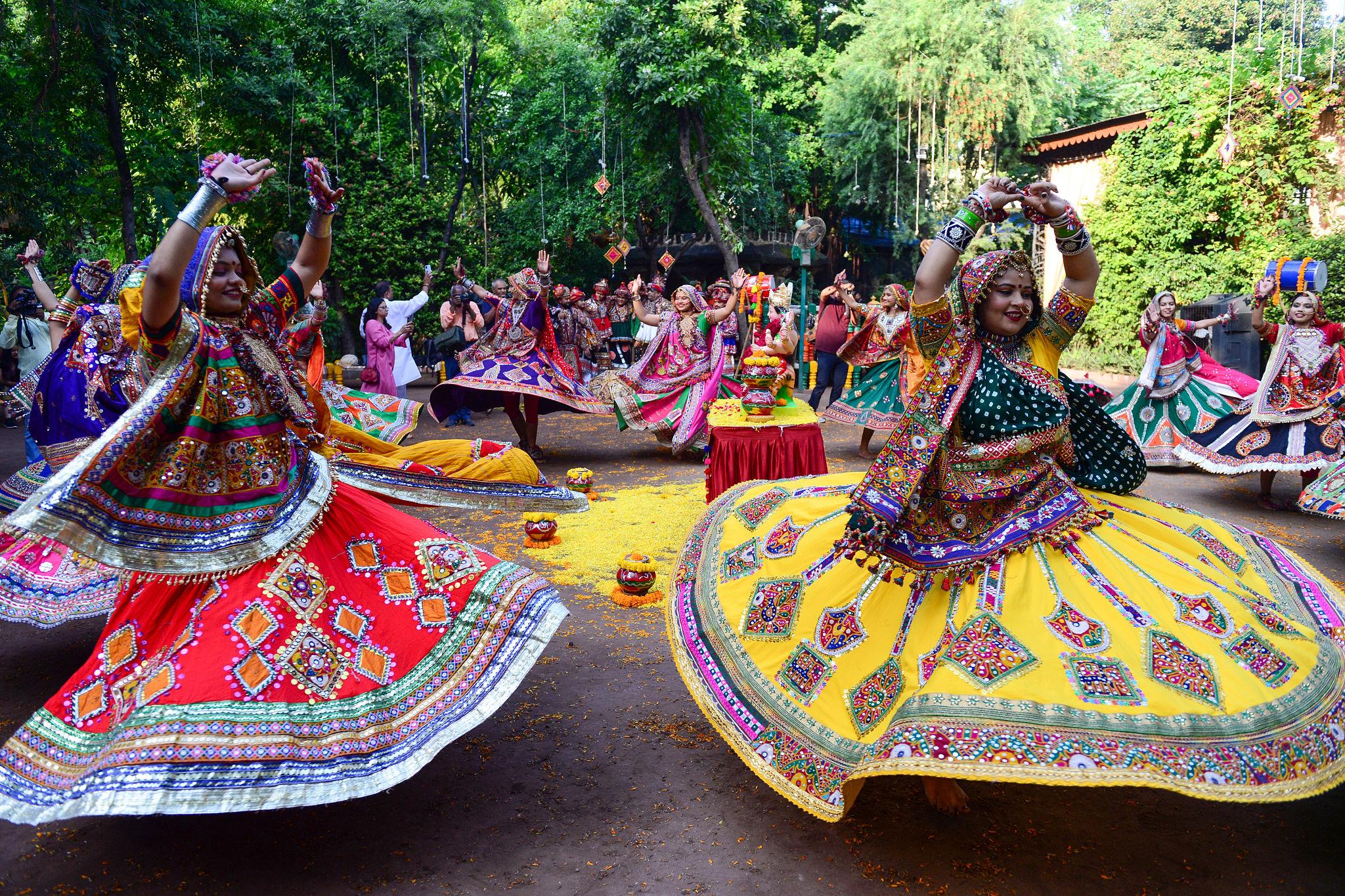
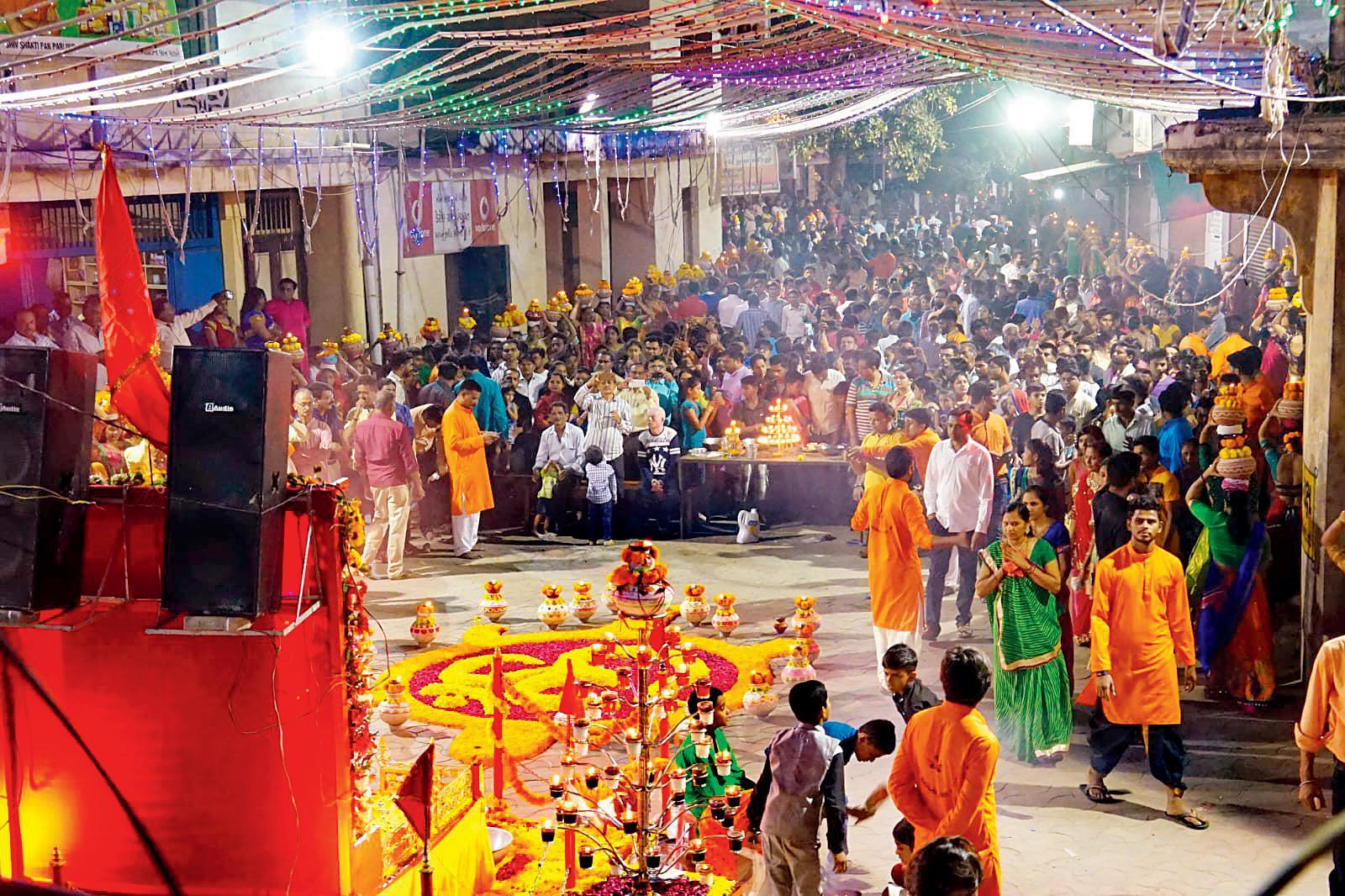
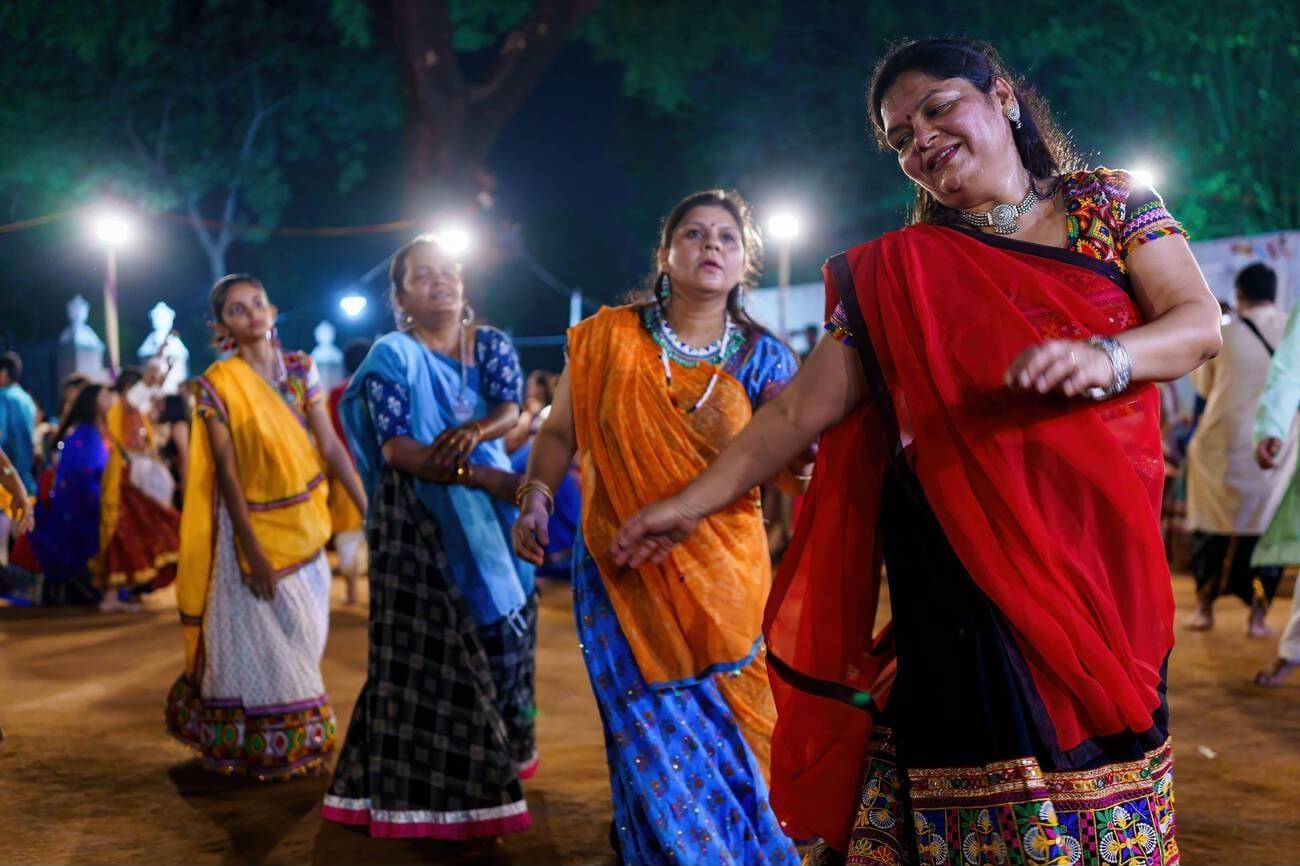
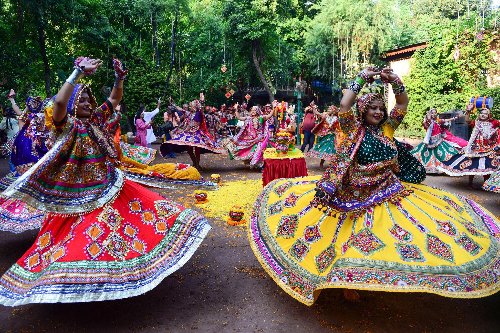
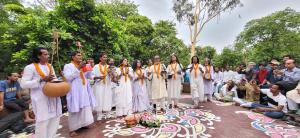
Garba is a devotional and participatory dance tradition practiced throughout Gujarat, particularly during Navaratri, the nine-night festival associated with the worship of feminine divine energy, or Shakti. At the centre of the traditional dance space is a perforated earthen pot containing an oil lamp, known as a garbha-deep, or an image of the goddess Amba. Dancers form one or more circles around this centre, moving counter-clockwise while singing and clapping together. The dance begins with measured circular movements and gradually develops into faster, more energetic patterns of movement and whirling.
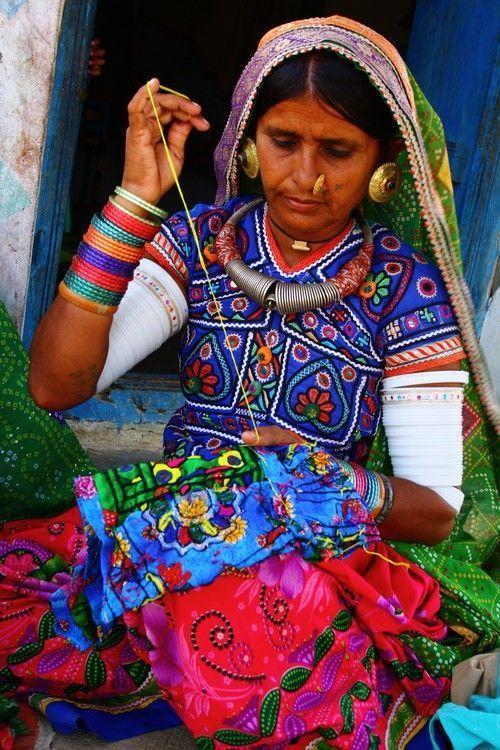
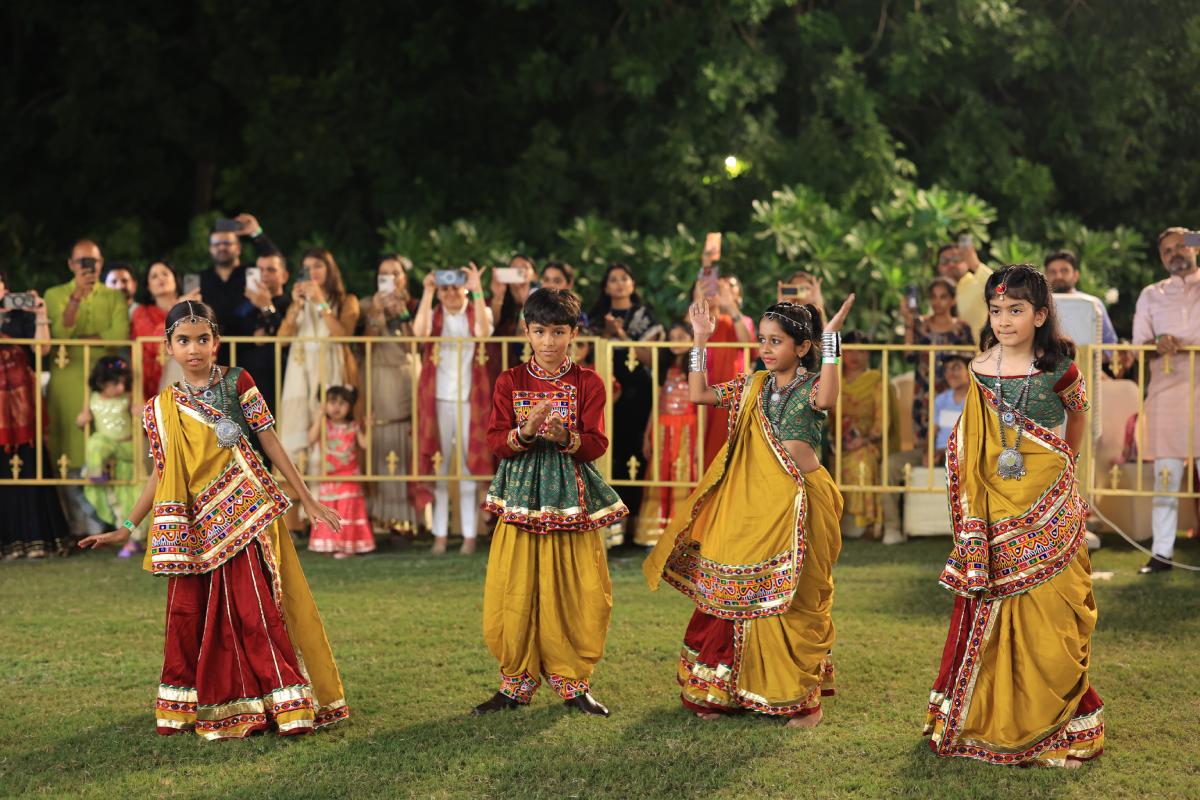
Garba is much broader than the movement performed in the circle. The tradition brings together dancers, singers, instrumentalists, religious figures, costume and ornament makers, potters, organizers and audiences. Traditional neighbourhood Garbas continue alongside large contemporary gatherings in cities and towns, allowing the practice to move between intimate community spaces and major public celebrations. The shared rhythm of the circle creates a temporary social space in which people of different ages and backgrounds participate together.
09-28-2026
| Institutional and human capacities | The knowledge of Garba is carried by a broad network rather than by a single group of specialists. Dancers and singers maintain the movement and musical repertoire, while musicians, choreographers, costume makers, embroiderers, potters, religious practitioners and event organizers contribute other essential forms of knowledge. The National Ministry of Culture works alongside institutions such as the Sangeet Natak Akademi and educational institutions involved in research, training and documentation. The Maharaja Sayajirao University of Baroda played an important role in documenting the tradition for the UNESCO nomination, working with practitioners and other community representatives. The nomination process itself identified artists, scholars, dancers, singers, instrumentalists, organizers, students and craftspeople as bearers of the heritage. This broad definition reflects the reality of Garba: the dance depends upon an entire cultural environment rather than only upon the people inside the circle. | |
| Transmission and education | Garba is primarily learned through participation, observation and imitation. Children encounter the dance within families and neighbourhood celebrations, gradually learning songs, rhythms and movements by watching older participants and joining the circle themselves. This informal transmission remains important in both rural and urban Gujarat, where the tradition is practiced across generations. Formal education increasingly complements this community-based learning. Schools, universities, cultural organizations and dance institutions offer workshops and courses connected with Garba, including dance, music, costume and ornament design, as well as technical areas such as sound, lighting and event organization. This combination of everyday participation and organized instruction allows Garba to adapt while retaining its recognizable communal structure. | |
| Inventorying and research | Garba was incorporated into India's National Inventory of Intangible Cultural Heritage in 2022. The inventory work was led by the Sangeet Natak Akademi with assistance from the Performing Arts Faculty of the Maharaja Sayajirao University of Baroda. Information was gathered from practicing communities, groups and individuals, documenting not only the dance but also its associated music, clothing, crafts, performance spaces and practitioners. The UNESCO nomination further expanded this documentation through consultations across Gujarat. A broad consultative meeting brought together community stakeholders of different genders and from different parts of the state, while letters of consent were collected from performers, musicians, scholars, NGOs, government representatives and other organizations. The national inventory is updated annually, providing a mechanism for continuing to record changes in the living practice. | |
| Policies as well as legal and administrative measures | The safeguarding of Garba is supported through India's national ICH framework and through cultural institutions working in Gujarat. Its inscription on the UNESCO Representative List in 2023 strengthened the visibility of the tradition while recognizing the communities and practitioners who maintain it. The nomination identified research, documentation, education and promotion as important components of future safeguarding. Planned measures include mapping and recording community performances, creating an inventory of practitioners, developing digital archives, incorporating Garba into educational curricula, identifying and training new artists, supporting research and establishing a coordinated body dedicated to safeguarding the practice. These measures are intended to strengthen transmission without separating Garba from the communities in which it remains a living practice. | |
| Role of intangible cultural heritage and its safeguarding in society | The social strength of Garba comes from its participatory character. The circle places dancers within a shared rhythm rather than separating performers from spectators, allowing people to experience the tradition collectively. UNESCO's documentation emphasizes Garba's ability to bring together people across socio-economic, gender and religious differences and to strengthen social bonds. The tradition also creates connections between different forms of cultural work. The central lamp or goddess image gives the dance its devotional focus, while songs, musical instruments, costumes, jewellery, decorated spaces and choreography contribute to the wider experience. Garba therefore functions as a cultural ecosystem in which religious expression, artistic creativity and community interaction reinforce one another. | |
| Awareness raising | During Navaratri, Garba becomes highly visible throughout Gujarat. Villages, neighbourhoods, schools, community grounds and urban venues become spaces for collective dancing, while large public events have developed alongside more traditional neighbourhood celebrations. Vadodara and Ahmedabad are particularly prominent centres of contemporary Garba activity, but the practice remains widespread across the state. Public performances and contemporary media have also expanded the reach of Garba beyond its traditional settings. Government cultural institutions, artists, choreographers and community organizations contribute to performances, educational programmes and promotional activities. The UNESCO nomination itself identified showcasing Garba internationally and supporting national and international promotional activities as part of its safeguarding strategy. | |
| Engagement of communities, groups and individuals as well as other stakeholders | Garba is sustained by participation at many levels. A single celebration can involve dancers, singers, musicians, costume makers, potters, religious figures, organizers, families, students and spectators. The communities that organize local Garbas determine how the dance space is prepared, how the music is performed and how participants are welcomed, allowing different local styles and social contexts to coexist within the broader tradition. The inclusiveness of participation has also been important in the contemporary development of Garba. UNESCO's nomination consultations involved stakeholders from different regions and backgrounds, and community consent was gathered from a wide range of practitioners and organizations. This broad participation reinforces the understanding of Garba as a shared cultural practice rather than the property of a particular professional performing group. | |
| International engagement | The inscription of Garba on the UNESCO Representative List in 2023 brought international recognition to a tradition that remains deeply rooted in Gujarat. Its international presentation emphasizes the relationship between devotional practice, collective dance, music, craftsmanship and community participation, while allowing the tradition to be understood as part of the wider diversity of living heritage. International visibility is accompanied by an important safeguarding responsibility: Garba must continue to be maintained as a participatory community practice rather than becoming only a staged cultural performance. Research, digital documentation, educational transmission, artist training and international promotion can support its visibility while keeping the local communities, practitioners and cultural spaces at the centre of its continuity. | |
| References |
|
|




.jpeg)


.png)


.jpeg)
.jpg)
.png)
.jpg)


_(31711258567).jpg)