
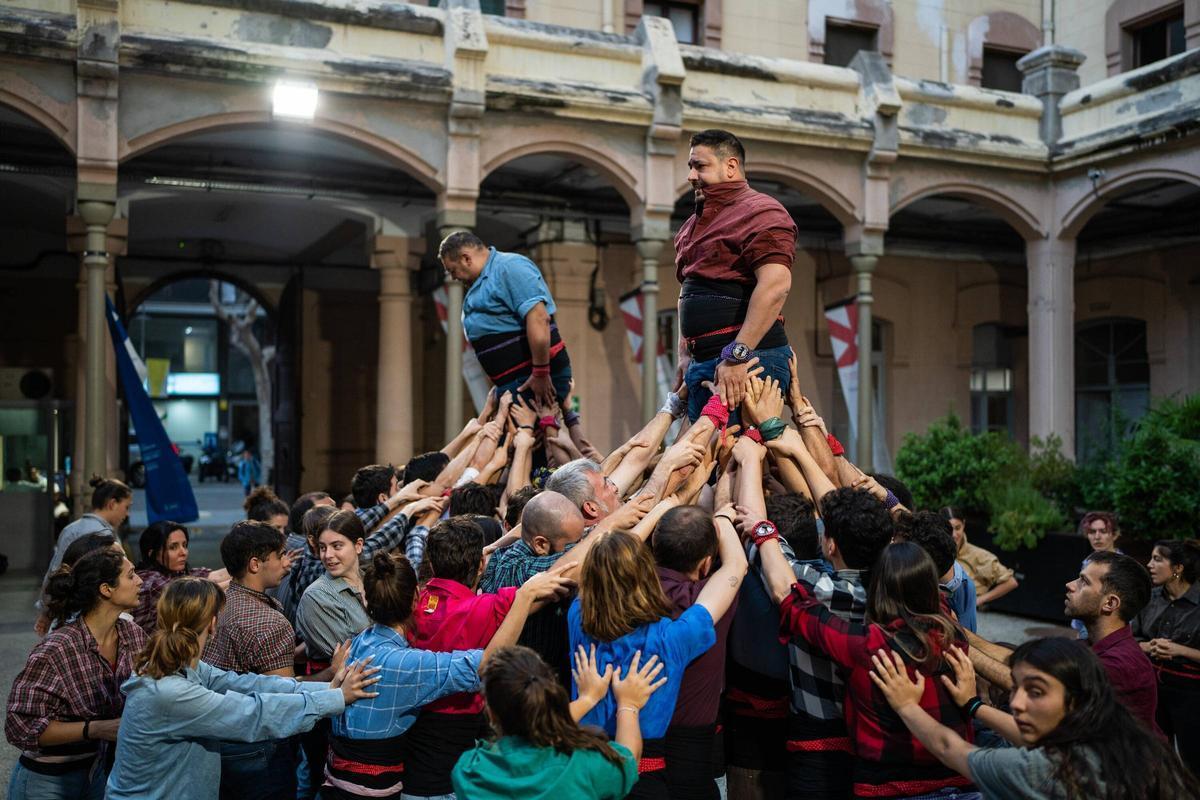
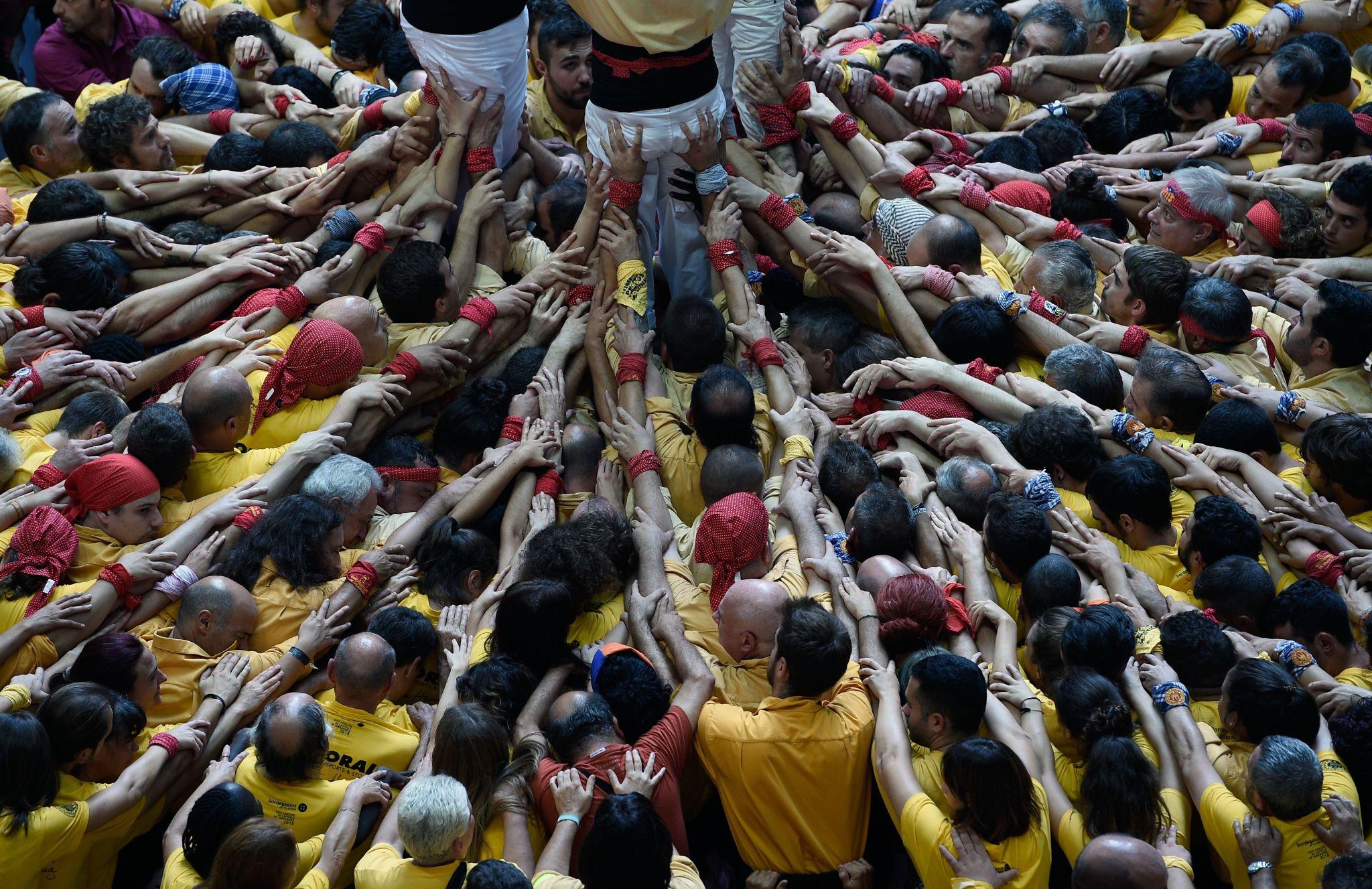
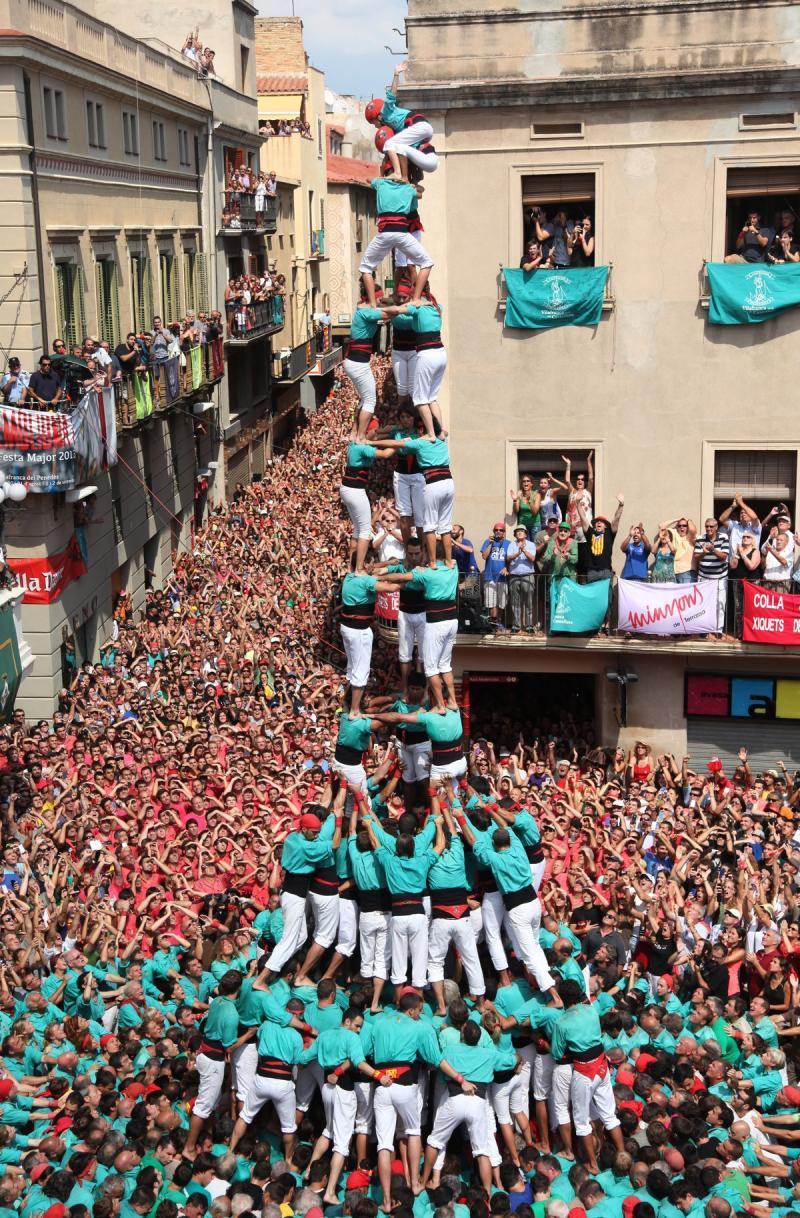
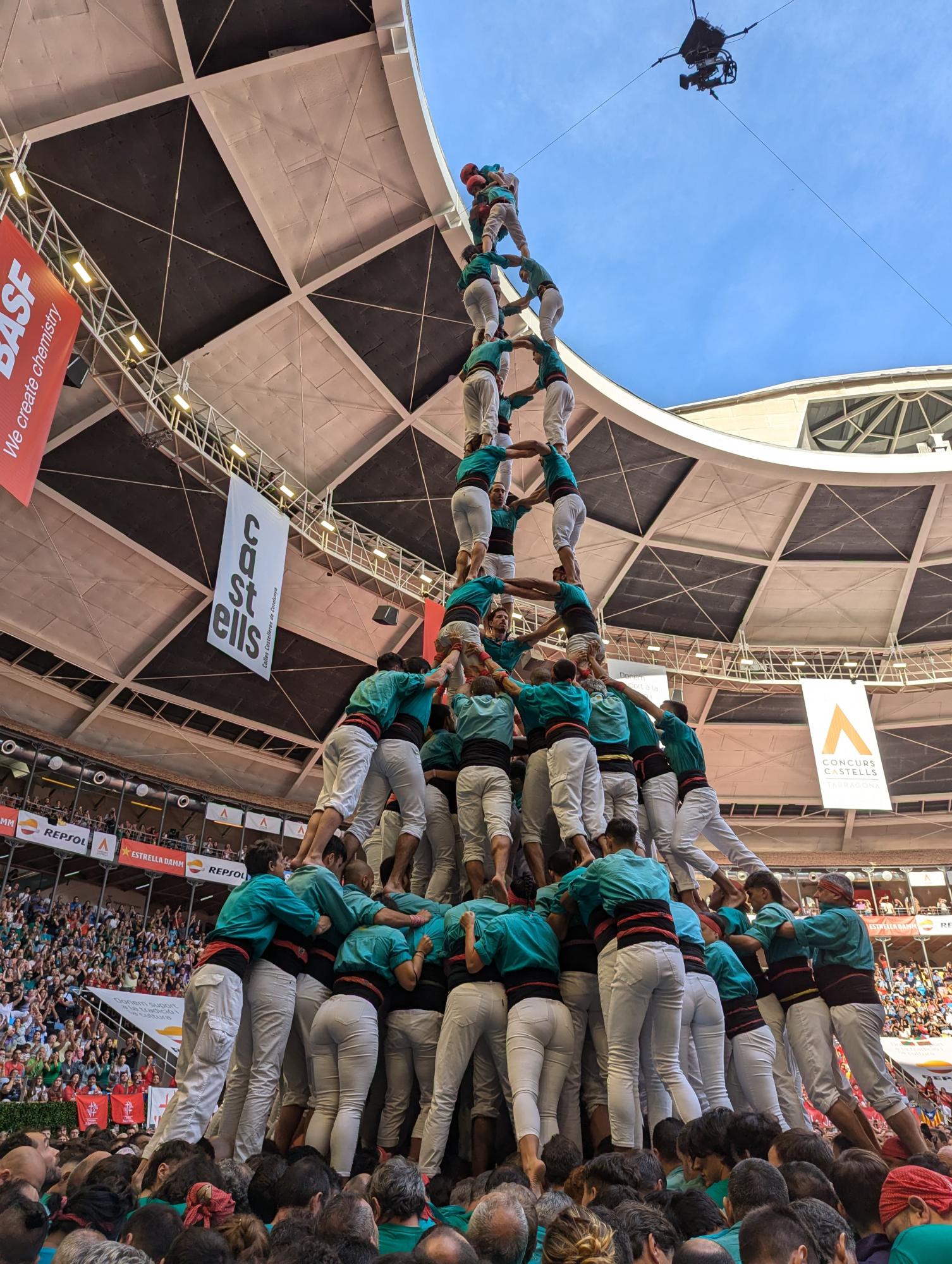
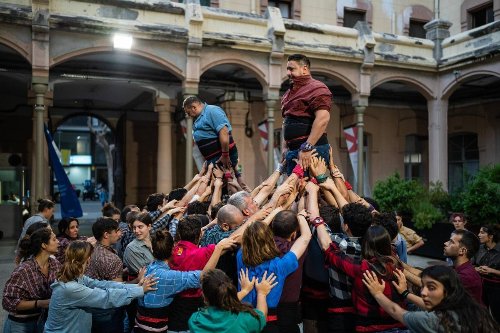
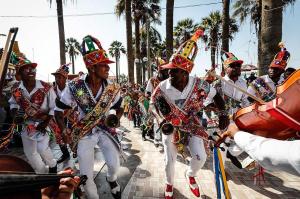
Castells are human towers constructed by members of amateur colles castelleres, especially during annual festivities in towns and cities across Catalonia. Participants climb onto one another in carefully coordinated levels, while the pinya, a dense circle of supporters at ground level, provides the foundation. The upper levels, known as the pom de dalt, are formed by younger children, whose lightness allows the tower to reach its highest point. The enxaneta, traditionally a child, crowns the structure and signals its completion. Traditional clothing, including the faixa sash, white trousers and each colla's distinctive shirt, forms part of the practice.
Music is inseparable from the performance. Players of the gralla, a traditional Catalan wind instrument, accompany the construction and provide an audible rhythm for the changing stages of the tower. The practice developed from eighteenth-century festive traditions in the Tarragona area and became an independent cultural expression during the nineteenth century. After declining during the early twentieth century, castells experienced a major revival from the 1960s onward and particularly from the 1990s.
09-21-2026
| Institutional and human capacities | The principal human infrastructure of castells is the colla: a community-based group that brings together people of different ages, physical abilities and levels of experience. Within each group, responsibilities extend beyond the climbers themselves to include technical teams, musicians, organizers, medical and safety personnel, trainers and the many people who form the pinya. The Coordinadora de Colles Castelleres de Catalunya (CCCC), established in 1989, provides support across groups in areas such as safety, communication, social values, management, musical training and transmission. Catalonia's institutional framework also connects the tradition with the Department of Culture and its heritage structures. The CCCC works collectively on issues that individual groups cannot address alone, while individual colles remain the principal spaces where practical knowledge is maintained. This combination of community groups and coordinating institutions has allowed the practice to expand while retaining its amateur and participatory character. | |
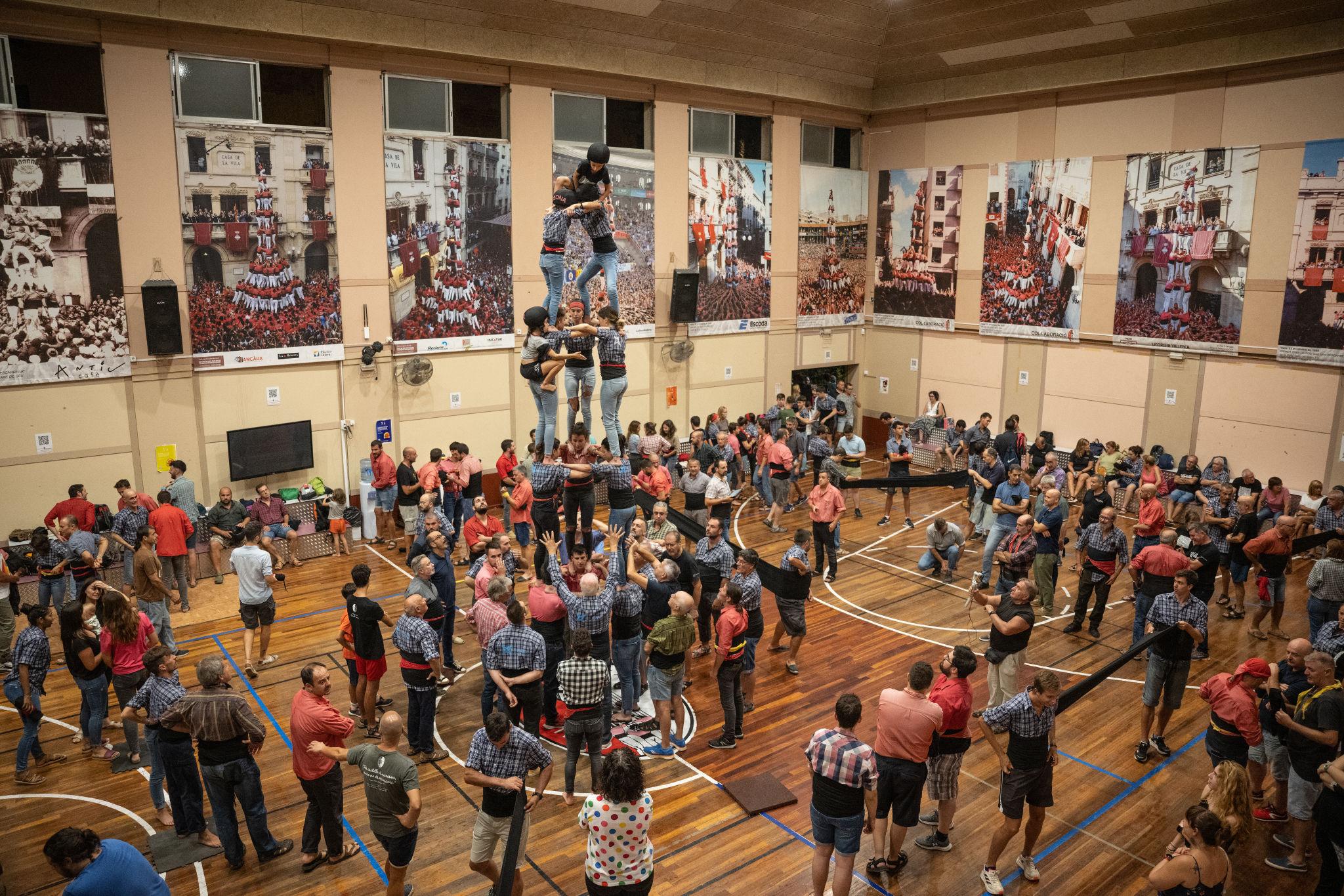
| Transmission and education | Knowledge of castells is learned primarily through participation. New members observe experienced castellers, practice movements repeatedly and gradually learn how to occupy different positions within a tower. Rehearsals allow participants to develop balance, coordination, physical awareness and the ability to respond to the movements of others. Children and young people learn alongside older members, making the colla itself an important intergenerational educational environment. UNESCO specifically identifies practical learning within the group as the traditional means through which casteller knowledge is transmitted. Contemporary training has expanded this informal transmission with organized instruction in technical, musical, managerial and safety-related knowledge. Open rehearsals also function as entry points for newcomers. A 2026 cultural programme in Barcelona, for example, described rehearsals as spaces where people of different ages and levels of experience meet, train together and learn from more experienced members. | |
| Inventorying and research | Castells have been documented through Catalonia's heritage institutions, community organizations and specialized research. The practice is included in the Inventory of the Ethnological Heritage of Catalonia, which was one of the elements considered by UNESCO when the tradition was inscribed in 2010. Documentation is not limited to the completed towers: research also examines their organization, technical structures, music, community life, safety and the changing composition of the colles. The CCCC has developed a particularly active research culture around the practice, including studies concerning injury prevention, physical preparation, safety systems and the organization of the pinya. Its work brings together castellers, medical professionals, researchers and technical specialists. In 2026, its thirtieth injury-prevention conference brought together representatives of 52 colles, demonstrating how research is continually fed back into everyday practice | |
| Policies as well as legal and administrative measures | Castells are included in Catalonia's heritage framework and were inscribed by UNESCO on the Representative List of the Intangible Cultural Heritage of Humanity in 2010. The nomination was prepared through cooperation between the Catalan Department of Culture, the Coordinadora de Colles Castelleres de Catalunya, the magazine Castells and numerous municipalities. UNESCO noted that the nomination had received the free, prior and informed consent of tradition bearers. Safeguarding has also developed around the practical conditions necessary for the tradition to continue. The CCCC coordinates collective work on injury prevention, insurance, protective equipment, training and good-practice guidance. More recently, its programmes have addressed children's safety, inclusion, gender equality, harassment prevention and youth empowerment, demonstrating that safeguarding is treated as an evolving responsibility rather than simply the preservation of an old performance. | |
| Role of intangible cultural heritage and its safeguarding in society | The meaning of a castell lies not only in the tower that becomes visible above the crowd but in the relationships required to construct it. A successful tower depends on people trusting one another, understanding their roles and remaining attentive to the movements of those around them. UNESCO identified continuity, social cohesion and solidarity as important dimensions of the practice, while Catalan heritage authorities describe teamwork, effort and collective self-improvement as central values. The pinya provides perhaps the clearest expression of this social character. People who may never climb into the upper levels can nevertheless become essential to the tower by supporting those above them. The practice therefore creates a visible structure in which different physical capacities and responsibilities have value, making participation itself part of the heritage. | |
| Awareness raising | Castells remain highly visible within Catalan public life because performances are connected to local festivals, town celebrations and major cultural events. The traditional setting is often the main square in front of a town hall, transforming an ordinary civic space into a temporary gathering place for the colla, musicians, families and spectators. The CCCC maintains an extensive performance agenda and provides introductory information about castells in Catalan, Spanish, English and French. Public awareness also grows through photography, broadcasting, educational activities and open rehearsals. The fifteenth anniversary of UNESCO recognition in 2025 was marked through the Som Patrimoni. Som castells campaign, with activities organized throughout the year. Such initiatives present castells not simply as impressive towers, but as an active cultural practice maintained by contemporary communities. | |
| Engagement of communities, groups and individuals as well as other stakeholders | Community participation is fundamental because a castell cannot be completed by the people who climb it alone. The pinya may include large numbers of supporters, while the wider colla contributes through organization, rehearsal, music, logistics, hospitality and technical preparation. Newcomers can enter the tradition through local groups, and established members progressively learn more demanding responsibilities. This creates a community in which participation does not depend exclusively on reaching the upper levels of a tower. The contemporary casteller community is also increasingly diverse. Catalan heritage authorities identify the creation of young and multicultural colles as one of the factors contributing to the revival of the tradition since the 1990s. The CCCC has additionally developed initiatives such as “Tots som una colla”, designed to support the participation and integration of newcomers into casteller groups. | |
| International engagement | UNESCO recognition in 2010 placed castells within the international framework of intangible cultural heritage and brought wider attention to a practice that remains rooted in Catalan communities. The nomination itself was based on cooperation between community organizations, public authorities and municipalities, demonstrating that international recognition emerged from an already active local safeguarding network. International engagement also takes place through the circulation of information and performances beyond Catalonia. The CCCC maintains multilingual public resources and supports a network that now includes groups beyond Catalonia, while continuing to present the Catalan colla as the fundamental social unit of the tradition. The international dimension therefore complements rather than replaces the local community context in which castells continue to be practiced. | |
| References |
|
|





.jpeg)


.png)
.jpeg)
.jpg)
.png)
.jpg)


_(31711258567).jpg)