
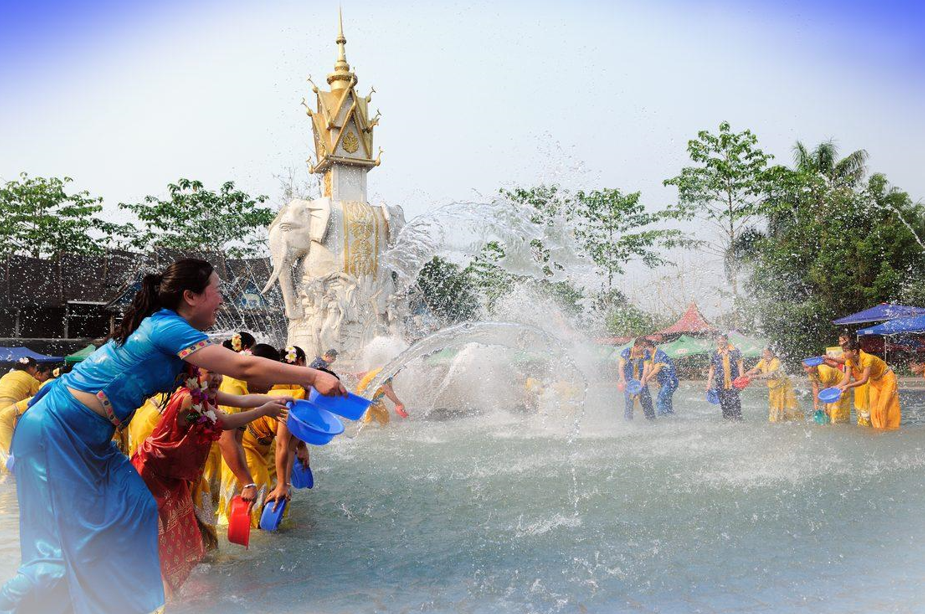
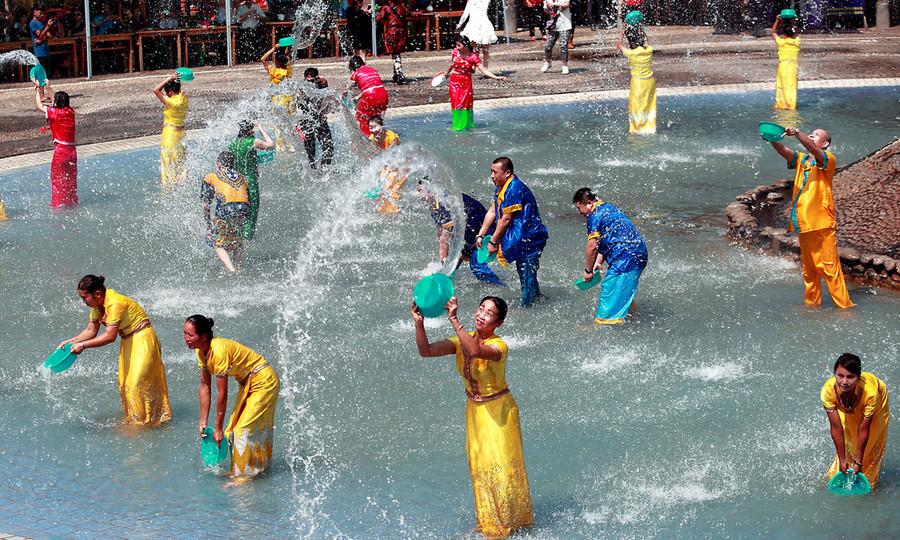
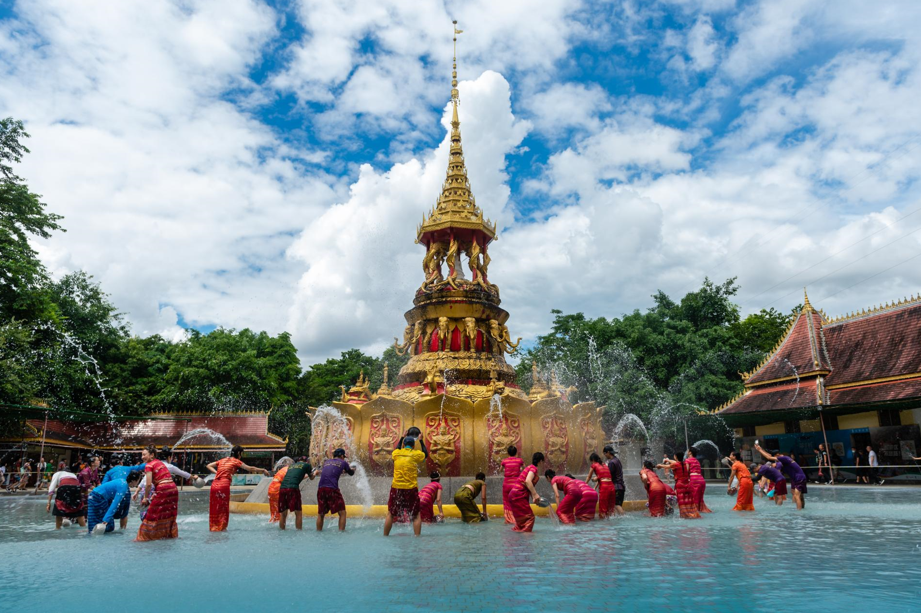
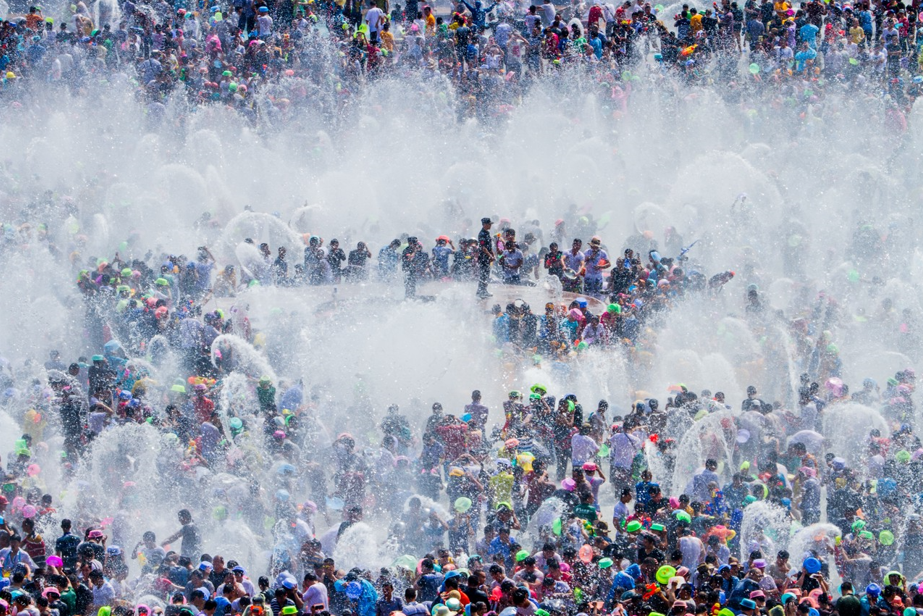
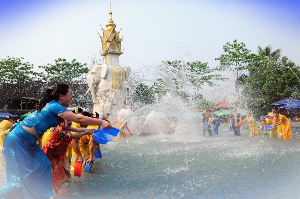
Each spring, the Dai New Year transforms Xishuangbanna into a period of renewal, gathering and collective celebration. Known internationally as the Water-Splashing Festival, the celebration is rooted in the Dai understanding of the transition from one year to another. Water carries wishes for purification, happiness and good fortune, and the act of splashing another person is traditionally understood as offering a blessing for the year ahead. The festival is therefore much more than the public spectacle for which it has become famous: it marks the beginning of a new annual cycle through a combination of ritual, social relationships and collective celebration.
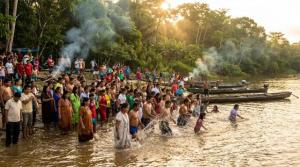
The relationship with water begins with practices that carry a more intimate and ceremonial meaning. Festival activities include the collection of water, the bathing of Buddha images and the use of water to express respect and blessings. One traditional form of blessing involves elders gently sprinkling younger people with water, while the more energetic collective splashing that follows extends the same symbolic language of good wishes into a wider communal celebration. In Xishuangbanna, these different forms exist along a spectrum, connecting religious observance, family relationships and public festivity.
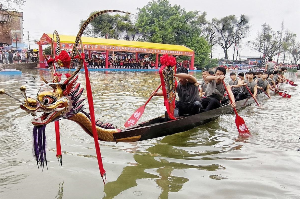
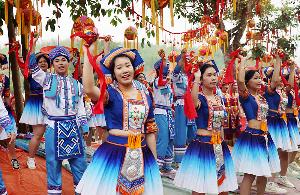
The Dai Water-Splashing Festival also creates a cultural space in which music, dance, traditional clothing and other forms of folk expression become part of the New Year celebration. Peacock dances, elephant-foot drum performances, folk songs and community gatherings contribute to the atmosphere surrounding the festival. At night, activities along the Lancang River may include the release of Kongming lanterns and water lanterns, extending the celebration from streets and temples into the wider river landscape.
Together, these practices make the festival a living expression of Dai cultural life in Xishuangbanna. Its vitality lies not in the water alone, but in the shared understanding that the arrival of the New Year should be marked by cleansing the past, offering blessings to others and beginning a new cycle through collective participation.
09-04-2026
| Institutional and human capacities | The continuation of the Water-Splashing Festival depends on a wide network of people whose knowledge and participation give meaning to the celebration. Families prepare for the New Year, community members organize local activities, religious practitioners maintain ceremonial traditions, and musicians and dancers contribute forms of performance that have long been associated with Dai cultural life. Buddhist temples and religious communities are particularly important to the ceremonial dimension of the festival. The bathing of Buddha images and other religious observances preserve meanings that cannot be reduced to the public water-splashing activities. Through these practices, water remains connected with reverence, purification and the renewal of spiritual relationships. The festival is also supported through cultural and heritage institutions at the prefectural and local levels. Since the Dai Water-Splashing Festival is recognized as a State-level ICH item, its safeguarding takes place within China's wider heritage framework. Contemporary cultural authorities in Xishuangbanna also organize and coordinate festival activities involving traditional arts, folk customs and ICH practices. At the same time, the strongest human capacity remains within the communities themselves. The festival continues because people know how to welcome the New Year, prepare for the celebration, participate in its rituals and understand the social meaning of giving and receiving water as a blessing. | |
| Transmission and education | Knowledge of the Water-Splashing Festival is transmitted through participation in the Dai New Year itself. Younger generations encounter the festival first through family and community life: they observe preparations, learn the meaning of the celebration, participate in water blessings and gradually become familiar with the cultural practices that surround the New Year. This process is particularly important because the most visible part of the festival can easily overshadow its deeper meanings. Participation allows younger people to learn that water splashing is connected with wishes for happiness and good fortune, while ceremonial activities such as the bathing of Buddha images carry their own religious and cultural significance. Through repeated participation, the symbolic language of water becomes part of the community's cultural memory. Transmission also takes place through traditional performing arts. Dance, music and folk expression create opportunities for younger practitioners to learn from experienced performers and participate in cultural activities during the festival. Recent celebrations in Xishuangbanna have continued to include folk performances and ICH-related activities, bringing traditional knowledge into direct contact with new generations. The annual return of the festival itself is therefore one of its most important forms of transmission. Each New Year creates another occasion for cultural knowledge to move from observation into participation. | |
| Inventorying and research | The Dai Water-Splashing Festival has been documented through China's official intangible cultural heritage system since its inclusion on the first State-level representative list in 2006. This recognition identifies the festival as a significant cultural practice associated with Dai communities, including those of Xishuangbanna. Research into the festival has also examined the specific cultural context of Xishuangbanna. Academic studies have explored how Dai New Year celebrations combine religious practices, public processions, water splashing and changing forms of cultural identity. Such research is particularly valuable because it demonstrates that the festival is not culturally static: its meanings continue to develop through interactions between community traditions, public celebrations and contemporary society. Contemporary documentation increasingly records the festival through photography, video, media reporting and cultural programming. However, the continued inventorying of the festival should give particular attention to the knowledge behind visible events: the meanings attached to water, the role of religious practices, the preparation of the New Year and the experiences of the people who continue to celebrate it. Future research can therefore strengthen the inventory by documenting not only major public events, but also the smaller family, community and religious practices through which the cultural life of the festival is sustained. | |
| Policies as well as legal and administrative measures | The inclusion of the Dai Water-Splashing Festival on China's State-level representative list of intangible cultural heritage in 2006 provides an important framework for its recognition and safeguarding. This status acknowledges the festival as a living cultural practice rather than merely a seasonal tourist event. In Xishuangbanna, contemporary festival planning also involves the coordination of cultural authorities and public institutions. Recent official programs have combined traditional folk activities, ICH experiences, cultural performances and public celebrations while incorporating arrangements for transportation, public safety and the management of large numbers of participants and visitors. The main safeguarding challenge is to ensure that institutional support protects the cultural meaning of the festival as its public scale continues to grow. Measures should therefore support the communities, practitioners and cultural spaces that maintain the religious, social and symbolic dimensions of the Dai New Year. | |
| Role of intangible cultural heritage and its safeguarding in society | The Water-Splashing Festival plays an important role in renewing cultural relationships within Dai communities in Xishuangbanna. The New Year brings together practices that may normally take place in different spaces: religious observance, family interaction, artistic performance and community celebration. During the festival, these practices become part of a shared cultural experience. The safeguarding of the festival depends especially on preserving its relationship with renewal and blessing. If water splashing is separated from these meanings, the practice can easily be reduced to entertainment. Maintaining knowledge about the ceremonial use of water, the Dai New Year calendar and the religious traditions surrounding the festival helps preserve the cultural context that gives the celebration its significance. Safeguarding must also recognize that the festival is living heritage. Contemporary forms of celebration, including large public gatherings and cultural performances, are now part of its current reality. The objective is not to return the festival to an imagined past, but to ensure that its growth does not disconnect it from the communities and cultural knowledge that continue to sustain it. | |
| Awareness raising | The Water-Splashing Festival is one of the most visible cultural expressions of Xishuangbanna, providing a major opportunity to introduce Dai traditions to wider audiences. Public celebrations, cultural performances and ICH activities allow visitors to encounter aspects of the festival that extend beyond water splashing. Recent official programming has specifically emphasized traditional cultural activities alongside contemporary celebrations. These have included water-fetching ceremonies, folk performances, ICH experiences, lantern activities and other cultural events connected with the Dai New Year. Awareness raising should therefore help people understand why water is used during the festival. The idea that being splashed represents a blessing is central to interpreting the practice respectfully. Public education can also encourage visitors to recognize the differences between ceremonial practices, family blessings and large-scale celebratory activities. In 2025, the festival also received exceptionally extensive digital media attention, demonstrating its growing visibility far beyond Xishuangbanna. This creates significant opportunities for cultural awareness, but also increases the importance of communicating the community-based meanings behind the festival. | |
| Engagement of communities, groups and individuals as well as other stakeholders | Community participation is the foundation of the Water-Splashing Festival. The celebration does not depend on a single audience watching a performance; people actively participate by preparing for the New Year, joining ceremonies, exchanging blessings and taking part in the collective use of water. Different generations participate in different ways. Elders may offer gentle blessings with water, families gather for the New Year, religious communities maintain ceremonial practices, and younger participants join the more energetic public celebrations. This diversity of participation allows the festival to create relationships across generations while giving each person a place within the wider celebration. The collective character of the water splashing is particularly significant. When people splash one another, the act creates a direct form of interaction in which participants simultaneously give and receive blessings. In this way, the festival transforms public space into a temporary environment of shared participation and social connection. Contemporary celebrations in Xishuangbanna have also expanded participation through folk cultural activities, public processions, performances and ICH events. The challenge for the future is to ensure that wider participation remains connected to the community traditions from which the festival developed. | |
| International engagement | The Water-Splashing Festival offers important opportunities for international cultural exchange because the cultural history of the Dai people extends beyond the boundaries of a single modern state. The Dai communities of Xishuangbanna form part of a wider cultural world in which related Tai-speaking communities across mainland Southeast Asia maintain their own New Year traditions and relationships with water. This wider context allows Xishuangbanna to participate in international dialogue about shared cultural practices while maintaining the distinctive characteristics of its own Dai traditions. Exchange can focus on questions of seasonal renewal, Buddhist cultural practices, water symbolism and the safeguarding of festivals that have become increasingly visible to international visitors. Xishuangbanna's contemporary festival also brings together domestic and international participants, creating opportunities for visitors to encounter Dai culture directly. The most meaningful form of international engagement, however, should encourage understanding rather than simple consumption. Visitors can learn that the festival's famous water celebrations emerge from a deeper cultural practice of renewal, blessing and collective participation. In this sense, the Water-Splashing Festival provides an important example of how a local community tradition can communicate beyond its place of origin while continuing to remain rooted in the cultural life of the people who celebrate it. | |
| References |
|
|









.jpeg)




.png)


.jpeg)
.jpg)

.png)
.jpg)


_(31711258567).jpg)