
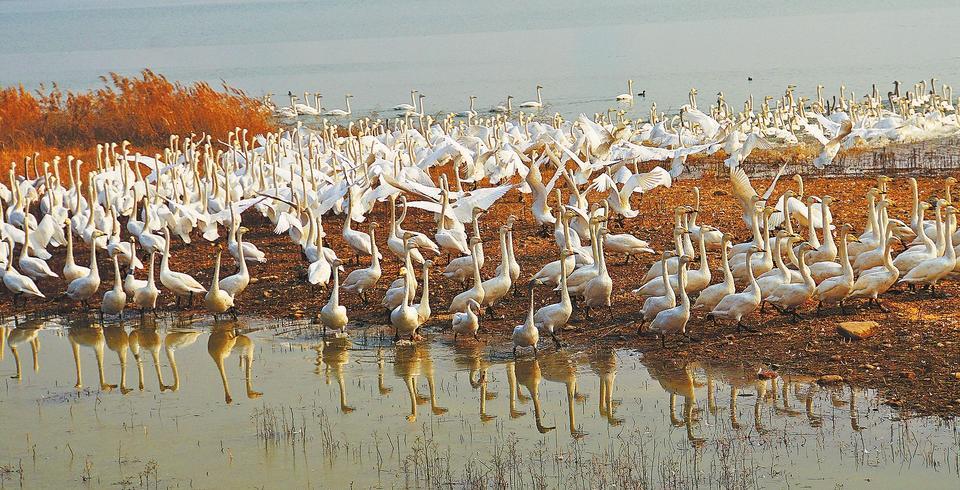
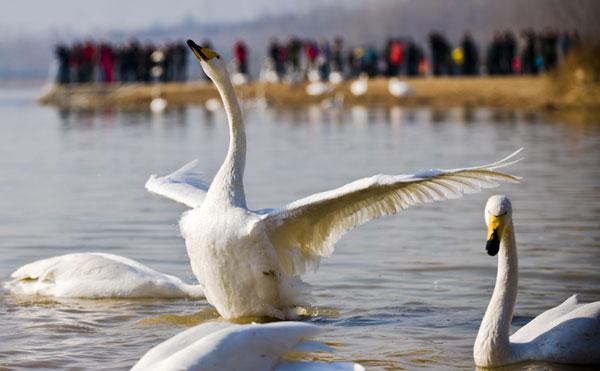
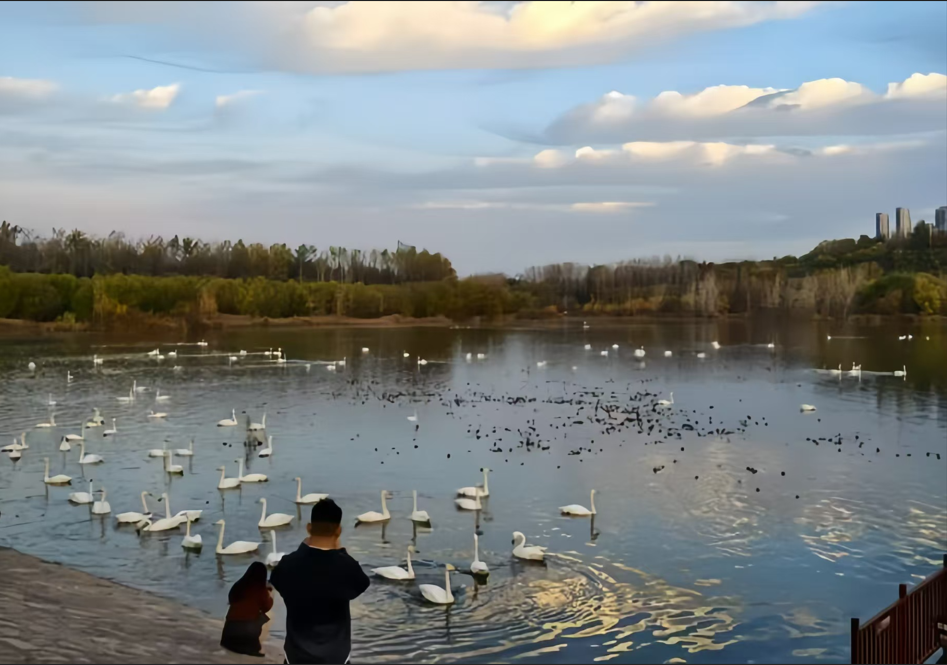
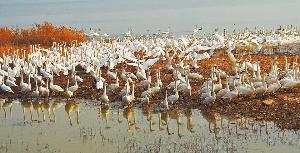
Every winter, the arrival of white swans along the Yellow River wetlands gives Sanmenxia a distinctive seasonal rhythm. The birds return to wetlands, shallow waters and riverbanks where local communities have become accustomed to observing their movements and sharing the landscape with them. Over time, this seasonal relationship has developed into an important part of Sanmenxia's contemporary identity, reflected in the city's designation as the “Swan City” and in the many cultural, educational and community activities that accompany the winter season. The relationship is therefore understood not simply through the presence of the birds, but through the knowledge and practices that have developed around their return.
People in Sanmenxia have learned to recognize the importance of keeping the wetlands quiet, clean and suitable for the birds. During the principal protection period, from October to March, activities that may disturb the swans, such as approaching them, feeding them, flying drones or making loud noises, are restricted. Residents, visitors, volunteers and protection personnel participate in maintaining these conditions, while local communities around important wintering areas contribute to patrols, environmental maintenance and visitor guidance.
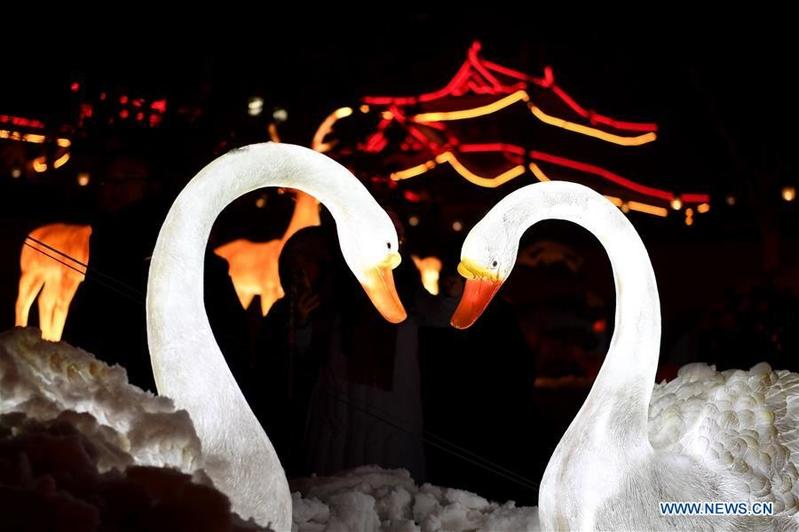
The swans have also become part of the cultural imagination of the city. Their image appears in photography, children's artwork, paper-cutting, sculpture, dance and other creative expressions. In this way, the seasonal return of the birds has developed beyond an ecological event into a shared cultural experience through which people express their attachment to the Yellow River landscape and their understanding of harmonious coexistence with nature.
08-25-2026
| Institutional and human capacities | The protection of the white swans is supported by a network of government departments, wetland management institutions, local communities, schools, volunteers and environmental workers. Sanmenxia's legislation assigns responsibilities to forestry authorities and habitat-management institutions while also requiring townships, subdistricts and village and residents' committees to assist with protection. At the same time, the regulations recognize that every individual and organization has a responsibility to protect the birds and their habitat. This institutional framework is reinforced by people who work directly in the wintering areas. At Houdi Swan Bay, for example, dedicated patrol teams monitor the birds and surrounding environment, guide visitors and respond to inappropriate behavior. The protection system combines direct human observation with monitoring technologies, creating continuous protection during the winter season. The knowledge held by these people is increasingly complemented by educational and cultural practitioners. Teachers, photographers, artists, museum educators and cultural workers help interpret the swans for younger generations and visitors. Together, these different forms of expertise allow the relationship between the community and the wetlands to be maintained through both practical stewardship and cultural transmission. | |
| Transmission and education | Knowledge of the white swans is increasingly transmitted through direct encounters with the wetlands. Children learn to recognize the birds, understand their migratory behavior and appreciate the importance of maintaining suitable habitats through school activities, museum programs, ecological education and visits to the wetland areas. Sanmenxia's protection regulations specifically require schools to strengthen scientific education concerning the swans and their habitats. Local cultural institutions have developed activities that connect ecological knowledge with cultural learning. Museum and library programs introduce children to migration routes, the birds' habits and the ecological characteristics of the Yellow River wetlands. The city's cultural center has also developed the “Swan Children's Art” program, through which children represent the birds and wetlands through painting. Such activities allow younger generations to form their own relationship with the seasonal landscape. Transmission also occurs informally. Families and local residents share knowledge about where the swans gather, how they behave and how visitors should respond to them. The winter season itself becomes an opportunity for repeated observation: children and adults return to the wetlands, watch the birds together and learn through participation. This combination of formal ecological education and everyday seasonal experience gives the practice a living character. | |
| Inventorying and research | The relationship between Sanmenxia and its white swans has been documented through ecological monitoring, wetland research, photography, educational materials and municipal records. Scientific surveys have been used to understand the condition of the wintering wetlands, while monitoring systems record bird activity and habitat conditions. Earlier municipal research led to investigations of the Yellow River wetlands and the development of restoration plans for important white-swan habitats. Documentation also increasingly records the cultural dimension of the relationship. Local photographers have produced extensive visual records of the swans and their wintering environment, while cultural institutions organize photography exhibitions that present the birds together with the Yellow River landscape. These images preserve not only the appearance of the swans but also the changing ways in which local people experience their seasonal return. The city's cultural documentation is also beginning to connect the contemporary swan image with older representations of birds in regional heritage. This provides a broader cultural context for understanding how birds and the natural environment have appeared in the artistic imagination of the Sanmenxia area. Such historical connections should be approached carefully, but they offer opportunities for further research into the relationship between local environmental knowledge, artistic representation and place identity. | |
| Policies as well as legal and administrative measures | Sanmenxia has developed an unusually specific legal framework for the protection of the white swans and their habitat. The Regulations of Sanmenxia Municipality on the Protection of White Swans and Their Habitats establish protection zones and a particularly important seasonal protection period from October through March. They regulate activities that could disturb the birds and establish responsibilities for government agencies, communities and individuals. The regulations go beyond prohibiting harmful activities. They require public education, scientific research, ecological monitoring and habitat restoration. They also designate November 22 as White Swan Protection Publicity Day and encourage citizens, organizations and volunteers to participate in protection activities. Schools are specifically encouraged to provide educational programs concerning white swans and their habitats. This framework gives the community's relationship with the swans a strong institutional foundation. It allows practices such as responsible observation, habitat stewardship and public education to become part of a wider local safeguarding environment. Recent municipal reviews continue to emphasize the importance of implementing and evaluating the regulation through public consultation, field inspections and engagement with residents. | |
| Role of intangible cultural heritage and its safeguarding in society | The annual return of the white swans has become a way through which Sanmenxia expresses its relationship with the Yellow River and its wetlands. The birds provide a visible reminder of the ecological character of the landscape and have become closely associated with the city's contemporary identity. Safeguarding the swans therefore also means maintaining a relationship between residents and the natural environment on which the seasonal phenomenon depends. One of the strongest aspects of this relationship is the development of community stewardship. People do not simply come to see the birds; they increasingly participate in keeping the environment suitable for them. Patrols, environmental cleaning, visitor guidance, rescue responses and public education all contribute to maintaining the conditions under which the swans can return each year. Recent examples show citizens reporting injured birds through the city's public-service system, allowing relevant authorities to organize rescue efforts. Safeguarding is therefore understood as an ongoing practice of coexistence. The objective is not to preserve a particular image of the swan season, but to ensure that the ecological knowledge, respectful behaviors and cultural meanings associated with it continue to be practiced. The connection between protection, cultural expression, education and community participation gives the tradition its contemporary relevance. | |
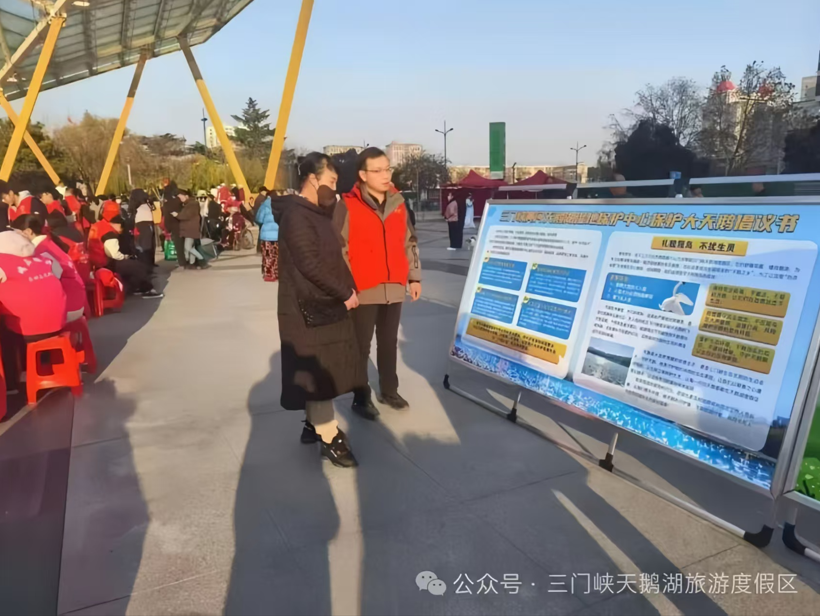
| Awareness raising | Sanmenxia has developed a strong culture of public awareness around the annual return of the swans. The city's White Swan Protection Publicity Day, ecological campaigns, photography exhibitions, school programs and public information activities help residents understand both the birds and the responsibilities associated with their protection. Earlier campaigns used newspapers, public transportation displays, digital media and wetland education activities to bring the message of wetland protection into everyday life. Cultural expression has become another important means of awareness raising. Local photographers document the swans, children depict them in paintings, dancers incorporate the image of the bird into performances, and craftspeople create swan-themed objects. A particularly significant development is the incorporation of the swan motif into local paper-cutting and other traditional crafts, allowing the contemporary ecological identity of Sanmenxia to enter established forms of cultural expression. The city increasingly brings these activities together during the White Swan Tourism Season. Rather than presenting the swans only as an attraction, the seasonal program combines ecological education, cultural exhibitions, traditional crafts, performances and local products. This creates a broader setting in which residents can share and communicate the cultural meanings attached to the winter landscape. | |
| Engagement of communities, groups and individuals as well as other stakeholders | Community participation is one of the most distinctive aspects of Sanmenxia's relationship with the white swans. The legal framework explicitly encourages citizens and organizations to participate through volunteer activities, while village and residents' committees are included in the local protection system. This gives the relationship a participatory dimension extending beyond professional conservation institutions. During the winter season, people contribute in different ways. Protection teams patrol important habitats, residents help maintain the surroundings, volunteers promote responsible behavior, and citizens report injured or endangered birds. In Houdi Swan Bay, for example, protection teams combine daily patrols with environmental maintenance and visitor guidance. Around the same area, the growing winter tourism economy has also created opportunities for residents to sell local agricultural products and operate rural tourism businesses. Younger residents and cultural practitioners are also becoming part of this process. Contemporary artists, dancers, photographers and craftspeople interpret the swans through their own practices, while cultural institutions provide spaces where these expressions can be shared. This creates an expanding community of participation in which environmental stewardship and cultural creativity reinforce one another. | |
| International engagement | The white swans connect Sanmenxia to a wider ecological network extending far beyond the city. Their seasonal migration demonstrates that the wetlands are part of a broader system of habitats used by migratory birds. Protecting the birds therefore requires attention not only to local conditions but also to the ecological continuity of their migratory routes. Sanmenxia's approach increasingly places the white swan within wider environmental and cultural cooperation. The municipal regulations encourage cooperation and information sharing between governments along the Yellow River, recognizing that habitat protection cannot be limited to a single administrative area. The cultural dimension also creates opportunities for international exchange. Photography, ecological education, wetland research and artistic interpretation provide ways for Sanmenxia's experience to be shared with communities facing similar questions concerning migratory species and human–nature relationships. At the local level, the city has already positioned the swan as an international-facing cultural symbol through its tourism and cultural programming, while maintaining protection and ecological education as central components. For safeguarding purposes, the strongest international contribution of the Sanmenxia experience lies in demonstrating how a community can transform the seasonal presence of a migratory species into a shared practice of observation, stewardship, education and cultural expression without separating the natural phenomenon from the people and landscape that sustain it. | |
| References |
|
|


























.jpeg)








.png)













.jpeg)

.jpg)



.png)
.jpg)


_(31711258567).jpg)