
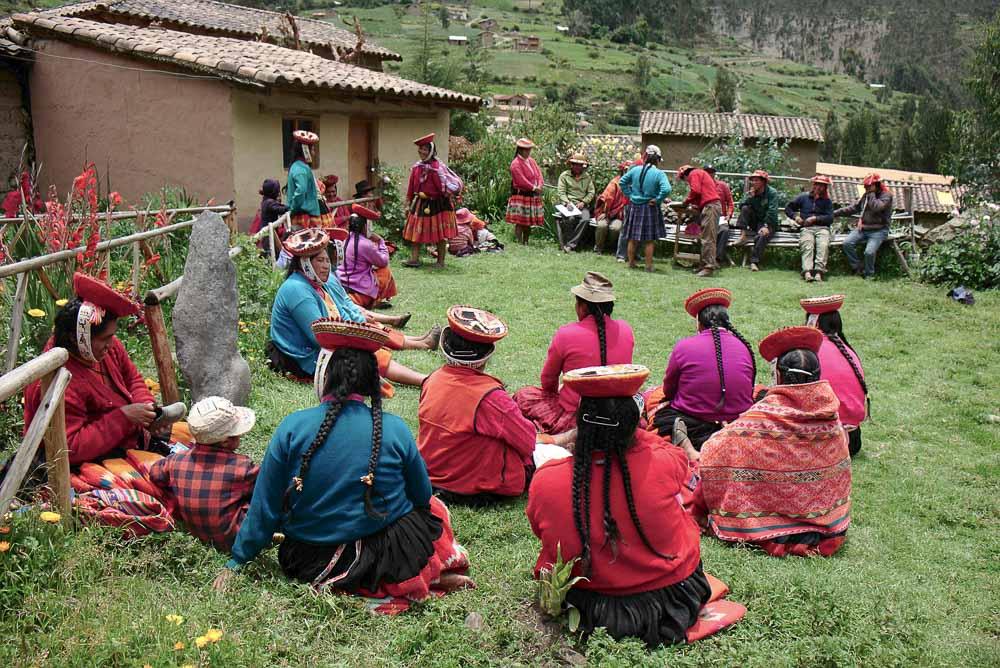
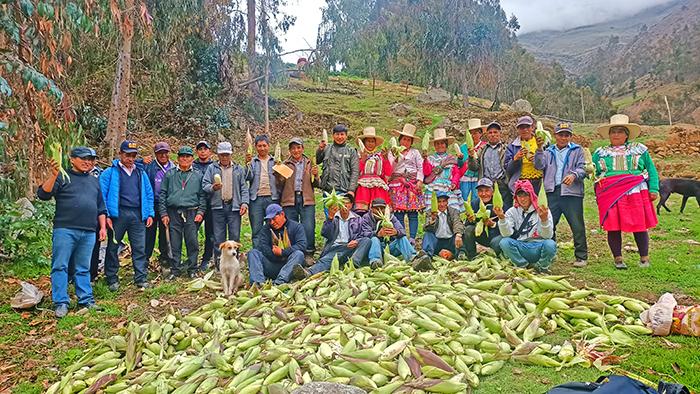
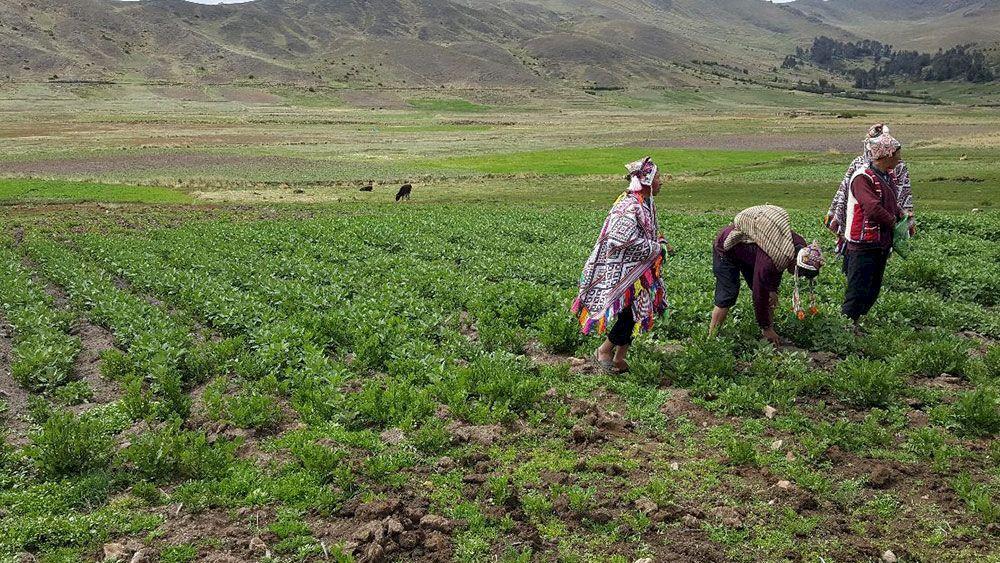
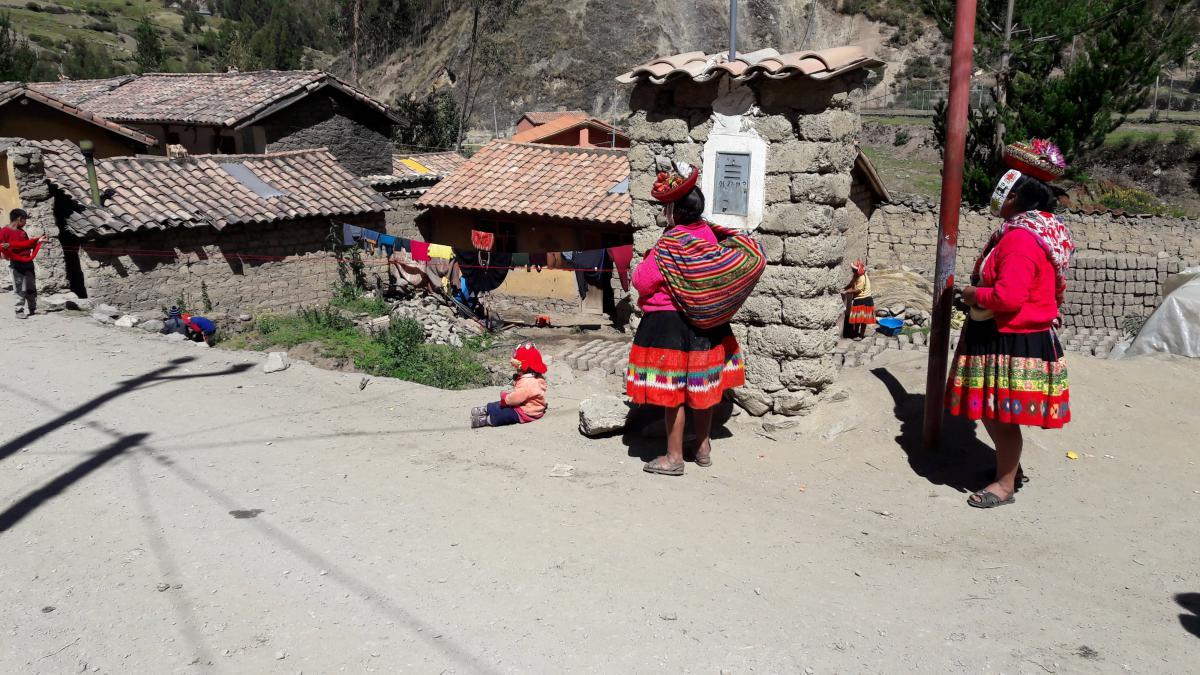
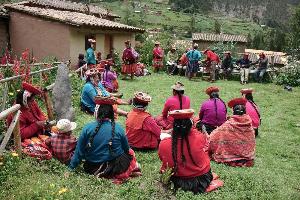
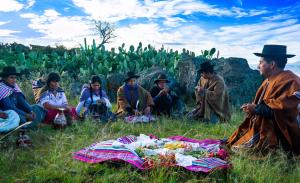
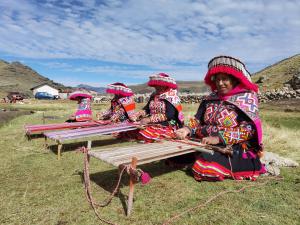
Ayni is a traditional system of reciprocal labor in which a person or household provides work to another with the expectation that the assistance will later be returned under comparable conditions. In Huilloc, a Quechua community located in the Sacred Valley of Cusco, in the Patacancha Valley of Ollantaytambo, ayni remains associated with agricultural activities and other forms of mutual assistance among families and community members. The practice is grounded in relationships of trust, kinship and mutual obligation rather than monetary payment.
The principle is considerably older than the Inca Empire. Historical research identifies reciprocal labor as a pre Inca practice that was incorporated into the social and economic organization of the Inca period. Within the ayllu, reciprocal exchanges supported household production and agricultural activities, while other labor systems such as minka and mit'a fulfilled different communal or state functions. Ayni therefore should not be understood as an exclusively Inca creation, but as part of a much older Andean social tradition that continued to develop under changing historical circumstances.
In Huilloc, its contemporary expression demonstrates that continuity does not require an unchanged form. The principle of returning assistance remains meaningful, while the activities, relationships and circumstances in which reciprocal work occurs have adapted to contemporary community life. A study dedicated specifically to Huilloc between 2016 and 2018 identified ayni as a continuing form of social reciprocity, while also observing changes associated with new technologies and the prevailing economic model.
08-20-2026
| Institutional and human capacities | Huilloc is a Quechua campesino community located in the district of Ollantaytambo, in the Cusco region. Agriculture and livestock raising remain important components of community life, alongside textile production and other economic activities. MINCETUR identifies ayni and minka as continuing forms of collective cooperation within the community. The principal practitioners of ayni are households and community members who maintain reciprocal relationships. The Huilloc study describes these relationships as particularly connected to kinship, familiarity and trust, while also identifying differences related to age, gender, work and social position. | |
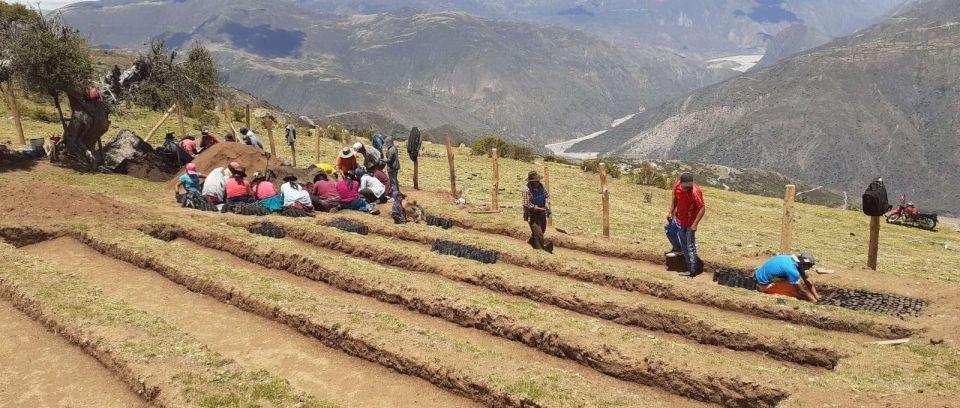
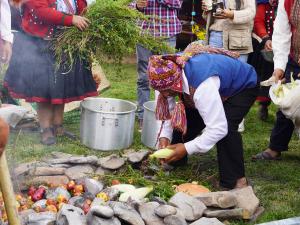
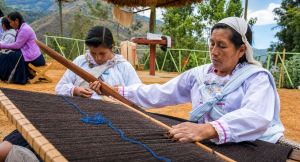
| Transmission and education | Ayni is traditionally transmitted through participation in everyday life rather than through formal instruction. Younger members learn its principles by accompanying relatives during agricultural work, observing exchanges of assistance and taking part in activities where cooperation and reciprocity are expected. Agriculture provides an important setting for this transmission. Contemporary descriptions of Huilloc identify reciprocal work in the context of community livelihoods, while broader studies of Andean agricultural communities document ayni in planting, harvesting, water management and other productive activities. Shared meals and drinks associated with reciprocal work can further reinforce the social relationship created through the exchange. | |
| Inventorying and research | Historical evidence places ayni within forms of reciprocal labor that existed before the consolidation of the Inca Empire. The practice was associated principally with exchanges between households and contributed to the organization of agricultural production. During the Inca period, it existed alongside minka, associated with collective communal labor, and mit'a, associated with obligations to the state. The contemporary situation in Huilloc has been examined directly through ethnographic research. A 2020 UNSAAC study based on research conducted from 2016 to 2018 describes ayni as a continuing social practice involving reciprocal services among people who are connected through family, familiarity and trust. It also records the influence of technological and economic changes on the practice. | |
| Policies as well as legal and administrative measures | Ayni in Huilloc does not have a specific national declaration as Intangible Cultural Heritage. Its cultural significance is instead situated within the broader recognition of Huilloc as a Quechua Indigenous community and of its traditional social and productive practices. The Ministry of Culture's Base de Datos de Pueblos Indígenas identifies Huilloc as a Quechua community, while the MINCETUR inventory of the community explicitly records ayni as part of its social organization and cultural life. | |
| Role of intangible cultural heritage and its safeguarding in society | The defining feature of ayni is reciprocity. Assistance creates an obligation to provide equivalent assistance in the future, establishing a continuing relationship between households rather than a one time exchange of labor. In this sense, the work itself is inseparable from the social relationship through which it is exchanged. This reciprocal organization has historically been particularly important for agricultural communities, where planting, harvesting and other tasks can require more labor than an individual household can provide alone. Contemporary Andean research continues to identify ayni as a mechanism through which families cooperate in agricultural production and other activities. The practice also reflects a broader Andean understanding of reciprocity. Recent scholarship describes ayni as involving relationships of mutual support not only between people but, in some Andean contexts, between humans and elements of the landscape such as mountains, springs and other sacred places. | |
| Awareness raising | Ayni is often represented simply as "helping one another," but this description does not fully capture its social structure. Assistance is embedded in an expectation of reciprocity: giving labor establishes a relationship in which that contribution can later be returned. The practice therefore expresses a distinctive understanding of work as a social obligation. Its significance lies not only in completing an agricultural or domestic task, but in maintaining relationships through repeated acts of giving and returning. | |
| Engagement of communities, groups and individuals as well as other stakeholders | Reciprocal labor in Huilloc is principally organized among community members and households. Kinship and familiarity are important in determining the relationships through which assistance is requested and returned. The Huilloc study emphasizes that these reciprocal relationships contribute to social cohesion among people connected by family, work, age and other aspects of community life. The activities associated with ayni extend beyond agricultural production. Contemporary Andean evidence identifies reciprocal labor in house construction, livestock care and other household needs, while studies of Huilloc describe the practice across different activities and social settings. | |
| International engagement | Ayni represents an important expression of Andean knowledge concerning reciprocity, cooperation and community organization. Its significance extends beyond the physical task being performed because the exchange of labor establishes and maintains social relationships. Its contemporary presence in Huilloc also illustrates the capacity of an inherited social principle to coexist with changing economic conditions and forms of community life. The practice therefore represents both historical continuity and ongoing adaptation within a living Quechua community. | |
| References |
|
|
























.jpeg)






.png)












.jpeg)

.jpg)



.png)
.jpg)


_(31711258567).jpg)