
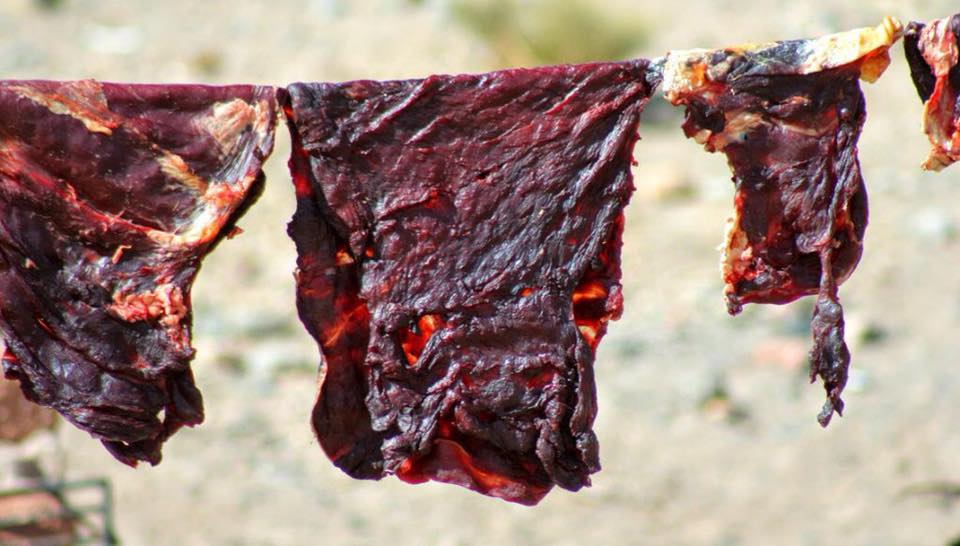
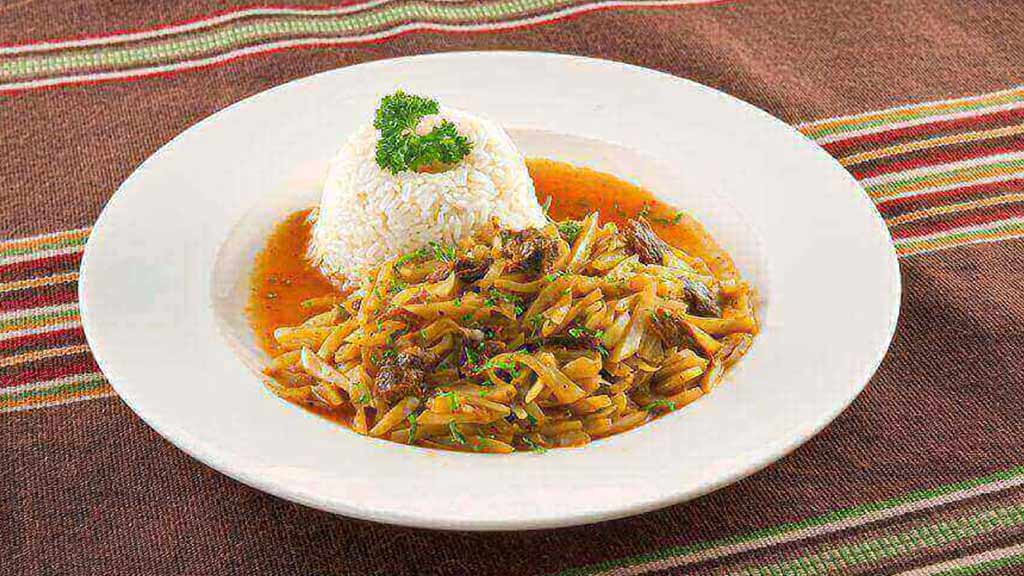
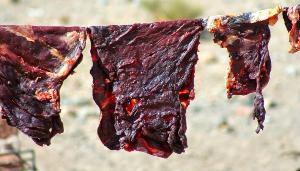
Ch'arki is one of the Andes' oldest food preservation traditions: meat is reduced to a durable form through drying, traditionally taking advantage of the combination of intense daytime sunlight, dry air and cold nighttime temperatures at high elevations. The technique allowed meat to remain usable for extended periods without refrigeration and transformed a highly perishable resource into food that could be stored, transported and consumed later.
The tradition is particularly associated with the highlands of Peru and with camelid meat, especially llama and alpaca. However, ch'arki has never been a completely fixed product. Different regions have developed variations in the type of meat, size and preparation of the pieces, use of salt, drying conditions and ways of incorporating the finished product into local cuisine. Today, charqui remains consumed and produced in several Andean regions, including Puno, Cusco, Arequipa, Ayacucho and Huancavelica. In April 2026, Peru's National Institute of Quality approved a technical standard establishing requirements for the quality, processing, storage and commercialization of charqui, demonstrating that the tradition remains part of contemporary food production.
08-18-2026
| Institutional and human capacities | The continuity of ch'arki depends on practical knowledge distributed among households, farmers, camelid breeders, meat processors, cooks and vendors. Knowledge includes selecting suitable meat, removing excess fat, cutting or preparing the pieces, controlling drying conditions and determining when the meat has reached the appropriate degree of preservation. In contemporary Peru, this knowledge exists at both household and commercial levels. Camelid meat remains an important source of charqui, particularly in highland regions, while traditional preparations continue to incorporate it into soups, stews and other regional dishes. The recent national technical standard for charqui demonstrates that traditional production now also interacts with modern systems of food safety and quality control. This combination is important for safeguarding. The heritage is not simply an old recipe but the accumulated ability to understand how meat behaves under particular environmental conditions and how it can be transformed into a durable food. | |
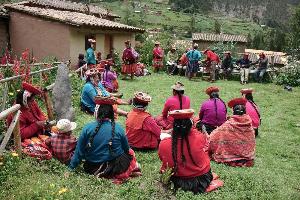
| Transmission and education | Traditionally, knowledge of ch'arki would have been transmitted through participation in household and community food preparation. Younger members learned by observing how meat was selected and prepared, how it was positioned for drying and how its condition was evaluated through experience. The environmental component of this learning is particularly important. Successful drying depends on understanding the relationship between temperature, sunlight, humidity, airflow and altitude. In the Andes, the natural alternation between cold nights and dry, intense daytime conditions created an environment exceptionally suited to dehydration and preservation. Today, transmission occurs alongside formal food education and commercial production. The existence of a national technical standard does not replace traditional knowledge, but creates a new framework through which producers can combine inherited techniques with contemporary requirements for hygiene, quality and commercialization. | |
| Inventorying and research | The history of ch'arki reaches deep into the pre-Hispanic Andes, although archaeological evidence must be interpreted carefully. Scholars have identified dried meat as an important preservation technology across the Andes, but archaeological remains alone cannot always demonstrate that a particular group consumed ch'arki. Lidio Valdez has specifically warned against automatically interpreting particular patterns of animal bones as proof of ch'arki consumption. By the time of the Inca state, however, dried meat formed part of a sophisticated system of food storage and redistribution. Inca storage facilities, or qullqa, allowed preserved foods to be accumulated and made available for different purposes. Historical descriptions indicate that meat was cut into thin pieces, exposed to sun and frost and sometimes pounded to facilitate drying. Ch'arki therefore became particularly valuable because it was light, durable and transportable. The tradition was also connected to movement across the Andean landscape. Dried camelid meat could travel from highland production areas toward lower regions where camelids were less readily available. Archaeological research has found evidence consistent with the movement of dried meat between highland and coastal populations, although specific interpretations must remain cautious. A contemporary inventory should document not only the finished product but the entire knowledge chain: animal husbandry, slaughtering, preparation, drying, storage, cooking, local terminology and the people who maintain these practices. | |
| Policies as well as legal and administrative measures | Ch'arki is increasingly situated between traditional food heritage and contemporary food regulation. In April 2026, the National Institute of Quality approved Peru's NTP 201.059, establishing requirements for the quality, safety and commercialization of charqui. The standard covers aspects of production, processing, storage and commercialization. This is an important contemporary development because safeguarding a food tradition also requires ensuring that its production can remain viable under present-day conditions. Regulation can help producers access markets and protect consumers, provided that standardization does not unnecessarily eliminate regional variations. The Ministry of Culture has also recognized Peruvian cuisine as an important field of intangible cultural heritage, emphasizing the continuity of regional culinary traditions and their relationship with historical environmental adaptation. For ch'arki, safeguarding measures should therefore seek a balance between food safety, economic viability and the preservation of traditional knowledge and regional diversity. | |
| Role of intangible cultural heritage and its safeguarding in society | Historically, ch'arki addressed one of the fundamental challenges of Andean life: how to preserve food in environments where refrigeration did not exist. This seemingly simple problem generated sophisticated knowledge. Meat could be transformed from a perishable resource into a stable food capable of surviving periods of scarcity and accompanying people during journeys. In the Inca period, preservation technologies were particularly important to systems of storage, mobility and redistribution. Ch'arki also illustrates how Andean societies transformed environmental conditions into technological advantages. The severe temperature fluctuations of high-altitude environments, which could be difficult for human habitation, created favorable conditions for freeze-drying foods. Archaeological and historical research describes the combination of nighttime freezing and daytime drying as a major Andean preservation strategy. | |
| Awareness raising | Ch'arki is often overshadowed by more internationally recognizable Peruvian foods. Yet its importance becomes clearer when it is presented as a technology of adaptation rather than simply a traditional ingredient. Awareness initiatives can explain how the technique emerged from the relationship between Andean communities, camelids and the high-altitude environment. They can also demonstrate how a preservation method developed before refrigeration continues to survive in contemporary kitchens and markets. It is important, however, to avoid presenting present-day charqui as an unchanged survival from Inca times. The core principle of drying has considerable historical depth, but ingredients, preparation methods, uses and commercialization have evolved. For example, the wider availability of salt and the introduction of new livestock after the Spanish conquest contributed to changes in meat preservation and consumption. | |
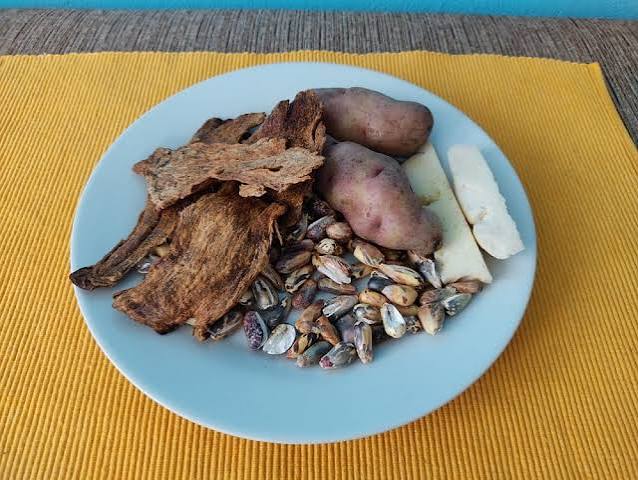
| Engagement of communities, groups and individuals as well as other stakeholders | The safeguarding of ch'arki involves more than the people who dry the meat. Camelid breeders, rural families, processors, cooks, vendors and consumers all participate in the contemporary life of the tradition. Its connection with camelid raising is particularly significant. Charqui creates a link between agricultural and pastoral knowledge and culinary practice, giving added value to animals raised in Andean communities. The 2026 quality initiative specifically identifies charqui as an important product for regions where thousands of families are involved in South American camelid production. There are also local traditions surrounding particular dishes made with charqui. In Carmen Alto, Ayacucho, for example, the annual Charquikanka Festival connects charqui with the historical culture of muleteers and long-distance travel. The local preparation combines dried meat with foods such as potatoes and toasted maize and is presented as part of a broader community celebration. Such regional manifestations demonstrate that safeguarding should document not one standardized "Peruvian charqui," but the diverse ways communities have incorporated preserved meat into their own food cultures. | |
| International engagement | Ch'arki provides a particularly useful subject for international dialogue because it represents knowledge developed in response to environmental conditions and subsequently transformed into a durable food technology. Its influence also extends beyond Peru. The Quechua term ch'arki is widely recognized as the origin of the English word "jerky," illustrating how an Andean preservation technique and vocabulary entered wider global food culture. The historical relationship between the terms should nevertheless be presented carefully because the linguistic history has been debated. International cooperation could focus on documenting traditional preservation technologies, food resilience and Indigenous approaches to adapting food systems to extreme environments. Ch'arki could consequently contribute to broader discussions about traditional knowledge, food security, biodiversity and climate adaptation. | |
| References |
|
|









.jpeg)




.png)




.jpeg)

.jpg)


.png)
.jpg)


_(31711258567).jpg)