
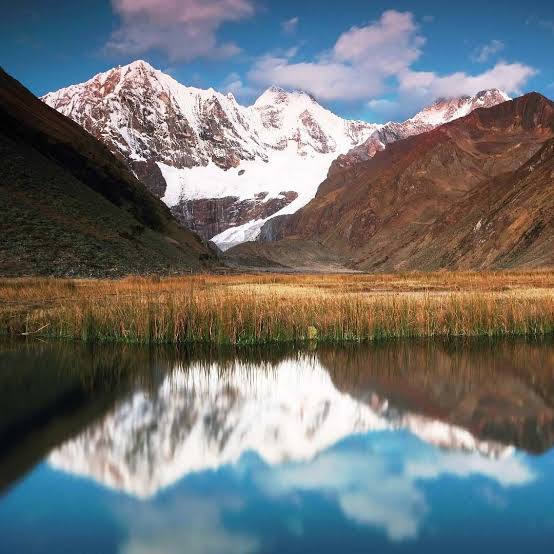
Across the Andes, mountains can be understood as more than physical features of the landscape. In many Quechua communities, particular mountains are regarded as powerful beings with whom people maintain relationships of respect, reciprocity and communication. These mountains are commonly known as Apus.
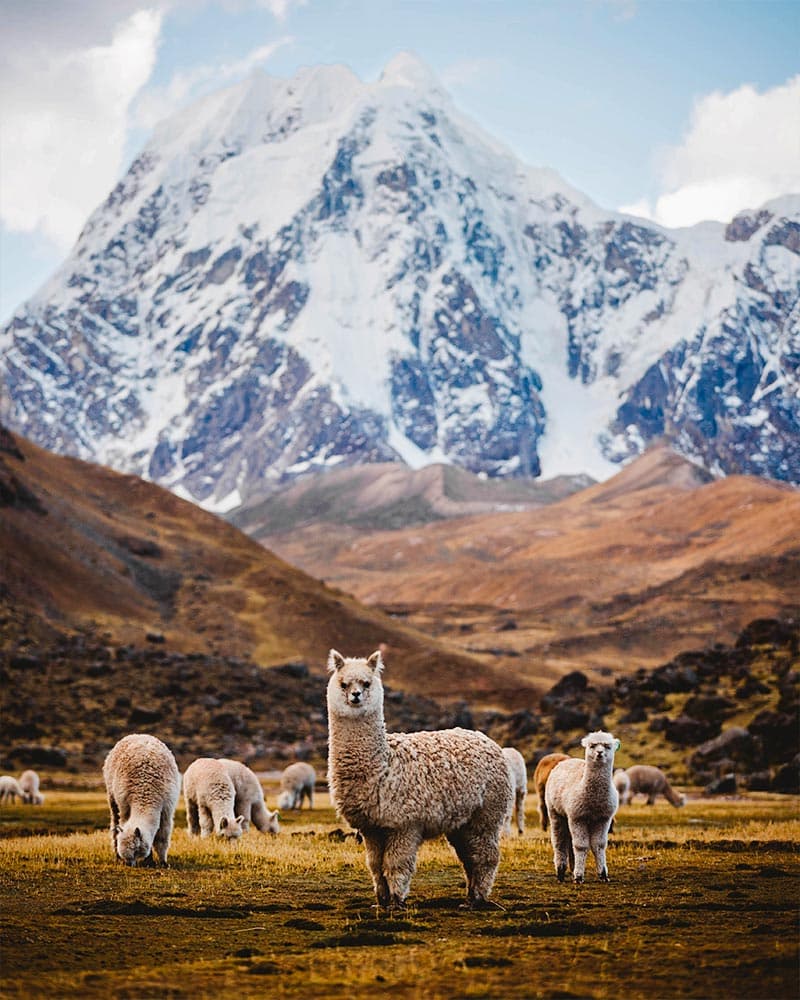
The Apu tradition encompasses a living body of knowledge and practice rather than a single ceremony. It includes oral narratives, sacred geography, offerings, prayers, agricultural and pastoral practices, ritual specialists, pilgrimage routes and ways of interpreting the relationship between people, mountains, water, animals and the wider landscape. In Cusco, mountains such as Ausangate, Pachatusan and Picol continue to occupy important places within local understandings of territory and ritual life.
The concept should not be presented as a uniform belief shared identically by all Andean people. Each community has its own sacred geography, names, narratives and relationships with particular mountains. What connects these traditions is the understanding that certain mountains possess protective, spiritual and socially meaningful qualities and that humans can enter into reciprocal relationships with them.
08-18-2026
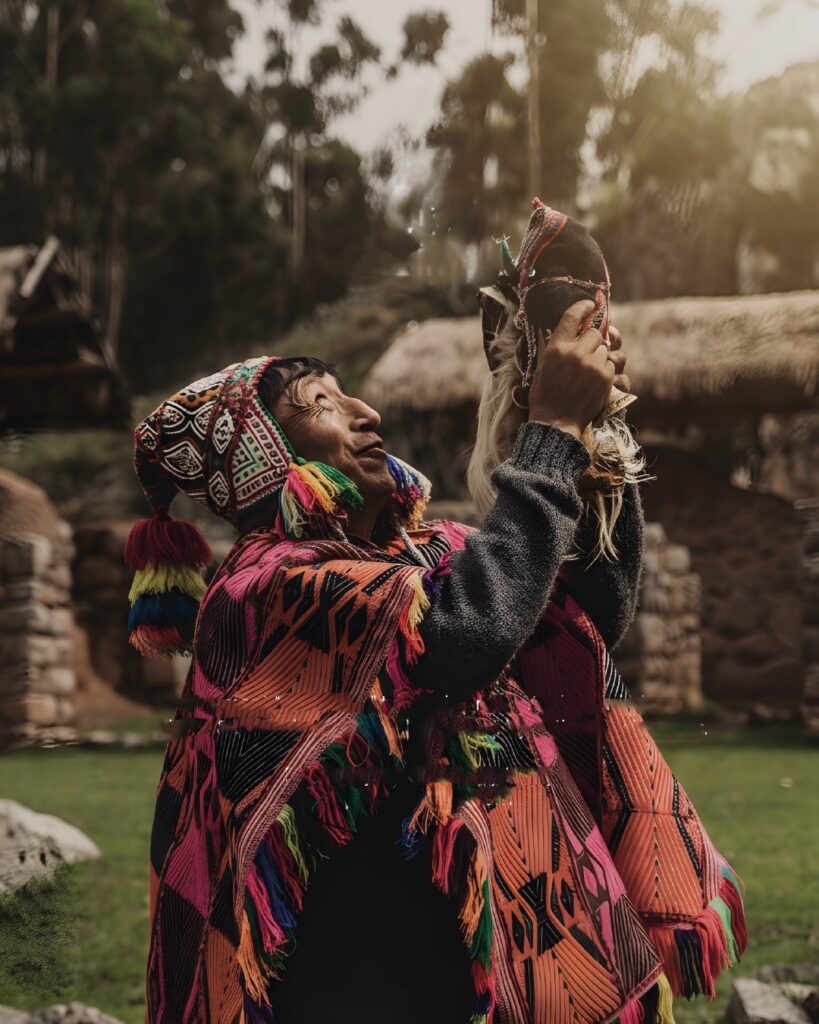
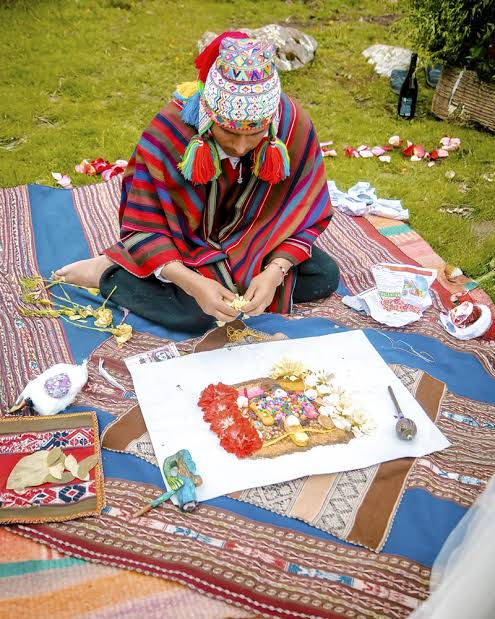
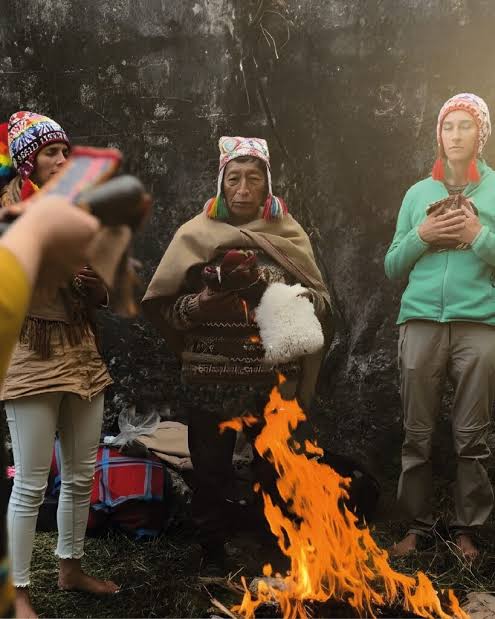
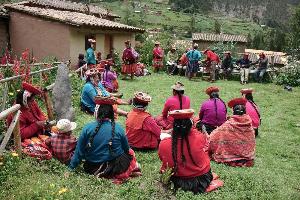
| Institutional and human capacities | The continuity of Apu traditions depends primarily on community knowledge rather than on formal institutions. Families, community authorities, farmers, herders, ritual specialists and elders preserve knowledge about particular mountains, their names, histories, powers and appropriate forms of respect. Ritual specialists play an important role in some communities. Their knowledge can include the preparation of offerings, the selection and arrangement of coca leaves and other ritual elements, prayers and the interpretation of signs. Contemporary research in Cusco documents the continuing relationship between traditional medicine, ritual specialists and beliefs concerning Apus, Pachamama and other elements of the natural environment. The human capacity involved is therefore both practical and spiritual. Knowledge of an Apu may determine where an offering should be made, when particular agricultural activities should begin, how a community understands a landscape or how protection and wellbeing are sought. | |
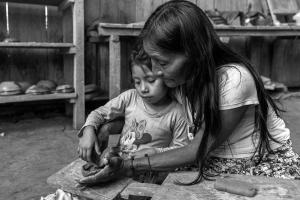
| Transmission and education | Knowledge concerning Apus is transmitted primarily through participation, observation, oral narration and everyday interaction with the landscape. Children may encounter the identity of particular mountains through family stories, agricultural activities, journeys, ceremonies and explanations concerning places considered sacred. The transmission of this knowledge is closely connected to language. Names of mountains, places, spirits and ritual actions preserve distinctions that may disappear when the landscape is interpreted only through geographical or touristic categories. Traditional knowledge can also be transmitted through educational materials. Peru's Ministry of Education, for example, has incorporated knowledge concerning sacred Apus into Quechua language educational material, describing their protective roles, relationships with different communities and the offerings made to them. This demonstrates that Apu knowledge is not solely a remnant of the past. It can continue to function as a means through which younger generations understand territory, identity and relationships with the natural world. | |
| Inventorying and research | An inventory of the Apu tradition should not attempt to create a single catalogue of all sacred mountains in Peru. The more appropriate approach is to document the relationships between specific communities and the mountains they recognize as significant. Research should record local names, oral histories, myths, ritual practices, pilgrimage routes, sacred sites, agricultural associations, water sources and forms of community organization. The work of Germán Zecenarro Benavente on the mountains surrounding the Cusco valley demonstrates the historical importance of Apus, wakas and paqarinas in shaping sacred geography and the territorial identities of Andean communities. Ausangate provides an especially rich case. Anthropological research has documented its myths and its importance as a sacred mountain for communities around Ocongate, while research associated with Qoyllur Rit'i records continuing offerings to Apu Ausangate near the sanctuary. Future inventories should give particular importance to community voices. The objective should not simply be to describe what an Apu "means," but to document how particular people continue to relate to a particular mountain. | |
| Policies as well as legal and administrative measures | The Apu tradition does not correspond to a single national heritage declaration. Its safeguarding therefore occurs through a combination of cultural policies, Indigenous community rights, local recognition and the protection of landscapes in which these practices take place. Government documentation provides evidence that Apu traditions continue to form part of living community practices. A consultation process concerning the proposed Ausangate Regional Conservation Area identified several Quechua communities in the region, including Sallani, Pampachiri, Ochollocllo, Ananiso, Phinaya, Collasuyo, Sahuancay, Marcapata Collana and Ausangate. The protection of sacred landscapes should consequently involve the communities that maintain relationships with them. Environmental conservation, archaeological management, infrastructure development and tourism planning should take into account the cultural and spiritual significance attributed to mountains. Safeguarding should also avoid separating the mountain from the knowledge associated with it. Protecting a landscape without protecting the practices, narratives and community relationships that give that landscape meaning would preserve only its physical dimension. | |
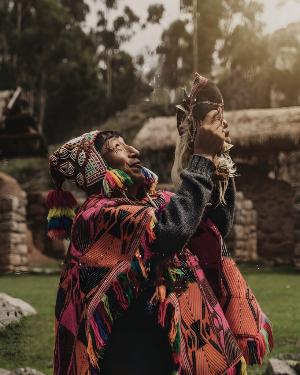
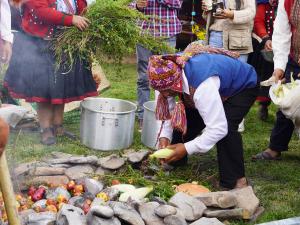
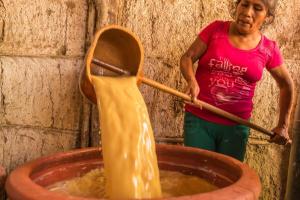
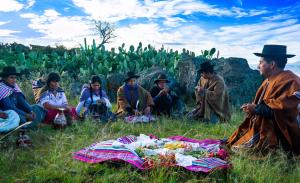
| Role of intangible cultural heritage and its safeguarding in society | The Apu tradition expresses a fundamentally relational understanding of landscape. A mountain is not simply a place where people live or a natural resource to be exploited. For communities that recognize an Apu, the mountain can be a protector, a source of water, a powerful presence and a participant in relationships of reciprocity. This relationship can be expressed through offerings, prayers and ritual acts. Research on Quechua offerings describes them as complex ceremonial compositions directed principally toward Pachamama and Apus, in which coca leaves and other elements are arranged according to specific symbolic principles. The relationship can also influence practical life. In Cusco, the Picol mountain is described in the national tourism inventory as an Apu associated with agricultural activities, with local people dedicating the first drink of chicha to tutelary mountains before beginning agricultural work, planting, harvesting or celebrations. The significance of the tradition therefore extends beyond religion. It connects spirituality with agriculture, water, territory, social identity and environmental knowledge. | |
| Awareness raising | The spectacular landscapes of the Andes have made sacred mountains increasingly visible to visitors, photographers and tourism operators. This visibility can create opportunities for cultural education but can also simplify complex traditions into attractive images of "Inca spirituality." Awareness raising should instead explain that an Apu is meaningful because of a living relationship between people and a particular landscape. The mountain should not be presented merely as an ancient object of worship or a scenic destination. Interpretation should also recognize the diversity of Andean traditions. The relationship with Ausangate, for example, cannot automatically be used to explain every mountain in the Andes. Each community possesses its own sacred geography, narratives and forms of ritual practice. Digital documentation could support this approach by recording oral histories, Quechua terminology, community maps, narratives, ritual knowledge and the changing relationships between younger generations and sacred landscapes. | |
| Engagement of communities, groups and individuals as well as other stakeholders | Communities must remain at the center of any safeguarding initiative concerning Apus. The knowledge belongs to living cultural contexts, and decisions about what should be documented, shared publicly or kept within the community should be made with the people who maintain these traditions. The diversity of stakeholders is considerable. Farmers, herders, community authorities, elders, ritual specialists, teachers, young people and local researchers may all possess different forms of knowledge about the same mountain. The relationship between sacred mountains and community organization can be seen particularly clearly in Cusco. The national consultation process for the Ausangate conservation area identified multiple Quechua communities whose territories and cultural relationships are connected to the region. Safeguarding should therefore encourage dialogue between cultural and environmental institutions rather than treating cultural heritage and landscape conservation as separate fields. | |
| International engagement | The Apu tradition offers an important contribution to international discussions about intangible cultural heritage because it challenges the separation between "nature" and "culture." The heritage exists in the relationship between communities, mountains, water, animals, agricultural cycles and spiritual practices. It also offers possibilities for comparative research with other Indigenous traditions in which particular landscapes are understood as living or spiritually significant. Such comparisons should focus on community specific relationships rather than assuming that all sacred mountain traditions share the same worldview. International research can additionally connect anthropology, environmental studies, archaeology and heritage management. Recent archaeological research on the high mountains of the Tawantinsuyu has examined Apus as living landscape beings with ritual and social agency, demonstrating the importance of understanding sacred mountains through both archaeological evidence and Indigenous conceptual frameworks. For safeguarding, the most valuable international contribution would be to strengthen community based documentation, support Indigenous knowledge transmission and promote approaches to landscape conservation that recognize cultural relationships with nature. | |
| References |
|
|








.jpeg)



.png)


.jpeg)
.jpg)



.png)
.jpg)


_(31711258567).jpg)