
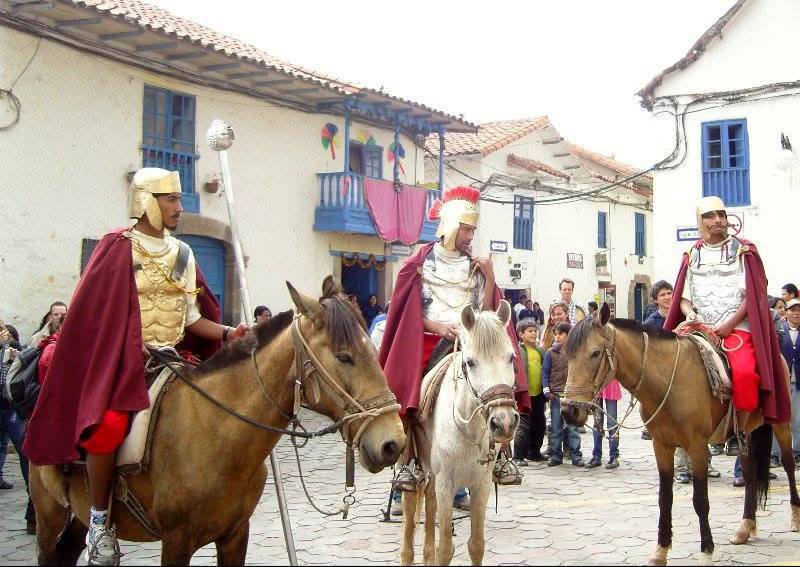
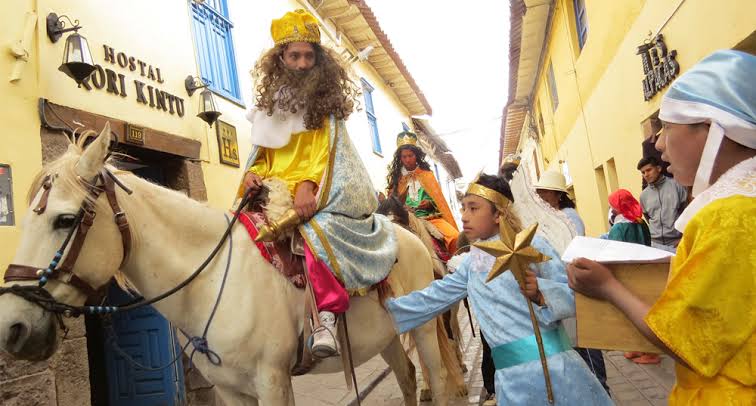
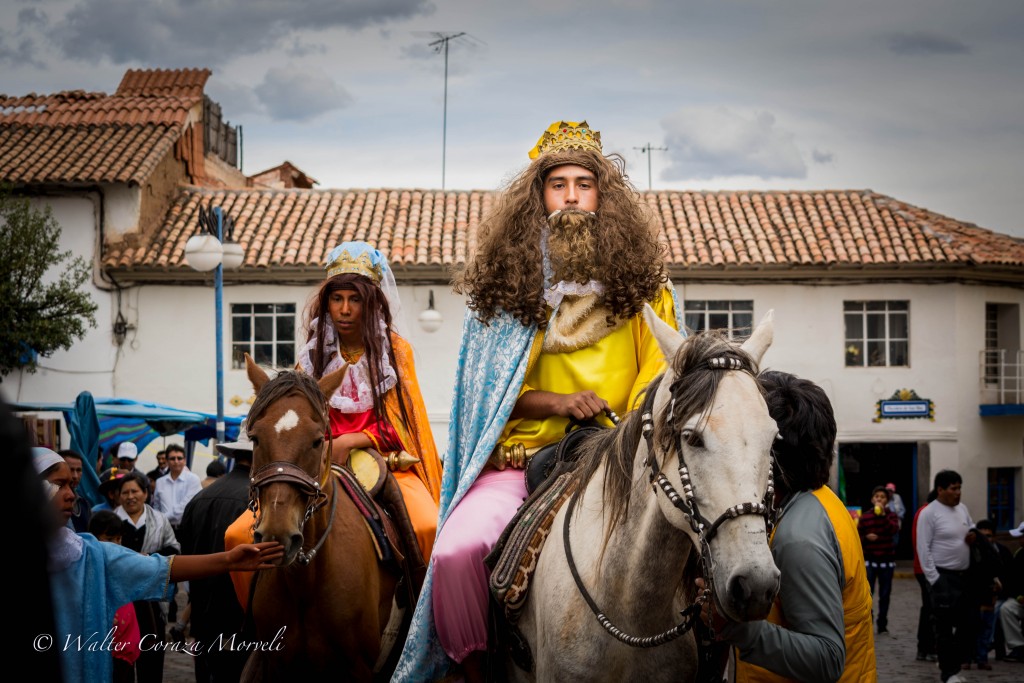
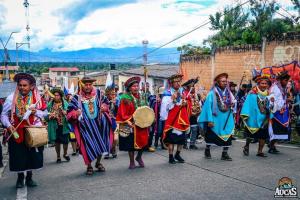
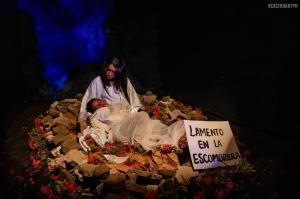
The Adoration of the Three Kings is a religious theatrical tradition of San Blas in which the biblical story of the Magi and the Massacre of the Innocents is transformed into a community performance. Developed in the early twentieth century and traditionally presented in late December, the celebration brings together theatre, music, dance, children’s performance, religious devotion and neighborhood participation.
More than a representation of a Christian story, the tradition embodies the cultural memory of San Blas. Its distinctive combination of Spanish and Quechua songs, local performance practices, costumed characters and community participation has made the event one of the most recognizable expressions of the historic artisan neighborhood.
08-14-2026
| Institutional and human capacities | The tradition is sustained through a network of people rather than through a single formal institution. Residents of San Blas, families, performers, musicians, singers, children, organizers and religious actors each contribute different knowledge to the celebration. Historical accounts associate its establishment in 1915 with the parish priest Juan Francisco Palomino, while subsequent generations, particularly members of the Rozas family and other neighborhood participants, played important roles in maintaining the performance. The human capacity embedded in the tradition is consequently extensive. It includes knowledge of characters and dialogue, musical interpretation, choreography, costume preparation, stage organization and the coordination of children and adult performers. Its continuity demonstrates how a complex cultural expression can be maintained through distributed knowledge across families and generations rather than through a permanent professional theatre company. | |
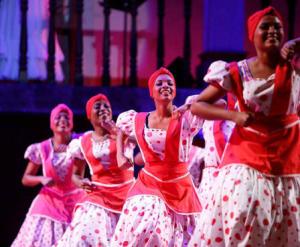
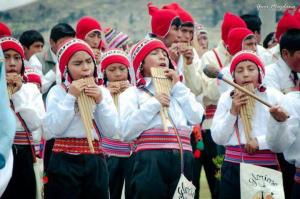
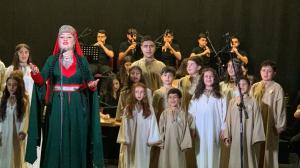
| Transmission and education | Transmission takes place principally through participation. Children and young people learn songs, dances, characters and stage behavior by observing older participants and becoming performers themselves. Historical descriptions record groups of children, sometimes referred to as pastorcitos, singing Christmas songs in both Spanish and Quechua and performing choreographed dances as part of the celebration. This makes the tradition an informal educational system. Religious narratives are transmitted alongside language, music, movement, theatrical expression and local memory. Learning does not depend exclusively on written scripts: repetition, rehearsal, observation and familiarity with the neighborhood's performance conventions are essential to acquiring the tradition. The continued involvement of younger generations is therefore central to its safeguarding. Historical observations have already noted concerns about declining spontaneous participation among San Blas children, making intergenerational transmission one of the most important challenges facing the tradition. | |
| Inventorying and research | The Adoration of the Three Kings has an unusually rich documentary and scholarly record. Margot Beyersdorff's research on the tradition examines its relationship with Spanish religious theatre and its transformation within the Andean cultural environment. More recent research has documented the centenary of the San Blas performance through interviews with residents and organizers, treating the celebration as an expression of local culture and popular religious education. A comprehensive inventory should look beyond the visible performance. Its heritage corpus includes the dramatic narrative, oral memory, songs, musical arrangements, characters, costumes, choreography, forms of rehearsal, family histories and the use of public space. Particular attention should also be given to the relationship between the theatrical tradition and the traditional Christmas songs associated with San Blas. Although these songs have different origins and should not all be attributed exclusively to the neighborhood, the performance became an important setting for their preservation and dissemination. | |
| Policies as well as legal and administrative measures | The Adoration of the Three Kings is documented among the traditional festivities of the historic San Blas neighborhood in Cusco's cultural and urban planning records. A register of traditions and customs of the Historic Center specifically lists the celebration among the annual festivities of San Blas. The tradition should nevertheless be distinguished from manifestations that have received formal national heritage declarations. The San Blas performance should not be presented as currently inscribed on Peru's National Cultural Heritage list solely on the basis of its inclusion in municipal documentation. Future safeguarding measures could include systematic audiovisual documentation, preservation of historical scripts and recordings, support for intergenerational rehearsals, protection of the traditional performance space and community participation in decisions concerning the evolution of the celebration. | |
| Role of intangible cultural heritage and its safeguarding in society | The most significant aspect of the tradition is the transformation of San Blas itself into a stage of collective memory. The performance brings religious narrative into the public life of the neighborhood, allowing residents to encounter their community through familiar streets, voices, music, costumes and characters. Over time, the imported religious narrative was incorporated into a distinctly Andean and Cusqueñan cultural environment. The performance combines Catholic imagery with local theatrical conventions, Quechua and Spanish song, Andean musical practices and neighborhood participation. It has consequently been described as one of the surviving expressions of mestizo Andean theatre. The heritage is therefore not simply the story of the Three Kings. It is the community's accumulated way of interpreting, performing and transmitting that story. | |
| Awareness raising | The performance has historically attracted audiences beyond San Blas and has contributed to the wider recognition of the neighborhood's cultural identity. Its songs and musical repertoire have also circulated beyond the original performance context through recordings and arrangements, helping associate traditional Cusqueñan Christmas music with San Blas. Awareness raising should emphasize the cultural depth of the celebration rather than presenting it merely as a Christmas spectacle. Interpretation can introduce visitors and younger residents to the history of the tradition, its performers, the role of children, its bilingual musical repertoire and the relationship between theatre and neighborhood identity. Digital documentation offers particular potential for safeguarding. Recordings of rehearsals, songs, oral testimonies, costumes, characters and performance spaces could preserve aspects of the tradition that are difficult to capture through written descriptions alone. | |
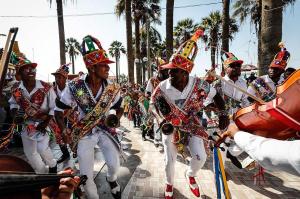
| Engagement of communities, groups and individuals as well as other stakeholders | Community participation is fundamental to the identity of the celebration. Historical accounts describe children, young people and adults from San Blas participating in the performance, while families and neighborhood residents have contributed to its organization and continuity. An account published by the Peruvian news agency Andina describes the performance as a manifestation in which children, young people and adults of the neighborhood participate and notes that preparations traditionally begin months in advance. Safeguarding should therefore remain community-centered. Families preserving roles and songs, musicians, performers, children, former participants, religious representatives, neighborhood residents, researchers and cultural authorities all represent potential holders or partners in the transmission of the tradition. The participation of children deserves particular attention. Their role is not simply decorative: young performers embody the mechanism through which the tradition moves from one generation to the next. Maintaining meaningful opportunities for their participation is consequently inseparable from safeguarding the celebration itself. | |
| International engagement | The tradition provides an important case for international discussion about how religious cultural forms are transformed through local appropriation and intergenerational practice. Its history connects European religious theatre with an Andean cultural environment in which new languages, musical forms, characters and community practices became incorporated into the performance. It can also contribute to comparative research with other Andean representations of the Adoration of the Three Kings. Peru contains several traditions bearing this name, including the distinct performance associated with the Feast of the Child Occe in Huancavelica, which was declared National Cultural Heritage in 2014. Comparing these manifestations can reveal both their shared historical foundations and the particular cultural forms developed by individual communities. International cooperation should prioritize documentation, community-based transmission and comparative research rather than treating the celebration primarily as a tourism product. | |
| References |
|
|









.jpeg)


.png)
.jpeg)
.jpg)
.png)
.jpg)


_(31711258567).jpg)