
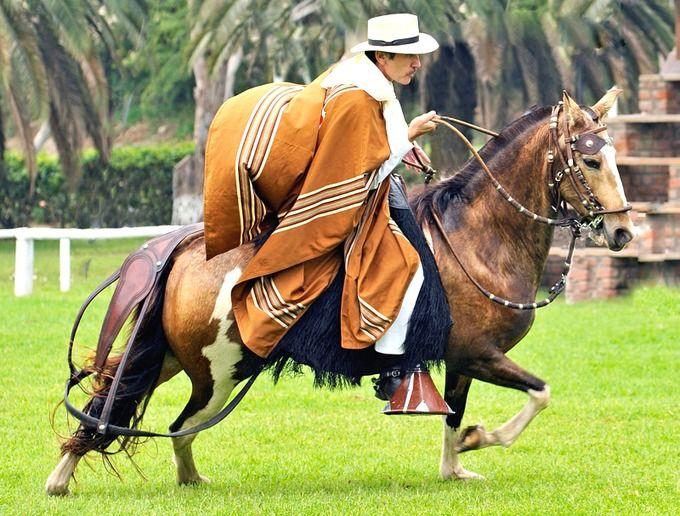
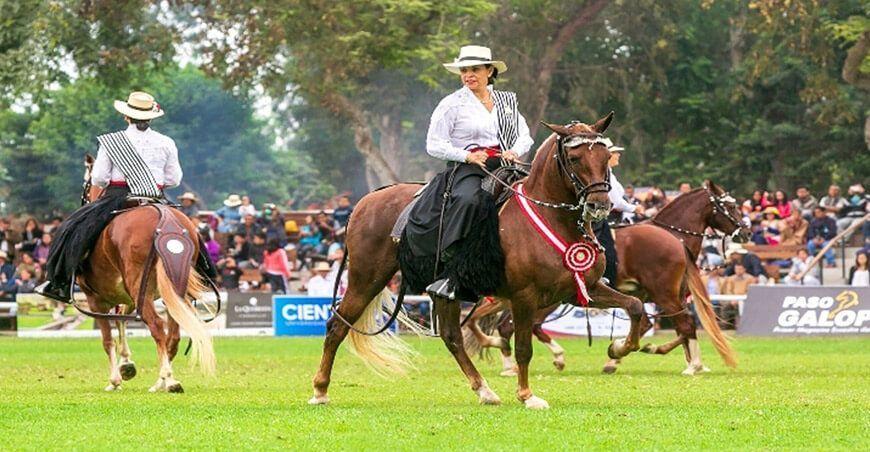
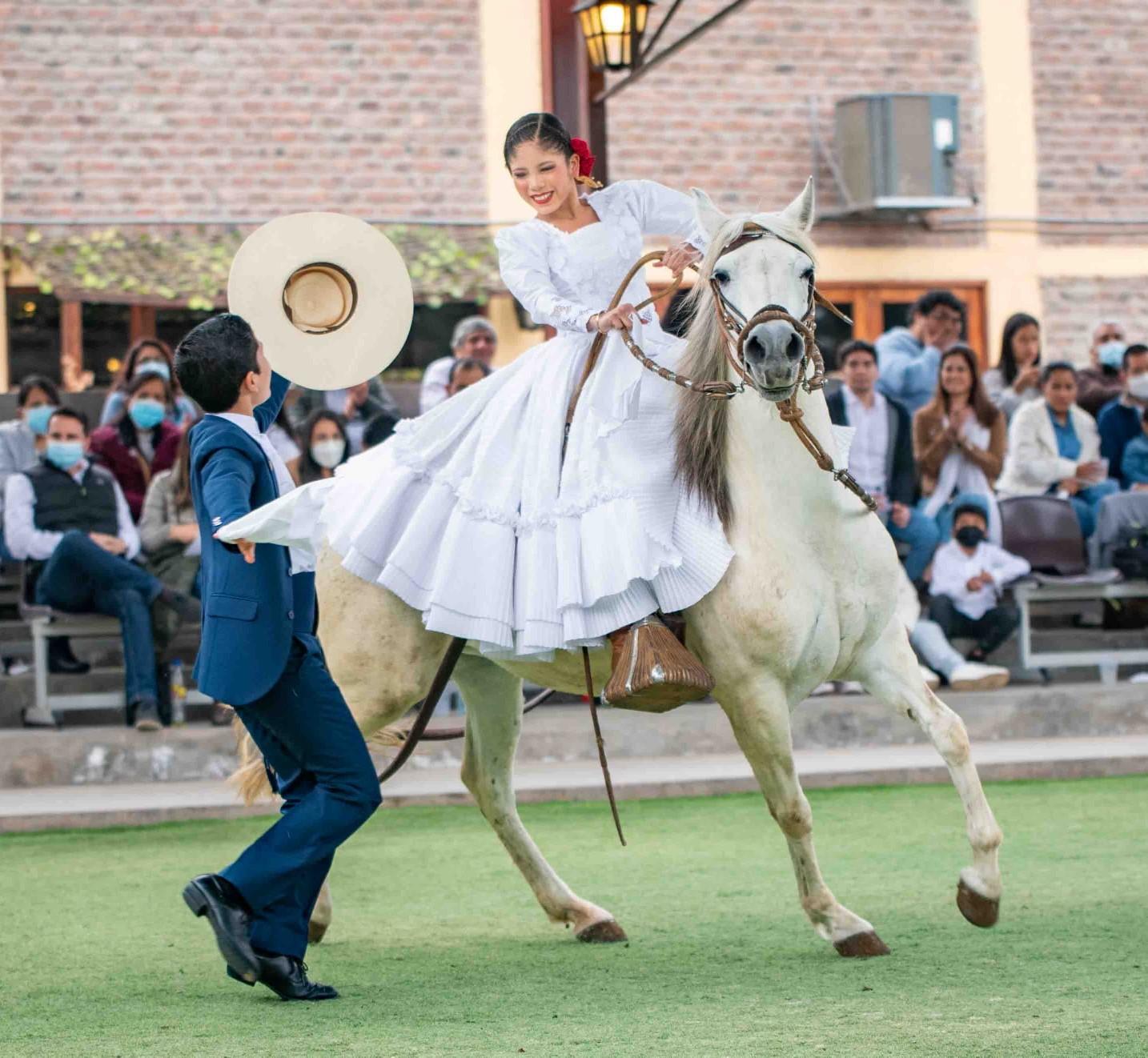
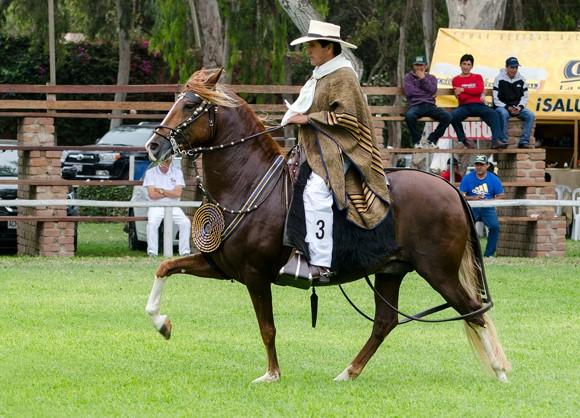
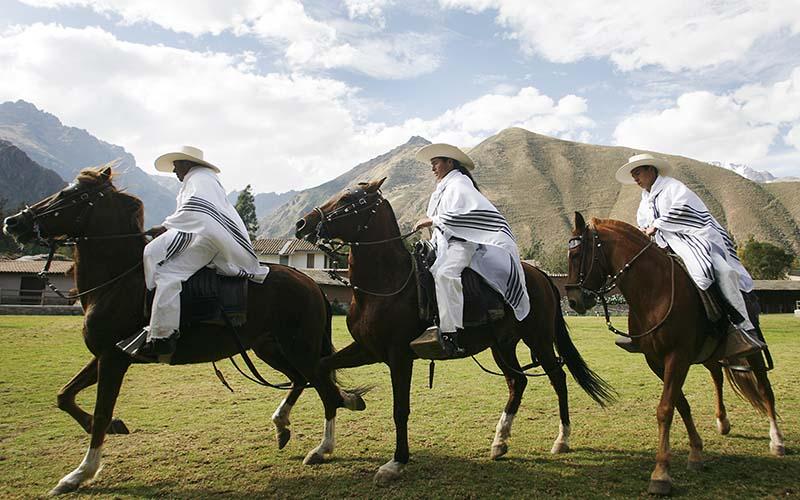
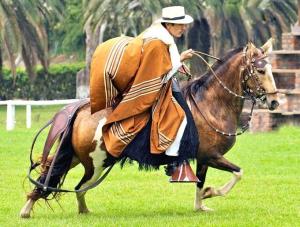
Few cultural traditions express harmony between humans and animals as gracefully as the Peruvian Paso Horse. Developed over centuries on Peru's coastal valleys and rural estates, this unique equestrian tradition represents far more than the breeding of a distinguished horse. It encompasses specialized knowledge of horsemanship, careful animal care, craftsmanship, ceremonial presentation, and a style of riding that values smoothness, elegance, and mutual understanding above speed or competition. Through generations of breeders, riders, trainers, artisans, and families, the Peruvian Paso Horse has become a living symbol of Peru's rural identity and equestrian heritage.
The origins of the tradition date back to the arrival of Iberian horses during the colonial period. Over time, the particular geography of Peru's coast, together with selective breeding and local riding practices, gave rise to a horse renowned for its naturally smooth gait, known as the paso llano. This four-beat lateral gait provides exceptional comfort for the rider while allowing the horse to move with remarkable balance and elegance. Alongside the development of the breed, communities cultivated specialized knowledge regarding breeding, training, nutrition, health care, riding techniques, traditional equipment, and ceremonial attire, transforming equestrian practice into an important cultural expression.
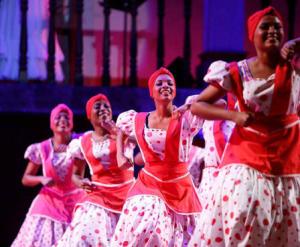
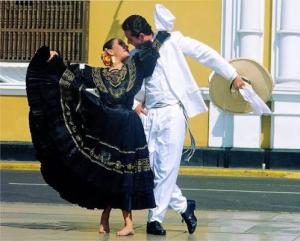
Today, the Peruvian Paso Horse continues to play an active role in festivals, exhibitions, breeding programs, cultural demonstrations, rural celebrations, and performances alongside the Marinera dance. Although its historical role as a working horse has evolved, the tradition remains vibrant through organizations, families, horse breeders, riders, artisans, and enthusiasts who continue preserving both the animal and the knowledge that surrounds it. The enduring significance of this heritage lies not simply in the beauty of the horse itself, but in the respectful relationship developed between people and animal through patience, trust, and shared experience.
08-04-2026
| Institutional and human capacities | The continuity of the Peruvian Paso Horse tradition depends upon the knowledge and commitment of breeders, horse trainers, riders, veterinarians, blacksmiths, saddle makers, leather artisans, textile craftsmen, judges, event organizers, rural families, and cultural practitioners. Each contributes specialized expertise that extends beyond breeding to include horsemanship, animal welfare, equipment production, and ceremonial presentation. National and regional cultural institutions, agricultural organizations, equestrian associations, universities, museums, municipalities, and Peru's Ministry of Culture contribute through documentation, educational activities, exhibitions, breeding promotion, and support for cultural events that celebrate Peru's equestrian heritage. Together, these actors help preserve both the tangible and intangible dimensions of this living tradition. | |
| Transmission and education | Learning begins through direct experience. Young riders gradually become familiar with horse behavior, stable routines, grooming, feeding, riding posture, and respectful handling before advancing to more specialized knowledge concerning training and exhibition. Observation, patience, and daily interaction remain fundamental methods of learning, allowing experience to accumulate naturally across generations. The tradition also transmits important ethical values. Experienced horsemen emphasize that effective riding depends not upon domination but upon communication. Riders learn to interpret subtle movements, understand the horse's temperament, and develop trust through consistency rather than force. In this way, the Peruvian Paso Horse teaches responsibility, discipline, empathy, and respect for living beings alongside technical equestrian skills. | |
| Inventorying and research | Research surrounding the Peruvian Paso Horse encompasses animal genetics, veterinary medicine, agricultural history, anthropology, biomechanics, cultural studies, and rural history. Scholars have documented the historical evolution of the breed, its adaptation to Peru's coastal environment, and the cultural significance of its distinctive gait within rural society. Contemporary investigations also examine breeding practices, equine health, conservation of genetic diversity, traditional riding techniques, craftsmanship associated with saddlery, and the role of equestrian traditions in strengthening cultural identity. These studies contribute to safeguarding knowledge that extends well beyond the horse itself, highlighting the complex cultural system developed around the breed. | |
| Policies as well as legal and administrative measures | Safeguarding the Peruvian Paso Horse requires integrated measures that protect both the breed and the cultural knowledge associated with its care. Breeding programs, veterinary support, registration systems, educational initiatives, exhibitions, and cultural events all contribute to maintaining high standards while ensuring that traditional practices continue to be transmitted responsibly. Administrative collaboration among agricultural authorities, cultural institutions, municipalities, educational organizations, breeders, and equestrian associations supports the organization of competitions, demonstrations, educational activities, and public exhibitions. These efforts encourage appreciation of the tradition while promoting responsible animal welfare and sustainable breeding practices. | |
| Role of intangible cultural heritage and its safeguarding in society | The cultural importance of the Peruvian Paso Horse extends beyond equestrian performance. The tradition demonstrates that harmony between humans and animals can itself become cultural heritage. Every ride reflects years of patient training, careful observation, and mutual adaptation in which horse and rider gradually learn to understand one another. The celebrated elegance of the paso llano is therefore not merely a physical characteristic of the horse, but the visible expression of a relationship built on confidence and cooperation. Safeguarding this tradition also preserves an important chapter of Peru's rural history. It recalls a way of life in which horses served as trusted companions in travel, agriculture, communication, and community celebrations. Even as technology has transformed transportation and farming, the Peruvian Paso Horse continues to remind society that cultural heritage often resides in relationships rather than objects, preserving values of patience, respect, and shared achievement that remain meaningful today. | |
| Awareness raising | Public exhibitions, equestrian festivals, cultural fairs, Marinera demonstrations, educational visits, agricultural events, museums, documentaries, and media productions have increased public appreciation of the Peruvian Paso Horse as an important expression of national heritage. These initiatives help audiences understand that the tradition encompasses breeding knowledge, craftsmanship, animal care, and cultural identity rather than simply equestrian competition. Educational activities also encourage younger generations to recognize the historical contribution of rural communities to Peru's cultural development. Demonstrations of traditional riding techniques, horse care, and artisan craftsmanship provide opportunities for broader audiences to appreciate the complexity and beauty of this living tradition. | |
| Engagement of communities, groups and individuals as well as other stakeholders | The safeguarding of the Peruvian Paso Horse depends upon cooperation among breeders, riders, trainers, veterinarians, artisans, agricultural specialists, municipalities, educational institutions, museums, cultural authorities, tourism organizations, and rural communities. Each participant preserves different aspects of the tradition while adapting responsibly to contemporary needs. Community engagement remains essential because the tradition continues to evolve through everyday practice. Families share breeding knowledge, experienced riders mentor newcomers, artisans preserve traditional manufacturing techniques, and cultural events create spaces where different generations collectively celebrate Peru's equestrian heritage. This collaborative network ensures that the tradition remains dynamic rather than merely commemorative. | |
| International engagement | The Peruvian Paso Horse enjoys international recognition as one of the world's distinctive horse breeds, attracting breeders, researchers, equestrian enthusiasts, and visitors interested in traditional horsemanship. International exhibitions, cultural exchanges, academic collaboration, and equestrian events provide opportunities to share Peru's unique approach to horse breeding and riding with broader audiences. Beyond the breed itself, the tradition contributes to global discussions on safeguarding rural heritage, responsible animal stewardship, traditional craftsmanship, and cultural landscapes. Its emphasis on harmony between horse and rider offers an alternative perspective within international equestrian culture, demonstrating that excellence may be measured not only by athletic performance but also by communication, balance, and mutual trust. | |
| References |
|
|







.jpeg)


.png)


.jpeg)
.jpg)


.png)
.jpg)


_(31711258567).jpg)