
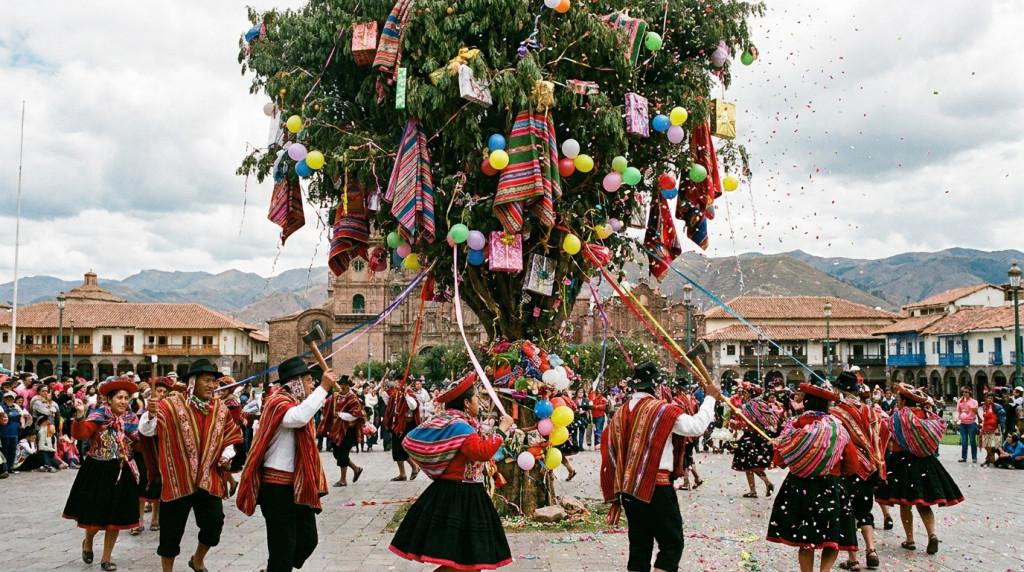
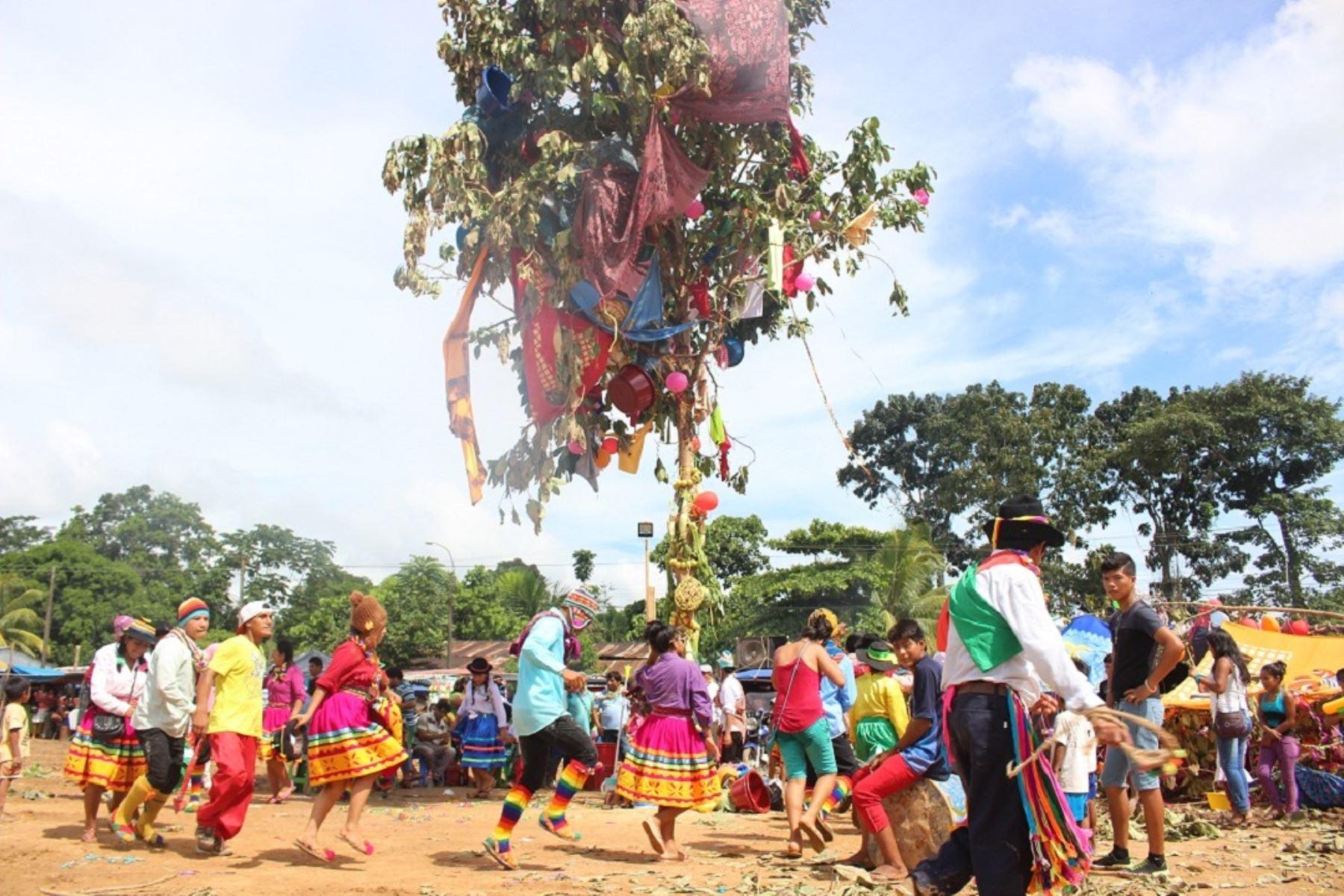
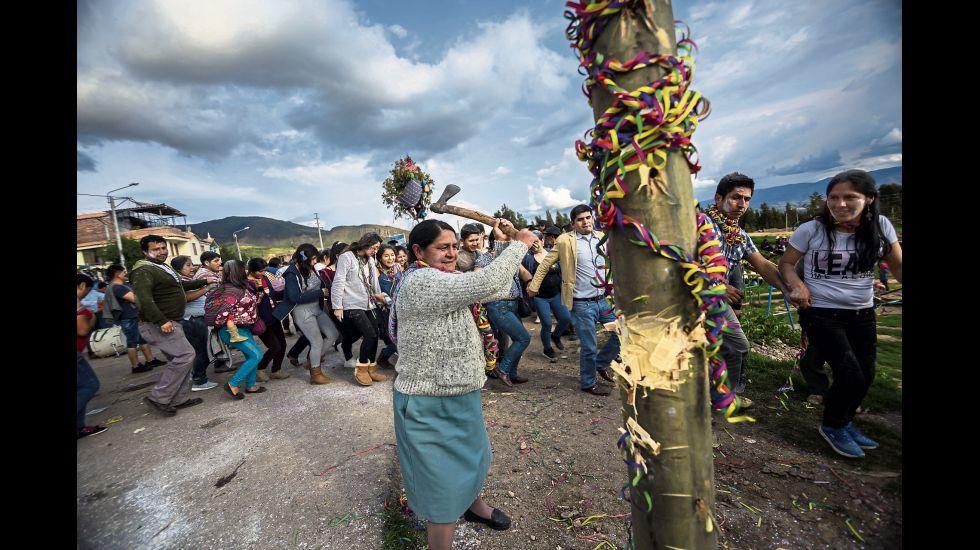
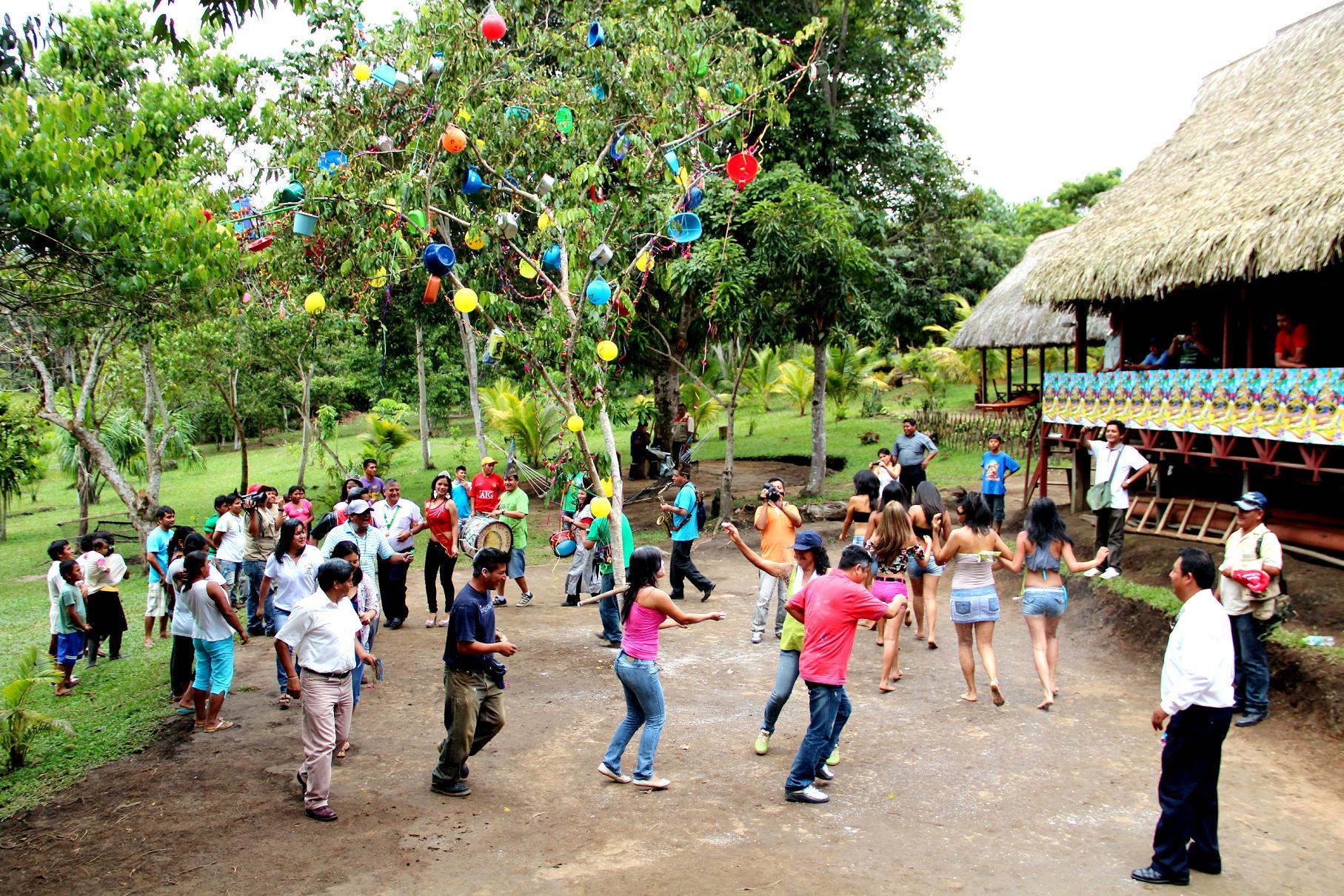
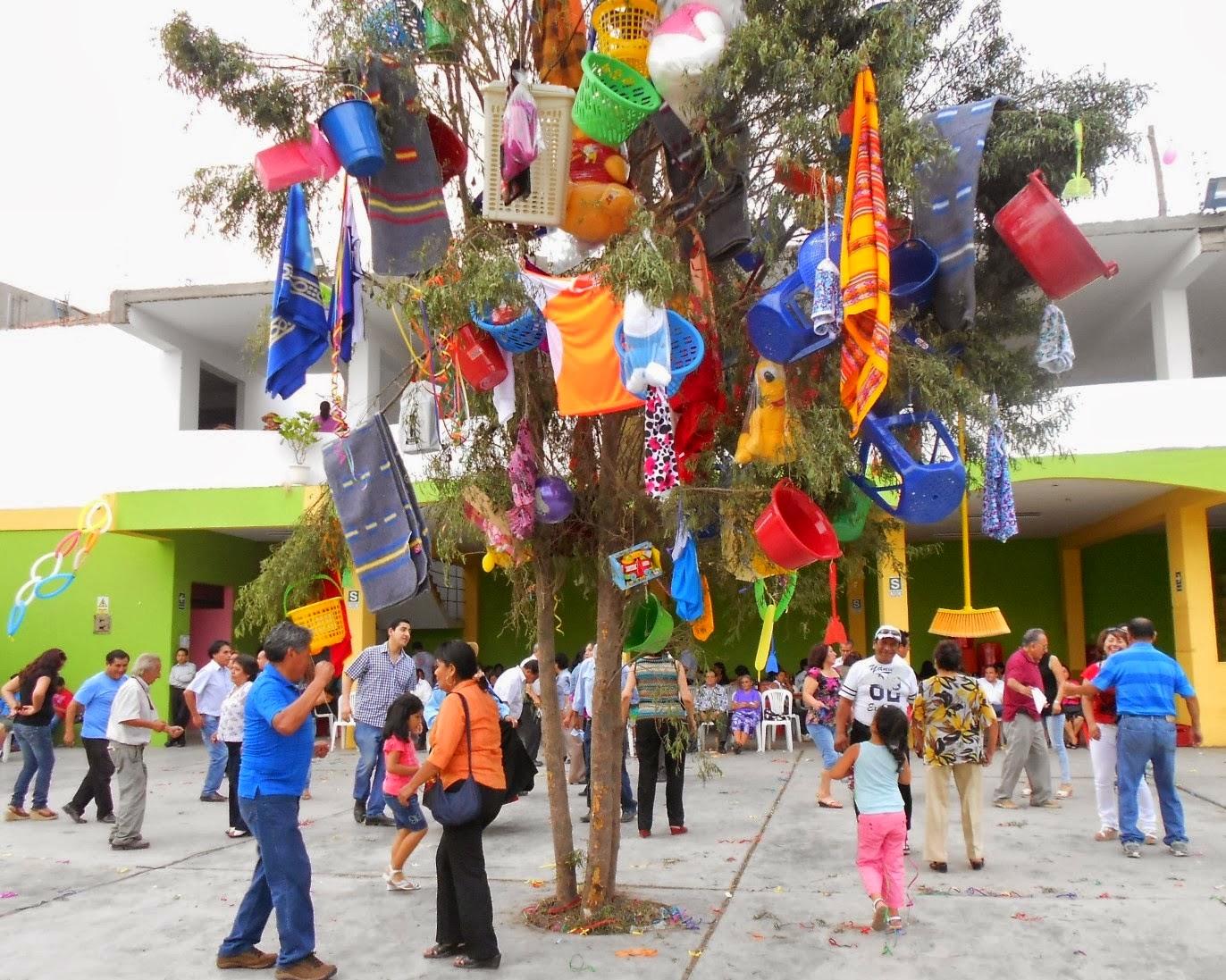
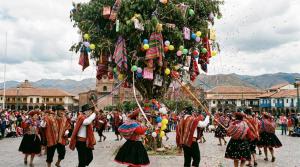
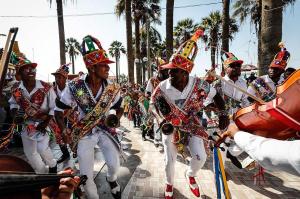
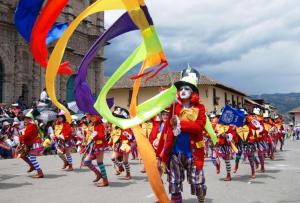
Across many regions of Peru, particularly in the central Andes, the northern highlands, and parts of the Amazon, communities celebrate a festive tradition known by different names, including Yunza, Cortamonte, and Umisha. Although local customs vary, they all share a common practice: a tree is decorated with gifts, ribbons, fruits, household items, toys, and colorful ornaments, becoming the symbolic center of Carnival festivities. Throughout the celebration, music, dance, laughter, and communal participation transform the tree into a temporary gathering place where prosperity is shared rather than possessed.
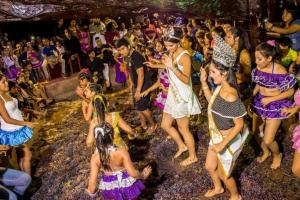
The celebration is practiced by entire communities, including families, neighbors, musicians, dancers, local authorities, and Carnival organizers. Participants dance in circles around the decorated tree while couples or individuals take turns striking its trunk with an axe or machete. As each participant makes only a few symbolic cuts before passing the tool to the next, the activity becomes a collective effort rather than an individual competition. Eventually, the tree falls, scattering the gifts among those present, who joyfully collect them as part of the celebration. In many communities, the person or couple responsible for the final blow traditionally assumes responsibility for organizing the following year's celebration, ensuring the continuity of the custom across generations.
Beyond its festive character, the Yunza expresses values of reciprocity, hospitality, cooperation, and collective celebration. The decorated tree symbolizes abundance that belongs to the community rather than to any single individual. Through music, dance, shared labor, and the symbolic distribution of gifts, the celebration reinforces social ties while reminding participants that prosperity is strengthened when it circulates among families and neighbors. Despite regional variations in its name and specific customs, the Yunza continues to embody one of Peru's most vibrant expressions of communal solidarity.
07-31-2026
| Institutional and human capacities | The continuity of the Yunza depends upon the active participation of neighborhood associations, Carnival committees, community leaders, musicians, dancers, families, artisans, local businesses, and volunteers who collaborate in preparing every stage of the celebration. Organizing the event requires coordination, shared responsibilities, and contributions from numerous members of the community, reflecting the collective spirit that defines the tradition. Municipal governments, cultural institutions, educational centers, and Peru's Ministry of Culture contribute by supporting Carnival activities, documenting regional expressions, facilitating cultural events, and encouraging the safeguarding of local festive traditions. Their efforts complement the leadership exercised by communities themselves, who remain the principal custodians of the celebration. | |
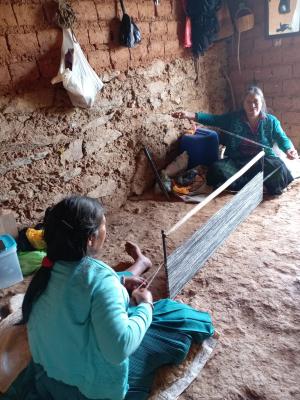
| Transmission and education | Knowledge of the Yunza is transmitted naturally through participation. Children grow up observing their families decorate the tree, prepare music, organize communal meals, dance with neighbors, and participate respectfully in every stage of the celebration. Rather than formal instruction, learning occurs through shared experience during annual festivities. The tradition also teaches social values that extend beyond the celebration itself. Younger generations learn the importance of contributing to collective events, respecting community responsibilities, taking turns, and understanding that festivals are sustained through cooperation rather than individual effort. In this way, cultural transmission strengthens both festive knowledge and community life. | |
| Inventorying and research | The Yunza has been documented through studies in anthropology, folklore, ethnography, cultural history, and Carnival traditions. Researchers have examined its regional variations, symbolic meanings, musical expressions, and its relationship with agricultural calendars, seasonal celebrations, and communal reciprocity. Contemporary research increasingly interprets the Yunza as a ritual of social exchange. Rather than focusing solely on the decorated tree or the distribution of gifts, scholars explore how the celebration reinforces social relationships, collective identity, and systems of mutual support that continue to play an important role in community organization throughout Peru. | |
| Policies as well as legal and administrative measures | Safeguarding measures encourage the continuity of traditional Carnival celebrations while supporting community participation, traditional music, dance, and public cultural events. Local authorities frequently facilitate the use of public spaces, logistical coordination, and cultural programming that allows communities to organize the celebration according to their own traditions. Administrative initiatives also promote documentation of regional expressions, recognizing that the Yunza adopts different names, musical styles, and ceremonial practices across Peru. Respecting this diversity contributes to preserving the richness of the tradition while avoiding the standardization of local customs. | |
| Role of intangible cultural heritage and its safeguarding in society | The Yunza demonstrates how celebration can strengthen social cohesion by transforming generosity into a collective public experience. Rather than emphasizing ownership, the tradition celebrates the circulation of gifts, hospitality, and shared enjoyment, reinforcing relationships among neighbors, families, and visitors through active participation. The celebration also renews community commitments from one year to the next. By entrusting future organization to new hosts, the Yunza creates a continuous cycle of responsibility, reciprocity, and cultural continuity that extends well beyond the Carnival season. | |
| Awareness raising | Public appreciation of the Yunza has grown through regional Carnival festivals, cultural fairs, educational activities, community museums, documentaries, and local media that highlight the diversity of Peru's festive traditions. These initiatives encourage audiences to recognize the celebration as an expression of living cultural heritage rather than simply recreational entertainment. Educational programs increasingly present the Yunza as an example of how festivals contribute to social organization, community participation, and the transmission of cultural values. This perspective allows younger generations to appreciate the deeper significance of the celebration beyond its colorful appearance. | |
| Engagement of communities, groups and individuals as well as other stakeholders | The safeguarding of the Yunza depends upon collaboration among families, neighborhood associations, Carnival committees, musicians, dancers, artisans, local authorities, educational institutions, researchers, and cultural organizations. Every participant contributes to different aspects of the celebration, from preparing the decorated tree and organizing music to coordinating communal activities and transmitting local customs. Community participation remains essential because the celebration cannot exist without collective involvement. Every contribution, whether providing decorations, preparing food, performing music, or joining the dances, reinforces the shared responsibility of preserving the tradition for future generations. | |
| International engagement | The Yunza contributes to international appreciation of Peru's cultural diversity through cultural exchanges, Carnival festivals, academic research, and comparative studies of communal celebrations around the world. Its regional diversity offers valuable opportunities to examine how different communities adapt shared traditions while maintaining common cultural values. The celebration also enriches international discussions on intangible cultural heritage by illustrating the social importance of reciprocity, collective participation, and gift exchange. In a world where many festivities emphasize spectacle, the Yunza reminds audiences that celebrations can also serve as mechanisms for strengthening solidarity and renewing community relationships. | |
| References |
|
|






.jpeg)


.png)

.jpeg)
.jpg)

.png)
.jpg)


_(31711258567).jpg)