
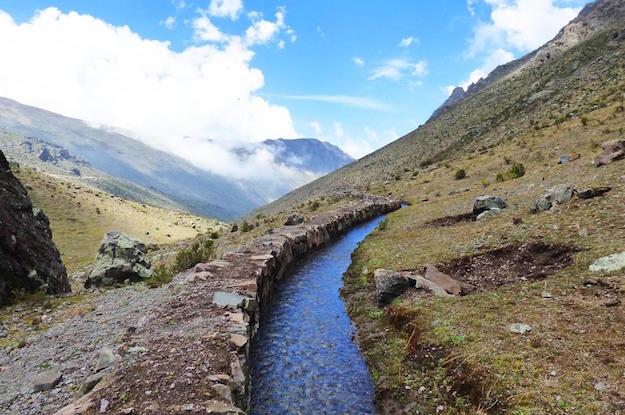
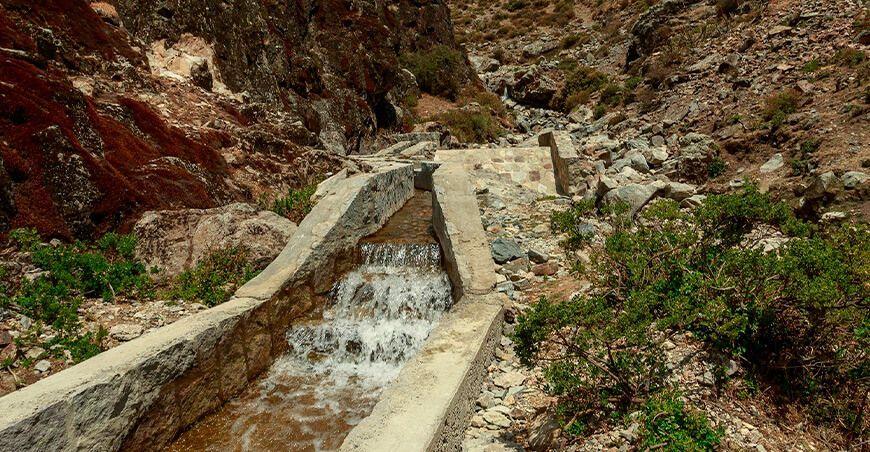
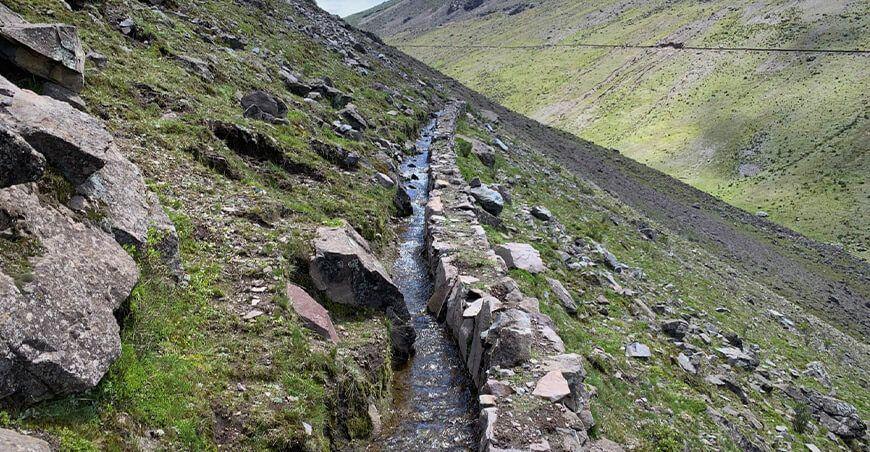
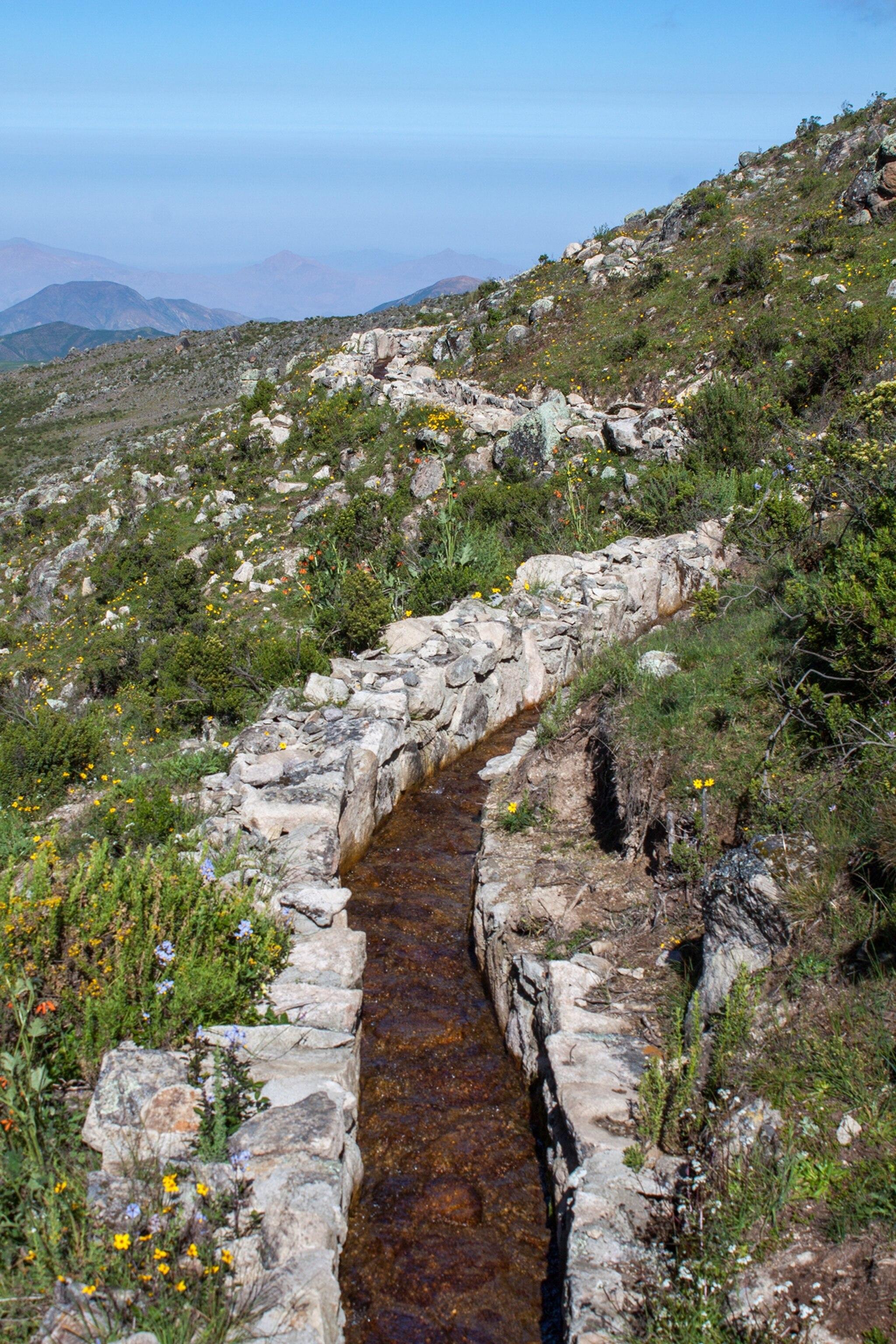
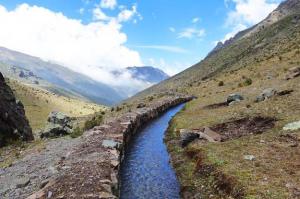
High in the central Andes of Peru, communities have safeguarded for centuries an ingenious system for managing one of their most precious resources: water. Known as amunas, these ancestral hydraulic systems capture rainwater and seasonal runoff during the wet season, guiding it through carefully constructed stone-lined channels into permeable mountain soils. Rather than transporting water directly to fields, the system allows it to infiltrate underground, where it is naturally stored before reappearing months later through springs that sustain agriculture and communities during the dry season.
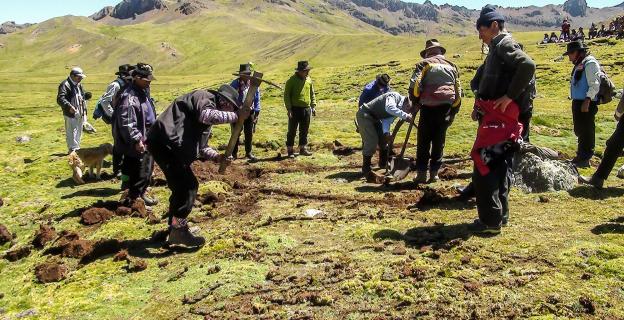
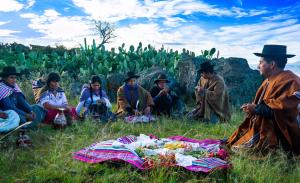
The knowledge associated with the amunas continues to be practiced principally in the province of Huarochirí, in the Lima Region, where local communities organize the annual maintenance, cleaning, and operation of the canals through collective labor. Elders, farmers, communal authorities, and younger generations work together to inspect channels, remove vegetation, repair stone structures, and monitor water flow according to seasonal conditions. These activities combine engineering knowledge, environmental observation, customary governance, and community cooperation into a single living tradition.
Far more than an irrigation technique, the amunas embody a sophisticated understanding of mountain hydrology developed long before modern groundwater science. The system demonstrates how communities learned to work with natural processes rather than against them, transforming rainfall into a long-term water reserve through gravity, geology, and collective stewardship. Today, as climate variability increasingly challenges water security worldwide, the amunas illustrate how ancestral knowledge can contribute valuable solutions to contemporary environmental challenges.
07-31-2026
| Institutional and human capacities | The continuity of the amunas depends upon communal authorities, experienced farmers, local water managers, elders, engineers, environmental specialists, and younger community members who collectively maintain both the physical infrastructure and the traditional knowledge associated with its operation. Practical experience is essential, as successful management requires understanding local geology, seasonal rainfall, soil permeability, and watershed dynamics. Today, universities, research centers, public institutions responsible for water management, Peru's Ministry of Culture, and environmental organizations increasingly collaborate with local communities to document traditional hydraulic knowledge while supporting community-led conservation initiatives. These partnerships recognize that safeguarding the amunas requires preserving knowledge as much as preserving canals. | |
| Transmission and education | Knowledge of the amunas is transmitted primarily through participation in communal maintenance activities. Younger generations accompany experienced community members during annual cleaning and repair campaigns, learning how to evaluate slopes, identify infiltration zones, maintain stone channels, and interpret the seasonal behavior of water across the landscape. This process teaches far more than engineering techniques. Participants develop an understanding of collective responsibility, environmental stewardship, and the principle that water should be managed for the long-term benefit of the entire community rather than immediate individual use. | |
| Inventorying and research | The amunas have attracted growing interest from archaeologists, hydrologists, geologists, engineers, anthropologists, climate scientists, and specialists in traditional ecological knowledge. Research combines archaeological documentation with hydrological monitoring to understand how ancestral techniques continue to recharge aquifers and regulate water availability. Recent interdisciplinary studies have demonstrated that the amunas function as nature-based infrastructure capable of improving water resilience under changing climatic conditions. As a result, the system has become an important example of how Indigenous engineering knowledge can complement contemporary approaches to sustainable water management. | |
| Policies as well as legal and administrative measures | Safeguarding initiatives promote the conservation of traditional hydraulic systems while supporting community governance of local water resources. National and regional policies increasingly recognize the value of ancestral infrastructure as part of broader strategies for watershed management, ecosystem restoration, and climate adaptation. Administrative cooperation among local governments, environmental authorities, water agencies, research institutions, and community organizations facilitates restoration projects, technical studies, and educational programs that strengthen both the physical infrastructure and the cultural knowledge associated with the amunas. | |
| Role of intangible cultural heritage and its safeguarding in society | The amunas demonstrate that intangible cultural heritage can contribute directly to human well-being by ensuring reliable water supplies for agriculture, livestock, and rural communities. The knowledge system reflects generations of observation, experimentation, and adaptation, illustrating how cultural heritage can become an essential component of environmental sustainability. The tradition also reinforces the importance of collective governance. Decisions regarding maintenance, water distribution, and long-term stewardship are made through community cooperation, demonstrating that sustainable resource management depends as much upon social organization as upon technical expertise. | |
| Awareness raising | Growing public interest in climate resilience has increased awareness of the amunas through documentaries, museum exhibitions, university research, educational programs, and environmental outreach initiatives. These activities encourage wider audiences to appreciate ancestral hydraulic knowledge not as a relic of the past but as an innovative approach to contemporary water challenges. Educational initiatives increasingly present the amunas as an example of traditional engineering, allowing students, policymakers, and environmental professionals to explore how Indigenous knowledge contributes to sustainable development and climate adaptation. | |
| Engagement of communities, groups and individuals as well as other stakeholders | Safeguarding the amunas requires cooperation among farming communities, communal authorities, environmental organizations, universities, engineers, hydrologists, government agencies, educators, and researchers. Community members continue to lead maintenance activities while external partners contribute scientific studies, technical assistance, and conservation support. This collaboration demonstrates that traditional knowledge and modern science need not compete. Instead, each offers complementary perspectives that strengthen the long-term protection of both cultural heritage and natural resources. | |
| International engagement | The amunas have gained increasing international recognition as an outstanding example of nature-based solutions rooted in traditional knowledge. Their contribution to groundwater recharge, climate adaptation, and sustainable water management has attracted the attention of researchers, international development organizations, and environmental initiatives seeking resilient approaches to water security. The experience of Andean communities contributes to global discussions on climate change, ecosystem restoration, and the value of Indigenous knowledge in addressing contemporary environmental challenges. By demonstrating that centuries-old practices remain scientifically relevant, the amunas illustrate how intangible cultural heritage can actively inform the future rather than simply preserve the past. | |
| References |
|
|




























.jpeg)










.png)






















.jpeg)

.jpg)




.png)
.jpg)


_(31711258567).jpg)