
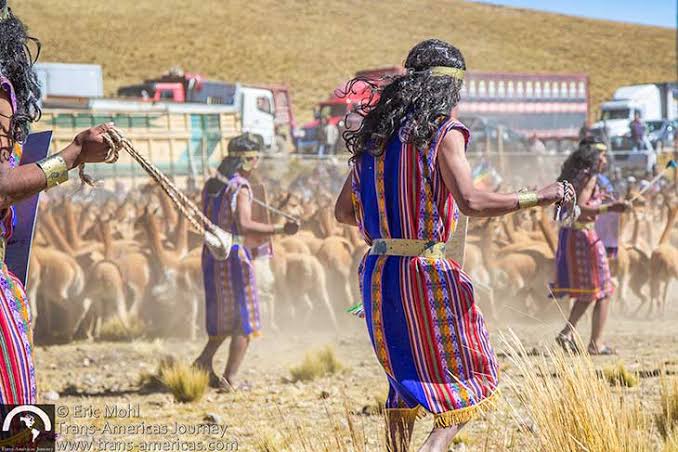
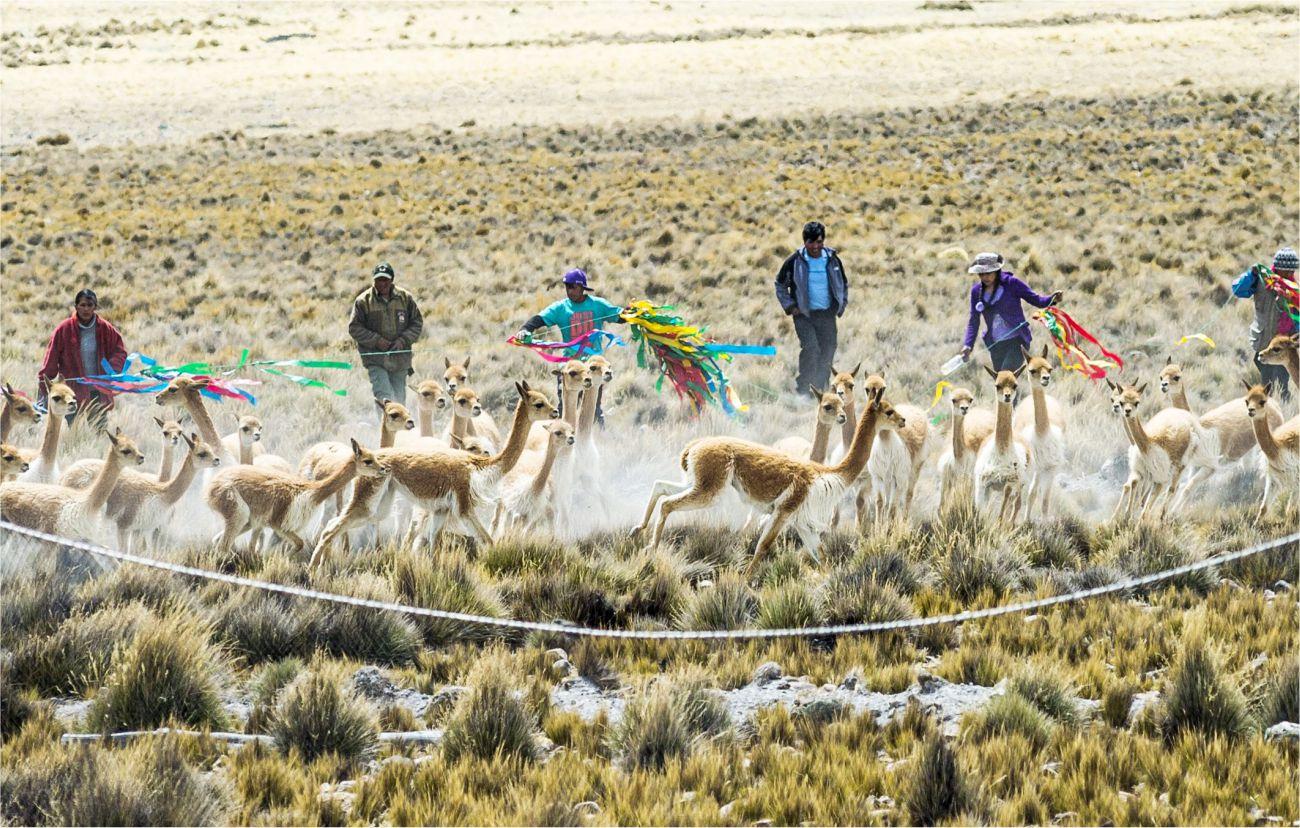
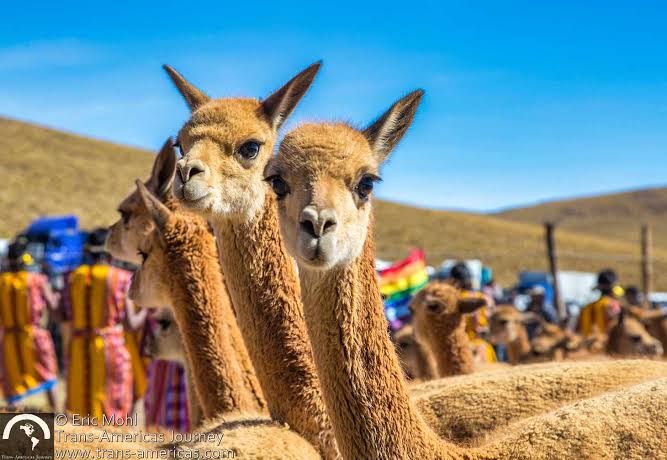
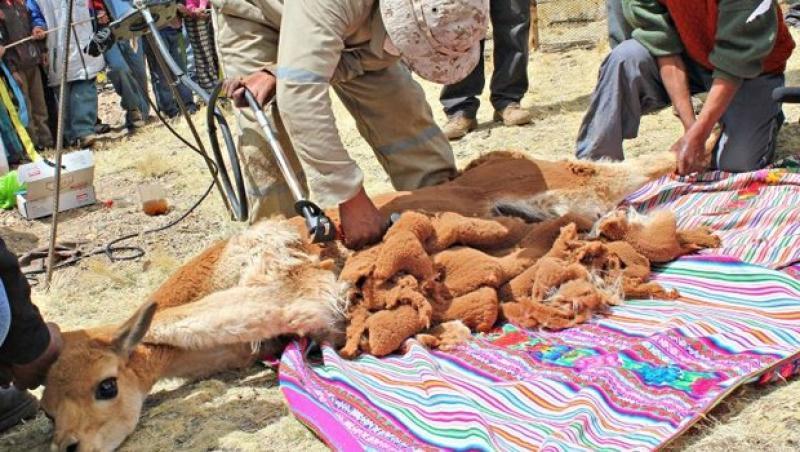
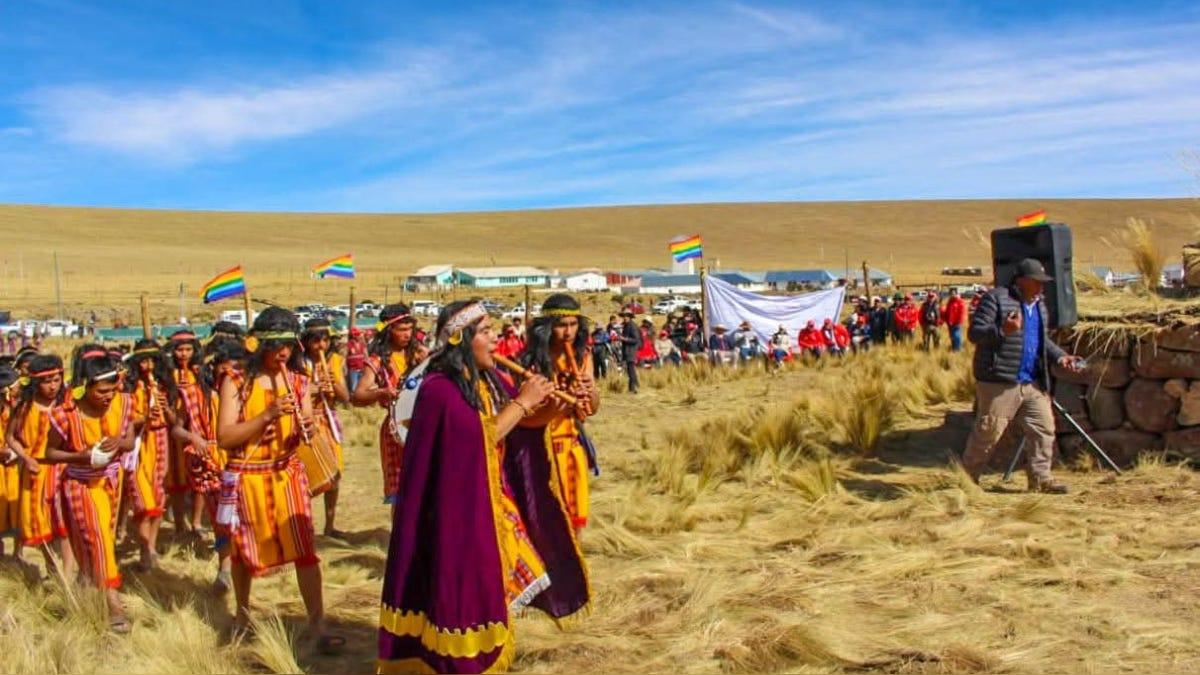
High in the Andean puna, where vast grasslands stretch across the mountains of Peru, communities continue to practice the Chaccu, an ancestral communal roundup of wild vicuñas that combines environmental stewardship, traditional knowledge, and collective organization. Practiced in regions such as Ayacucho, Huancavelica, Apurímac, Cusco, Arequipa, and Puno, the Chaccu follows techniques that have existed since pre-Hispanic times, allowing communities to harvest the valuable fiber of the vicuña without harming the animals before releasing them back into their natural habitat.
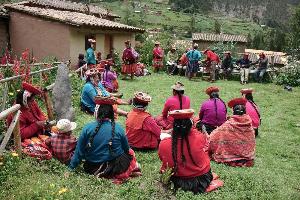
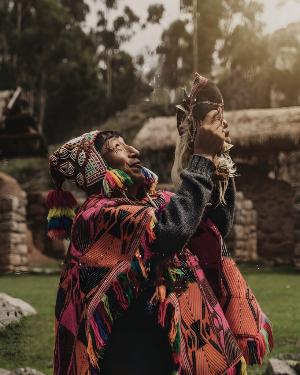
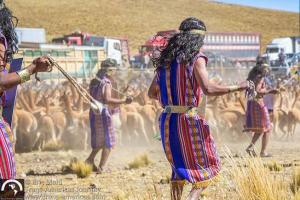
The practice involves entire communities, including local authorities, herders, families, students, conservation specialists, and volunteers. Participants form long human chains that gradually guide vicuñas toward temporary enclosures, where trained personnel carefully shear the animals before returning them to the wild. The event is often accompanied by traditional ceremonies expressing gratitude to nature and respect for the vicuña, reinforcing the understanding that wildlife should be managed responsibly rather than exploited.
Today, the Chaccu represents far more than a fiber harvesting activity. It embodies centuries of ecological knowledge regarding wildlife behavior, grassland management, and communal decision making. By demonstrating that economic use and biodiversity conservation can coexist, the Chaccu has become an internationally recognized example of how traditional knowledge contributes to the sustainable management of natural resources while strengthening the cultural identity of Andean communities.
07-30-2026
| Institutional and human capacities | The continuity of the Chaccu depends upon the coordinated participation of Andean communities, communal authorities, experienced herders, environmental technicians, wildlife specialists, and local families who possess detailed knowledge of vicuña behavior, highland ecosystems, and traditional management practices. Their experience allows the activity to be conducted efficiently while minimizing stress on the animals and protecting the surrounding environment. Public institutions responsible for culture, wildlife conservation, protected natural areas, and rural development collaborate with local communities by providing technical guidance, conservation programs, and regulatory oversight. This partnership reflects the understanding that safeguarding the Chaccu requires both cultural continuity and sound environmental management. | |
| Transmission and education | Knowledge of the Chaccu is transmitted through direct participation during annual roundups. Younger generations accompany elders into the puna, where they gradually learn how to organize the communal effort, interpret animal behavior, navigate the high-altitude landscape, and understand the ecological principles that sustain healthy vicuña populations. Transmission also includes ethical values regarding the respectful treatment of wildlife. Community members learn that the objective is not hunting but sustainable coexistence, ensuring that the vicuña continues to thrive while providing a renewable source of one of the world's finest natural fibers. | |
| Inventorying and research | The Chaccu has attracted the attention of anthropologists, ecologists, conservation biologists, historians, and specialists in traditional resource management. Research has documented its historical continuity from the Inca period to the present, as well as its contribution to biodiversity conservation, community governance, and sustainable fiber production. Scientific studies have also examined how traditional ecological knowledge complements modern conservation strategies. The Chaccu is frequently cited as an example of successful collaboration between Indigenous knowledge systems and contemporary wildlife management, demonstrating that cultural heritage can actively contribute to environmental sustainability. | |
| Policies as well as legal and administrative measures | Safeguarding the Chaccu requires close coordination between environmental regulations and cultural heritage policies. National legislation governing the protection of vicuñas establishes standards for animal welfare, fiber harvesting, and habitat conservation while recognizing the role of local communities in managing this renewable resource. Administrative measures also support training programs, monitoring systems, and community participation to ensure that harvesting remains sustainable. By integrating scientific oversight with traditional practices, these policies help maintain both healthy vicuña populations and the cultural knowledge associated with the Chaccu. | |
| Role of intangible cultural heritage and its safeguarding in society | The Chaccu demonstrates that intangible cultural heritage can contribute directly to environmental conservation. Rather than separating people from nature, the practice illustrates a model in which communities assume long-term responsibility for protecting wildlife while benefiting from the sustainable use of natural resources. The tradition also reinforces cooperation within Andean communities. Organizing a successful Chaccu requires collective planning, shared responsibilities, and mutual trust, strengthening social cohesion while reaffirming the cultural values that have guided communal resource management for centuries. | |
| Awareness raising | Educational campaigns, protected area interpretation programs, documentaries, museums, and community demonstrations have increased public awareness of the Chaccu as both a cultural practice and a conservation strategy. These initiatives help audiences understand that the value of the tradition lies not only in the production of fine fiber but also in the knowledge system that makes sustainable management possible. Public outreach increasingly highlights the Chaccu as an example of how Indigenous and local communities contribute to biodiversity conservation, encouraging greater appreciation of traditional ecological knowledge within broader environmental discussions. | |
| Engagement of communities, groups and individuals as well as other stakeholders | The safeguarding of the Chaccu depends upon collaboration among communal organizations, local families, environmental authorities, protected area managers, veterinarians, researchers, educational institutions, textile producers, and conservation organizations. Each stakeholder contributes specialized knowledge while respecting the leadership of the communities that have safeguarded the practice for generations. Community assemblies continue to play a central role in planning the annual roundup, allocating responsibilities, and determining how benefits derived from vicuña fiber contribute to local development. This participatory approach ensures that safeguarding remains closely linked to community well-being. | |
| International engagement | The Chaccu has become an internationally recognized example of community-based conservation and sustainable wildlife management. Researchers, conservation organizations, and international environmental programs frequently reference the practice when discussing successful approaches that integrate cultural heritage with biodiversity protection. Its experience has contributed to international dialogue on the sustainable use of wild species, demonstrating how traditional ecological knowledge can support conservation objectives while generating economic opportunities for local communities. As interest grows in nature-based solutions and Indigenous knowledge, the Chaccu offers a valuable model for balancing environmental protection with cultural continuity. | |
| References |
|
|










.jpeg)




.png)





.jpeg)

.jpg)



.png)
.jpg)


_(31711258567).jpg)