
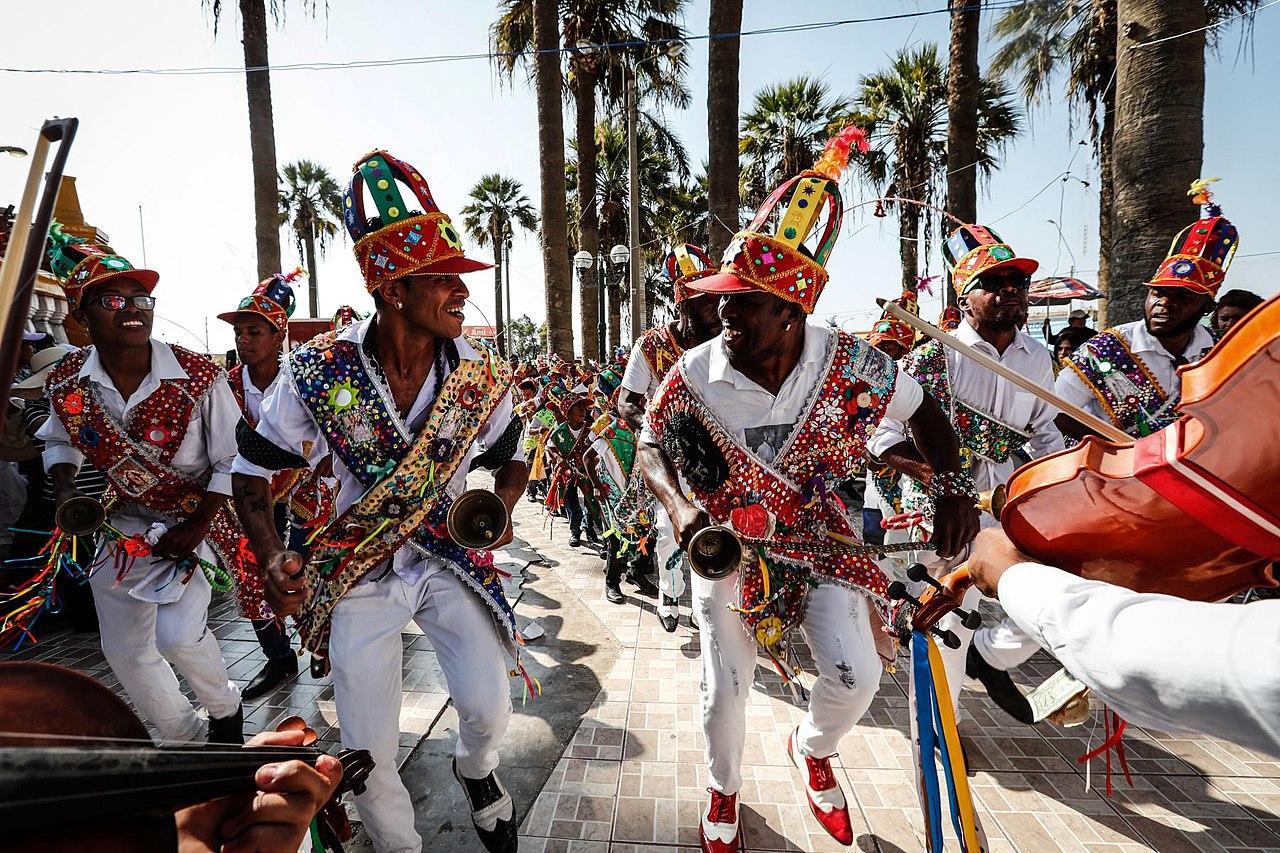
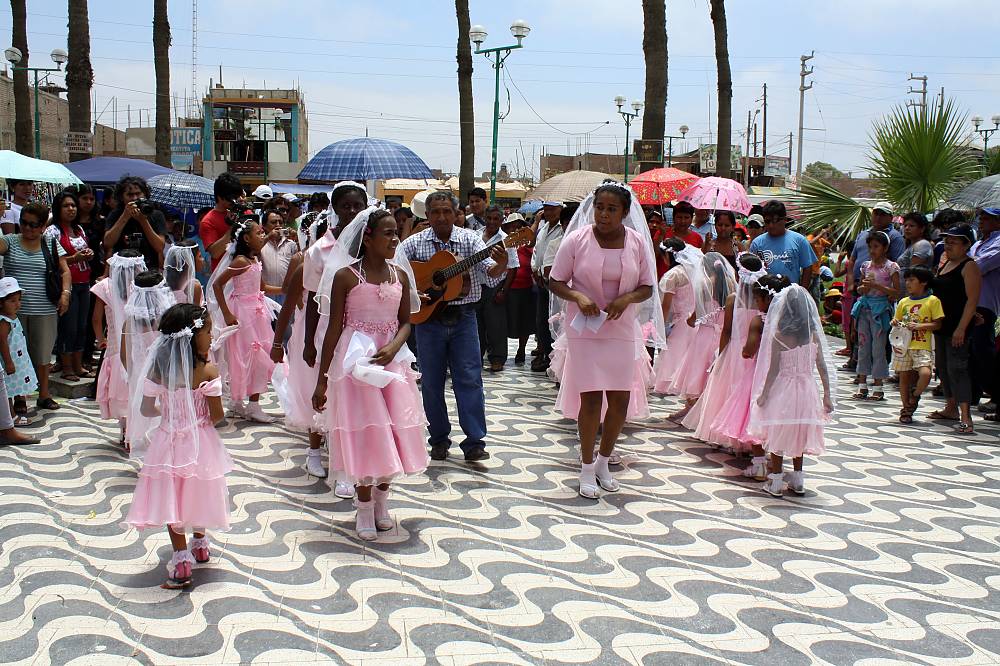
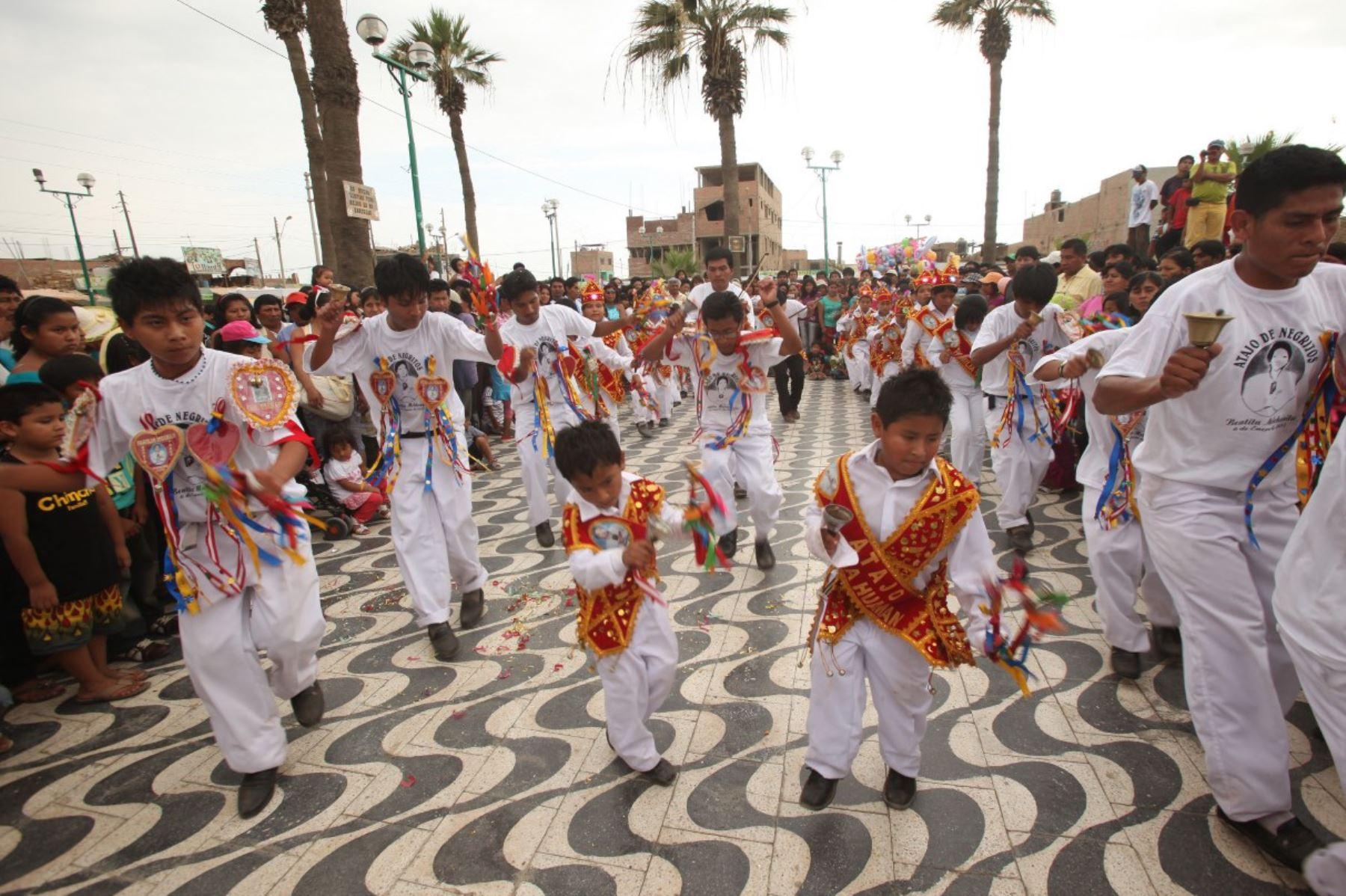
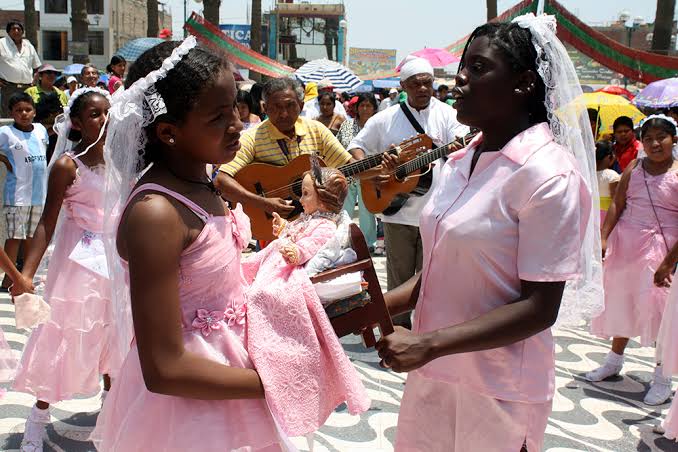
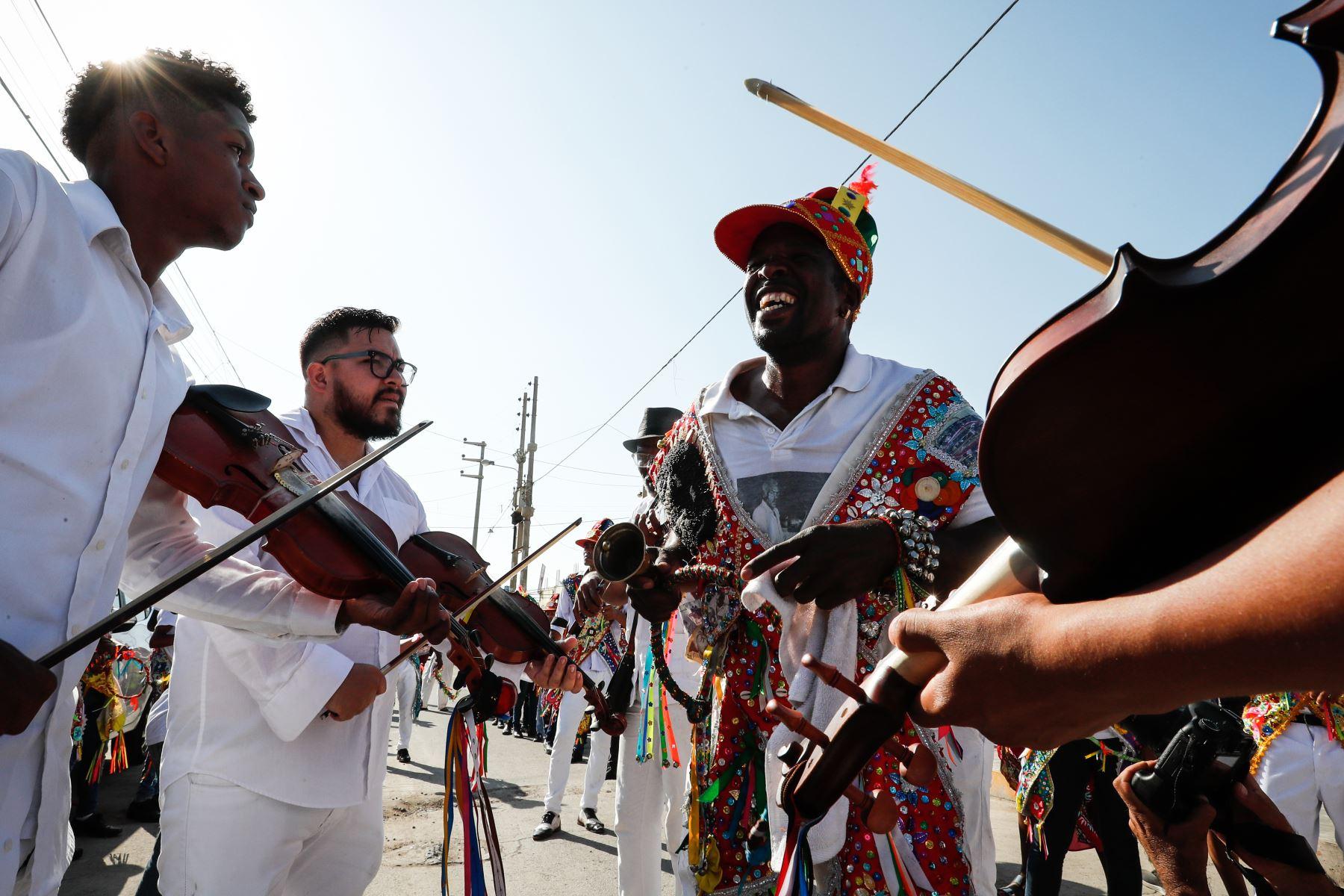
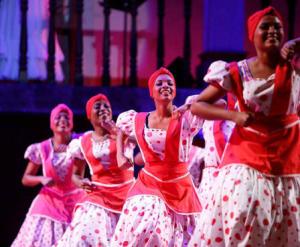
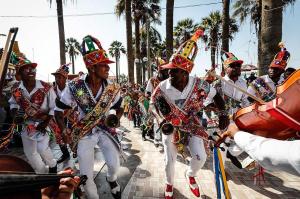
Every year during the Christmas season, towns across the regions of Ica and southern Lima come alive with the rhythmic sounds of violin, bells, songs, and zapateo as groups perform the Hatajo de Negritos and Las Pallitas. These two complementary cultural expressions combine music, dance, poetry, and religious devotion in celebrations dedicated to the Nativity. Although each has its own distinctive style, they are traditionally performed as part of the same festive cycle, reflecting the cultural diversity and historical experiences of Peru's southern coast.
The Hatajo de Negritos is practiced primarily by Afro-Peruvian communities, while Las Pallitas is traditionally performed by women's groups from the same localities. Together, they represent a remarkable example of how different sectors of society participate in a shared celebration while maintaining their own artistic identities. Participants include singers, dancers, violinists, community leaders, families, and local residents who prepare throughout the year to perform during religious festivities and community gatherings.
Beyond their festive character, these expressions preserve centuries of collective memory. They embody the resilience of Afro-Peruvian communities, the continuity of devotional traditions, and the capacity of music and dance to strengthen social bonds across generations. Their recognition by UNESCO in 2019 highlights not only their artistic richness but also their significance as living expressions of identity, history, and cultural continuity.
07-30-2026
| Institutional and human capacities | The safeguarding of the Hatajo de Negritos and Las Pallitas relies on the dedication of community musicians, dancers, singers, violinists, elders, families, religious leaders, and cultural promoters across the regions of Ica and southern Lima. Their knowledge encompasses musical performance, choreography, oral poetry, ceremonial organization, and the preparation of traditional attire, all of which contribute to maintaining the integrity of these celebrations. Municipal governments, educational institutions, cultural organizations, and Peru's Ministry of Culture support safeguarding initiatives through documentation, educational activities, community festivals, and heritage promotion. Their collaboration strengthens local capacities while recognizing that the communities themselves remain the principal bearers of these living traditions. | |
| Transmission and education | Transmission takes place primarily through participation in annual celebrations. Children often begin by accompanying relatives during rehearsals and performances, gradually learning songs, rhythms, choreography, and ceremonial responsibilities through observation and practice. Musical instruction frequently occurs within families or community groups, allowing technical skills and cultural values to be learned simultaneously. The educational process also preserves a rich repertoire of oral traditions. Participants learn verses, prayers, and songs whose meanings reflect both Christian devotion and the historical experiences of Afro-Peruvian communities. In this way, each performance becomes an opportunity to transmit history, identity, and collective memory alongside artistic knowledge. | |
| Inventorying and research | Researchers have documented the Hatajo de Negritos and Las Pallitas as outstanding examples of Afro-Peruvian cultural heritage and religious performance. Studies have examined their historical development, musical structures, poetic traditions, choreography, and their relationship with Christmas celebrations in Peru's southern coastal valleys. Recent research has increasingly emphasized the role of these expressions in preserving Afro-Peruvian history and strengthening cultural identity. Documentation projects have recorded songs, oral testimonies, musical repertoires, and community narratives that contribute to safeguarding both the performances and the historical knowledge they embody. | |
| Policies as well as legal and administrative measures | Safeguarding initiatives support the continuity of these expressions through educational programs, documentation projects, cultural festivals, and community participation. Public institutions collaborate with local organizations to facilitate opportunities for younger generations to learn traditional music, dance, and oral performance within their own communities. Administrative measures also encourage the preservation of the celebration's musical and poetic traditions by recognizing the importance of supporting local practitioners and ensuring that safeguarding activities respect the cultural values and leadership of the communities involved. | |
| Role of intangible cultural heritage and its safeguarding in society | The Hatajo de Negritos and Las Pallitas demonstrate how music and dance can preserve historical memory while strengthening community cohesion. Their annual performances create opportunities for different generations to celebrate together, reinforcing shared values of cooperation, faith, and cultural continuity. These expressions also contribute to the broader recognition of Afro-Peruvian heritage within Peru's diverse cultural landscape. By maintaining traditions that have endured despite historical challenges, communities affirm their identity while enriching the country's intangible cultural heritage with unique artistic and historical perspectives. | |
| Awareness raising | Public awareness has grown through cultural festivals, educational initiatives, documentaries, museum exhibitions, and performances that introduce wider audiences to the historical and artistic significance of these traditions. These efforts increasingly emphasize the importance of understanding the social history behind the celebrations rather than appreciating them solely as festive performances. UNESCO's inscription has further encouraged educational activities that highlight the contribution of Afro-Peruvian communities to Peru's cultural heritage, fostering greater recognition of their historical legacy and artistic achievements. | |
| Engagement of communities, groups and individuals as well as other stakeholders | The continuity of these expressions depends on the collaboration of families, musicians, dancers, religious communities, schools, cultural organizations, municipalities, researchers, and local residents. Their shared commitment ensures that the celebrations remain rooted in community participation while adapting to contemporary social realities. Young people play an increasingly important role by joining established groups, learning traditional repertoires, and participating in the organization of annual festivities. This active involvement allows the traditions to evolve naturally while preserving their essential cultural meanings. | |
| International engagement | Following their inscription on UNESCO's Representative List of the Intangible Cultural Heritage of Humanity in 2019, the Hatajo de Negritos and Las Pallitas have attracted growing international attention as exceptional examples of Afro-descendant cultural heritage in Latin America. Academic exchanges, cultural festivals, and international research have highlighted their contribution to the understanding of music, dance, oral tradition, and religious expression within the African diaspora. These traditions also contribute to global discussions on cultural diversity by illustrating how communities preserve historical memory through artistic expression. Their continued vitality demonstrates that intangible cultural heritage can serve as a bridge between past and present while promoting intercultural dialogue and mutual respect. | |
| References |
|
|










.jpeg)



.png)




.jpeg)
.jpg)

.png)
.jpg)


_(31711258567).jpg)