
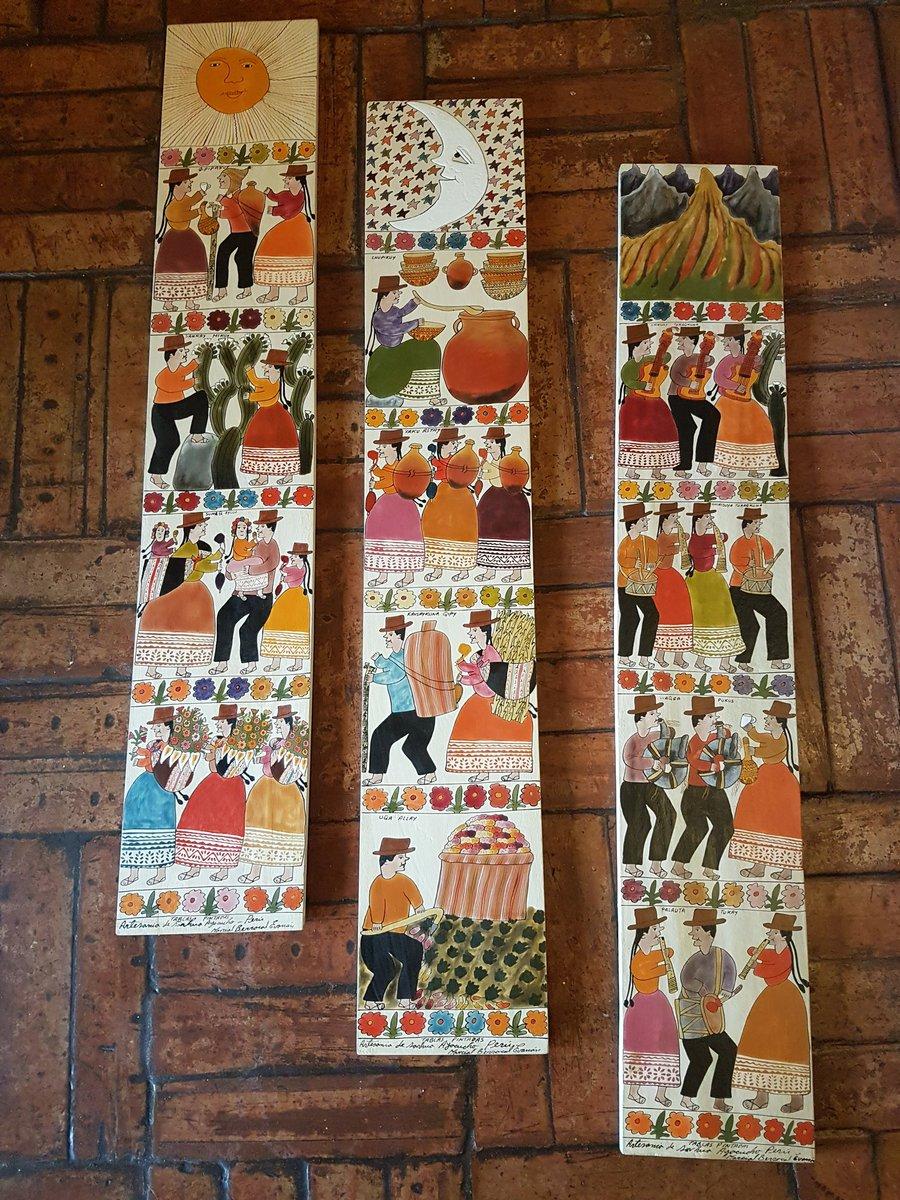
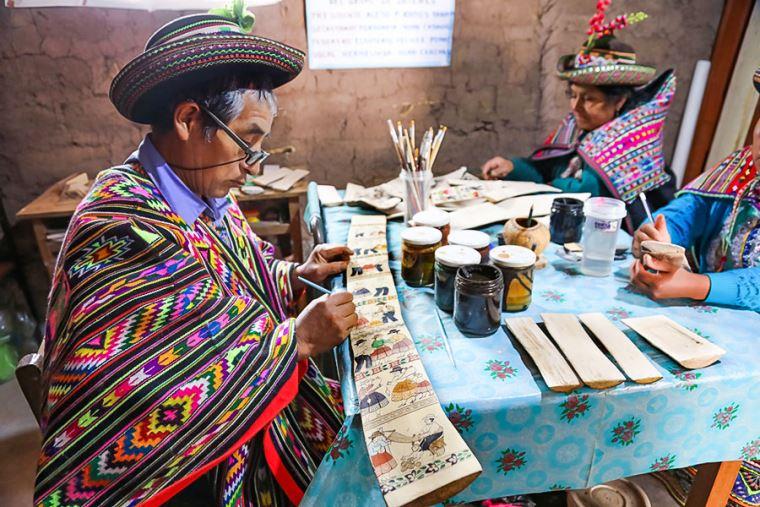
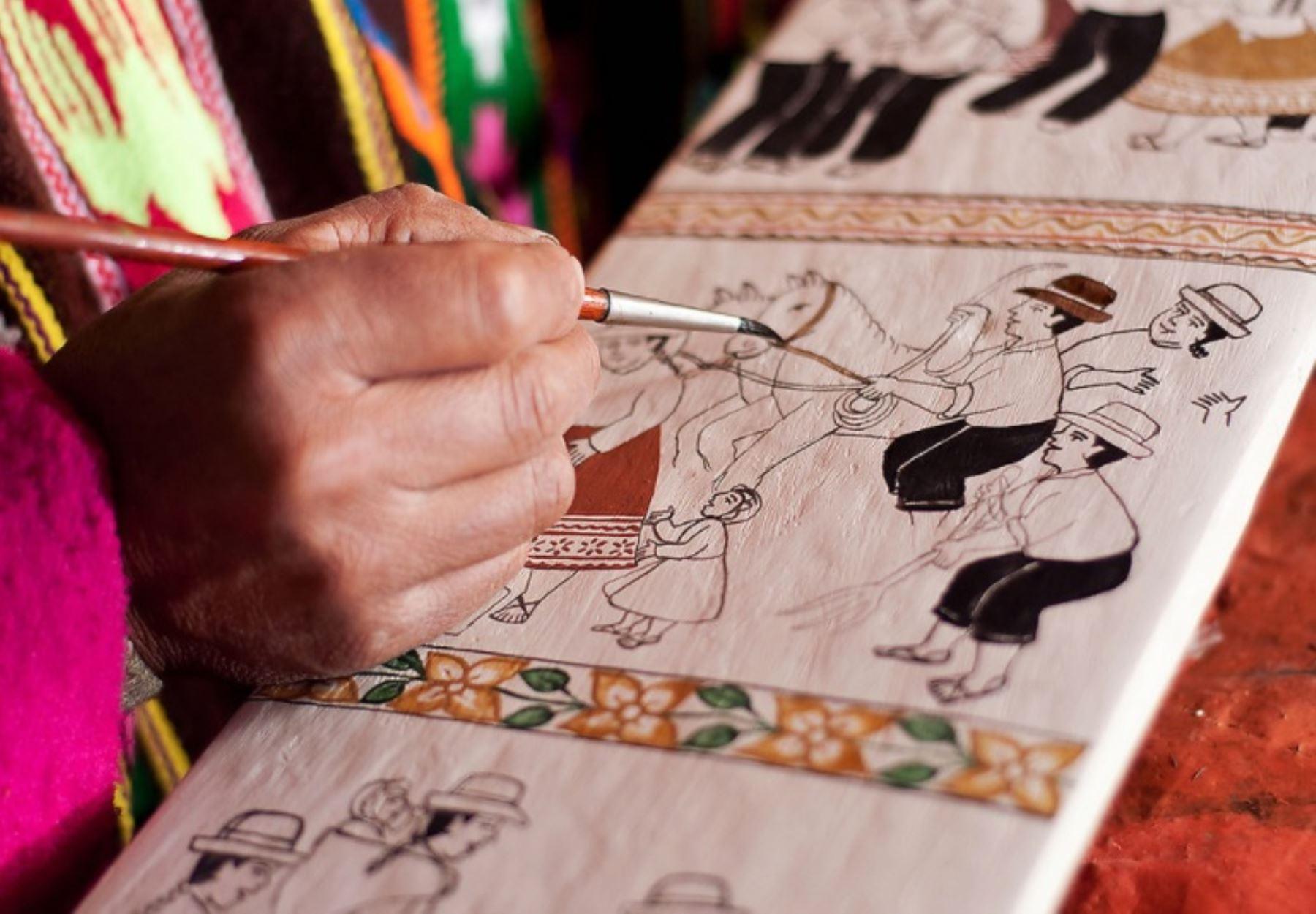
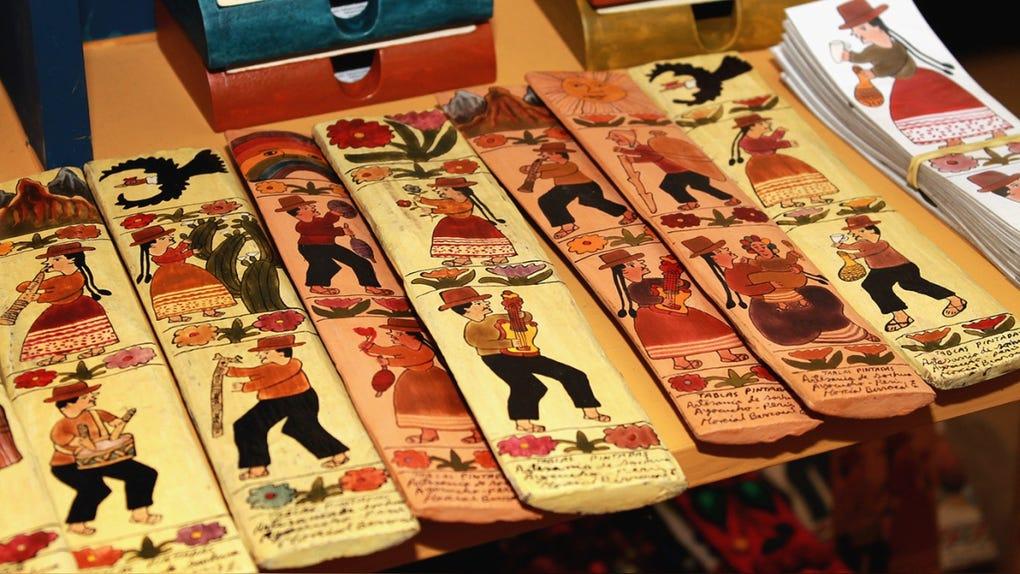
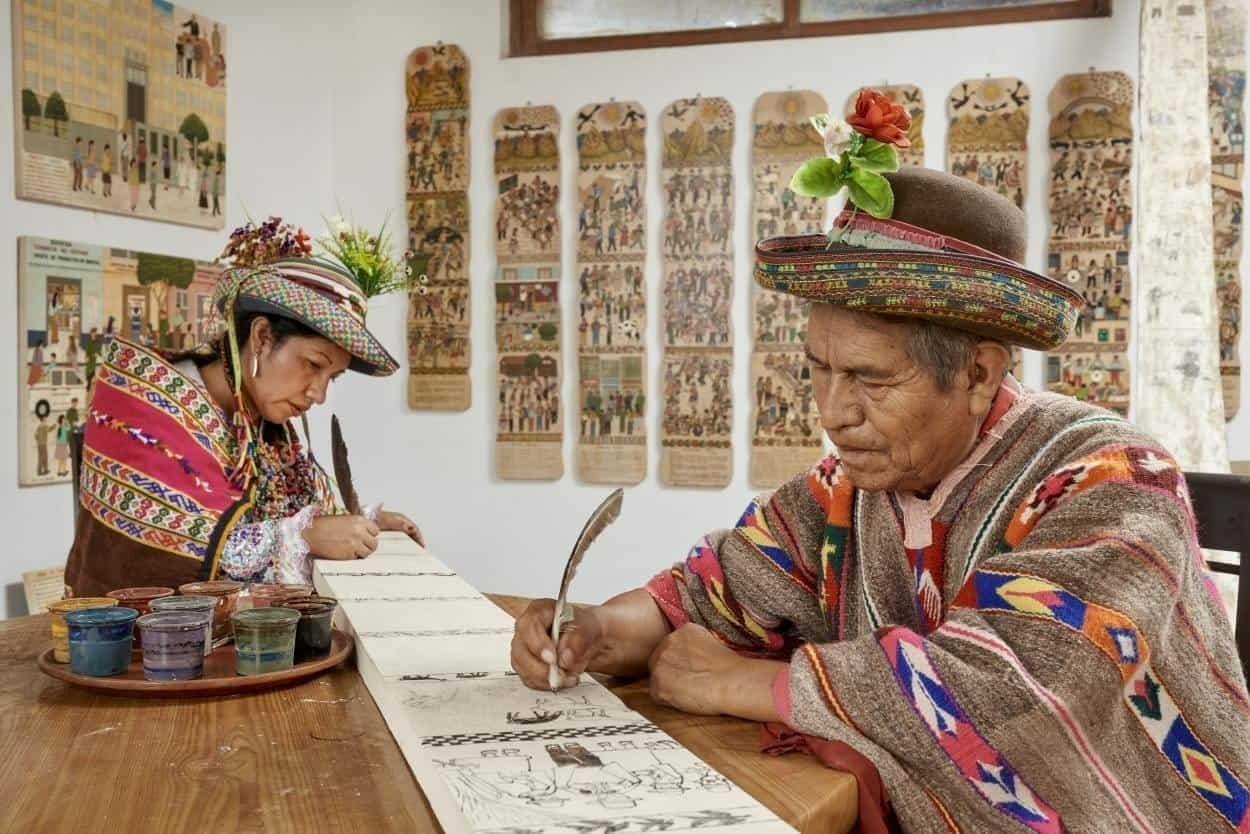
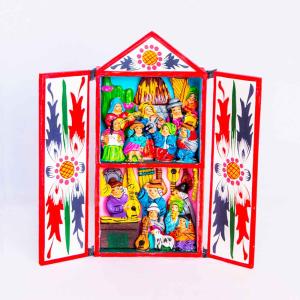
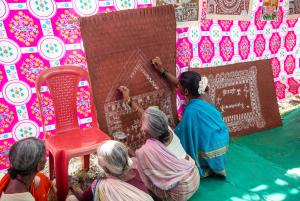
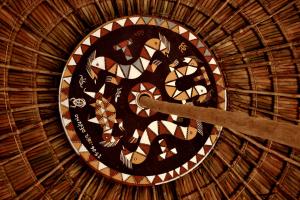
In the Andean district of Sarhua, located in the Ayacucho Region, a newly built house is traditionally welcomed with a remarkable painted wooden board that tells the story of the family who will inhabit it. Known as the Tablas de Sarhua (Sarhua Painted Boards), this artistic tradition combines painting, storytelling, genealogy, and community memory into a single cultural expression. The custom dates back several centuries and originated as a symbolic gift presented during the construction of a new home. Rather than serving solely as decoration, each board documents important aspects of family life, portraying relatives, occupations, shared responsibilities, religious beliefs, agricultural work, and significant events through colorful illustrations accompanied by written descriptions.
The tradition is preserved by local artists, artisan families, apprentices, and community members, who continue to produce painted boards using techniques refined over generations. A typical board is created on a long wooden plank and organized into a sequence of illustrated scenes arranged from top to bottom. Each figure is carefully painted in a distinctive style characterized by vivid colors, detailed clothing, and expressive gestures that reflect local customs and the surrounding Andean environment. Although many boards continue to be commissioned for their original ceremonial purpose, contemporary artists have also adapted the tradition to portray broader themes such as regional history, social change, environmental conservation, and cultural identity, allowing the practice to remain relevant while respecting its traditional foundations.
The Tablas de Sarhua represent a unique form of visual documentation in which art functions as both historical record and cultural testimony. Every painted board preserves memories that might otherwise remain only in oral tradition, strengthening connections between generations and reinforcing a sense of belonging within the community. The practice also encourages collaboration between experienced artists and younger apprentices, ensuring the continuity of painting techniques, symbolic language, and narrative composition. Through this combination of craftsmanship, storytelling, and collective memory, the Sarhua Painted Boards continue to express the values, experiences, and identity of the Andean communities that have safeguarded this tradition for generations.
07-24-2026
| Institutional and human capacities | The safeguarding of the Sarhua Painted Boards Tradition is sustained by artisan families, painters, apprentices, community elders, and local residents of the district of Sarhua in the Ayacucho Region. Traditional artists preserve not only painting techniques but also the cultural conventions that determine how family histories, social relationships, occupations, and ceremonial events are represented on each wooden board. Museums, cultural institutions, municipalities, and Peru's Ministry of Culture support safeguarding through exhibitions, documentation, educational programs, and initiatives that promote the recognition of the Sarhua boards as a distinctive expression of Peru's living cultural heritage while respecting their strong community roots. | |
| Transmission and education | The tradition is primarily transmitted through family-based artistic apprenticeship, where younger generations gradually learn drawing, painting, composition, and the symbolic language that characterizes the boards. Apprentices first assist with preparing wooden planks, pigments, and decorative elements before developing the ability to create complete narrative compositions. Beyond artistic instruction, transmission includes learning how to represent family structures, kinship relationships, community responsibilities, and local customs accurately. Young artists acquire an understanding of the social meaning behind each figure, ensuring that every painted board faithfully reflects the people and values it commemorates. | |
| Inventorying and research | The Tablas de Sarhua have been widely documented by anthropologists, art historians, ethnographers, and specialists in visual culture because they provide exceptional records of community organization and everyday life in the Peruvian Andes. Research has explored their origins as ceremonial housewarming gifts, their artistic evolution, and their role in documenting social history through visual narratives. Scholars have also examined the boards as valuable ethnographic sources, revealing information about traditional clothing, agricultural practices, architecture, family organization, religious celebrations, and changing social realities. This documentation has demonstrated that the Sarhua boards preserve knowledge extending far beyond artistic expression. | |
| Policies as well as legal and administrative measures | Safeguarding initiatives encourage the preservation of both the artistic techniques and the cultural meanings associated with the Sarhua boards. Public institutions support exhibitions, artisan workshops, educational activities, and research projects that strengthen opportunities for intergenerational transmission while promoting broader public appreciation of the tradition. Administrative measures also recognize the importance of supporting local artisans as active bearers of cultural knowledge. By facilitating participation in cultural fairs, museum collaborations, and heritage programs, these initiatives contribute to the long-term sustainability of community-based artistic practice. | |
| Role of intangible cultural heritage and its safeguarding in society | The Sarhua Painted Boards function as visual records of family and community identity. Rather than commemorating anonymous events, each board documents the people who form a household, their occupations, responsibilities, relationships, and shared values. In doing so, the tradition preserves aspects of community history that might otherwise remain undocumented or survive only through oral memory. The boards also reinforce social cohesion by celebrating cooperation and mutual responsibility within families and communities. Their continued creation demonstrates how artistic expression can strengthen intergenerational connections while preserving a shared sense of belonging rooted in local history and collective experience. | |
| Awareness raising | Museums, cultural exhibitions, educational workshops, and artisan fairs have increased public awareness of the Sarhua Painted Boards by presenting them as more than decorative folk art. Interpretation programs increasingly explain the symbolic language of the paintings, helping audiences understand how each board documents family history, community organization, and cultural values. Digital archives and documentary projects have further expanded access to this tradition, allowing broader audiences to appreciate the boards as visual testimonies of Andean life while encouraging respect for the communities that continue to preserve this unique artistic practice. | |
| Engagement of communities, groups and individuals as well as other stakeholders | The tradition remains deeply rooted in community participation. Families, artisans, local residents, educational institutions, museums, researchers, cultural organizations, and public authorities all contribute to safeguarding by supporting artistic production, documentation, exhibitions, and educational activities. Perhaps most importantly, the families who commission the boards actively participate in preserving the tradition by sharing their own histories, relationships, and experiences with the artists. In this way, each new board becomes a collaborative cultural document created jointly by the community and its artisans. | |
| International engagement | The Sarhua Painted Boards have gained international recognition through museum exhibitions, academic research, and cultural exchange programs dedicated to traditional Andean art. These initiatives have introduced global audiences to an artistic tradition that combines painting, historical documentation, genealogy, and community memory in a unique visual format. International collaborations have also encouraged comparative research on community-based visual documentation and vernacular art traditions. Rather than being appreciated solely for their aesthetic qualities, the boards increasingly serve as examples of how intangible cultural heritage can preserve family histories, strengthen cultural identity, and communicate local knowledge across generations and cultures. | |
| References |
|
|




.jpeg)

.png)
.jpeg)
.jpg)

.png)
.jpg)


_(31711258567).jpg)