
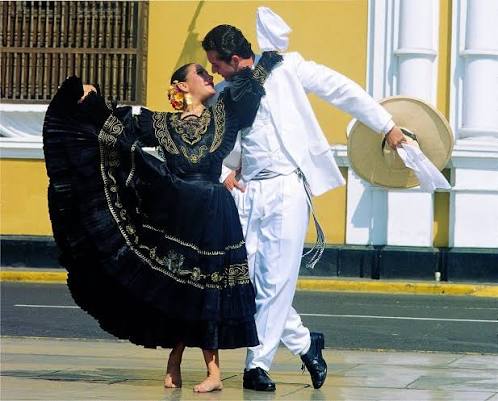
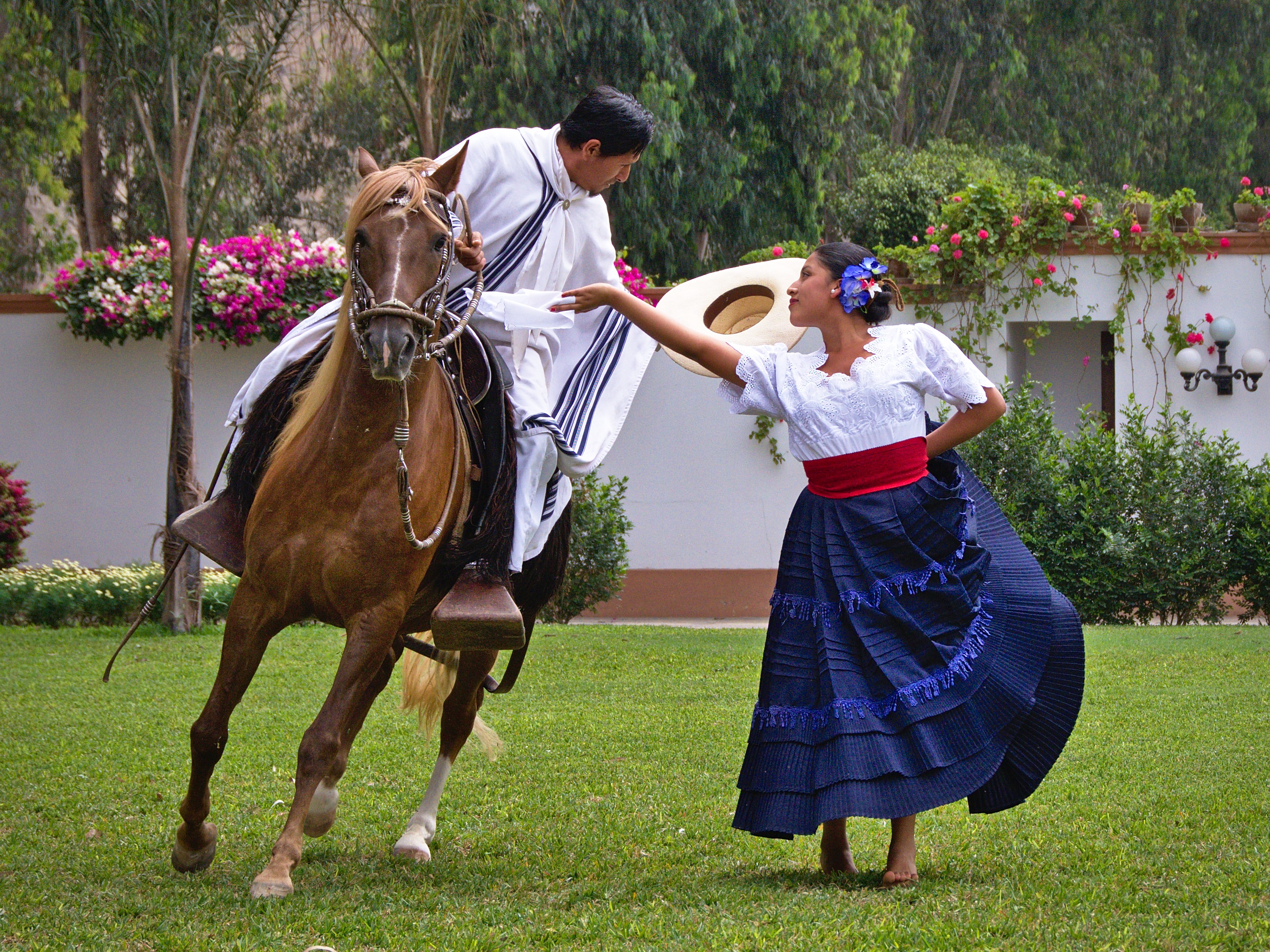
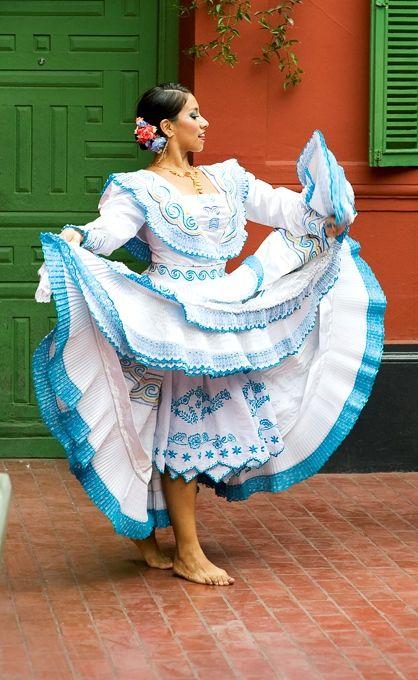
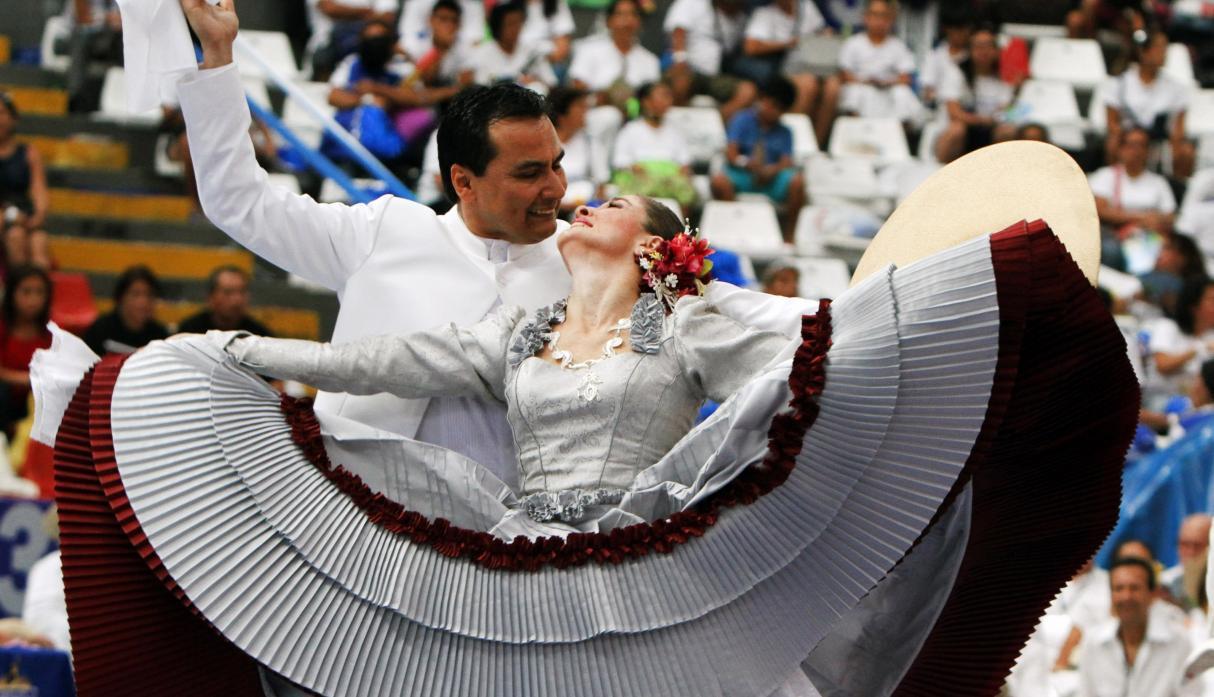
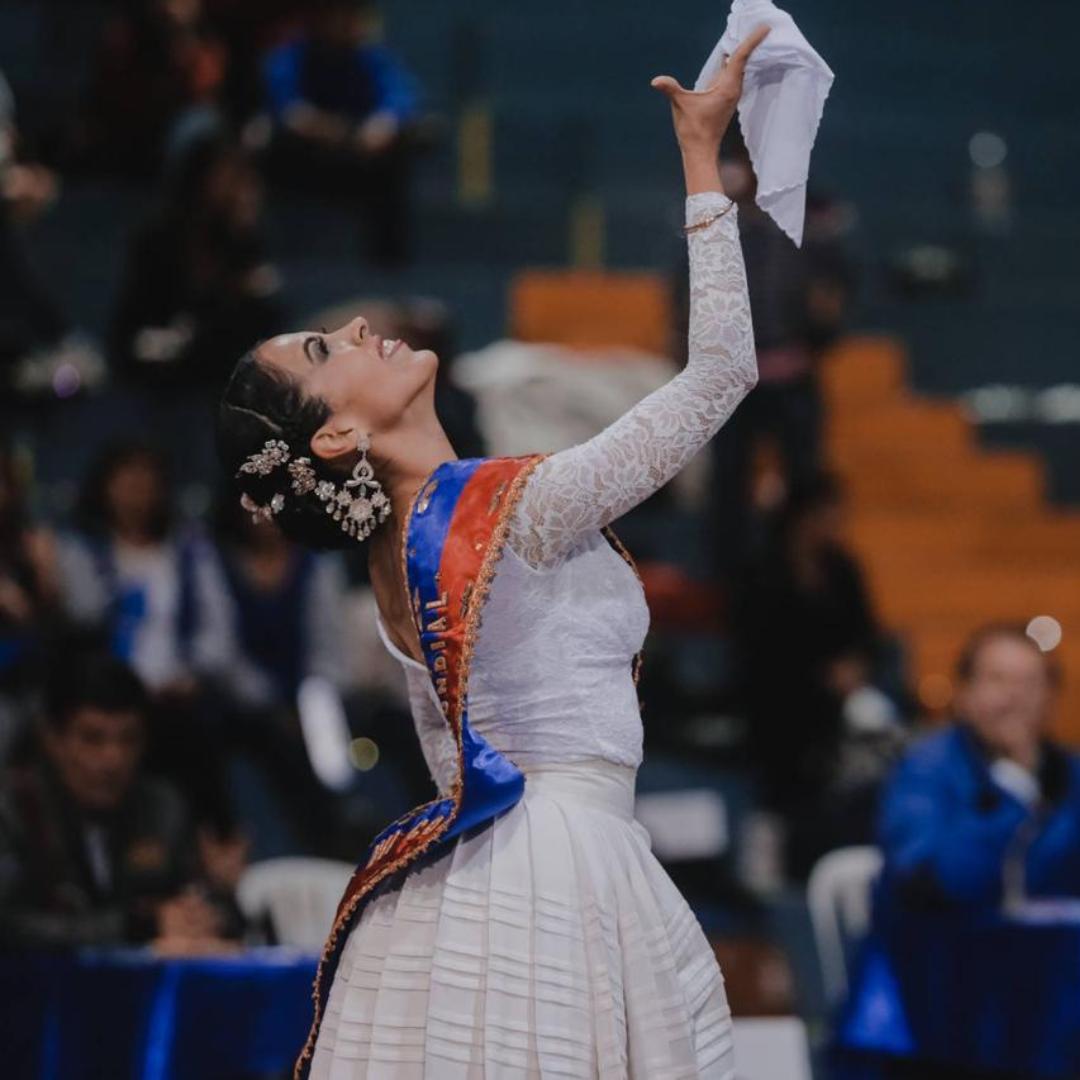
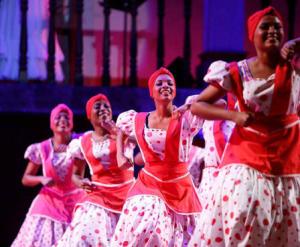
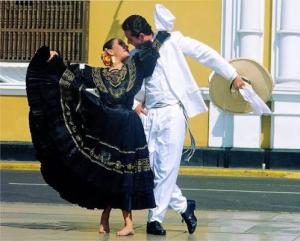
Graceful movements, elegant attire, and the rhythmic waving of white handkerchiefs define the Marinera, Peru's national dance and one of the country's most celebrated cultural expressions. While several regional styles exist, including Marinera Norteña, Marinera Limeña, and Marinera Serrana, the tradition is especially associated with the city of Trujillo, in the La Libertad Region, where it occupies a central place in local cultural life. The dance emerged during the nineteenth century from the fusion of Indigenous, Spanish, and Afro-Peruvian cultural influences, reflecting Peru's diverse historical heritage. Its current name, Marinera, was adopted in honor of the Peruvian Navy following the War of the Pacific, replacing the earlier designation Zamacueca.
The Marinera is practiced by dancers, musicians, instructors, students, families, and cultural communities throughout Peru. It is performed during civic celebrations, regional festivals, cultural events, competitions, and family gatherings, with participation beginning at an early age in many communities. The dance portrays a stylized courtship through coordinated footwork, expressive body language, and the symbolic use of handkerchiefs carried by both partners. Depending on the regional style, performances may feature different musical arrangements, costumes, and choreographic interpretations. In northern Peru, the tradition is particularly linked to the National Marinera Festival, held annually in Trujillo, where participants from across the country gather to celebrate and showcase the richness of this artistic heritage.
The Marinera has become a powerful symbol of national identity while continuing to evolve through the creativity of its practitioners. Dance schools, community organizations, and families contribute to its transmission by teaching both technical skills and an appreciation for its historical and cultural significance. The tradition also supports a wide range of associated cultural practices, including live music, tailoring, embroidery, shoemaking, and the craftsmanship involved in producing traditional attire. Through its enduring popularity and broad participation across generations, the Marinera remains a living expression of Peru's cultural diversity, celebrating elegance, artistic excellence, and the country's rich multicultural heritage.
07-24-2026
| Institutional and human capacities | The safeguarding of the Marinera Dance Tradition is supported by a broad network of dance instructors, musicians, choreographers, costume makers, judges, horse trainers, cultural organizations, and dance schools throughout Peru, particularly in the La Libertad Region. Their combined expertise preserves not only the choreography but also the musical interpretation, regional styles, etiquette, and performance standards that distinguish the Marinera. National, regional, and municipal cultural institutions contribute by organizing festivals, competitions, educational initiatives, and heritage promotion activities. Annual events, particularly those held in Trujillo, provide important opportunities for practitioners to exchange knowledge while encouraging the continued development of the tradition. | |
| Transmission and education | The Marinera is one of Peru's few traditional dances with a structured learning system. Many practitioners begin their training during childhood through dance academies, community workshops, cultural centers, or school programs, where technical instruction is combined with an understanding of the dance's historical origins and regional variations. Education extends beyond choreography. Students learn musical interpretation, partner communication, stage presence, traditional dress, and the symbolic use of the handkerchief, developing an appreciation for courtesy, confidence, and mutual respect. This holistic approach transforms dance instruction into cultural education rather than simple physical training. | |
| Inventorying and research | The Marinera has been extensively documented by dance historians, musicologists, folklorists, and cultural researchers interested in the evolution of Peru's national dance. Studies have explored its historical roots in the Zamacueca, the emergence of regional styles, the relationship between choreography and music, and its role in expressing Peru's multicultural heritage. Research has also examined the festival and competition system that supports the tradition today, documenting judging criteria, costume evolution, musical accompaniment, and the continuous adaptation of performance practices while maintaining their traditional foundations. | |
| Policies as well as legal and administrative measures | Safeguarding measures encourage the preservation of the Marinera through cultural education, support for traditional festivals, and recognition of regional dance traditions. Public institutions collaborate with cultural organizations to facilitate competitions, exhibitions, and educational programs that promote participation across different age groups. Administrative support also contributes to maintaining standards for competitions and public performances while encouraging the preservation of live musical accompaniment, traditional attire, and the diversity of regional interpretations that enrich the Marinera. | |
| Role of intangible cultural heritage and its safeguarding in society | The Marinera represents a unique form of social communication through artistic expression. The interaction between partners is based on elegance, mutual respect, improvisation, and expressive dialogue rather than verbal communication, making the dance a reflection of social values that extend beyond the performance itself. Its practice also strengthens cultural identity by bringing together families, schools, musicians, artisans, and local communities through festivals and competitions. Across generations, the Marinera continues to serve as a shared cultural language that celebrates creativity, discipline, and regional pride while reinforcing connections among diverse communities throughout Peru. | |
| Awareness raising | Public appreciation of the Marinera is strengthened through national festivals, televised competitions, educational demonstrations, cultural exhibitions, and performances held throughout Peru and abroad. These activities introduce audiences not only to the choreography but also to the music, craftsmanship, and historical development that define the tradition. The National Marinera Festival has become one of the country's most influential platforms for raising awareness, transforming Trujillo each year into a meeting place where practitioners, researchers, visitors, and new learners experience the richness and diversity of Peru's national dance. | |
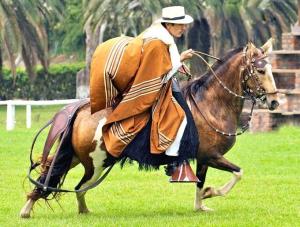
| Engagement of communities, groups and individuals as well as other stakeholders | The Marinera thrives through the collaboration of dance academies, families, musicians, costume designers, horse breeders and trainers, educational institutions, cultural organizations, festival organizers, judges, and local authorities. Each stakeholder contributes to preserving a different dimension of the tradition, demonstrating that its continuity depends on an interconnected cultural network rather than solely on dancers. Families play an especially significant role by encouraging participation from an early age, supporting training, attending competitions, and passing on a sense of pride in regional traditions that often spans multiple generations. | |
| International engagement | The Marinera has become one of Peru's most recognizable cultural ambassadors through international dance festivals, cultural exchange programs, and Peruvian communities established abroad. Dance academies operating outside Peru regularly organize workshops, competitions, and exhibitions that allow new audiences to engage with the tradition while maintaining close ties to its cultural origins. Its international presence has also encouraged scholarly collaboration in the fields of dance studies, ethnomusicology, and performance heritage. As practitioners from different countries learn and perform the Marinera, the tradition continues to promote intercultural dialogue while preserving the distinctive artistic identity that characterizes Peru's national dance. | |
| References |
|
|






.jpeg)


.png)

.jpeg)
.jpg)
.png)
.jpg)


_(31711258567).jpg)