
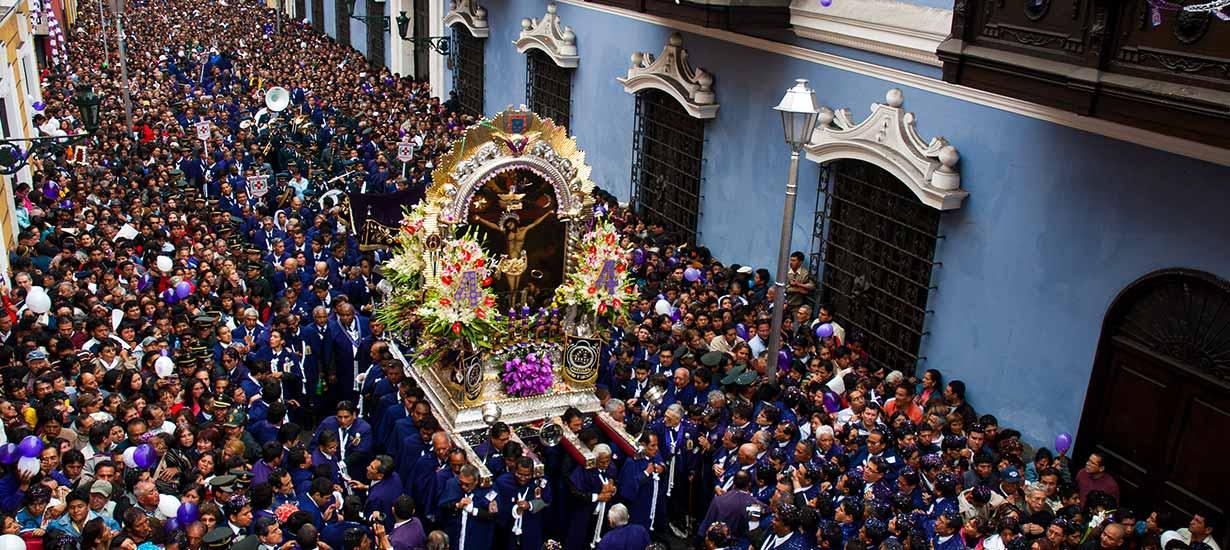
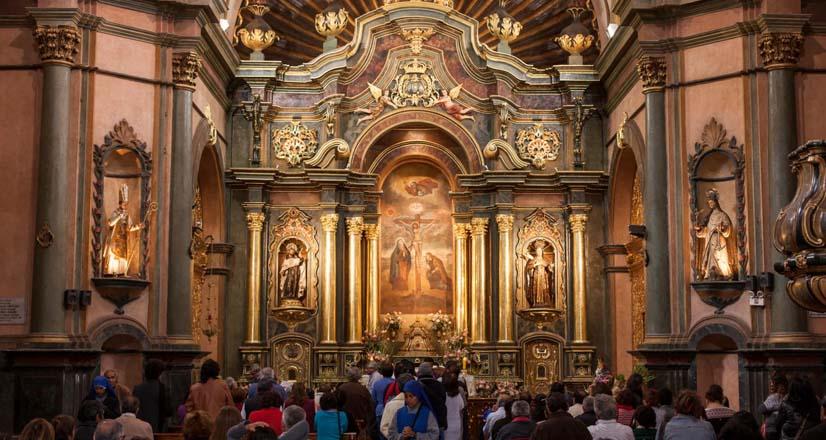
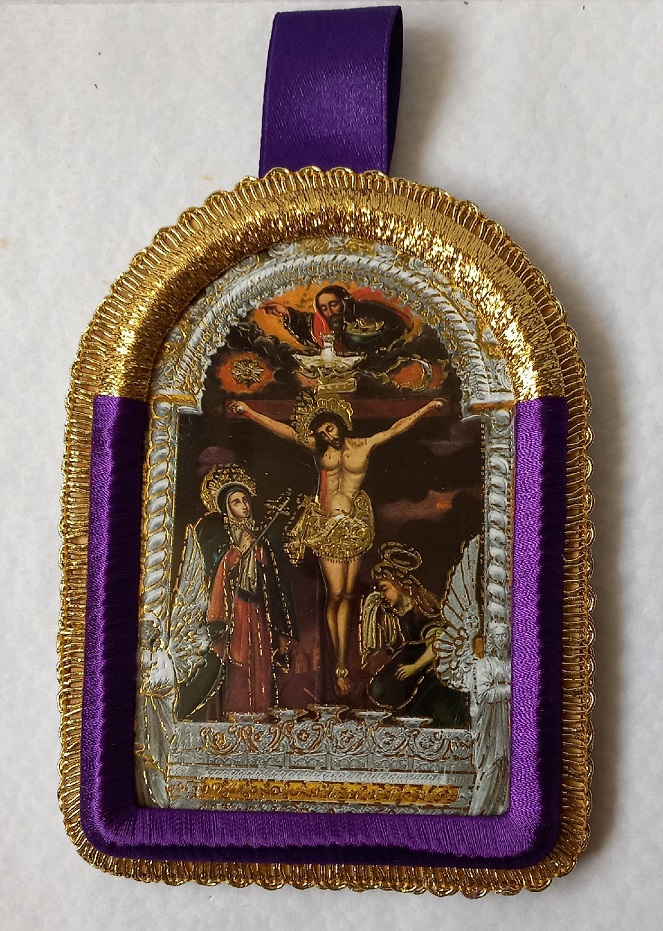
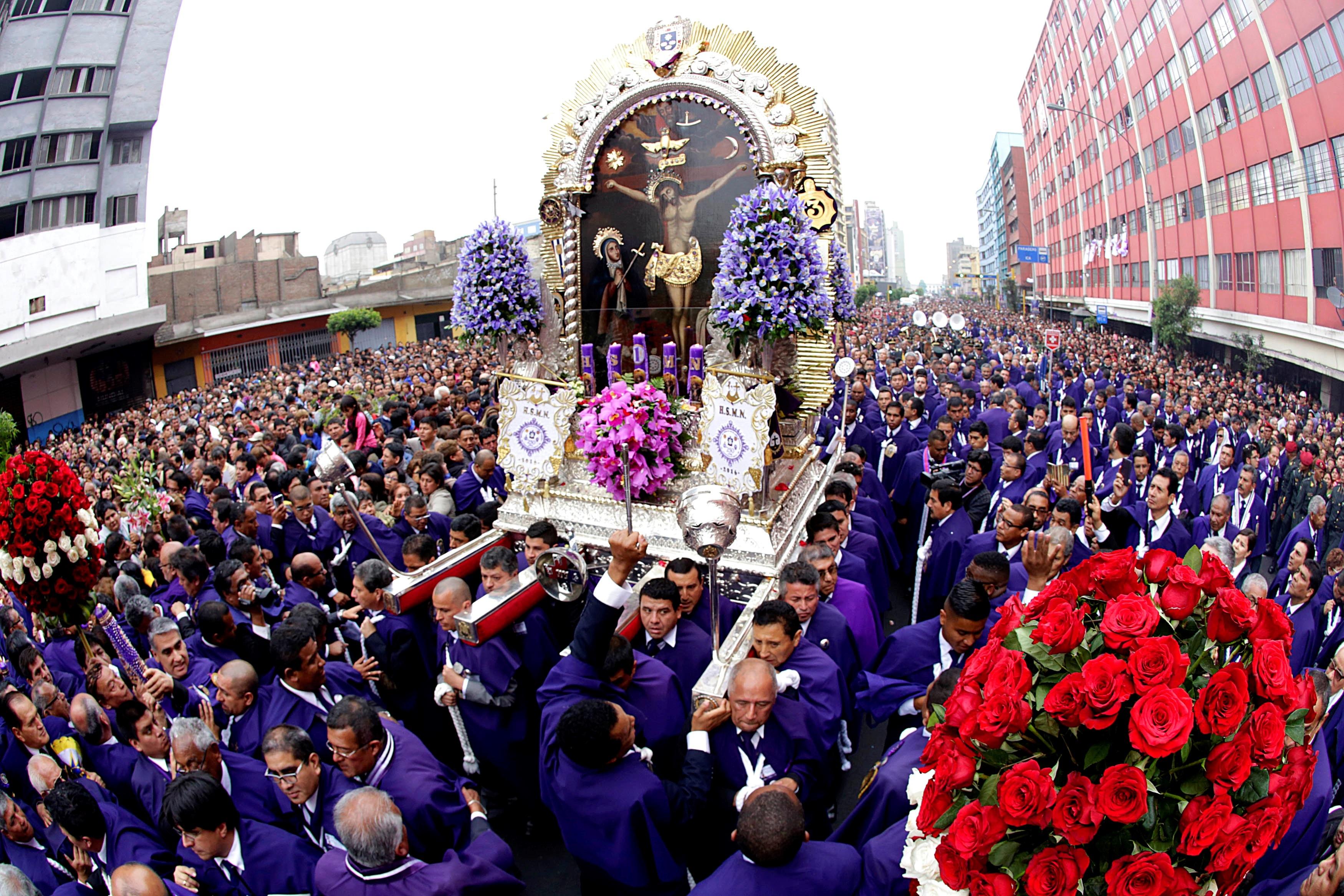
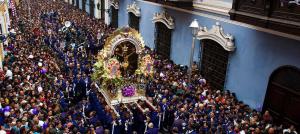
Every October, the city of Lima is transformed by a sea of purple as hundreds of thousands of devotees gather to participate in the Procession of the Lord of the Miracles (Señor de los Milagros), one of the largest religious processions in the world. The celebration centers on a revered mural depicting the crucified Christ, painted in the mid-seventeenth century by an Afro-Peruvian man of Angolan origin in the Pachacamilla neighborhood. According to tradition, the mural remained standing after the devastating earthquakes of 1655, 1687, and 1746, events that inspired widespread devotion and led the image to be regarded as miraculous. What began as a local expression of faith within an Afro-descendant community gradually evolved into a tradition embraced by people from every social background, becoming one of the strongest symbols of Lima's cultural and religious identity.
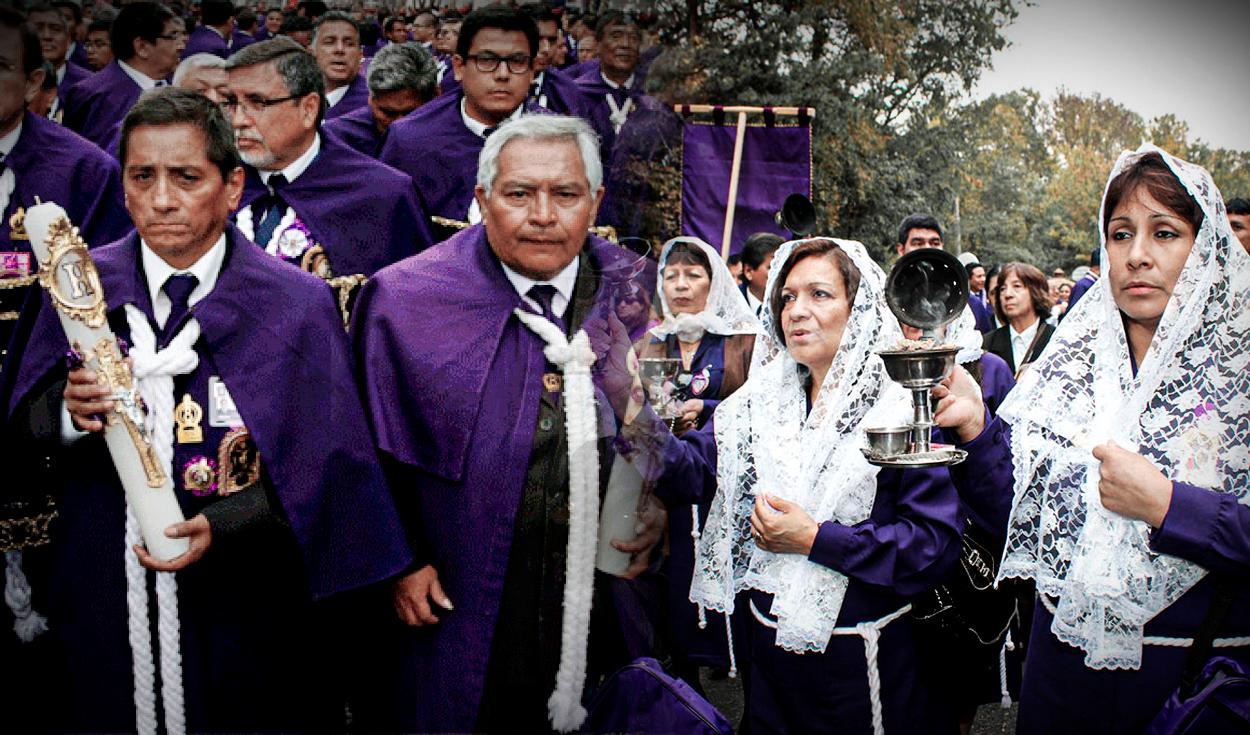
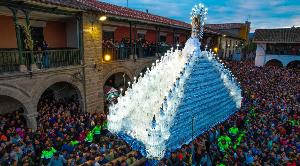
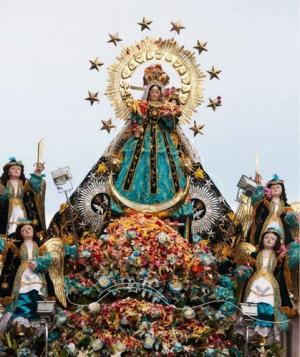
Rather than being confined to a single ceremony, the celebration unfolds through a series of processions held on several dates throughout October, following routes that cross the Historic Centre of Lima and surrounding districts. The tradition is practiced by Catholic faithful, neighborhood residents, religious communities, musicians, volunteers, and families, many of whom prepare throughout the year to participate. The image is carried on an elaborately decorated platform by teams of bearers, while incense fills the streets and sacred hymns accompany the procession. Participants commonly wear purple garments, a custom inspired by the habit of the Nazarene Sisters, and many walk for hours as an act of gratitude, devotion, or personal promise. The celebration also includes the preparation and sharing of traditional foods associated with the season, such as turrón de Doña Pepa, reinforcing the close relationship between religious practice and local culinary traditions.
The Lord of the Miracles Procession represents far more than an annual act of worship. It functions as a living cultural tradition that strengthens social cohesion, preserves historical memory, and connects generations through shared beliefs, music, ritual practices, and public participation. Although its spiritual heart remains in Lima, the devotion has spread throughout Peru and to Peruvian communities abroad, where similar processions are organized each year. In 2005, the Festivity of the Lord of the Miracles was declared Cultural Heritage of the Nation of Peru, recognizing its historical, religious, and cultural importance as one of the country's most enduring expressions of living heritage.
07-24-2026
| Institutional and human capacities | The continuity of the Lord of the Miracles Procession relies on the coordinated efforts of Catholic faithful, procession bearers (cargadores), singers, volunteers, artisans, religious communities, and local residents who collectively organize one of the world's largest annual religious processions. The preparation of the event requires specialized knowledge related to ceremonial protocol, the transportation of the sacred image, floral decoration, musical accompaniment, crowd coordination, and the maintenance of long-established devotional practices. Religious institutions provide the spiritual framework for the celebration, while cultural authorities and municipal agencies contribute logistical support, public safety measures, heritage conservation, and traffic management. This collaboration enables a centuries-old urban tradition to continue functioning within one of South America's largest metropolitan areas. | |
| Transmission and education | Unlike many heritage expressions that are transmitted primarily through technical instruction, devotion to the Lord of the Miracles is learned through family participation and shared religious experience. Children often accompany parents and grandparents during the October processions, gradually becoming familiar with prayers, hymns, ceremonial etiquette, and the cultural meaning of the celebration. Knowledge is also transmitted through parish activities, community gatherings, oral narratives, and the preparation of traditional customs associated with the month of October. This continuous participation allows the procession to remain an integral part of Lima's cultural calendar while reinforcing values of solidarity, faith, and community service. | |
| Inventorying and research | The Lord of the Miracles Procession has been extensively documented by historians, anthropologists, theologians, sociologists, and urban heritage researchers. Studies have examined its origins within Lima's Afro-Peruvian community during the seventeenth century, its expansion into a nationwide devotion, and its role in shaping the cultural identity of Peru's capital. Research has also explored the procession as an urban phenomenon, documenting its ceremonial routes, historical transformations, devotional practices, traditional music, and associated culinary traditions. This multidisciplinary documentation provides valuable insight into the evolution of one of Latin America's most significant public expressions of faith. | |
| Policies as well as legal and administrative measures | Safeguarding the procession requires careful coordination between religious, cultural, and municipal authorities. Administrative planning includes the preservation of historic processional routes, crowd management, emergency response, protection of cultural property, and logistical arrangements that allow hundreds of thousands of participants to gather safely within Lima's Historic Centre. The declaration of the Festivity of the Lord of the Miracles as Cultural Heritage of the Nation has reinforced public recognition of its cultural significance while supporting initiatives that document, promote, and preserve the traditions associated with the celebration. | |
| Role of intangible cultural heritage and its safeguarding in society | The Lord of the Miracles Procession transforms the public spaces of Lima into places of collective memory and shared identity. Streets that normally serve commercial and administrative functions temporarily become ceremonial spaces where people from different generations, occupations, and social backgrounds participate in a common cultural experience. In this way, the procession continuously reaffirms the relationship between the city's inhabitants and its historic urban landscape. The celebration also demonstrates how intangible cultural heritage can foster social solidarity. Throughout October, thousands of volunteers contribute their time to organizing processions, distributing assistance, preparing religious activities, and supporting participants. These acts of cooperation reinforce civic engagement while strengthening the sense of belonging shared by Lima's diverse communities. | |
| Awareness raising | Public awareness of the procession extends well beyond the days of the celebration. Television broadcasts, radio programs, newspapers, documentaries, museum exhibitions, and digital platforms document the history of the devotion, allowing audiences to understand its religious, historical, and cultural dimensions. One of the most distinctive awareness mechanisms is the visible transformation of Lima during October. Purple decorations, religious imagery, traditional music, and the seasonal preparation of turrón de Doña Pepa make the celebration present throughout the city, creating an immersive cultural environment that naturally introduces new generations and visitors to the tradition. | |
| Engagement of communities, groups and individuals as well as other stakeholders | The procession is sustained by an exceptionally broad network of participants that includes faithful devotees, procession bearers, singers, volunteers, artisans, florists, musicians, parish communities, public institutions, emergency services, local businesses, and residents. Each group fulfills specific responsibilities that contribute to the successful organization of the celebration while preserving long-established ceremonial practices. The tradition also encourages participation beyond religious practice. Families prepare homes and businesses along the procession route, artisans create devotional objects, bakers produce seasonal foods, and neighborhood communities actively welcome participants, illustrating how safeguarding extends into many aspects of urban life. | |
| International engagement | The Lord of the Miracles Procession is one of Peru's most internationalized expressions of intangible cultural heritage. Through successive waves of migration, Peruvian communities have established annual processions in cities across North America, South America, Europe, Asia, and Oceania, preserving the tradition while adapting it to new cultural settings. Rather than existing as isolated celebrations, these overseas processions maintain strong symbolic connections with Lima, reinforcing cultural identity among the Peruvian diaspora and promoting intercultural dialogue within host societies. The tradition therefore demonstrates how intangible cultural heritage can remain rooted in its place of origin while simultaneously becoming a living expression of transnational cultural continuity. | |
| References | Ministry of Culture of Peru. Festividad del Señor de los Milagros – Cultural Heritage of the Nation. Archdiocese of Lima. Historical information on the Lord of the Miracles devotion and annual procession. Municipality of Lima. Cultural heritage and Historic Centre management. Academic publications on Afro-Peruvian history, religious anthropology, and urban heritage in Lima. UNESCO. Convention for the Safeguarding of the Intangible Cultural Heritage (2003). |
|




.jpeg)


.png)
.jpeg)
.jpg)

.png)
.jpg)


_(31711258567).jpg)