
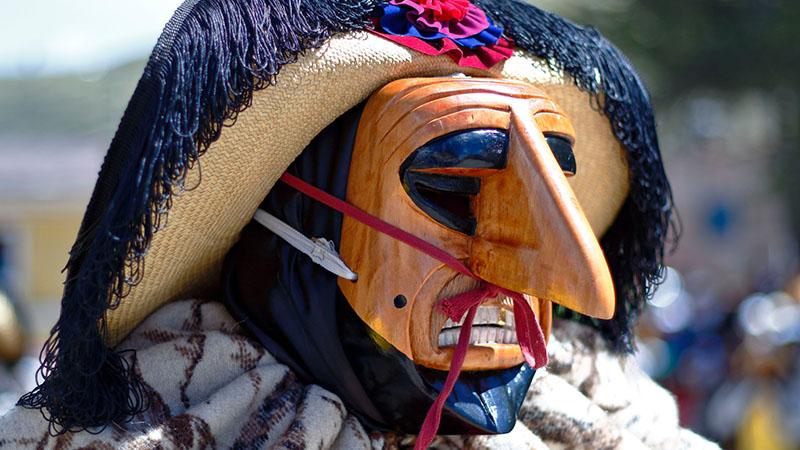
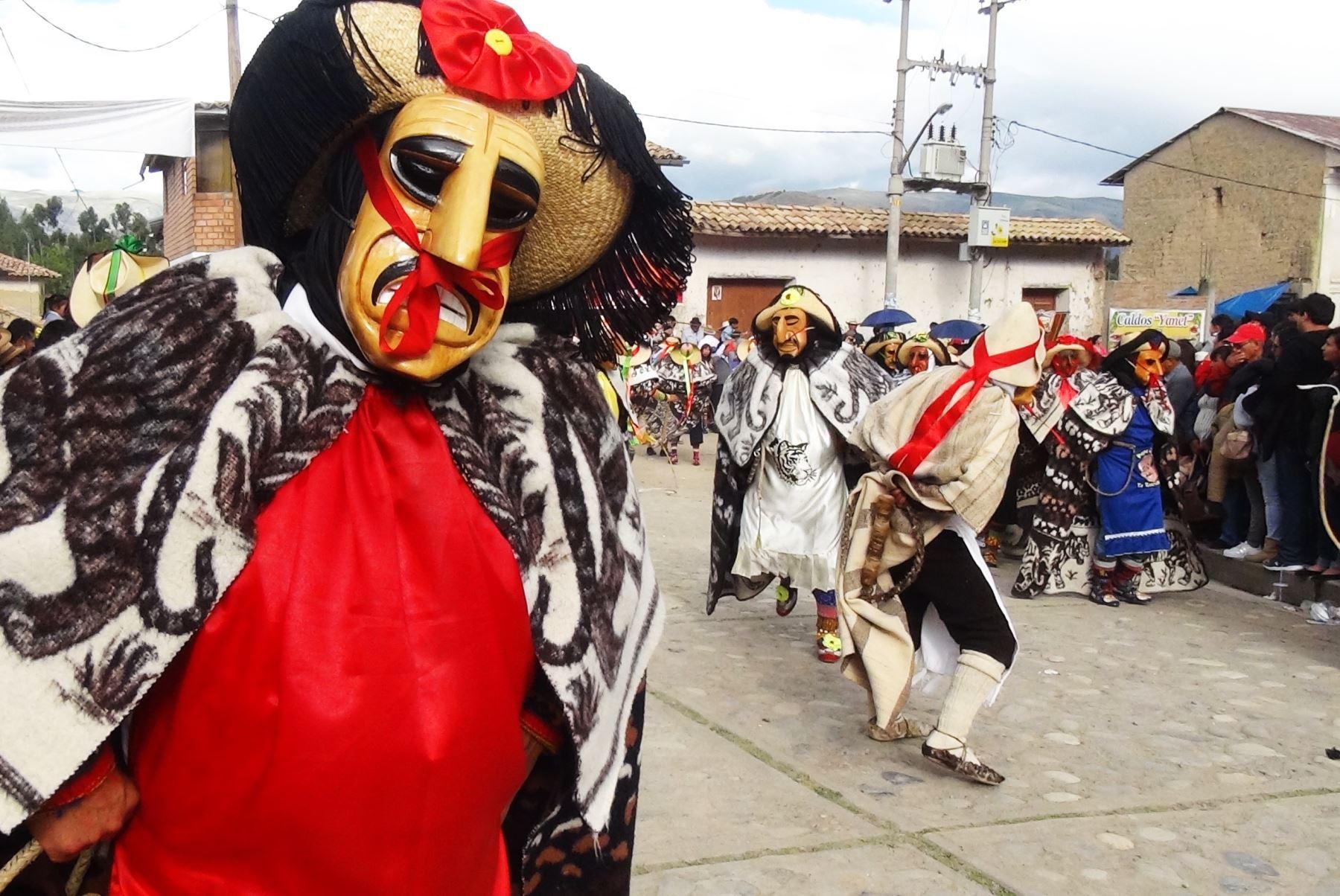
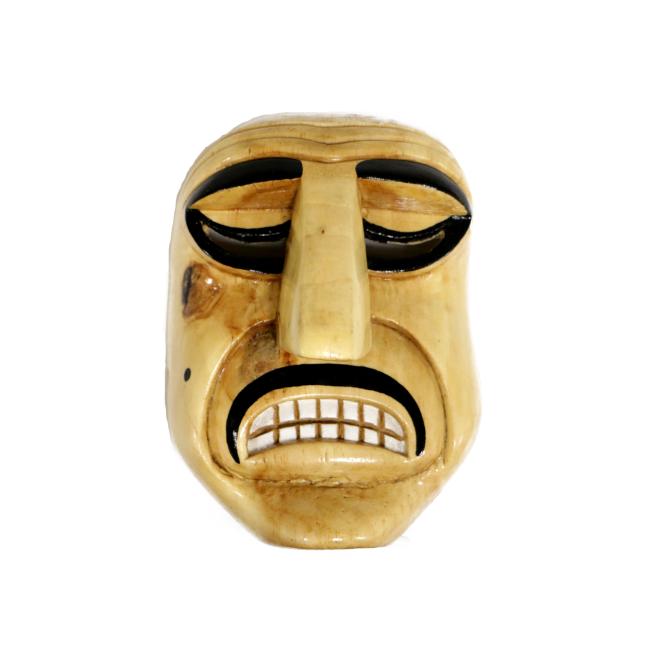
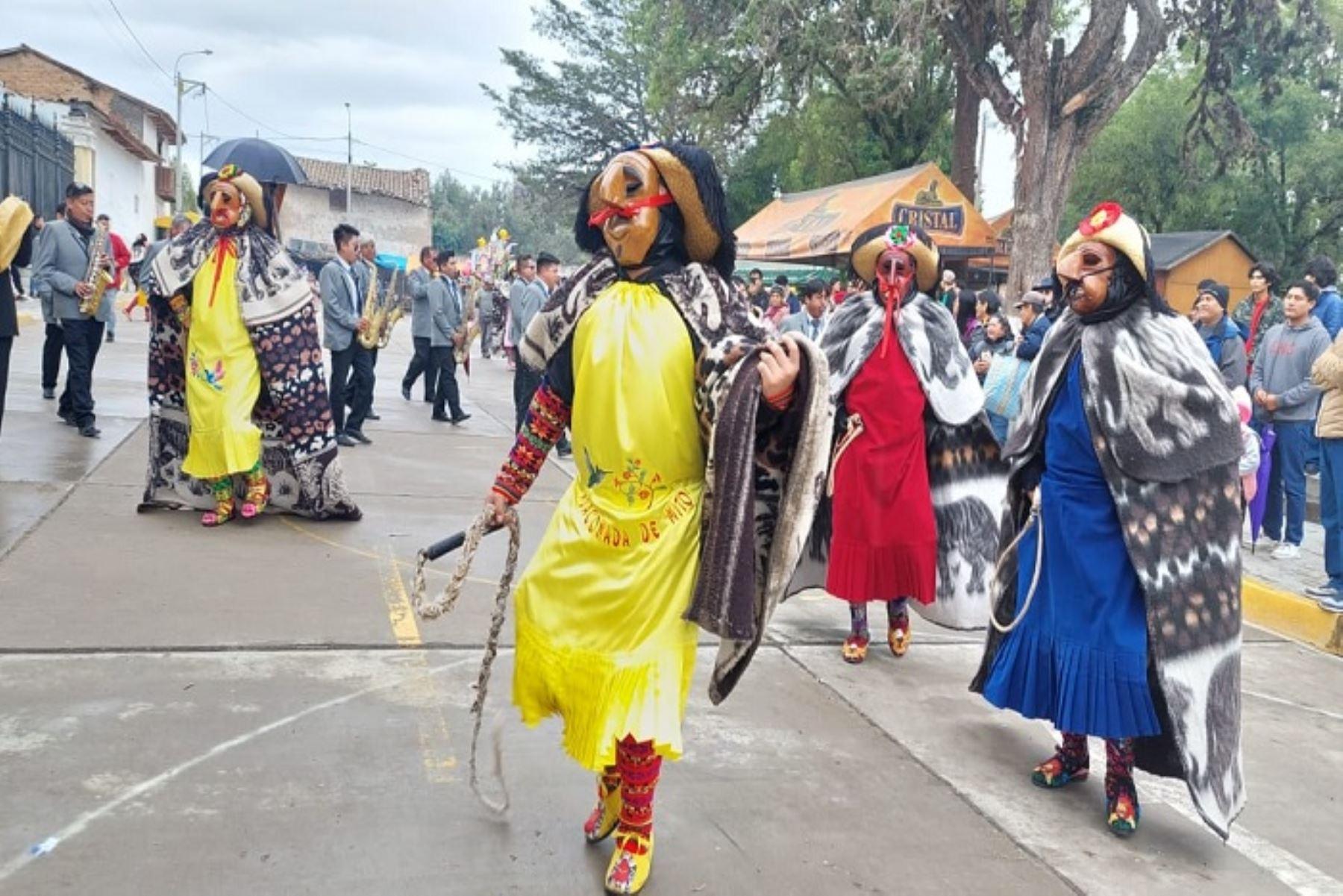
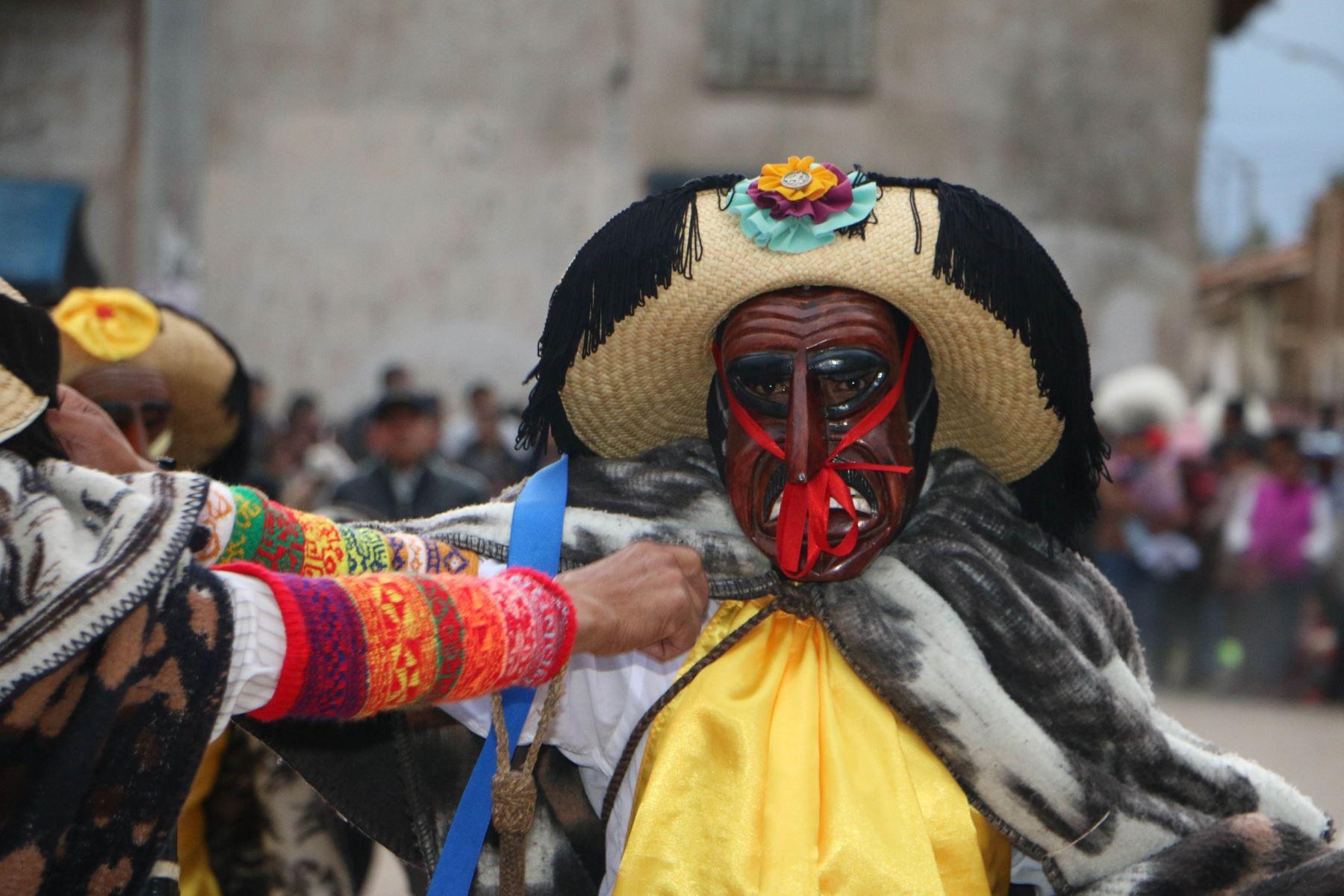
Every year during the first days of January, the quiet district of Mito, located in Peru's central Junín Region, becomes the setting for the Huaconada Ritual Dance, a ceremonial tradition distinguished by its imposing wooden masks, solemn choreography, and strong symbolic character. At the heart of the celebration are the huacones, masked figures who temporarily assume the role of moral guardians within the community. Their presence represents authority, wisdom, and justice, embodying ancestral principles that encourage respect for social order and communal values. While the celebration is closely linked to the local New Year festivities, its origins are believed to predate the colonial period, preserving elements of pre-Hispanic ceremonial practices that have endured through centuries of cultural continuity.
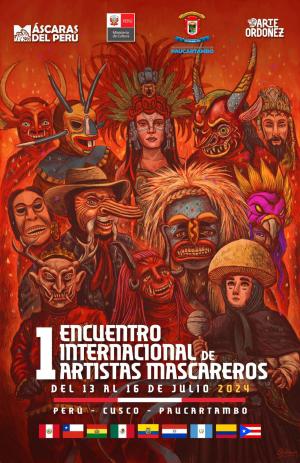
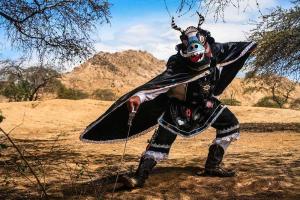
The tradition is maintained by local residents, traditional dancers, musicians, mask makers, and artisan families who prepare for the celebration well in advance. One of the most distinctive elements of the Huaconada is the use of hand-carved wooden masks, each featuring exaggerated facial expressions, prominent noses, and expressive wrinkles that symbolize maturity, authority, and life experience. Dressed in traditional attire and carrying staffs, the masked dancers move deliberately through the streets and public spaces, performing choreographed sequences accompanied by musicians playing traditional Andean instruments. The ceremony follows established customs that define the roles of participants according to age and experience, ensuring that responsibilities are gradually passed on to younger generations under the guidance of experienced community members.
Rather than serving solely as entertainment, the Huaconada functions as a public expression of collective memory and cultural identity. The annual gathering reinforces social bonds by bringing together multiple generations in the preparation and performance of the ritual, while also preserving traditional craftsmanship through the continued production of masks and ceremonial attire. Its combination of dance, music, symbolism, and community participation reflects a holistic understanding of cultural heritage in which artistic performance and social values are inseparable. In recognition of its cultural significance and its successful transmission across generations, the Huaconada Ritual Dance was inscribed on UNESCO's Representative List of the Intangible Cultural Heritage of Humanity in 2010, acknowledging it as an outstanding example of Peru's living intangible cultural heritage.
07-24-2026
| Institutional and human capacities | Unlike many large-scale cultural festivals, the safeguarding of the Huaconada Ritual Dance depends primarily on the cultural leadership of the community of Mito, in the Junín Region. Local dancers, musicians, mask makers, elders, and experienced performers are the principal custodians of the tradition, ensuring that the ceremonial protocols, symbolic roles, and artistic elements remain faithful to community customs. Public institutions complement these community efforts by supporting cultural documentation, heritage promotion, and local festivities. Following UNESCO's recognition in 2010, cultural authorities have collaborated with the community to strengthen safeguarding measures while respecting the tradition's local governance and decision-making processes. | |
| Transmission and education | The Huaconada is transmitted through progressive community participation, where younger generations first observe the ritual before gradually assuming responsibilities according to age, experience, and cultural knowledge. This process reflects the hierarchical structure of the dance itself, in which senior performers mentor new participants and preserve the ceremonial standards expected within the community. Learning extends beyond choreography. Participants acquire knowledge about the symbolism of the masks, appropriate behavior during the ritual, traditional music, community ethics, and the historical significance of the celebration. This informal educational process strengthens both cultural identity and social responsibility. | |
| Inventorying and research | Due to its distinctive ceremonial structure and restricted geographical distribution, the Huaconada has become the subject of ethnographic, anthropological, and heritage research focused on ritual performance, symbolic authority, and community organization. Documentation has recorded not only the dance itself but also the craftsmanship involved in mask production, oral histories, musical traditions, and the social rules governing participation. Its inscription on UNESCO's Representative List of the Intangible Cultural Heritage of Humanity has encouraged further audiovisual documentation and academic collaboration, providing valuable records that support safeguarding while recognizing the community of Mito as the primary source of knowledge about the tradition. | |
| Policies as well as legal and administrative measures | Safeguarding measures for the Huaconada prioritize the preservation of its authentic ceremonial context rather than promoting large-scale expansion or commercialization. Local authorities coordinate with community representatives to ensure that annual celebrations can be carried out under appropriate cultural conditions while respecting the ritual's established practices. National heritage policies and UNESCO recognition have reinforced legal and administrative support for documentation, conservation, and cultural promotion without altering the community's traditional authority over how the ritual is organized and transmitted. | |
| Role of intangible cultural heritage and its safeguarding in society | The Huaconada serves as a powerful expression of collective ethics and social order. Through the symbolic authority of the masked huacones, the ritual reinforces values such as responsibility, respect for elders, integrity, and community accountability. Rather than functioning solely as a performance, the dance represents a public reaffirmation of the principles that have historically guided social life in Mito. The annual celebration also strengthens community cohesion by bringing together multiple generations in the preparation of costumes, masks, music, and ceremonial activities. In doing so, it preserves not only artistic practices but also the shared values that define the community's cultural identity. | |
| Awareness raising | Because the Huaconada is deeply rooted in a single locality, awareness-raising initiatives focus on explaining its cultural meaning rather than simply showcasing its visual appeal. Documentary films, museum exhibitions, educational publications, and cultural presentations have helped audiences understand the symbolism of the masks, the role of the dancers, and the historical importance of the ritual. UNESCO recognition has further increased public interest while encouraging responsible interpretation of the tradition, emphasizing that its value lies in its ceremonial function and community significance rather than solely in its artistic performance. | |
| Engagement of communities, groups and individuals as well as other stakeholders | The Huaconada remains fundamentally community-led. Decisions regarding the organization of the ritual, participant responsibilities, ceremonial protocols, and artistic standards continue to be guided by local residents and experienced practitioners, ensuring that safeguarding measures remain closely aligned with community values. Additional support from educational institutions, researchers, cultural authorities, and heritage organizations contributes to documentation and promotion while recognizing the community's central role as the principal bearer and decision-maker of the tradition. | |
| International engagement | The Huaconada has attracted international attention primarily through its recognition by UNESCO and the growing interest of researchers specializing in ritual performance, anthropology, and intangible cultural heritage. Unlike traditions that frequently tour abroad, its international presence is largely based on scholarly exchange, heritage documentation, and cultural cooperation rather than regular international performances. This form of engagement has promoted greater appreciation of community-centered safeguarding practices, demonstrating how a locally maintained ritual can achieve global recognition while remaining firmly rooted in its place of origin. | |
| References | UNESCO. Huaconada, Ritual Dance of Mito. Representative List of the Intangible Cultural Heritage of Humanity (2010). Ministry of Culture of Peru. Patrimonio Cultural Inmaterial del Perú. Municipality of Mito (Junín). Cultural information on the Huaconada festival. Academic publications on ritual dance, Andean symbolism, and community heritage in the central Peruvian Andes. Ethnographic and audiovisual documentation on the Huaconada and traditional mask-making. |
|













.jpeg)




.png)







.jpeg)

.jpg)


.png)
.jpg)


_(31711258567).jpg)