
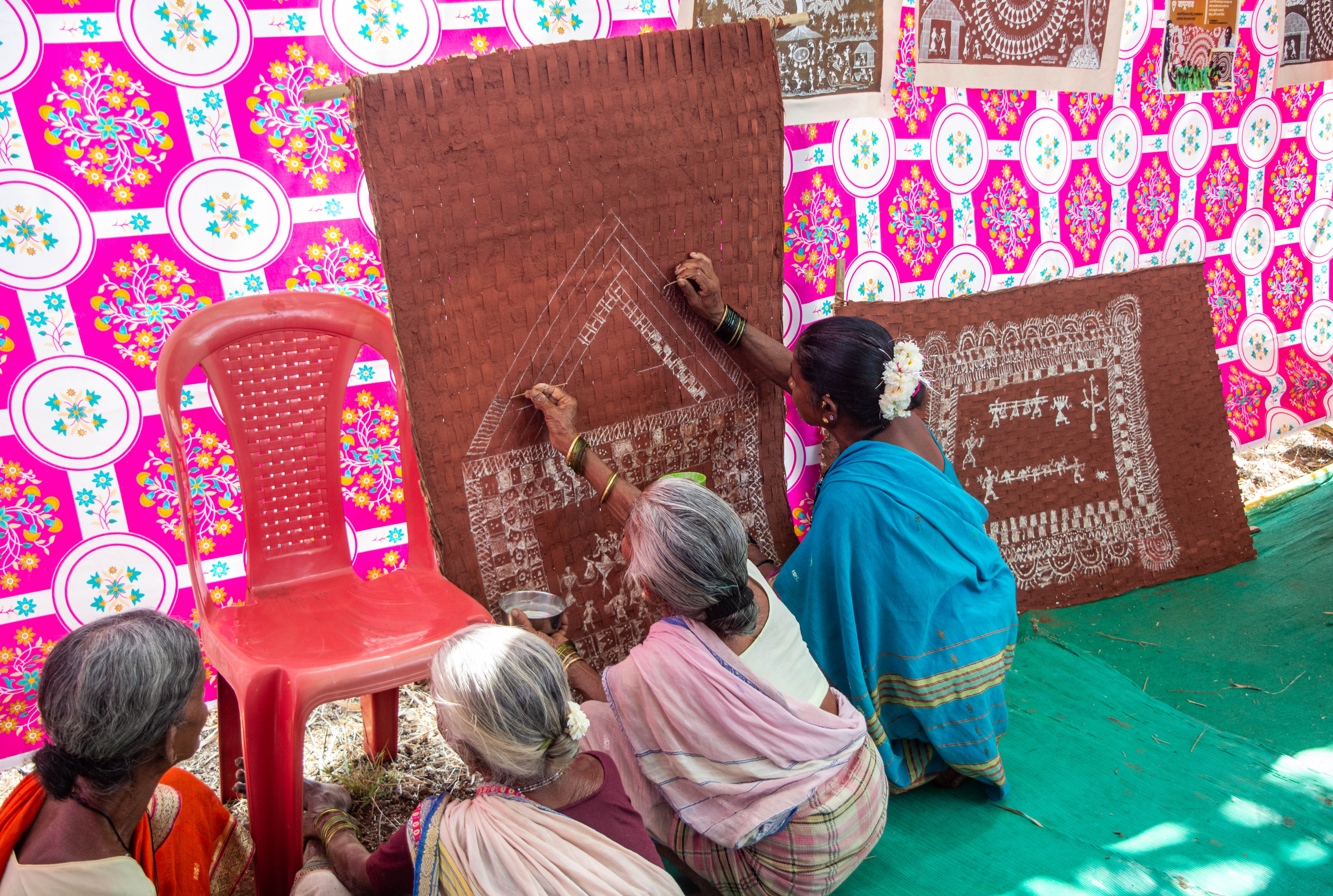
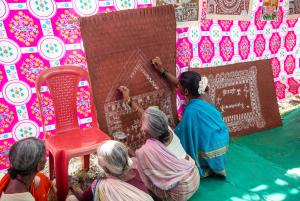
Warli painting is a traditional visual art practice of the Warli indigenous community inhabiting the western coastal region of India, particularly in the Palghar district of Maharashtra. In the tribal belts of Palghar, Warli extends beyond art; it is a way of life. The community’s folklore, rich with deities such as Palghat Devi, the goddess of fertility and the protector of the community, and Waghoba—the tiger god—finds expression through both painting and storytelling. Village scenes—depicting farming, dancing, and communal life—form central themes within this practice. Using a vocabulary of basic geometric shapes, the paintings reflect everyday routines, where each figure can signify fertility, harvest, or celebration.
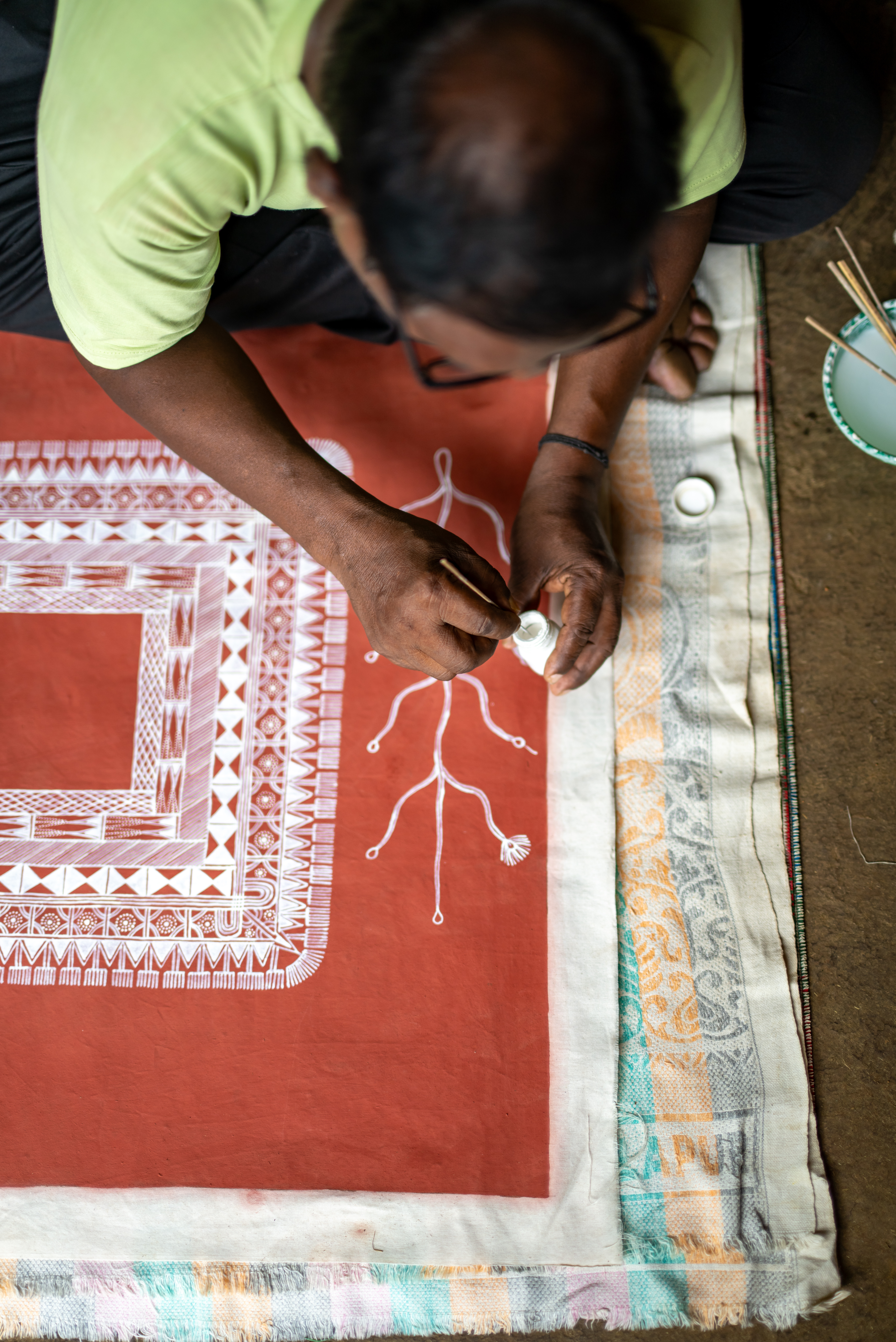
Rituals are central to Warli identity, and their visual language brings these sacred moments to life. The sacred Chawk, a ritual square composition, is created to invoke the happiness and harmony of conjugal life. Marriage ceremonies are marked by the Chawk, featuring Palghat Devi, surrounded by the bride, groom, and celebratory figures.
Warli murals function as visual records of collective memory, expressed through rhythmic white lines set against earthen red backgrounds. Traditionally executed on mud walls using rice paste, the paintings are not merely decorative but are closely tied to social and ceremonial practices. Villages such as Ganjad and Bapugaon in Dahanu taluka continue to serve as active centres of this tradition, where it remains embedded in daily life.
Recognised with a Geographical Indication (GI) tag in 2014, Warli painting affirms its cultural specificity and its collective ownership by the Warli community.
07-16-2026
| Institutional and human capacities | The safeguarding of Warli painting is supported by a combination of community knowledge systems, individual practitioners, and institutional initiatives. Traditionally, women were the primary practitioners, holding knowledge of ritual contexts, symbolic meanings, and techniques. In contemporary practice, both women and men engage as artists, expanding the scope of the tradition. A significant transformation in institutional and artistic capacity is linked to the work of Padma Shri Jivya Soma Mashe of Ganjad, who, in the 1970s, transitioned Warli painting from ritual wall art to paper and canvas, enabling its recognition in national and international art spaces. Today, artist collectives, local cultural organizations, and tourism-linked initiatives, including the Maharashtra Tourism Development Corporation’s (MTDC) initiative to develop cultural tourism in Palghar and Nashik, are helping to strengthen artistic practices and enhance performance readiness within the community. | |
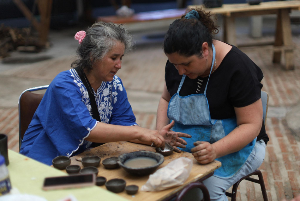
| Transmission and education | Transmission of Warli painting remains primarily informal and intergenerational. Knowledge is passed within households and community settings through observation, participation, and practice, especially during festivals, marriage ceremonies, and agricultural rituals. In recent years, more structured modes of transmission have emerged through workshops, cultural tourism programmes, and artist-led training. Initiatives supported by the Maharashtra Tourism Development Corporation (MTDC) have facilitated engagement between artists and visitors in villages such as Ganjad, creating opportunities for experiential learning and youth participation. The MTDC Palghar Lok Itihas Sangrahalaya in Gholwad—a living heritage museum and the first of its kind in Palghar, curated in association with the local community—further support transmission and awareness raising. | |
| Inventorying and research | Warli painting has been documented through baseline studies, cultural mapping exercises, and community-based documentation processes coordinated by Contact Base. Research initiatives have focused on identifying active practitioner clusters, mapping key villages such as Ganjad and Bapugaon, and recording associated cultural practices, including music, dance, and ritual traditions. Documentation and outreach efforts, such as the Living Heritage Trails of Palghar on Google Arts & Culture—featuring the rich cultural landscape of Palghar—further contribute to presenting these interconnected practices to wider audiences. Documentation efforts also include the recording of oral histories, symbolic interpretations, and material processes, contributing to a broader understanding of Warli painting as part of an interconnected cultural ecosystem rather than an isolated art form. | |
| Policies as well as legal and administrative measures | Warli painting is supported through legal recognition and policy frameworks aimed at safeguarding traditional knowledge. GI registration in 2014 provides formal recognition and helps protect the authenticity and regional identity of the art form. Further, initiatives by the Maharashtra Tourism Development Corporation (MTDC) have contributed to strengthening the ecosystem by linking artists with artisan cards, facilitating their access to formal recognition, welfare schemes, and market opportunities. | |
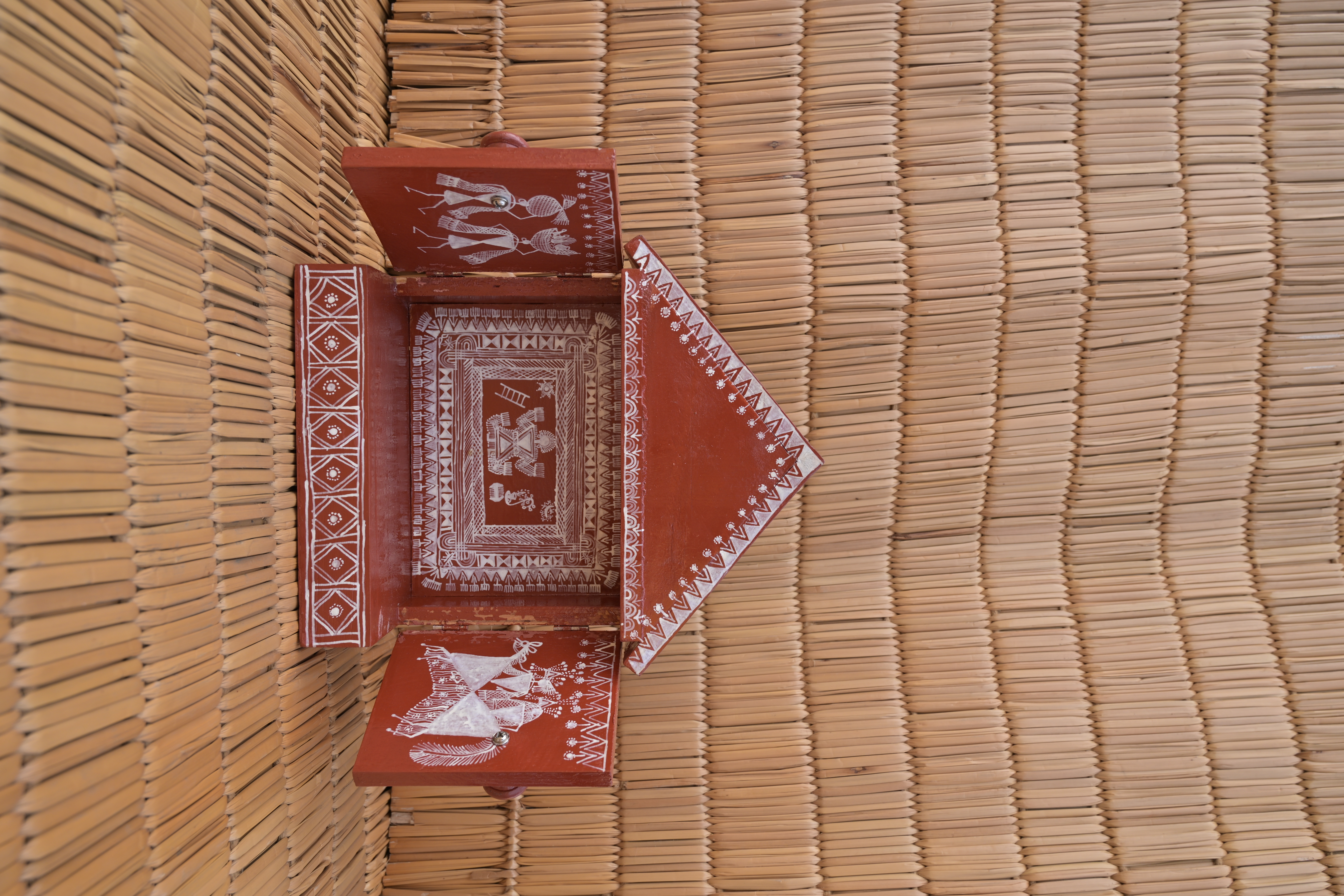
| Role of intangible cultural heritage and its safeguarding in society | Warli painting plays a vital role in reinforcing cultural identity, social cohesion, and ecological knowledge within the Warli community. As a visual expression of collective memory, it reflects relationships between humans, nature, and the spiritual world. At the same time, the practice continues to evolve through the experiences and interpretations of contemporary artists. Younger practitioners, particularly from villages such as Ganjad, are exploring new themes and formats—for instance, creating illustrated books using Warli painting to depict the evolution of transport, or developing miniature wooden house souvenirs where Warli motifs extend across the entire structure. These adaptations reflect how traditional visual language is being reinterpreted in response to changing contexts. The safeguarding of Warli painting contributes to sustaining cultural diversity and promoting respect for indigenous knowledge systems. Its continued practice within ritual contexts ensures that it remains embedded in everyday life, while its adaptation to contemporary formats allows it to remain relevant in changing socio-economic contexts. | |
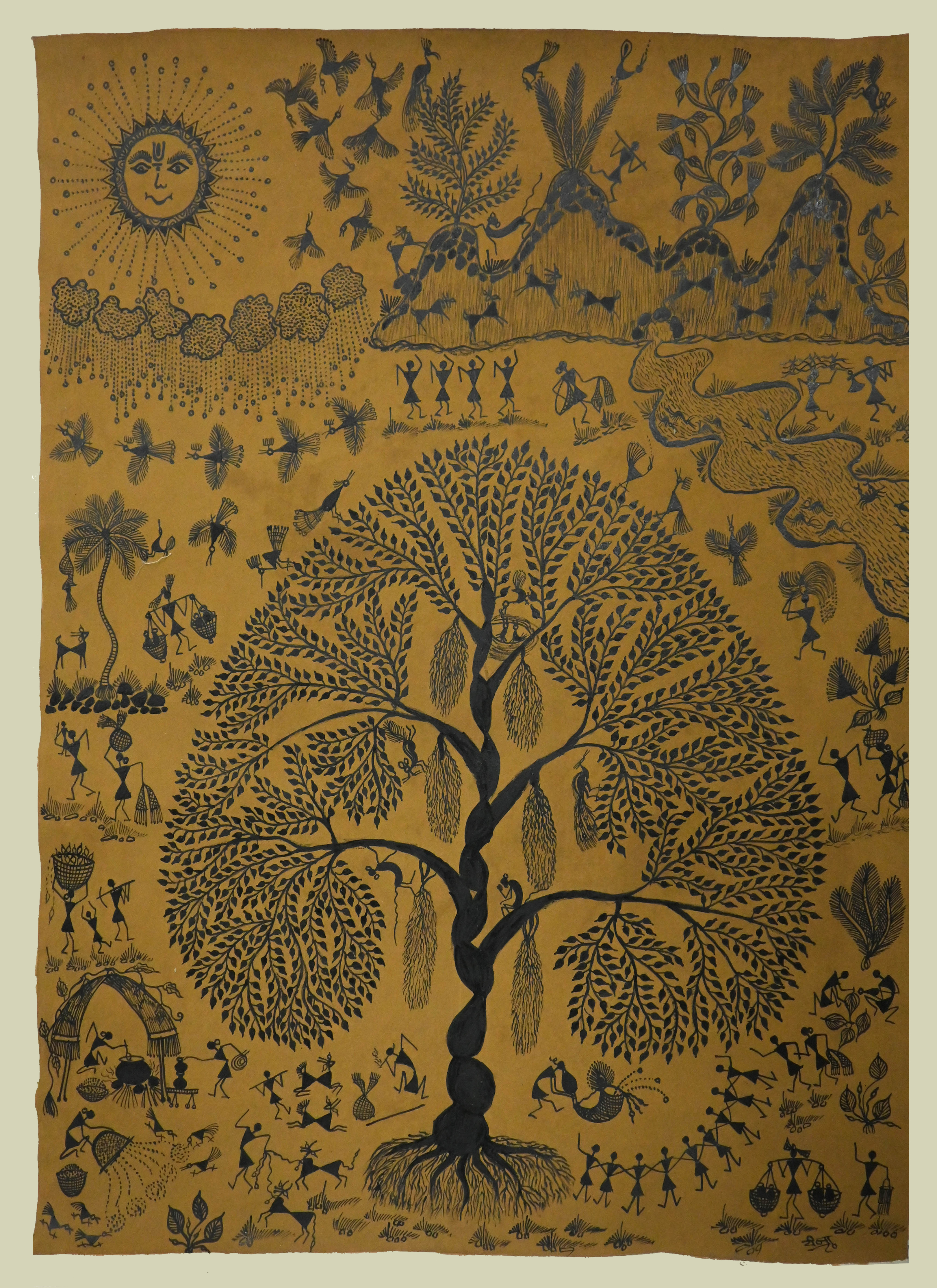
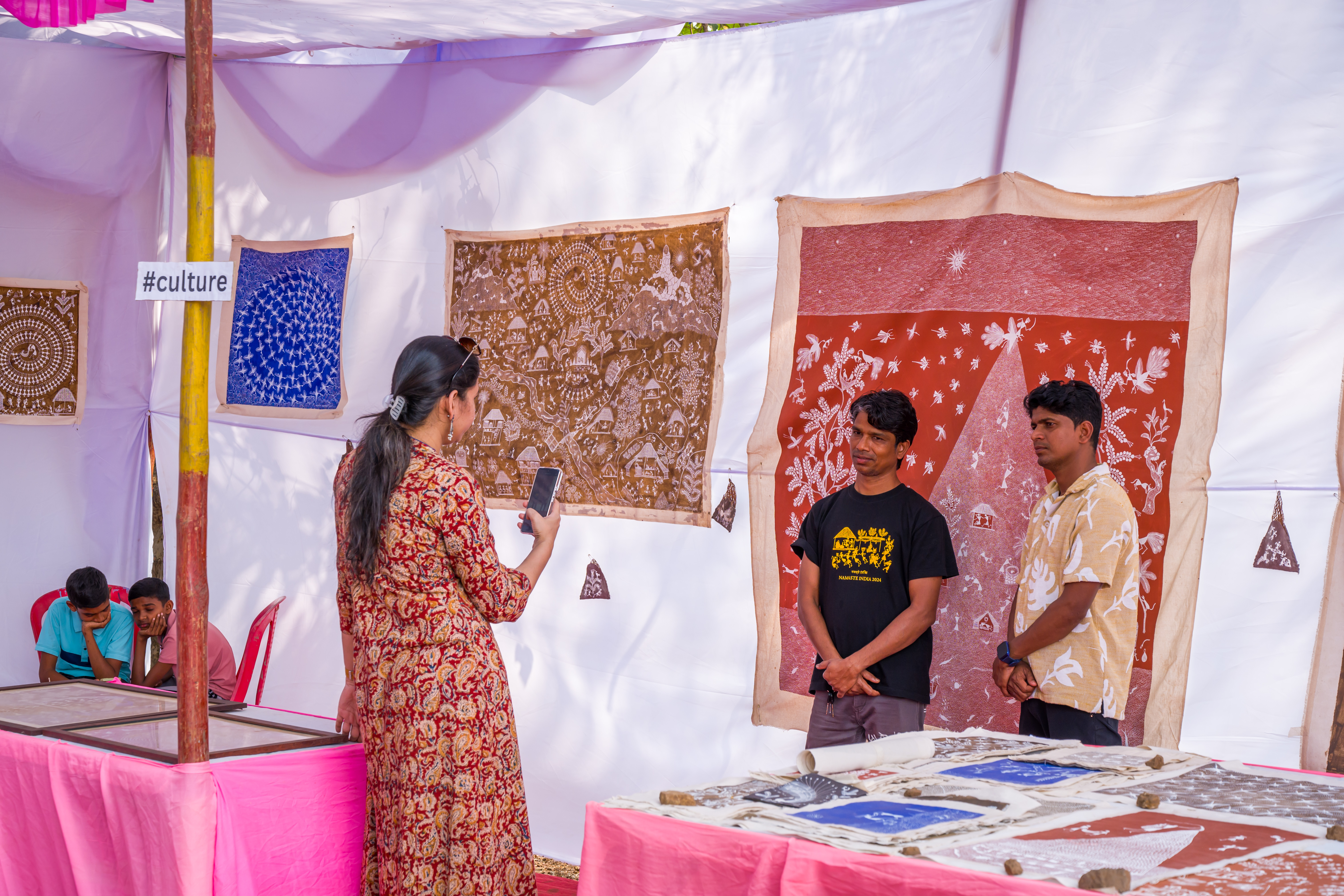
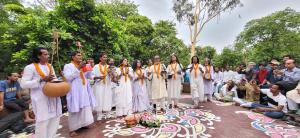
| Awareness raising | Awareness of Warli painting has grown significantly through exhibitions, publications, cultural festivals, and tourism initiatives. Workshops and public demonstrations have further enabled wider audiences to engage with the art form and appreciate its cultural significance. Central themes in Warli painting—such as the Tree of Life and other narrative compositions—play a crucial role in this engagement, as they reflect a deep connection with nature and express concerns about the environment, life, and the passage of time. These narratives embody both continuity and an evolving depth of expression, demonstrating how artists expand traditional visual vocabulary while remaining rooted in cultural meanings. Through these artworks, the collective thought processes of the community are articulated, reflecting their relationship with nature, cultural practices, and ways of life, while also fostering awareness through artistic expression. Festivals such as the Palghar ICH Festival, an initiative of the Maharashtra Tourism Development Corporation (MTDC) in collaboration with local communities, have created important platforms for celebrating the cultural heritage of the region . Such initiatives not only raise awareness but also support intergenerational learning and strengthen connections between artists, communities, and wider audiences. | |
| Engagement of communities, groups and individuals as well as other stakeholders | The Warli community remains central to all safeguarding efforts. Artists, elders, and community leaders actively participate in the transmission, production, and representation of the art form. Villages such as Ganjad, Palghar, Gholwad, Jawahar, and Bapugaon serve as important hubs where community engagement is closely linked to practice. A key aspect of this transmission is the guru–shishya parampara (teacher–disciple tradition), where experienced artists guide younger practitioners through workshops and hands-on learning. Through this process, knowledge is not only passed on but also adapted, as younger artists bring their own perspectives and interpretations to the practice. These interactions often lead to new ideas and expressions, reflecting how the younger generation understands and engages with Warli painting today. Their work may reinterpret traditional themes or explore new narratives while retaining the core visual language. Through such workshops and exchanges, new generations of painters continue to emerge, ensuring both continuity and renewal within the tradition. Stakeholder engagement also includes collaborations between community practitioners, government bodies, designers, researchers, and non-governmental organizations. These collaborations aim to balance livelihood generation with cultural integrity, ensuring that community voices remain central in decision-making processes. | |
| International engagement | Warli painting has gained international recognition through exhibitions, collaborations, and its inclusion in global art and design contexts. The transition of the art form to portable mediums such as paper and canvas has enabled its movement beyond local settings. A key figure in this process was Jivya Soma Mashe, a pioneering painter of the Warli tribal art form from Maharashtra, India. He was among the first to present Warli art internationally, with exhibitions at the Palais de Menton in 1976 and the Pompidou Centre in 1989. . His paintings are part of major collections, including the British Museum, reflecting the global visibility and continued relevance of Warli painting. This international engagement has continued with other artists from Warli villages who have participated in exhibitions and cultural exchanges in many countries. Institutions like the Mithila Museum in Niigata, founded by Tokiko Hasegawa, have played a role in supporting and showcasing indigenous art forms from India, including works by artists from Ganjad. Such platforms have contributed to broader recognition while enabling artists to engage with new audiences and contexts. | |
| References | · Government of India, Press Information Bureau. Warli Painting and Geographical Indication Status (2014). · Maharashtra Tourism Development Corporation (MTDC) – Warli Painting Cultural Tourism Initiative · MTDC Official Portal (Festivals and Cultural Initiatives) · Google Arts & Culture – Living Heritage Trails of Palghar (Banglanatak) · British Museum Collection – Jivya Soma Mashe · Academic and field-based documentation on Warli painting, oral traditions, and community practices |
|





.jpeg)

.png)
.jpeg)
.jpg)

.png)
.jpg)


_(31711258567).jpg)