
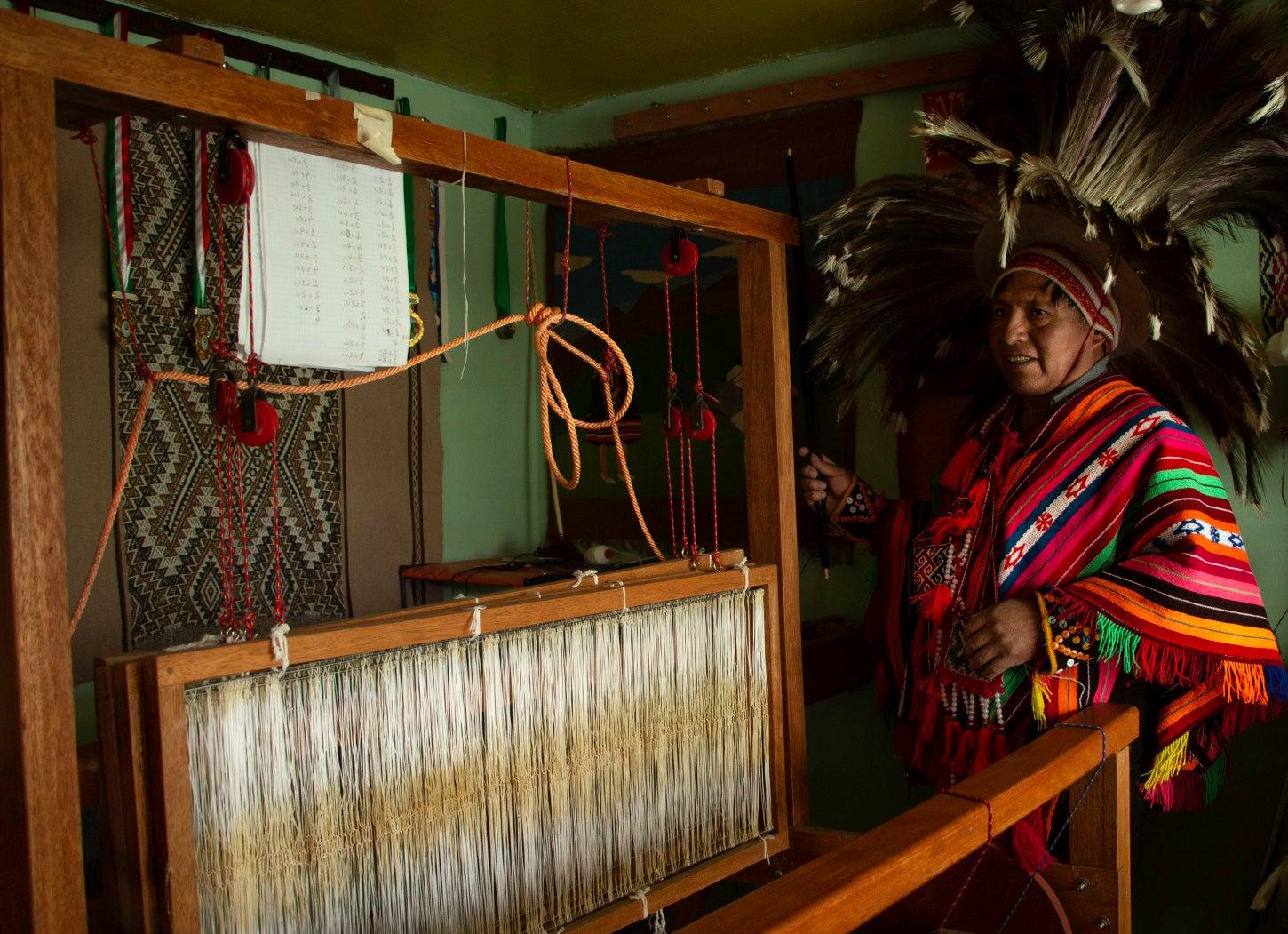
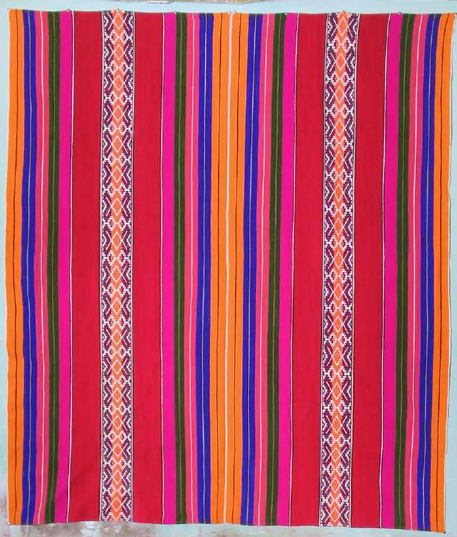
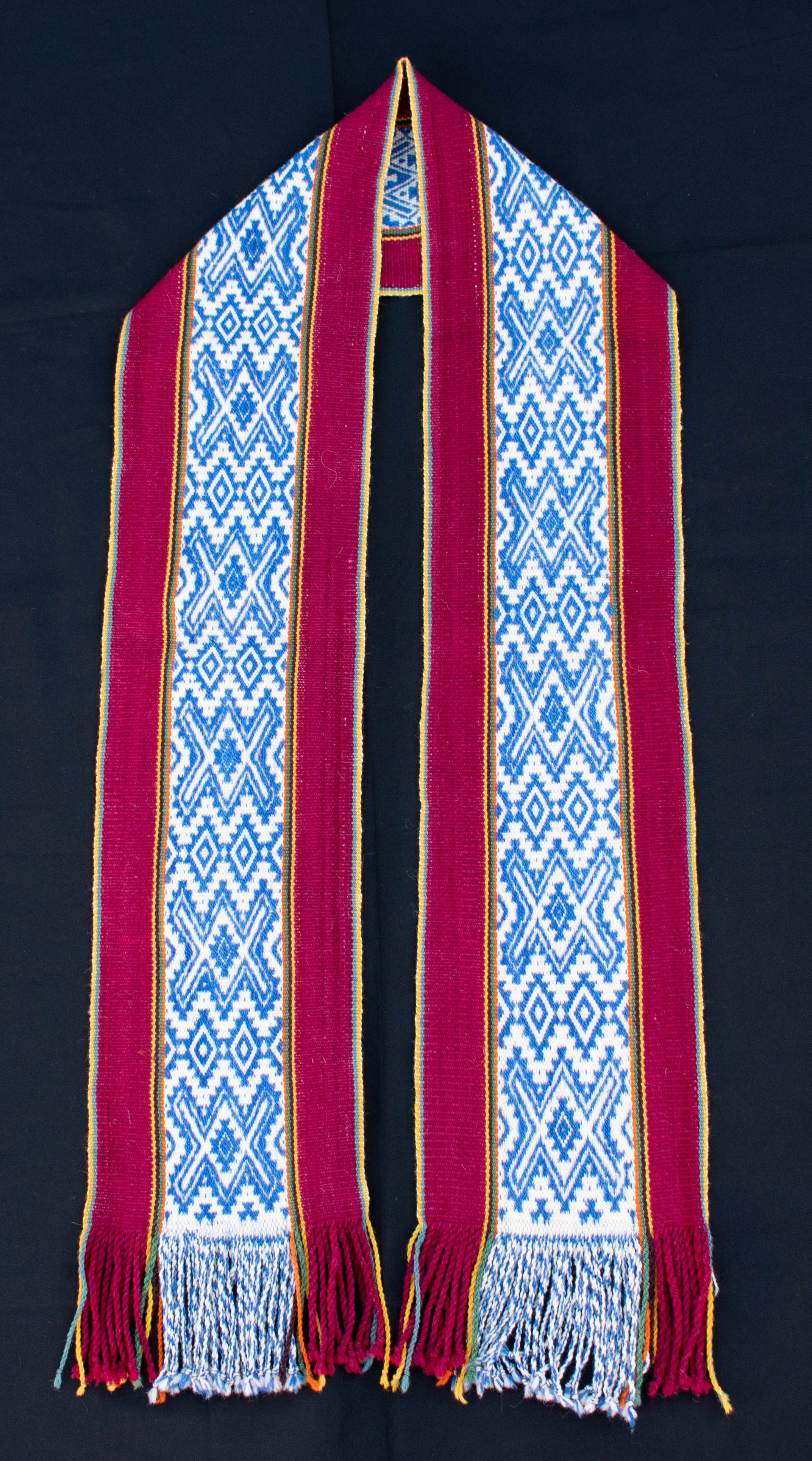
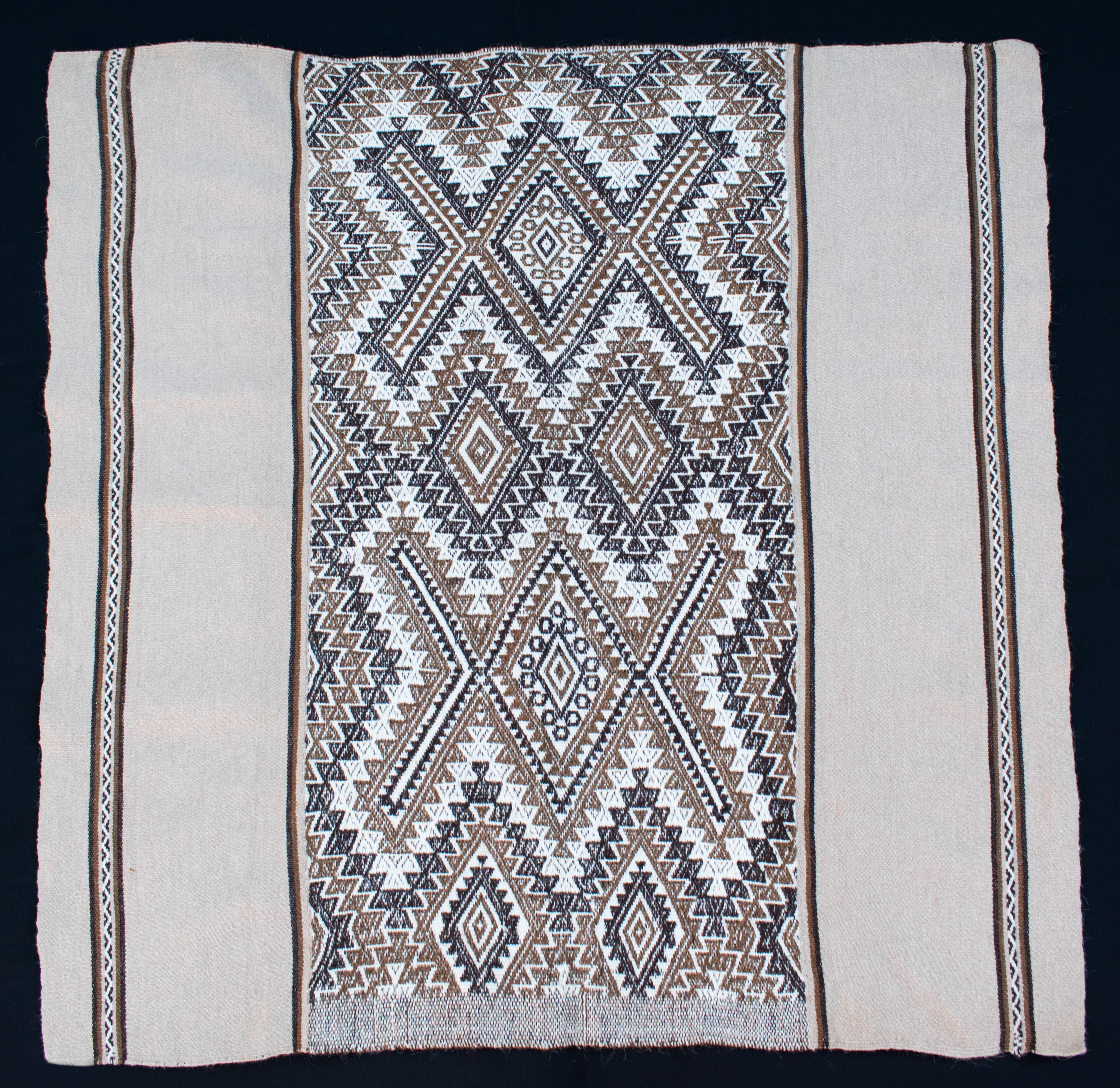
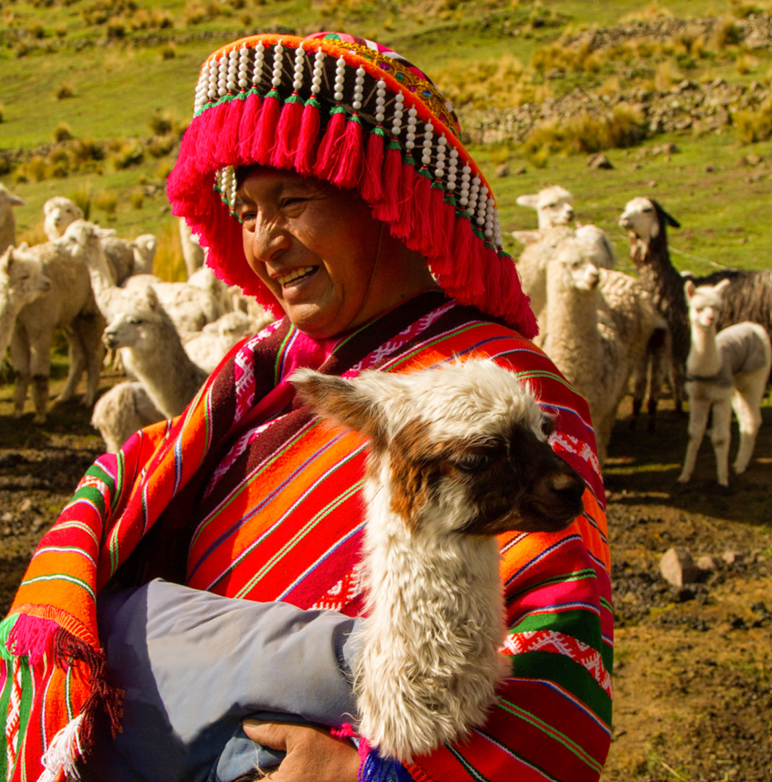
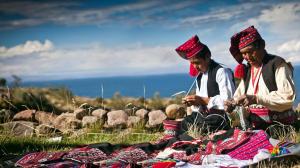
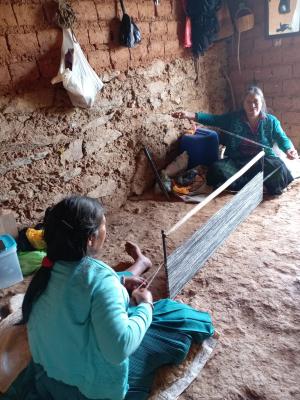
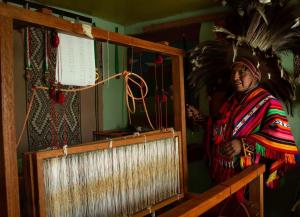
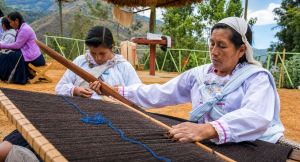
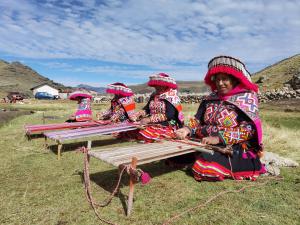
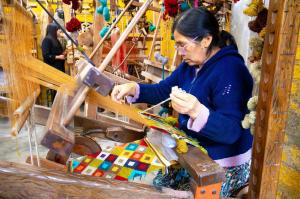
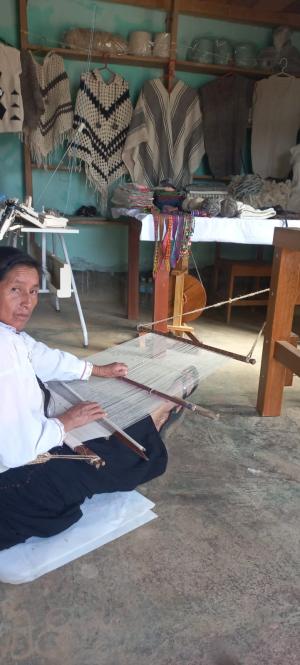
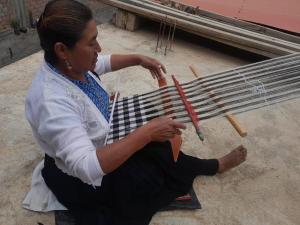
I am Tiodoro Pacco Choque, a master textile artisan from the district of Palca, province of Lampa, in the Puno region of Peru, and a bearer of ancestral knowledge linked to the traditional textile art of the Peruvian Altiplano. For more than thirty-five years, I have dedicated my life to the safeguarding, practice, and intergenerational transmission of textile techniques inherited from my ancestors—knowledge that forms part of the historical and cultural memory of the Andean communities of southern Peru. My learning process began during childhood within my family and community, observing and practicing alongside my father and the elders of my community the traditional techniques of hand-spinning, dyeing with natural pigments, the use of the stake loom and pedal loom, as well as the interpretation of ancestral designs and iconographies. This knowledge was not acquired merely as a productive trade, but as part of a way of life deeply connected to nature, the raising of South American camelids, communal organization, and the Andean worldview.
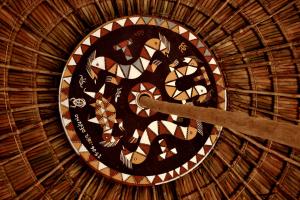
The textile art of Palca constitutes a living manifestation of the intangible cultural heritage of the Peruvian Altiplano because it preserves knowledge transmitted from generation to generation and maintains the spiritual, cultural, and community relationship between human beings, nature, and the territory. Each textile contains symbols, colors, and ancestral iconographies that represent the collective memory of our communities, agricultural cycles, tutelary mountains, the observation of nature, the traditional breeding of alpacas and llamas, and the cultural identity of the Altiplano peoples. Traditional weaving does not merely represent an artisanal piece; it constitutes a cultural language and an expression of historical continuity that strengthens the collective identity of our communities. Through each ancestral technique and design, knowledge is preserved that forms part of the living memory of the peoples of the Puno Altiplano.
Throughout my career, I have worked on the conservation and safeguarding of traditional fine-weaving techniques using alpaca, llama, and vicuña fibers, striving to maintain the authenticity of ancestral processes from fiber selection to the final finishing of each piece. Furthermore, I have promoted the appreciation of artisanal quality and respect for inherited knowledge, driving sustainable practices related to the responsible use of natural resources and the traditional breeding of South American camelids. In 2003, along with my wife, Doña Juana Zea, I founded the 'Las Vicuñas de Palca' Livestock and Artisanal Association, an organization composed of artisan families committed to the preservation and strengthening of our community's traditional textile practices. Through this organization, we have driven the intergenerational transmission of knowledge, the strengthening of cultural identity, and the continuity of ancestral techniques that currently face risks stemming from industrialization, youth migration, and the progressive loss of traditional wisdom.
My work as a bearer of intangible cultural heritage also unfolds through teaching and guiding young artisans and community members, sharing knowledge related to artisanal spinning, traditional weaving, the use of natural dyes, and the interpretation of ancestral designs. I consider that transmitting this knowledge constitutes a cultural and moral responsibility to guarantee that future generations continue to preserve the memory, identity, and traditional wisdom of the Andean peoples. Through my work, I have participated in cultural spaces, craft fairs, and national and international exhibitions where the traditional textile art of Palca has been recognized for its cultural, technical, and artistic value. These experiences have made it possible to disseminate the importance of Peru's intangible cultural heritage and demonstrate that ancestral textile practices remain alive thanks to the knowledge, commitment, and active participation of the bearer communities.
As an artisan and bearer of intangible cultural heritage, I believe that the safeguarding of textile art should not be limited solely to the conservation of material objects, but principally to the protection of the knowledge, techniques, cultural values, and forms of community transmission that make the continuity of this ancestral tradition possible. Weaving represents the living history of our peoples and constitutes a cultural legacy that we must preserve with dignity and responsibility for future generations.
05-23-2026
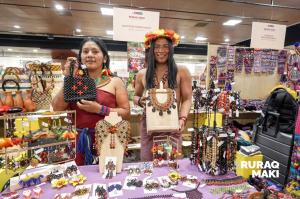
| Institutional and human capacities | For more than thirty-five years, I have developed specialized knowledge related to traditional textile art, strengthening human, technical, cultural, and organizational capacities within my community and across various artisanal organizations in the Puno region. As the founder and leader of the 'Las Vicuñas de Palca' Livestock and Artisanal Association, I have promoted collective work, the training of artisans, the intergenerational transmission of knowledge, and the preservation of ancestral textile practices linked to the intangible cultural heritage of Peru. My experience encompasses mastery of traditional techniques in artisanal spinning, weaving on stake looms and pedal looms, dyeing with natural pigments, the selection and classification of fine alpaca, llama, and sheep fibers, as well as the design and interpretation of ancestral textile iconographies. This knowledge has been transmitted through community teaching processes, training workshops, and technical assistance directed at artisanal associations, peasant communities, and young artisans. Furthermore, I have participated as a facilitator, trainer, speaker, and master artisan in programs driven by municipalities, community organizations, rural development projects, and institutions linked to the strengthening of traditional crafts and the conservation of Andean textile wisdom. These experiences have contributed to the organizational strengthening of artisan families and the continuity of traditional knowledge currently threatened by industrialization processes and the progressive loss of ancestral cultural practices. My career has also been recognized in national and international cultural spaces, highlighting my participation in the Ruraq Maki national traditional art exhibition, as well as recognitions granted by the Ministry of Culture of Peru, local governments, and regional institutions for my contribution to the preservation of the living cultural heritage of the Peruvian Altiplano. | |
| Transmission and education | The transmission of knowledge constitutes one of the fundamental principles of my work as a bearer of intangible cultural heritage. The textile wisdom that I inherited from my parents, ancestors, and community elders continues to be shared with young artisans, artisan families, and members of various Andean communities through practical teaching, collective work, and direct learning. Through these training processes, knowledge related to artisanal spinning, weaving on stake looms and pedal looms, dyeing with natural pigments, the selection and classification of alpaca, llama, and sheep fibers, as well as the cultural meaning of ancestral designs and iconographies, is transmitted. This teaching encompasses not only technical aspects, but also cultural values linked to respect for nature, communal organization, and the Andean worldview. For more than two decades, I have participated as a facilitator, trainer, and master artisan in workshops, training programs, and artisanal strengthening processes developed across various communities and organizations. Through these activities, I have contributed to the training of new artisans and the continuity of traditional knowledge currently facing risks of disappearance due to industrialization, youth migration, and the progressive loss of ancestral cultural practices. The intergenerational transmission of these skills and wisdom allows us to keep the cultural memory of our communities alive and guarantee the continuity of the ancestral textile art of Palca as a living expression of the cultural identity of the Andean peoples of Peru. | |
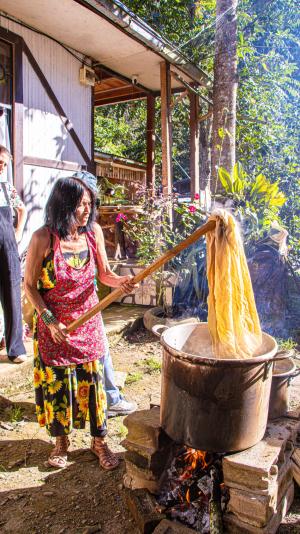
| Inventorying and research | My work encompasses the preservation, documentation, and transmission of traditional knowledge related to the ancestral textile art of the district of Palca. Through the continuous practice of traditional weaving and community-based learning, ancestral techniques, designs, and iconographies that form part of the cultural memory of the Andean peoples are conserved. The designs present in our textiles contain symbolic representations linked to nature, agricultural cycles, the breeding of South American camelids, tutelary mountains, communal organization, and the Andean worldview. Each textile piece constitutes an expression of cultural identity and a way to preserve knowledge transmitted from generation to generation. Furthermore, I carry out an ongoing process of recovery and strengthening of traditional techniques related to hand-spinning, loom weaving, the transformation of alpaca fibers, and the use of natural dyes obtained from resources within the Andean environment. This work is complemented by training activities, the exchange of knowledge, and participation in cultural and artisanal spaces that contribute to maintaining the authenticity and cultural continuity of the textile tradition. Through these actions, the safeguarding of intangible cultural heritage and the preservation of ancestral knowledge are promoted. | |
| Policies as well as legal and administrative measures | As a master artisan and bearer of intangible cultural heritage, I develop actions aimed at strengthening the protection, continuity, and transmission of traditional knowledge related to the ancestral textile art of the district of Palca. My work promotes the cultural valuation of artisanal labor, the preservation of ancestral techniques, and the strengthening of the cultural identity of Andean communities. Through community teaching, participation in cultural spaces, craft fairs, training processes, and cultural dissemination activities, I contribute to the safeguarding of traditional knowledge linked to artisanal spinning, loom weaving, and the use of natural dyes on these fibers. These actions strengthen the intergenerational transmission of wisdom and promote the social recognition of intangible cultural heritage. Furthermore, my participation in cultural initiatives, regional contests, and national exhibitions organized by cultural institutions and public entities in Peru has contributed to making visible the importance of traditional textile art as a living expression of cultural memory. | |
| Role of intangible cultural heritage and its safeguarding in society | "Intangible cultural heritage plays a fundamental role in the preservation of identity, collective memory, and the historical continuity of peoples. In the case of the traditional textile art of the district of Palca, ancestral knowledge and techniques constitute a living expression of the relationship between communities, nature, and the Andean worldview. The practice of traditional weaving preserves not only artisanal techniques inherited from generation to generation, but also cultural values related to communal organization, respect for nature, the breeding of South American camelids, and the transmission of ancestral knowledge. Each textile represents a form of cultural memory that strengthens the identity of the bearer communities. The safeguarding of these cultural practices contributes to strengthening the sense of community belonging, promotes respect for traditional wisdom, and favors the continuity of an ancestral tradition that forms part of Peru's cultural diversity. Through community teaching, participation in cultural spaces, and the training of new artisans, it is guaranteed that this knowledge will continue to be transmitted to future generations. Preserving the traditional textile art of Palca means preserving the living history, cultural identity, and collective memory of my community. | |
| Awareness raising | Through my participation in craft fairs, cultural exhibitions, seminars, workshops, and national and international dissemination platforms, I have contributed to raising public awareness about the importance of my community's traditional textile art as intangible cultural heritage. These activities make visible the cultural value of ancestral weaving techniques, promote respect toward the bearer communities, and strengthen the social recognition of traditional knowledge linked to hand-spinning, the use of natural dyes, and loom weaving. Furthermore, they contribute to generating awareness regarding the need to protect and safeguard these cultural practices against industrialization processes, the loss of traditional wisdom, and social transformation. My participation in cultural and artisanal spaces has also made it possible to disseminate the importance of Peru's living cultural heritage and demonstrate that ancestral textile practices remain vital and relevant thanks to the commitment, intergenerational transmission, and collective work of the bearer communities. | |
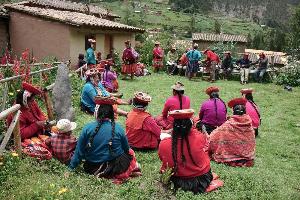
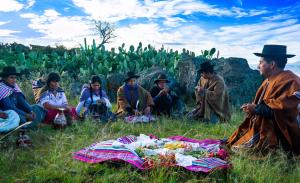
| Engagement of communities, groups and individuals as well as other stakeholders | The ancestral textile tradition of the district of Palca is kept alive thanks to the active participation of artisan families, South American camelid breeders, master weavers, and Andean communities that continue to preserve knowledge transmitted from generation to generation. My work unfolds collectively alongside members of the 'Las Vicuñas de Palca' Livestock and Artisanal Association and other individuals committed to the preservation of the intangible cultural heritage of the Puno region in Peru. Through community work, practical teaching, and the exchange of knowledge, the continuity of traditional techniques related to artisanal spinning, loom weaving, and the use of natural dyes on alpaca and sheep yarns is strengthened. This community participation contributes to the strengthening of cultural identity, the continuity of collective memory, and the intergenerational transmission of traditional knowledge within our community and other Andean communities linked to the ancestral textile tradition. | |
| International engagement | The traditional textile art of the district of Palca has been disseminated in cultural spaces, craft fairs, exhibitions, and cultural promotion activities developed at national and international levels, where the value of the cultural heritage of Peru and the Puno region is recognized. My participation in these spaces has made it possible to share ancestral knowledge related to artisanal spinning, traditional weaving, and the use of natural dyes, contributing to the dissemination and appreciation of traditional textile techniques preserved by Andean communities. Furthermore, these experiences have strengthened the cultural recognition of artisanal work as a living expression of intangible cultural heritage. Participation in cultural activities and exchange spaces also contributes to intercultural dialogue and to raising awareness about the importance of safeguarding traditional knowledge transmitted from generation to generation by the bearer communities of cultural heritage. | |
| References | https://citecamelidospuno.com.pe/logro-destacado-de-tiodoro-pacco-choque-en-el-xxvi-concurso-premio-maestro-regional-de-la-artesania-region-puno-2024/ https://www.textile-forum-blog.org/2017/12/tinkuy-2017-gathering-of-the-textile-arts-weaving-the-past-present-and-future/ https://web.facebook.com/ruraqmakihechoamano/videos/1925217957736747/ https://www.jersonramirez.com/proyectos-tiodoro-pacco |
|







.jpeg)


.png)


.jpeg)
.jpg)


.png)
.jpg)


_(31711258567).jpg)