
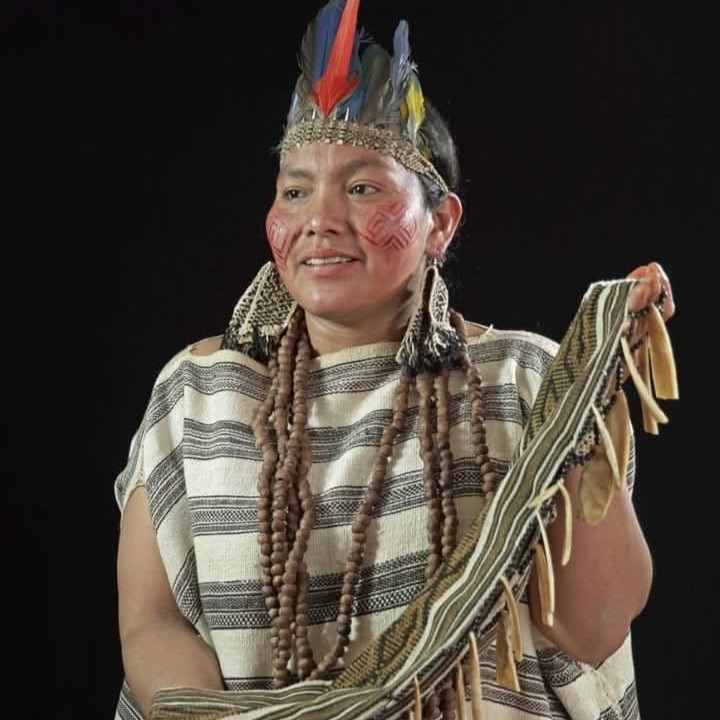
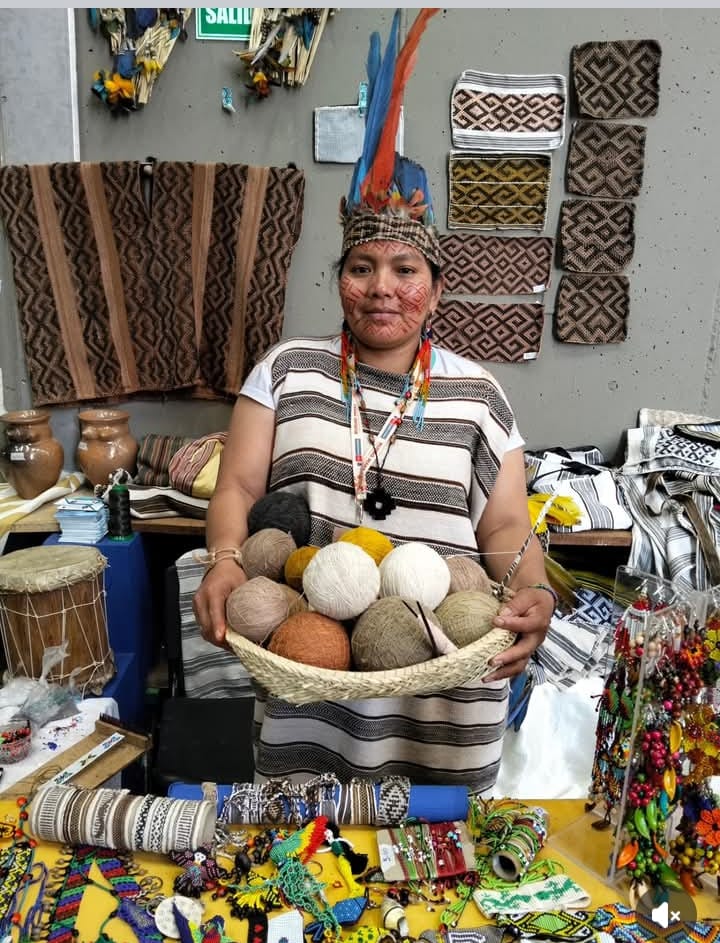
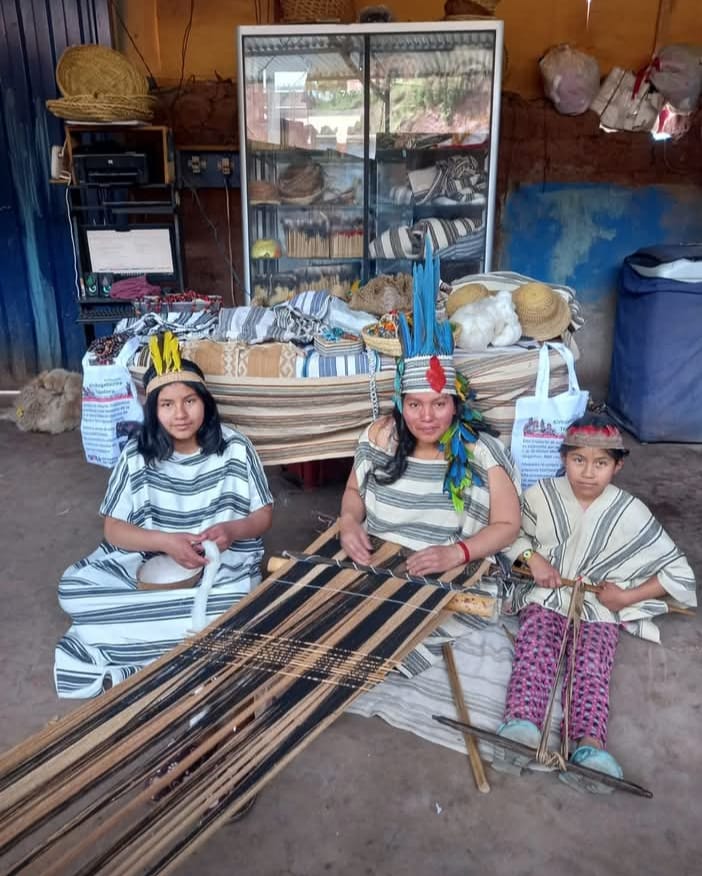
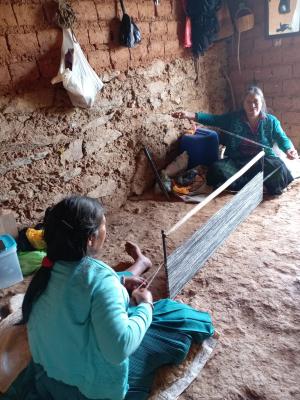
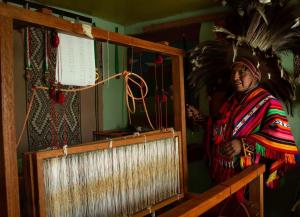
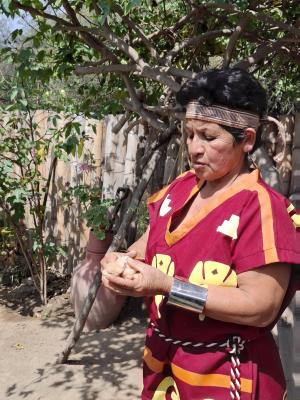
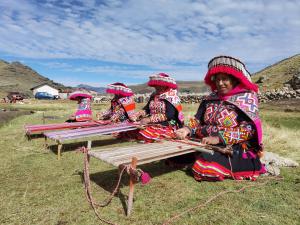
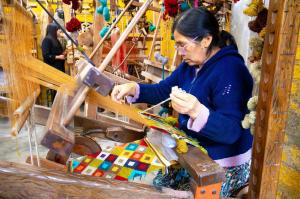
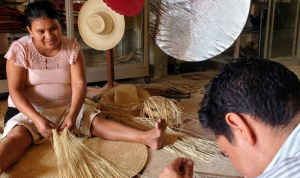
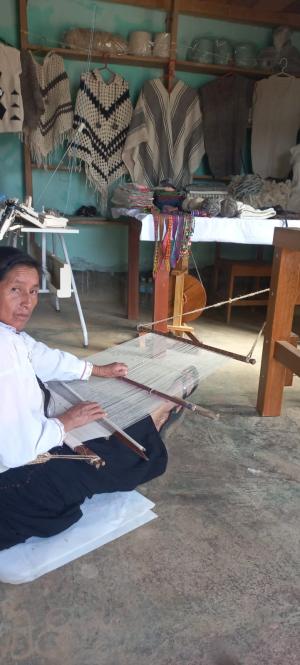
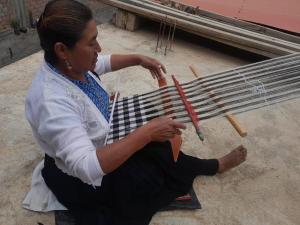
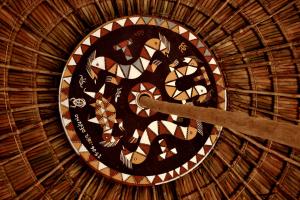
Since I was 7 years old, I learned the art of natural weaving from my grandmother. She taught me the stitches, the Amazonian designs, and the symbols that represent our tradition.
Over time, I continued perfecting this technique together with my siblings, and today we continue to pass on this passion for weaving, natural dyeing, and handmade jewelry. These works take us months to complete, but we always make them with love and dedication.
05-08-2026
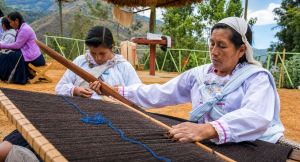
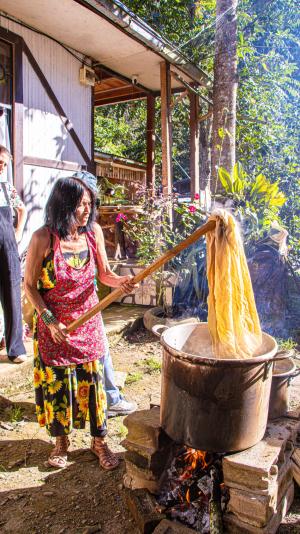
| Institutional and human capacities | Since I was seven years old, I have been developing my artisanal skills, as my grandmother taught me how to weave. Throughout my life, I have strengthened these abilities with the support of my husband, my children, and my family. Together, we work as a family enterprise, despite having limited resources. My husband, my children, and I weave everything by hand, using 100% natural cotton, and each design is created with natural dyes. In our case, our institutional capacities are mainly those we have built as a family. We support one another, train ourselves in new designs, research our traditions, and, little by little, have helped recover our customs while keeping our cultural heritage alive. | |
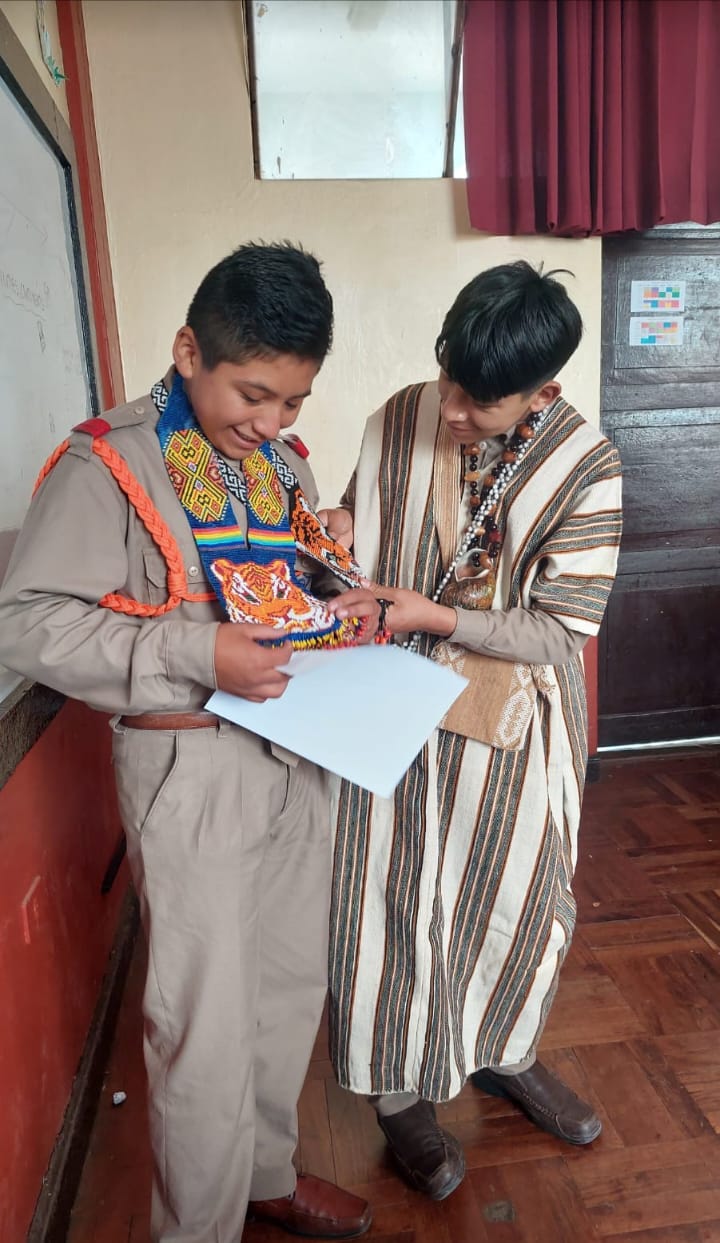
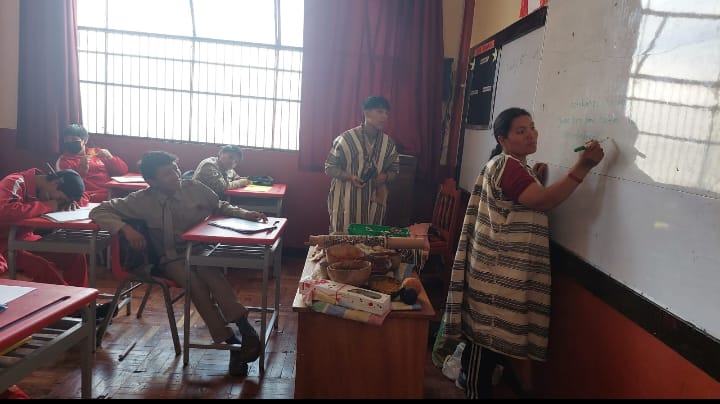
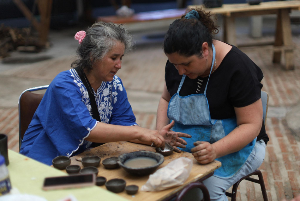
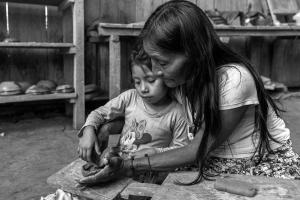
| Transmission and education | Since I was little, my grandmother taught me how to weave, and now I pass this knowledge on to my children. Every time I create a design, I share the story of our culture and the customs of our women, including the traditions associated with their coming of age. In my family business, we organize small workshops with my children and other children from the neighborhood, so they can learn about handicrafts and our traditions. In this way, education goes beyond the product itself: it becomes a bridge for transmitting our identity. | |
| Inventorying and research | I have personally kept an inventory of each of my woven pieces since I first began. We document every design, each type of cotton, and the natural dyeing techniques I use. In addition, I research books and archives on the textile tradition of our region. Every piece we create is the result of this research: it is not only a product, but a legacy. Every detail is recorded, and through this inventory, I preserve not only the garments themselves, but also the history behind them. | |
| Policies as well as legal and administrative measures | As the owner of the business, I have developed internal policies to respect tradition, use natural materials, and maintain transparency. Although there is no specific law, I am guided by the principles of cultural heritage protection, ensuring that each product reflects a commitment to identity and history. | |
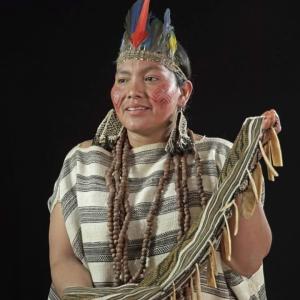
| Role of intangible cultural heritage and its safeguarding in society | For me, intangible cultural heritage is essential to society because, through my family business, I help safeguard the traditions of the Amazon rainforest. Each garment, each crown, is a way of telling our story. In this way, we not only keep traditional techniques alive, but also connect people with their identity, fostering pride and a sense of belonging within the community. | |
| Awareness raising | For me, intangible cultural heritage is essential to society because, through my family business, I help safeguard the traditions of the Amazon rainforest. Each garment and each crown is a way of telling our story. In this way, we not only keep traditional techniques alive, but also connect people with their identity, fostering pride and a sense of belonging within the community. | |
| Engagement of communities, groups and individuals as well as other stakeholders | The participation of communities, groups, and individuals is fundamental to my work. Those who most appreciate and value our art are often foreigners, who come from other countries and fall in love with our pieces. They are fascinated not only by the beauty of a crown, a kushma, or a baby carrier, but also by the story behind each piece: every detail, every weave, and every symbol. This connection between people, both from our own community and from abroad, is what keeps our art and tradition alive. | |
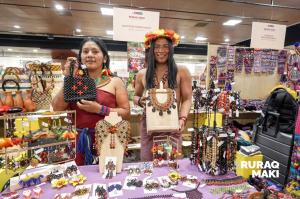
| International engagement | So far, our participation has been at the national level. We have mainly taken part in fairs such as the well-known Ruraq Maki in Lima, which is held twice a year, in July and December. Although we have only presented our art in Cusco and Lima so far, it is our dream to take it further and share it internationally. We believe that by participating in events in other countries, we will not only expand our reach, but also bring our culture to more people, helping ensure that it is never lost and continues to be appreciated around the world. | |
| References |
|
|
Attached File(1)
1. Recognitions and Awards.pdf





.jpeg)


.png)
.jpeg)
.jpg)

.png)
.jpg)


_(31711258567).jpg)