
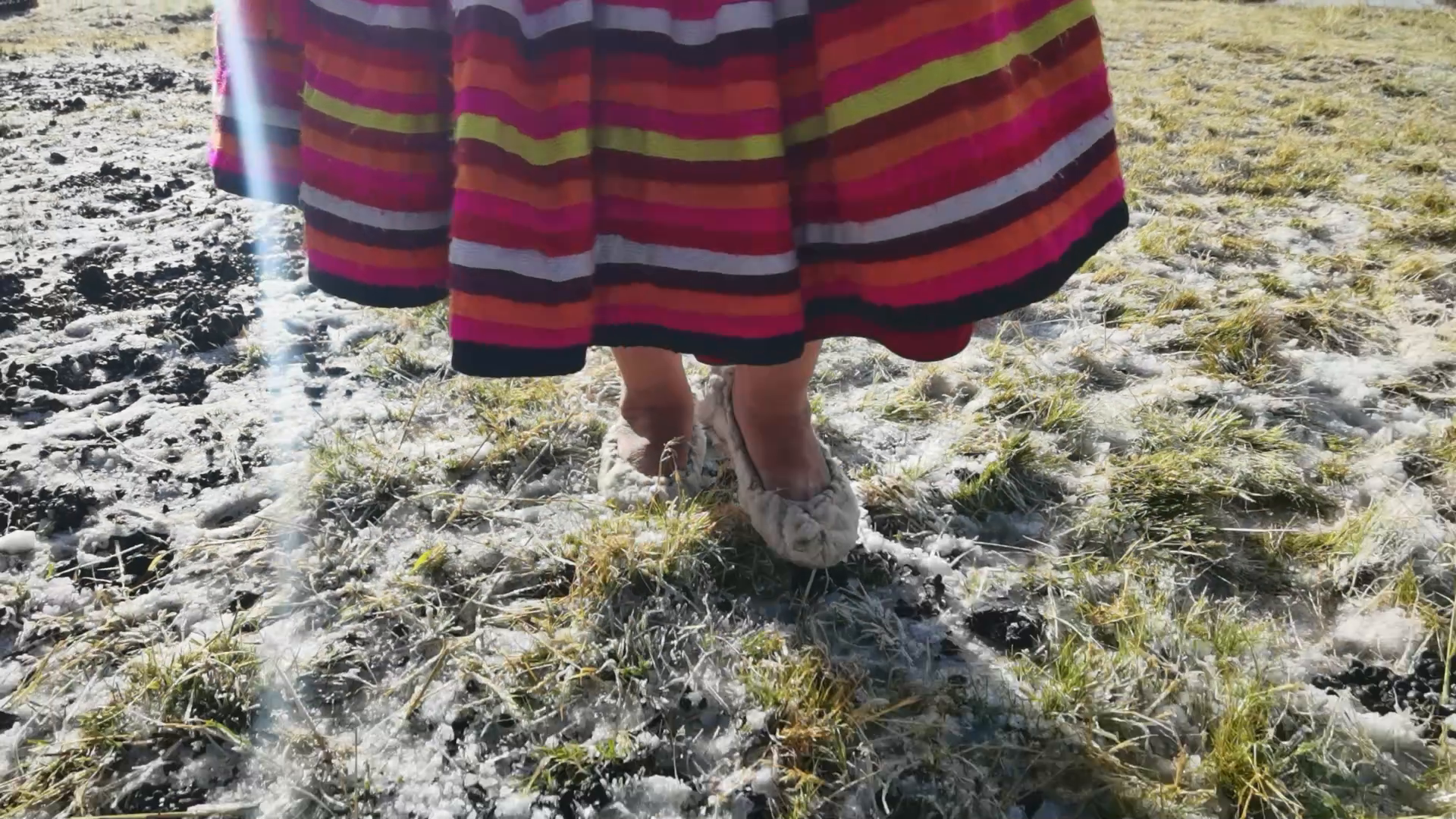
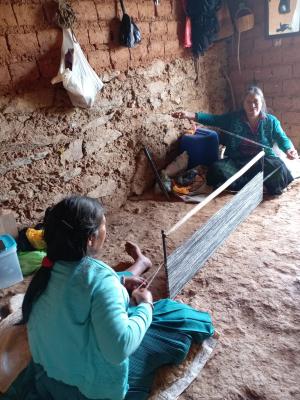
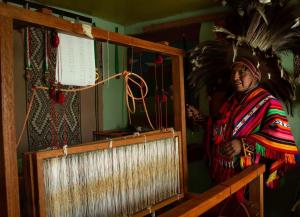
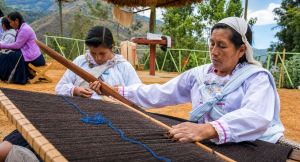
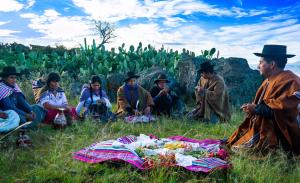
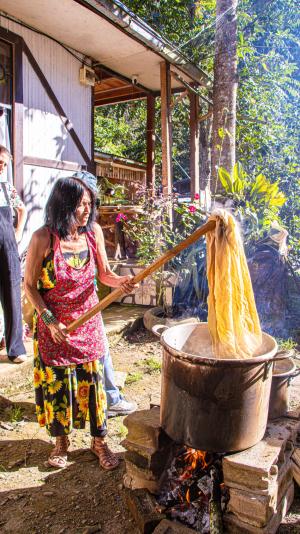
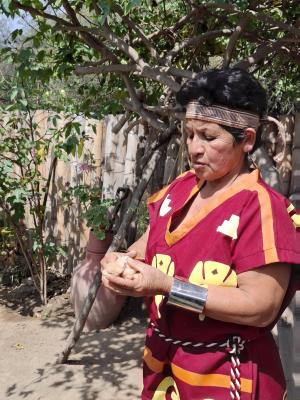
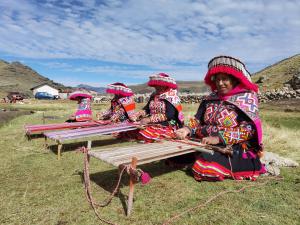
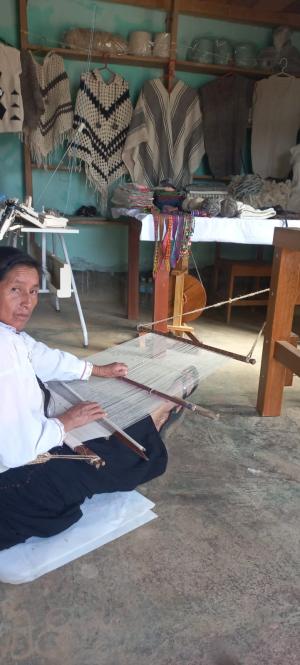
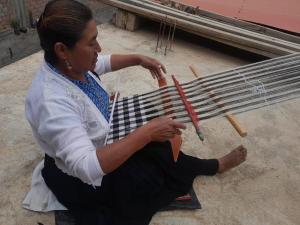
This 58-second video presents the living heritage of Silvia Condori Mamani, a master weaver and cultural transmitter from the Ayarachi people in the high-Andean community of Paratia, Lampa – Puno, Peru. In her own land, at over 3,800 meters above sea level, we see her ancestral environment: the alpacas grazing on the puna, whose fine fiber is the raw material for her art. The video captures key moments of her traditional textile system: hand-spinning with the pushka (drop spindle), natural dyeing with Andean herbs (cochineal, muña, chilca), and the weaving of intricate designs on the telar de cintura (backstrap loom) and the ancient four-stake loom. Silvia is also seen teaching young women and elders, ensuring the transmission of this endangered ICH. The final frames show her award-winning textiles, including those that earned her the third prize at the Iberoamerican Weaving and Basketry Award in Cuenca, Ecuador (2024). This video is part of the documentation and promotion efforts led by Lic. Wilson Mamani Villasante, a professional who supports many artisan families across the Puno region, strengthening their visibility and access to international safeguarding opportunities such as the JIAPICH award.
04-30-2026
| Institutional and human capacities | The institutional capacities for safeguarding this ICH are led by the CITE Camélidos Sudamericanos Puno and the Municipalidad Distrital de Paratia, which have collaborated with Silvia Condori Mamani as a certified master trainer. Human capacities are built through a network of more than 300 women trained by Silvia, who now act as multiplying agents in their own communities. Professional support for documentation and international dissemination is provided by Lic. Wilson Mamani Villasante, who works to connect Puno’s artisans with global heritage platforms. | |
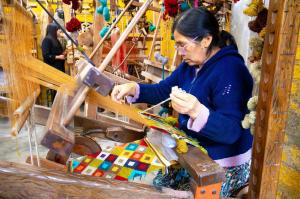
| Transmission and education | Transmission is informal, community-based, and follows the "master of masters" model. Silvia Condori Mamani has led training programs for over 22 years, including a 280-hour course with Heifer International (2016), specialized technical training at I.E.S.T.P. Cholecca (2017), and ongoing workshops with DIRCETUR Puno and various municipalities. Her methodology covers the complete textile cycle: from raw fiber selection, natural dyeing, and pushka spinning, to weaving on backstrap, pedal, and four-stake looms. She has also been certified by Peru's Ministry of Labor in Textile Design (2017), validating her educational approach. | |
| Inventorying and research | This inventory entry is based on direct fieldwork: interviews with Mrs. Condori and members of the Paratia community, participant observation of her workshops, and photographic/video recording of the entire textile process (February–March 2026). The community actively contributed by explaining the symbolic meanings of the Ayarachi designs and the specific roles of different weavers. The video was produced by Lic. Wilson Mamani Villasante as part of a support initiative to document and promote Puno’s living heritage. | |
| Policies as well as legal and administrative measures | Peru’s General Law of Cultural Heritage of the Nation (Law No. 28296) and its regulations protect intangible cultural heritage. The Plan Estratégico Nacional de Artesanía – PENDAR includes specific objectives for safeguarding traditional techniques. The Premio Nacional a la Mujer Artesana (awarded to Silvia in 2021 by MINCETUR) is a national policy measure that recognizes women’s leadership in ICH. Additionally, the Ministry of Labor’s certification of labor competencies has formalized Silvia’s role as a qualified trainer. | |
| Role of intangible cultural heritage and its safeguarding in society | This ICH is the living memory of the Ayarachi people and a pillar of cultural identity for the Puno region. Its safeguarding ensures intergenerational dialogue, strengthens social cohesion, promotes gender equity (by empowering rural women economically), and contributes to the sustainable development of high-Andean communities. It also enhances Peru’s cultural diversity and tourism image at national and international levels. | |
| Awareness raising | Awareness has grown notably through Silvia Condori Mamani’s recognitions: Premio Nacional Mujer Artesana Lideresa (MINCETUR, 2021) , Maestra Regional de la Artesanía Puneña (2022) , Puneña del Bicentenario (Congress of the Republic, 2021) , and Third Place – Premio Iberoamericano de Tejeduría y Cestería (Cuenca, Ecuador, 2024) . Her role as a qualified judge in regional artisan contests (XXVI Concurso Maestro Regional, 2024) has also elevated quality standards. The dissemination of this video on international platforms like ichngo.net, supported by Lic. Wilson Mamani Villasante, further raises awareness among global heritage professionals. | |
| Engagement of communities, groups and individuals as well as other stakeholders | The Paratia community, especially women and youth, are the active subjects of this ICH. Silvia Condori Mamani is the main transmitter and leader. CITE Camélidos Sudamericanos and the Municipalidad Distrital de Paratia provide institutional support. Heifer International previously supported the creation of productive nuclei. MINCETUR, the Ministry of Labor, and DIRCETUR Puno have validated the process through awards, certifications, and training partnerships. Lic. Wilson Mamani Villasante acts as a professional facilitator for documentation, international linkage, and postulation support. | |
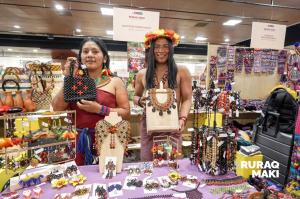
| International engagement | Silvia Condori Mamani has represented Peruvian Andean ICH internationally by winning third place at the Iberoamerican Weaving and Basketry Award in Cuenca, Ecuador (2024) – the only artisan from Puno to reach the podium. She has participated in virtual courses on sustainable fashion projects and circular economy with international perspectives. This video inventory, uploaded to ichngo.net (a platform linked to the ICH NGO Forum), is part of a strategy to increase her visibility and that of Puno’s heritage in global safeguarding networks. | |
| References | Lic. Wilson Mamani Villasante – Professional advisor and cultural heritage documentation specialist supporting artisan families and traditional weavers across the Puno region, Peru. He has collaborated directly with Ms. Silvia Condori Mamani to prepare, document, and disseminate her candidacy for the Jeonju International Awards for Promoting Intangible Cultural Heritage (JIAPICH) 2026. |
|















.jpeg)




.png)








.jpeg)
.jpg)



.png)
.jpg)


_(31711258567).jpg)