
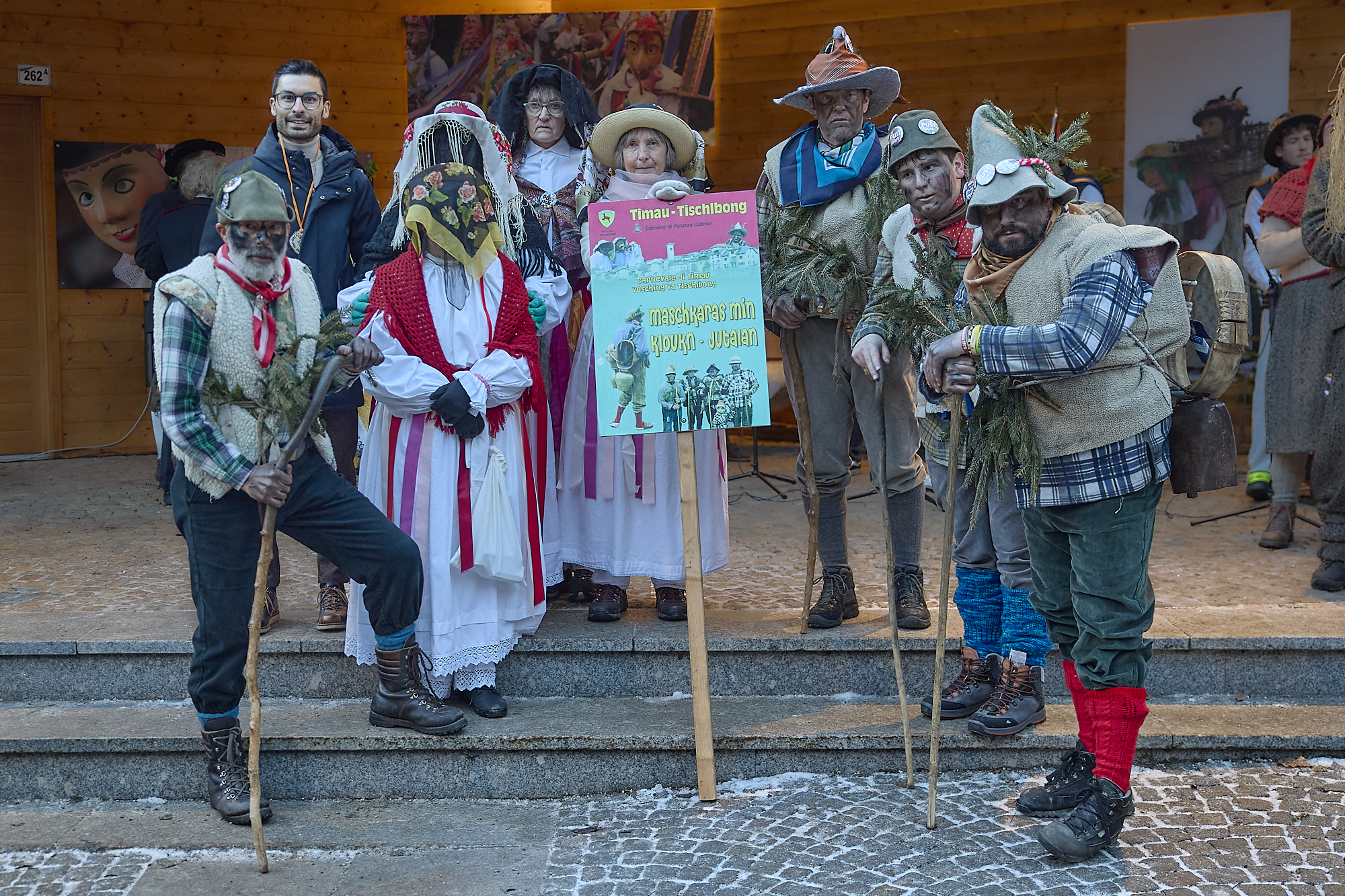
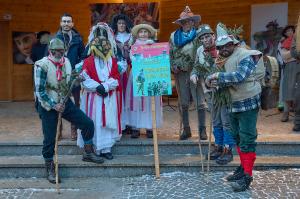
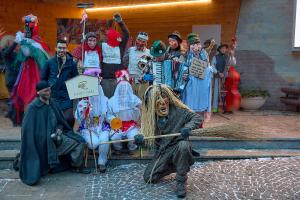
The archaic masquerade is part of the culture and history of a German-speaking community that settled in 1284 in what is now the Paluzza area.
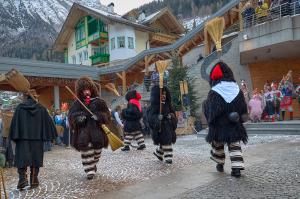
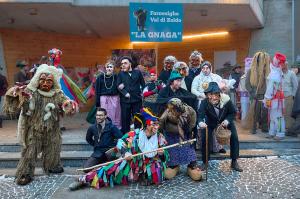
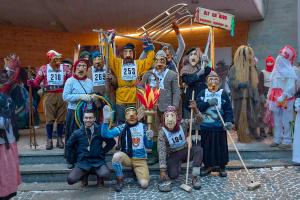
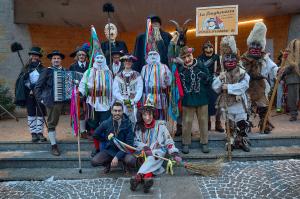
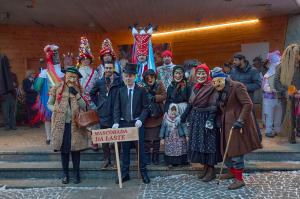
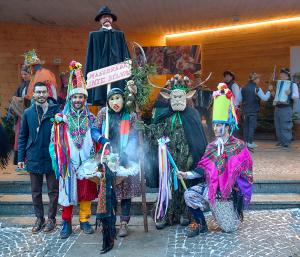
Among the ritual figures of this masquerade is "Dar Maschkar min kloukn," who wears a fur coat reminiscent of the agricultural world. He has fir branches tucked into his hat and between the buttons of his shirt. His face is blackened with soot, which he also uses to smear the faces of those he encounters along the way, as well as grease them with the grease from the rind tied around his waist. He has a cowbell tied to his back, which he rings rhythmically as he moves. This mask does not enter homes and wanders around the village during the day.
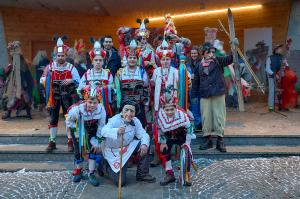
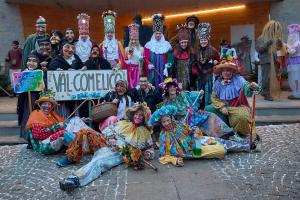
Another ritual figure of the Timau masquerade is "Da Jutalan," who wears a white dress decorated with colorful handkerchiefs and his face is covered. He travels in a group from house to house, carrying an accordion, where he performs three dances. If he stays, he must identify himself by uncovering his face. His pilgrimage takes place in the evening.
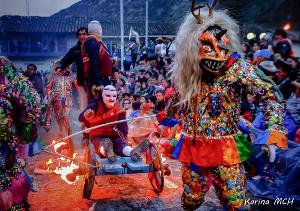
On Shrove Tuesday, in Timau-Tischlbong, the "Vosching varprenan" takes place, the burning of the Carnival King, which closes the masked season and marks the beginning of Lent.
Text by Antonio Gheno
04-30-2026
| References | ||















.jpeg)





.png)


.jpeg)
.jpg)

.png)
.jpg)


_(31711258567).jpg)