
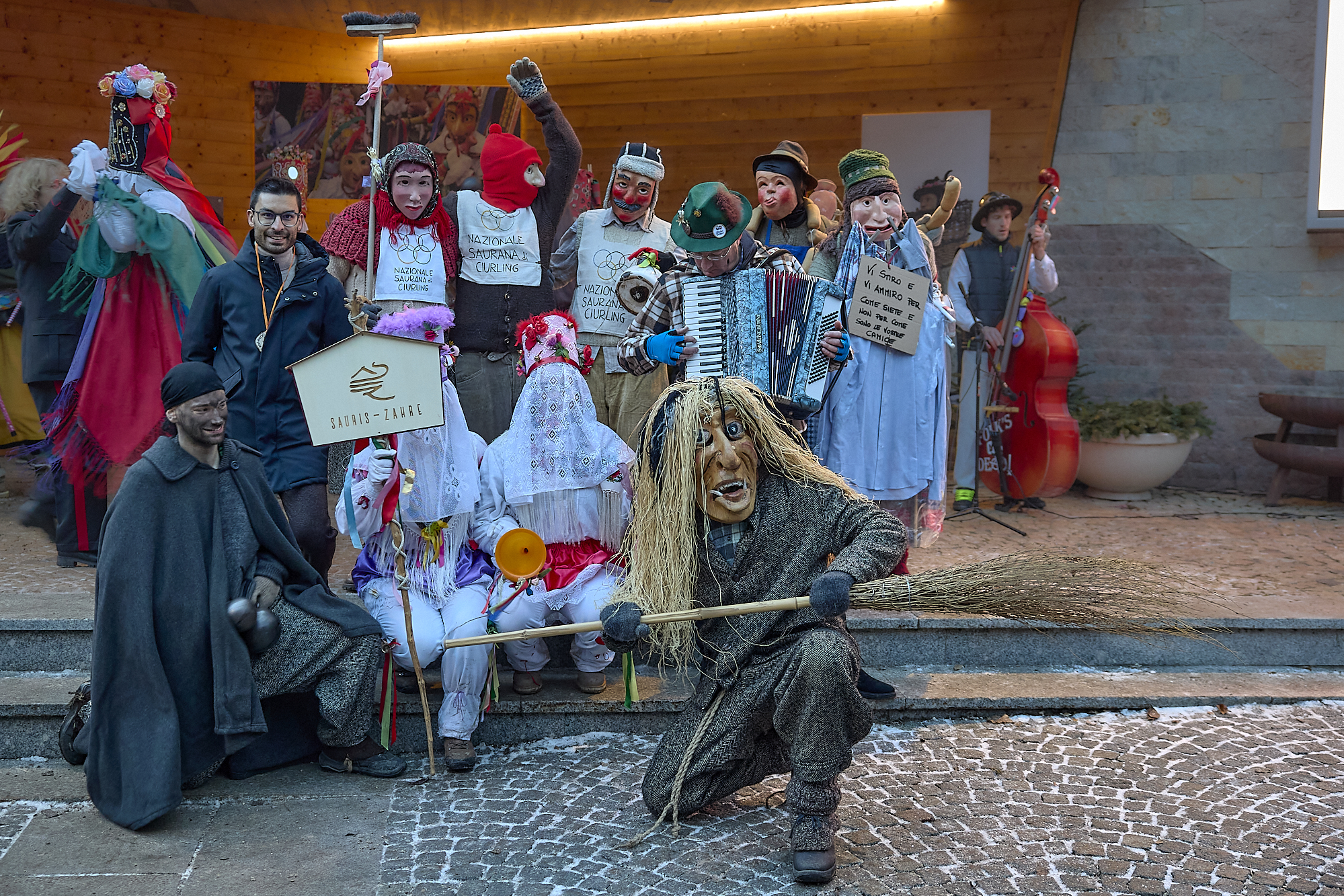
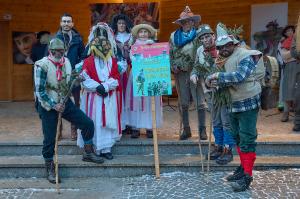
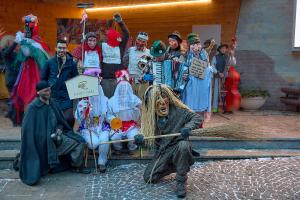
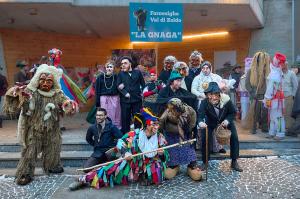
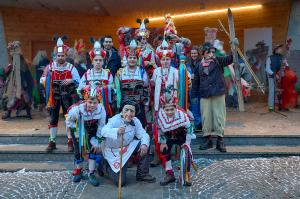
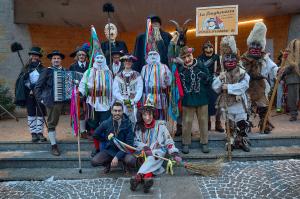
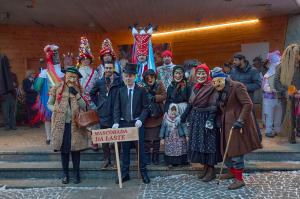
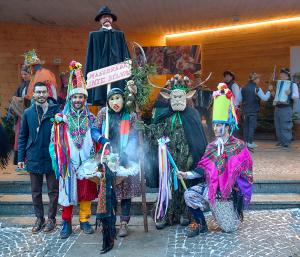
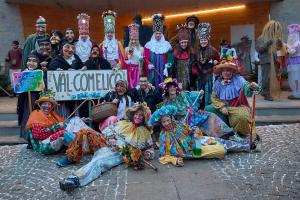
The archaic masquerade is a product of the culture and history of a German-speaking community that settled there around the 13th century. Propitiatory rituals were once repeated several times a week, from Epiphany onward, while today the celebration focuses particularly on the "Night of the Lanterns." The main masks of this rite are the Rölar and the Kheirar.
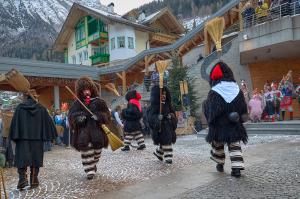
The Rölar wears dark clothing, his face covered in soot, and shouts and shakes the bells around his waist to announce the start of Carnival and drive away evil spirits with their din.
The Kheirar, or King of Masks, has his face covered by a wooden mask and in the past would knock on the doors of homes with a broom made of sorghum. Once inside, he would sweep the floor, performing a propitiatory rite to sweep away the burdens of winter and make way for the arrival of spring.
Spring is represented in the procession by the "beautiful mask" of the Rikè, whose face is covered by a veil and adorned with bells, which awaken the spirits, and colorful ribbons that offer a glimpse of the colors that the warm season will bring. In contrast, the procession also features ugly masks, a reminder of the past and the passing of winter.
Text by Antonio Gheno
04-30-2026
| References | ||




























.jpeg)












.png)







.jpeg)

.jpg)

.png)
.jpg)


_(31711258567).jpg)