
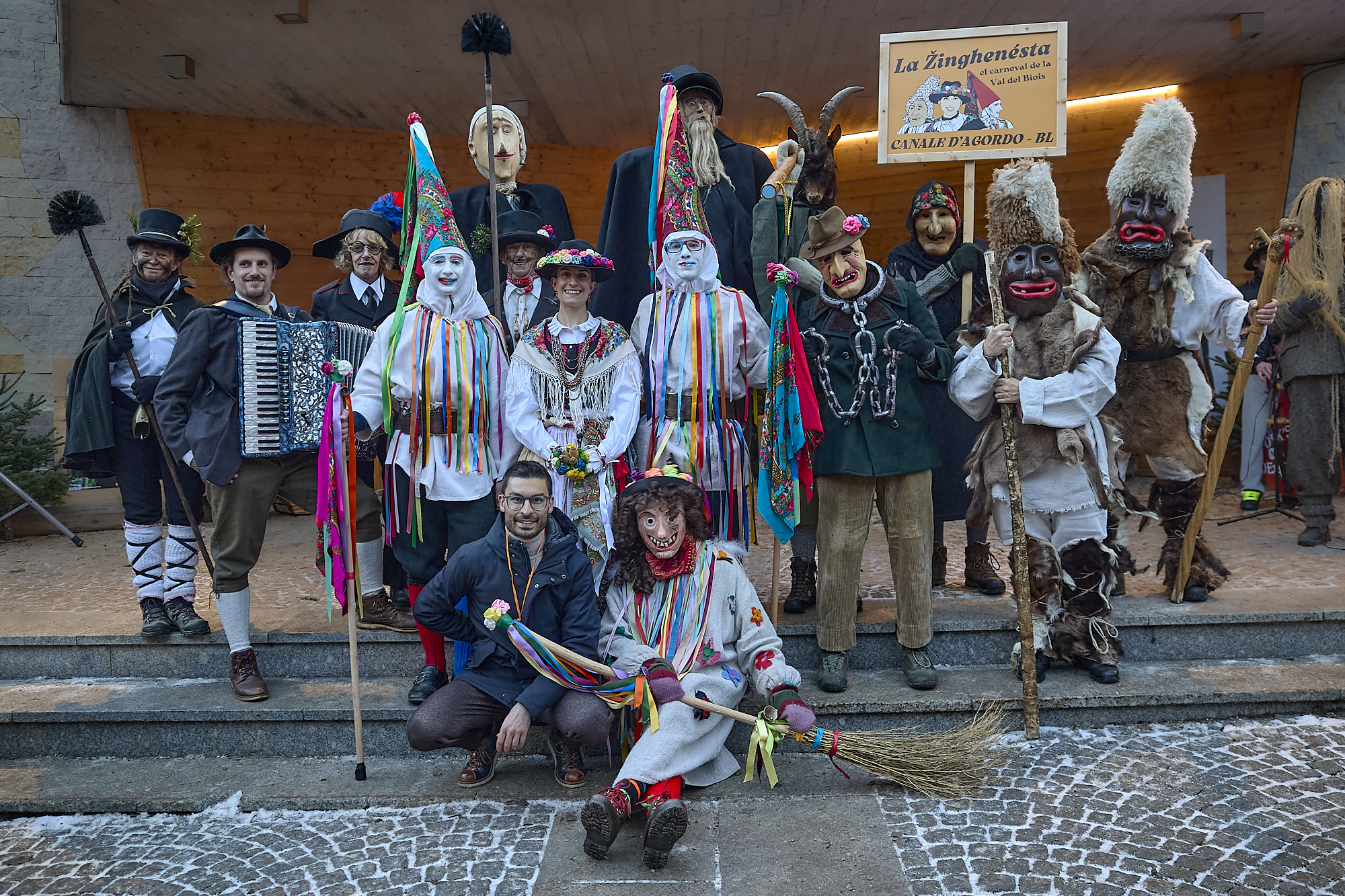
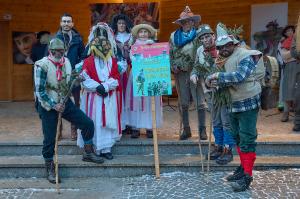
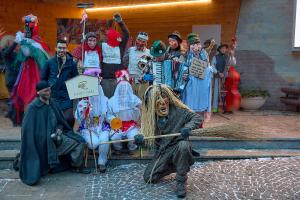
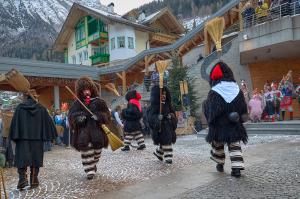
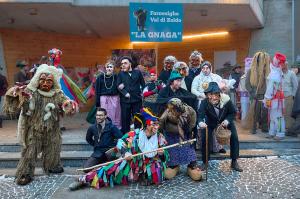
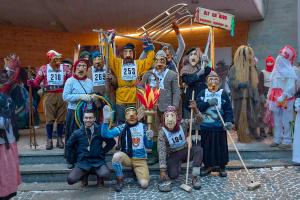
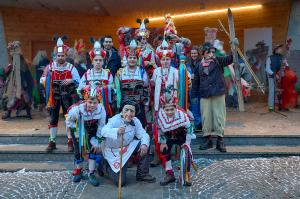
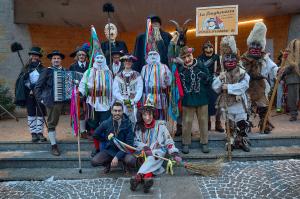
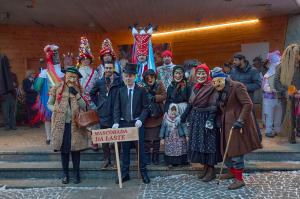
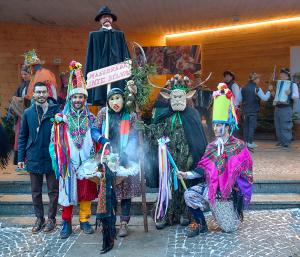
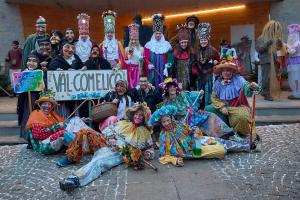
On Shrove Tuesday in the Canale d'Agordo area of the Alto Agordino they celebrated the Zinghenésta (Gipsy), an innovative female character of good omen for abundance who appeared in the middle of the second half of the nineteenth century. The other characters in the procession on the other hand seem to be orthodox and original and are completely similar to types found elsewhere (Matiéi, Laché, Paiazi and Puster). Of interest is the final part of the rite when some youths, dressed as murderers, carried out robberies and sacked the houses, but at the end they were released and allowed to keep what they stole. It is highly probable that these would be conscripts whose freedom of action corresponded to a form of recognition that they were the new power force in the community. Also present and well described are masks of the ugly type whose behaviour is similar to those of the Pagliacci and included the Puster, the Spazzacamin and the Ber who beat cowbells and sticks rhythmically to 'call the grass'. Then in the afternoon a court hearing was held in the town square to try, not the sasini (assassins), but Carnival itself personified by a clown of straw and rags. At the end of the debate the judges sentenced the clown to be hanged and this was promptly carried out. The satire was completely in dialect and full of local matters, often delicate. The last masquerade was held during Carnival 1915 and a timid restoration is now being attempted.
Text by Gianluigi Secco
04-30-2026
| References | ||



















.jpeg)






.png)


.jpeg)

.jpg)


.png)
.jpg)


_(31711258567).jpg)