
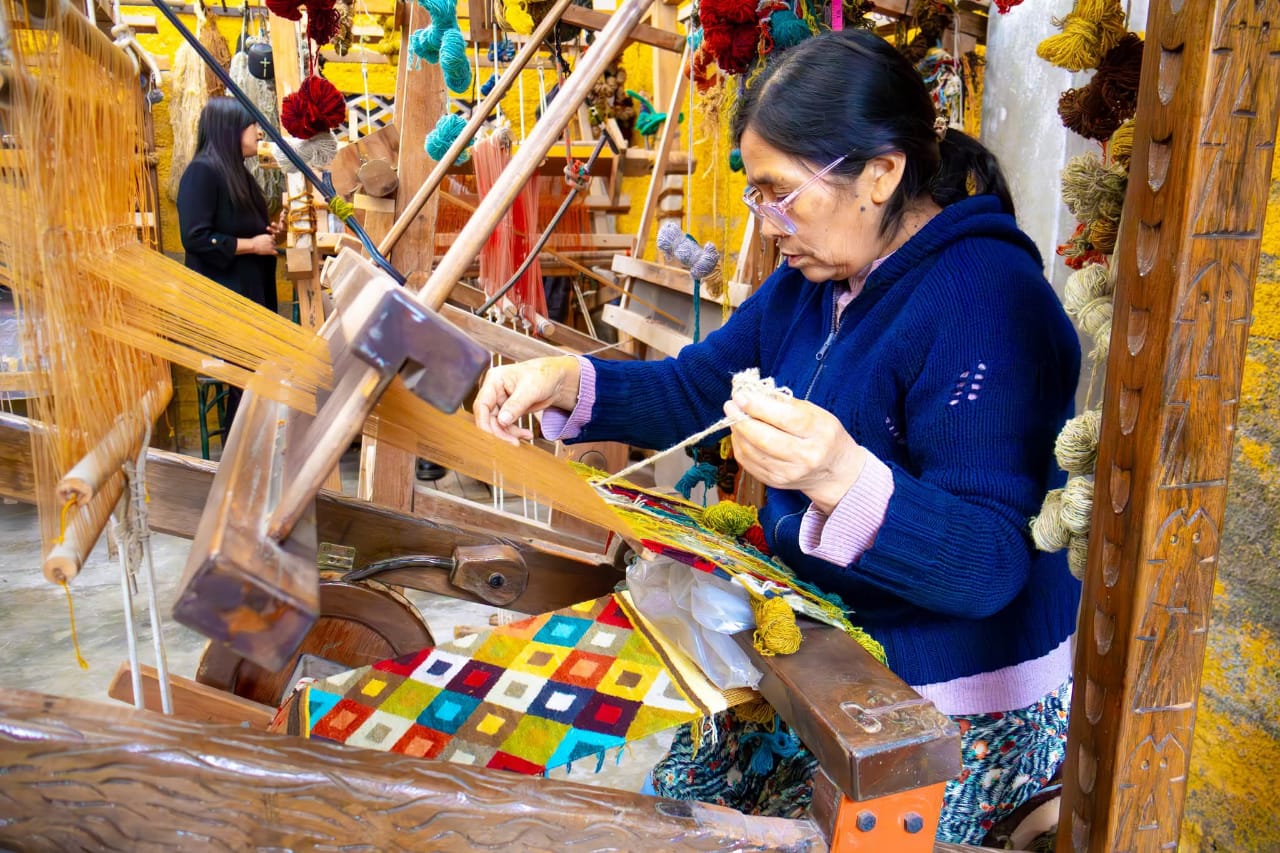
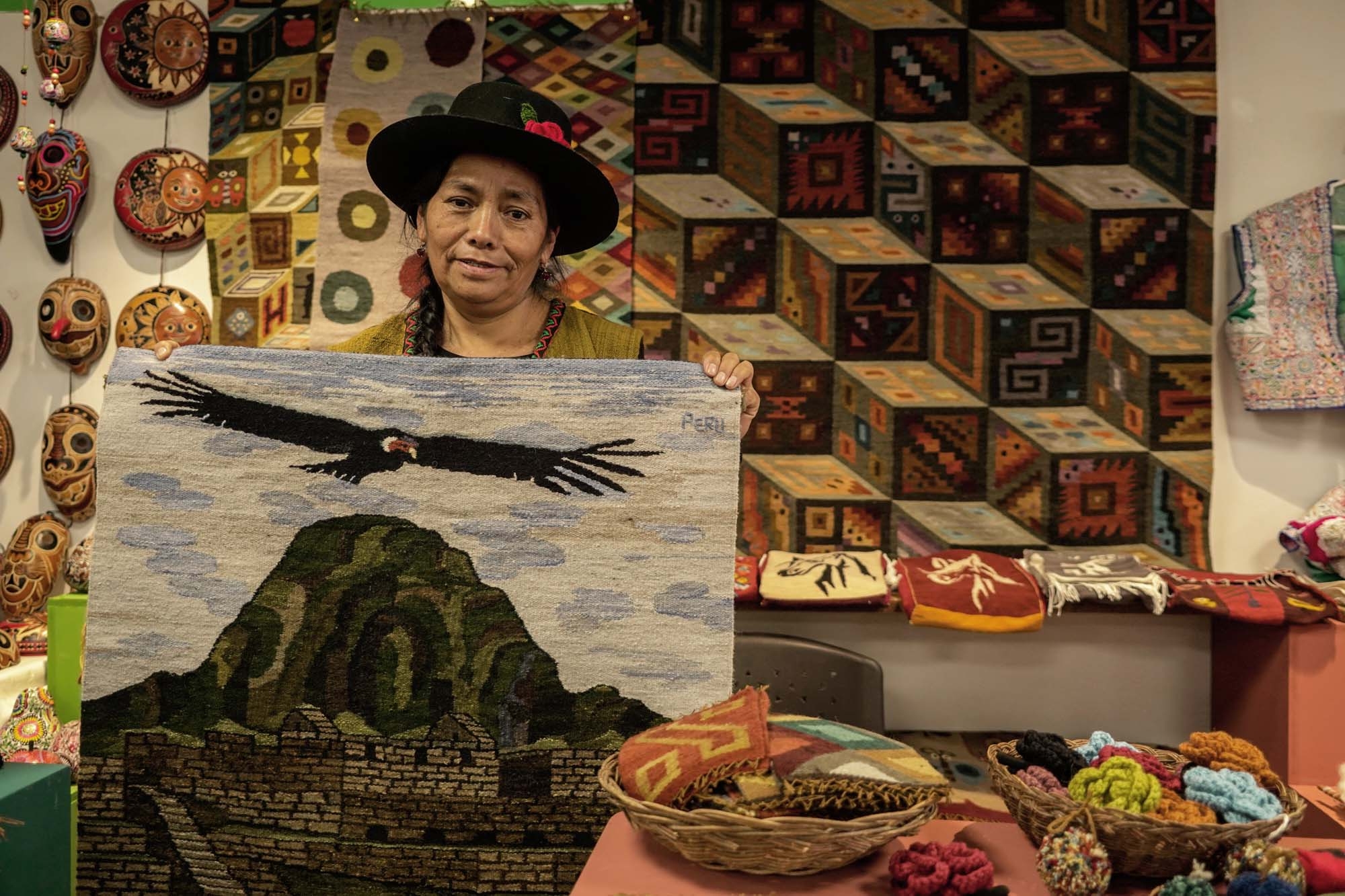
The tapestry tradition of Ayacucho is one of the most ancient and sophisticated in the Americas. The Wari (600–1100 CE) were the strongest pre-Inca society and first true state in Peru. From their base in Ayacucho, they were renowned for their complex tapestries and standardized weaving throughout their domain.The history of Andean textiles dates back more than 4,000 years. Long before the rise of the Inca civilization, ancient cultures in the Andes had already developed sophisticated weaving traditions.
Ayacucho is noted for its tapestries characterized by a creative combination of pre-Hispanic and contemporary Western influences. Inspired by the recovery of ancient technology and Wari cultural themes.
04-29-2026
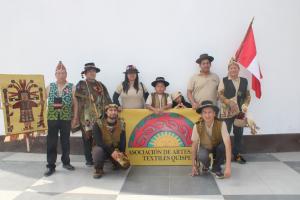
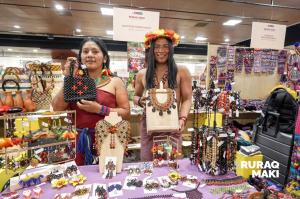
| Institutional and human capacities | The Asociación de Artesanos Textiles Quispe is sustained by a multigenerational team of family members, each contributing distinct expertise to the safeguarding of Andean weaving traditions.Beyond the family, the association's human capacities extend to a broader network of former apprentices — cousins, neighbors, and community members trained in the workshop, who, even when they have moved into other fields, carry the knowledge of Andean weaving with them. The Asociación de Artesanos Textiles Quispe operates from a fully equipped workshop in Lurín, Lima, and maintains formal institutional relationships at the local, national, and international levels.The association has established productive relationships with multiple Peruvian public institutions. MINCETUR has supported participation in national artisan fairs; the Ministry of Culture features the workshop in the Ruraq Maki official catalog — Peru's flagship fair for living traditional craftsmanship, in which they have participated four times. The Municipality of Lima and Cáritas Lima have also supported participation in fairs and cultural events. The Municipality of Lurín has organized guided school and community visits to the workshop. | |
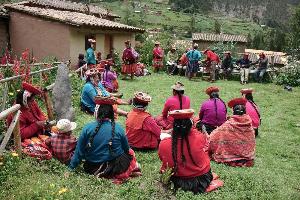
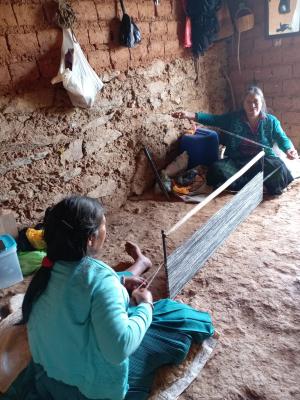
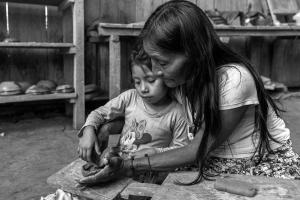
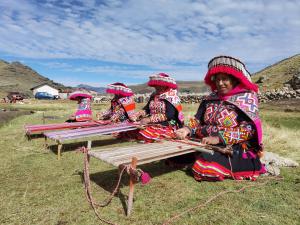
| Transmission and education | Despite modernization, traditional weaving remains an important cultural practice in many Andean communities. Each tapestry represents not only artistic skill but also a living cultural tradition. Supporting handmade Andean textiles helps sustain artisan communities and protect ancient knowledge that has been passed down for generations across the Andes.Traditional Peruvian weavers pass their knowledge on from generation to generation. The tapestries of Quispe family are the result of four generations of learning and skill.The workshop practices a structured intergenerational apprenticeship: children begin learning from an early age, progressing through wool preparation, loom operation, traditional iconography, natural dyeing, and eventually developing their own creative techniques. Today, the founders' grandchildren aged 8 and 10 are already learning alongside the adults. | |
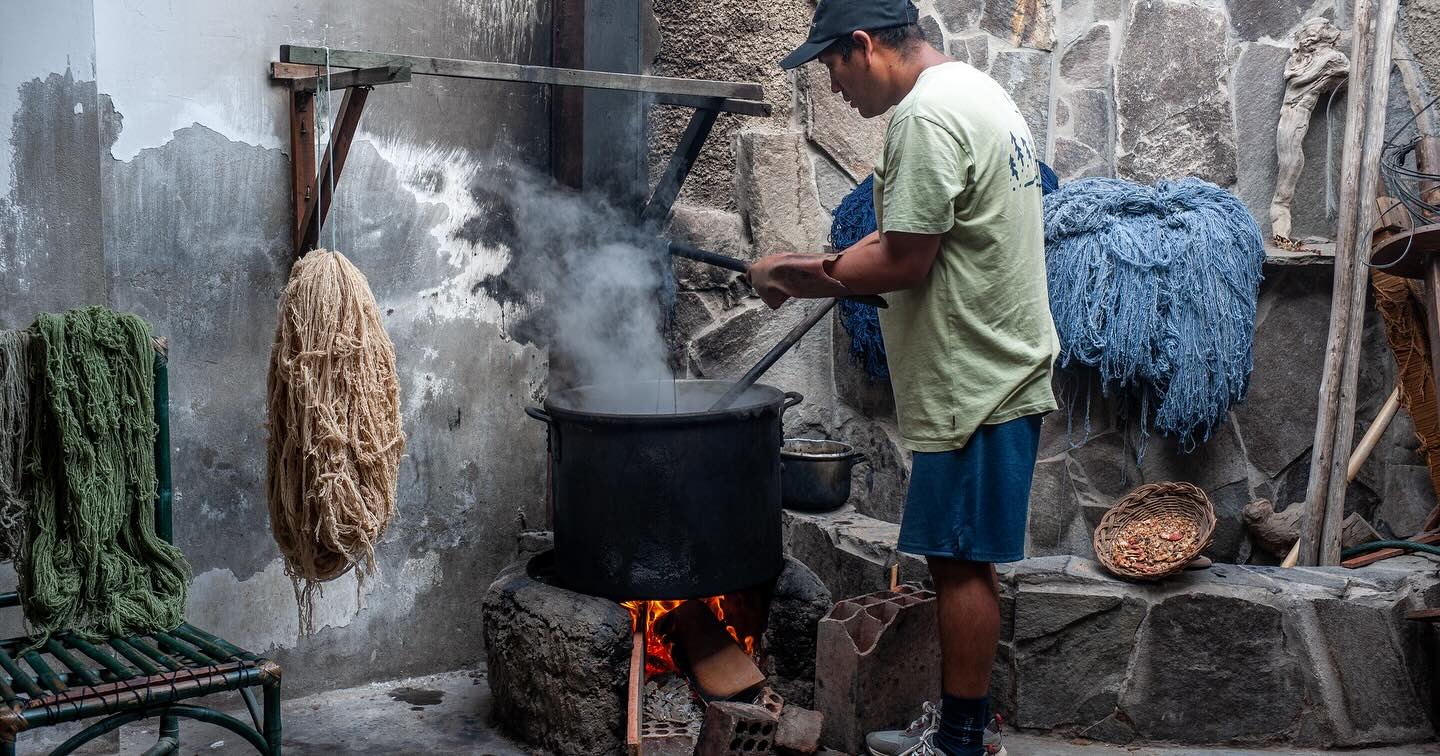
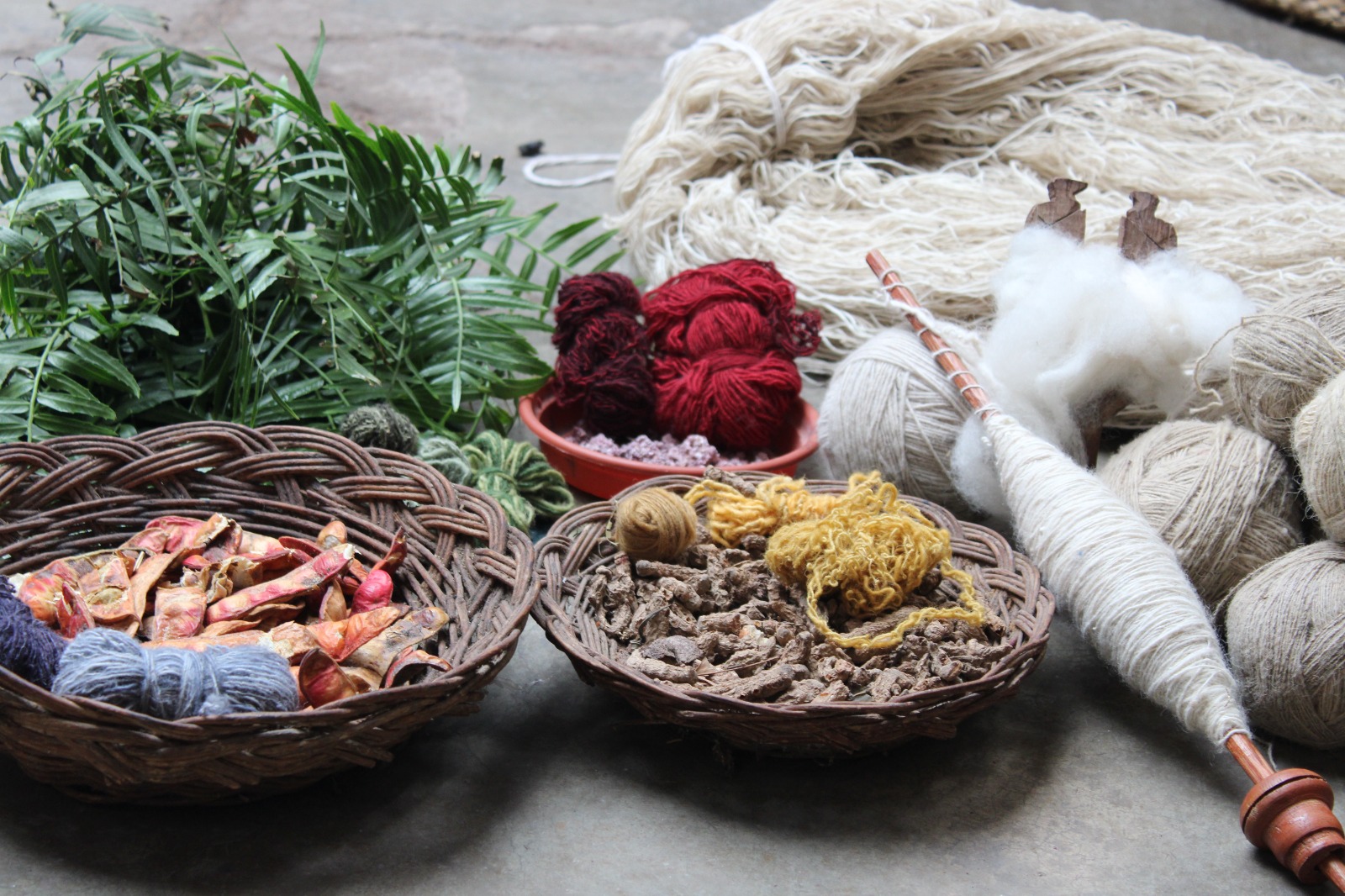
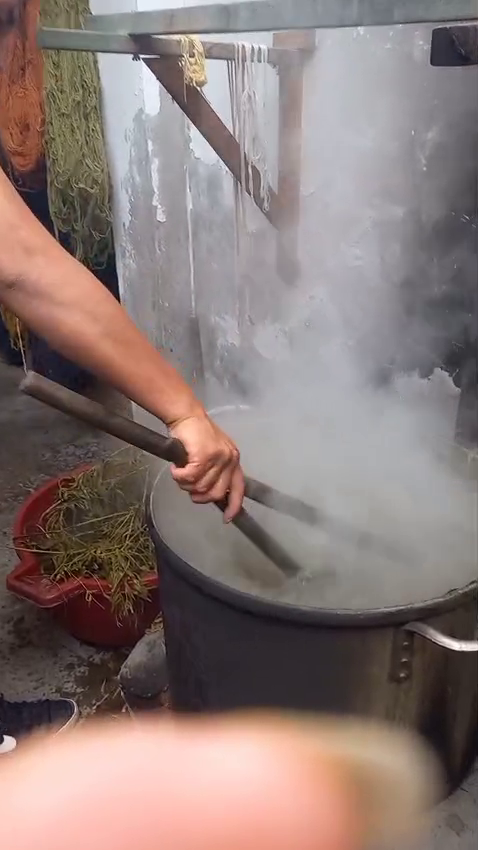
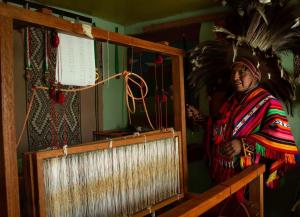
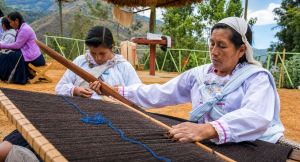
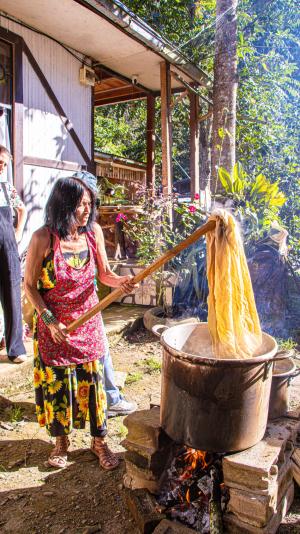
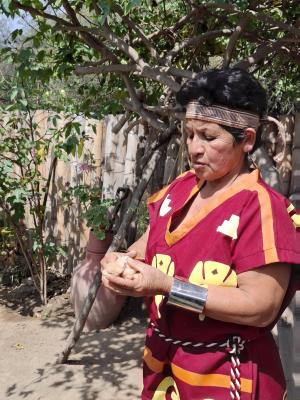
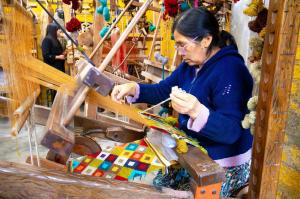
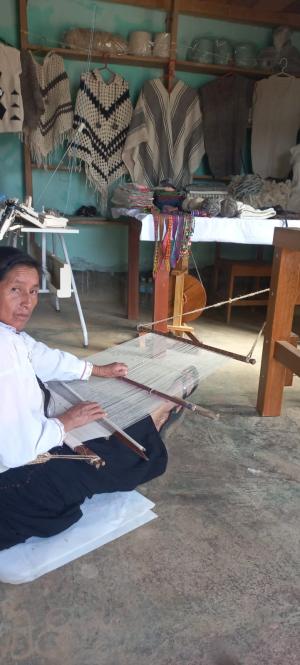
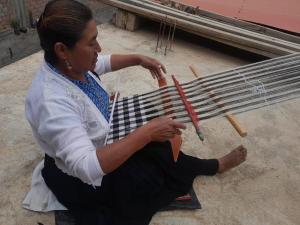
| Inventorying and research | Technical Inventory: Materials and Fibers: Ayacucho weavers work primarily with natural animal fibers of exceptional quality, Alpaca wool and sheep wool Natural dyes : natural dyes created an astonishing palette: red from cochineal insects, orange from citrus rinds and tree bark, green from plants like ch'illca, purple from cochineal mixed with minerals, and blue from fermented indigo leaves. These dyes required knowledge of fermentation and fixatives. Looms and Weaving Techniques Tapestries are entirely hand-woven using the two-pedal loom, delivering stunning textures.The weaving process is extremely detailed. Depending on the size and complexity of the tapestry, a single piece can take several days or even weeks to complete. Symbolism and Iconography: Ayacucho tapestries are not merely decorative — they are visual texts encoding cosmology, history, and identity. The hallmarks of Peruvian tapestry design are interlinked with memories, myths, and rituals that have their roots in a society that worshipped the sun, placed great importance on geometric shapes and totemic design, and valued societal traditions. Among the most important iconographic elements are: Tocapus — stylized Inca glyphs used as an ancestral alphabet, often woven in intense colors on traditional looms. Geometric patterns — derived from Wari design, representing cosmic order and social hierarchy. Artisans such as the Quispe family are all well known in the region. As children they coexisted with the world of weaving and assisted all aspects of preparation and production — from spinning and dyeing the wool to warping the loom. These artisans are guardians of the ancestral knowledge. Having their own workshops is not only inspiring for artisans, but also encourages young people to learn about textile art and maintain the traditions of weaving — to preserve and promote it as a living expression of Peru's identity. The Ayacucho tapestry thus stands as one of the most complete expressions of Andean thought: a textile that is simultaneously tool, history, cosmology, and art. | |
| Policies as well as legal and administrative measures | The most significant recent legal milestone is the formal recognition issued by Peru's Ministry of Culture. The Ministry of Culture declared the knowledge, skills, and weaving techniques of the Ayacucho tapestry as Patrimonio Cultural de la Nación (Cultural Heritage of the Nation), given its unique aesthetic value and its role as an expression of historical memory and the cultural identity of the people of Ayacucho. This was established through Ministerial Vice-Resolution N° 000231-2023-VMPCIC/MC, published in the official gazette El Peruano. At the broader policy level, Peruvian artisans, including tapestry weavers are protected under the Ley del Artesano y del Desarrollo de la Actividad Artesanal (Law 29073). This law establishes the legal framework that recognizes the artisan as a builder of cultural identity and traditions, and regulates the sustainable development, protection, and promotion of craft activity in all its forms. It aims to preserve artisanal traditions in all their expressions, promote their techniques and production processes, and raise public awareness of their economic, social, and cultural importance. | |
| Role of intangible cultural heritage and its safeguarding in society | What makes the Asociación de Artesanos Textiles Quispe exceptional is not only the technical mastery of their craft, but the depth of its human and social impact. The loom in this family is not a production tool, it is a living space where Quechua oral traditions, Andean cosmovision, and intergenerational memory are transmitted alongside weaving techniques. Children grow up hearing stories and riddles in Quechua while they learn to weave; young people find direction and livelihood through the craft; and community members — including individuals facing social vulnerability — have found dignity and purpose in the workshop's inclusive, open environment.Over nearly four decades, the Quispe family has demonstrated that intangible cultural heritage can take root and flourish even in migration, and that a family workshop can be a powerful engine of cultural preservation, social inclusion, and human transformation. I have witnessed firsthand how their work elevates communities, sustains ancient knowledge, and builds bridges between the Andes and the world | |
| Awareness raising | The Artesanos Textiles Quispe has developed a wide-ranging set of promotion and awareness-raising practices that bring Andean textile heritage into contact with new and diverse audiences — in Peru, in their local community of Lurín, and internationally. Through these combined efforts , local events, national fairs, international exhibitions, and digital presence, the Asociación de Artesanos Textiles Quispe has contributed actively and consistently to raising public awareness of Andean textile heritage as a living, relevant, and valuable cultural practice. | |
| Engagement of communities, groups and individuals as well as other stakeholders | The Textiles Quispe has built a wide and active network of relationships with diverse communities, groups, and individuals, rooted in a genuine commitment to sharing living Andean textile heritage beyond the family workshop.The workshop regularly opens its doors to members of the local community in Lurín (Lima), offering free guided visits and hands-on spinning and weaving workshops. Visitors include school groups, university students, elderly residents, people with disabilities, and curious individuals who reach out through social media. These activities — sometimes organized in coordination with the Municipality of Lurín — bring urban Lima communities into direct contact with an Andean textile tradition that might otherwise feel distant or inaccessible to them. | |
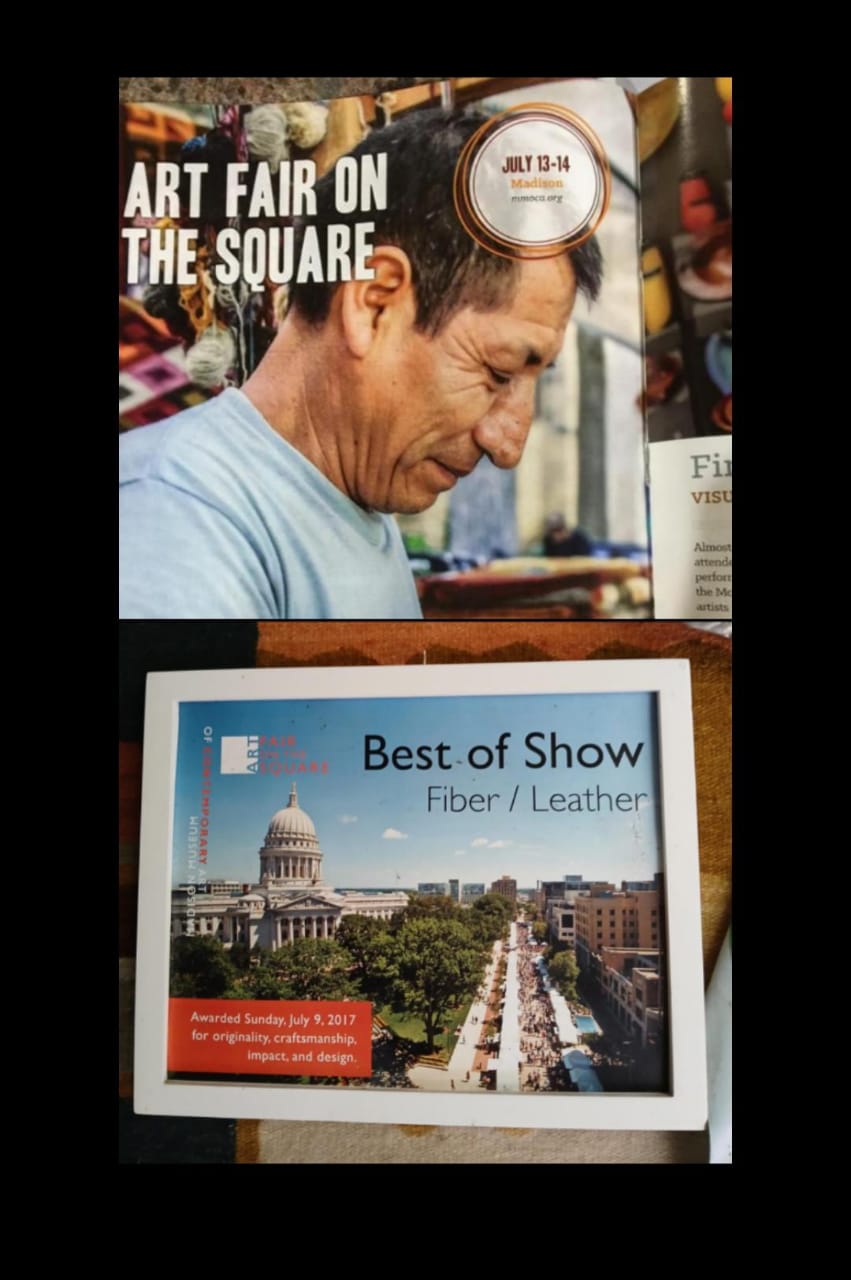
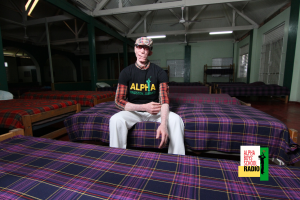
| International engagement | The Textiles Quispe has cultivated a network of cooperation spanning local communities, national institutions, and international contexts always in service of sharing and sustaining living Andean textile heritage. At the international level, the workshop conducted weaving training at a rehabilitation center in the United States, demonstrating the cross-border social value of traditional textile arts. Their products are regularly exported to the U.S., and founder Wilber Quispe travels there annually to maintain direct relationships with clients. Long-standing ties with ArtAndes have brought international visitors to the workshop for cultural exchange and direct commerce, and media coverage from U.S.-based outlets has amplified their global visibility. | |
| References |
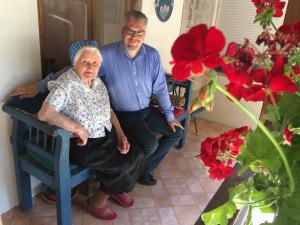
Pascuala Paredes Fernández - artesana tejedora de Lurín, Lima, Perú fundacioncomunidad.org/templates/comunidad/skins/2012/audio/Wilbur_Story.mp3 Tapestry Rug weaver, Wilbur Quispe, at the Ann Arbor Street Art Fair 2015 |
|










.jpeg)

.png)


.jpeg)
.jpg)


.png)
.jpg)


_(31711258567).jpg)