

EVENT
2026 JIAPICH Finalists Announcement
INVENTORIES
Circles of Light: Garba and the Living Heritage of Gujarat
ICHGRAM
Daksha | Crafting Voices - Celebrating living heritage of eastern India
-
INVENTORIES
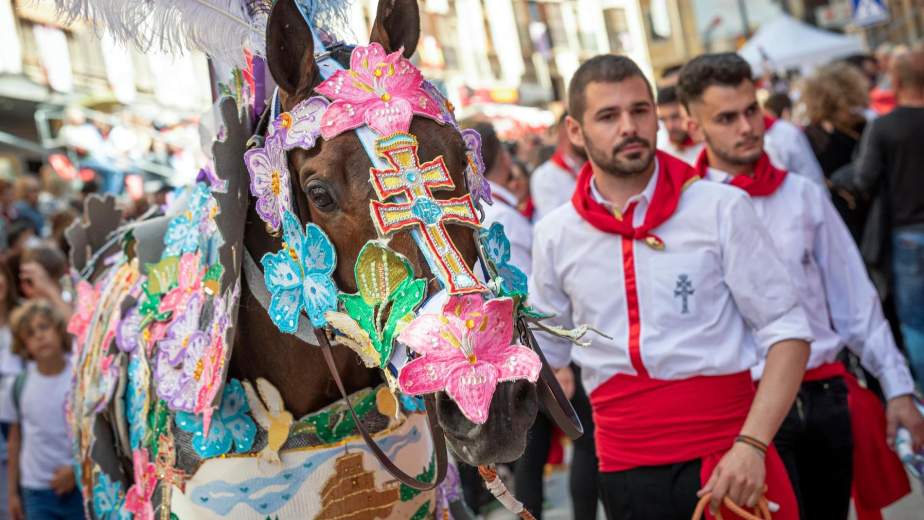
Silk, Gold and Speed: The Living Wine Horses of Caravaca
Every year from 1 to 3 May, the people of Caravaca de la Cruz in the Region of Murcia gather for the Wine Horses, a central tradition of the festivities dedicated to the Santísima y Vera Cruz. The horse is the protagonist of a sequence of activities that begins with its care throughout the year and culminates in its presentation, parade and celebrated ascent toward the castle. The most distinctive moment of the tradition is the enjaezamiento, the elaborate dressing of the horse in a complete set of embroidered pieces made with silk, coloured threads, gemstones and gold and silver ornamentation. Each set is specially produced for its horse and represents months of artistic and collective work.The celebration brings together two knowledge systems that have long been connected to the identity of Caravaca: horse breeding and wine-growing. On 2 May, four caballistas run alongside each horse during the timed ascent of the steep Castle Hill, creating a demanding demonstration of coordination between people and anima
09-28-2026
-
INVENTORIES
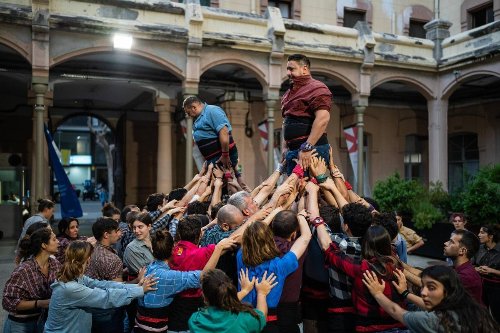
Castells and the Living Tradition of Catalonia
Castells are human towers constructed by members of amateur colles castelleres, especially during annual festivities in towns and cities across Catalonia. Participants climb onto one another in carefully coordinated levels, while the pinya, a dense circle of supporters at ground level, provides the foundation. The upper levels, known as the pom de dalt, are formed by younger children, whose lightness allows the tower to reach its highest point. The enxaneta, traditionally a child, crowns the structure and signals its completion. Traditional clothing, including the faixa sash, white trousers and each colla's distinctive shirt, forms part of the practice. Music is inseparable from the performance. Players of the gralla, a traditional Catalan wind instrument, accompany the construction and provide an audible rhythm for the changing stages of the tower. The practice developed from eighteenth-century festive traditions in the Tarragona area and became an independent cultural expression during the nineteenth centur
09-21-2026
-
INVENTORIES
“Let’s give back to the villages what belongs to the villages.” - Transmission of the Hungarian folk song as an intangible cultural heritage in the Tápió region
The folk music research of the Tápió region in Pest County, as an ethnographic landscape, began in the early 1800s. As a result of the continuous work of folk music researchers, over the past 225 years, more than 1,500 local folk songs have been documented in 21 settlements of the region. The settlement folk songs of more than 400 local singers have been recorded, which is the unique intangible cultural heritage of the region. Songs related to local customs, folk games, lamentations, songs of notable days, old-style folk songs, new-style folk songs, and contemporary "nóta" works documented by the 60 folk music researchers. By the 21st century, only a few people in the settlements, the oldest, sang local folk songs. Saving local folk songs, having the oldest people sing them, and getting to know the complete documentation, collections, and recordings in scientific institutions became an important task. In 2009, Dr. József Terék, a native of the Tápió region, undertook the task of following in the footsteps of
05-02-2026
-
INVENTORIES
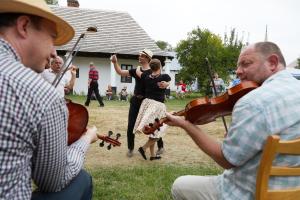
Hungarian string band tradition
The Hungarian string band tradition is one of the country’s defining ensembles and one of the most common representatives of folk music culture. The basic fiddle-viola-bass line-up takes many forms across regions and eras and can be expanded to include additional string players or reed instruments. Up until the middle of the twentieth century, string bands provided music for village parties, family and village festivities, agricultural events and religious and public holidays. Today, they play a crucial role in stage performances, local festivities such as dances, and urban táncház (“dance-house” or folk dance parties). A group’s repertoire can include thousands of melodies, which village musicians play entirely from memory. In addition to memory-based oral transmission, melodies are now also acquired in formal educational settings using written transcriptions and audio-visual documentation. Because Hungarian string bands have always adapted to the social context, the melodies, lyrics, playing style and reper
04-30-2026
-
INVENTORIES

Táncház method: a Hungarian model for the transmission of intangible cultural heritage
The Táncház (‘dance-house’) model of teaching folk dance and music combines traditional forms of acquisition with modern pedagogical and academic methods. Participants acquire dance knowledge from experienced members or tradition bearers by direct observation and imitation, to the accompaniment of live music, while using their own individual level of creativity to develop their competence and dancing ability. The dancing is complemented by singing instruction, handicraft activities and ethnographic presentations. Anyone regardless of age, competence or prior exposure can become an active participant. The aim is to establish a value-based, community-building, entertaining yet educational form of recreational activity through the practice and transmission of intangible cultural heritage. Táncház methods are also utilized in art schools and all levels of education, and influence folk dance and music performance. An annual National Táncház Festival and Fair constitutes the largest meeting of bearers, mediators an
04-30-2026
-
INVENTORIES
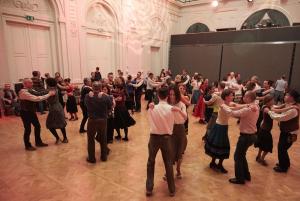
Csárdás dance tradition
The csárdás is a Hungarian dance that is performed by couples consisting of a man and a woman, or, in some regions, of two women. Multiple couples participate in the dance at the same time, forming one large or several smaller circles. Each region has its own themes, gestures and figures, which are improvised according to well-known, established rules and patterns. The csárdás is a universal favourite in both village and urban dance traditions, and is performed during weddings, community events, folk dance events and on stage. It is often accompanied by a string band consisting of violins, violas and double basses. The practitioners are amateur and professional dancers who learn through formal education or folk dances. The csárdás is an expression of the self-organizing and cohesive power of communities. Dancers also sing and must pay attention to their partner as well as to surrounding couples. The partners learn to think jointly as they co-create the dance. The acquired skills can be applied to everyday lif
04-30-2026
-
INVENTORIES
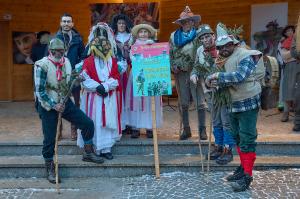
Dar Maschkar min kloukn and Da Jutalan - The ritual masks of Timau-Tischlbong of Paluzza (UD) - Italy
The archaic masquerade is part of the culture and history of a German-speaking community that settled in 1284 in what is now the Paluzza area.Among the ritual figures of this masquerade is "Dar Maschkar min kloukn," who wears a fur coat reminiscent of the agricultural world. He has fir branches tucked into his hat and between the buttons of his shirt. His face is blackened with soot, which he also uses to smear the faces of those he encounters along the way, as well as grease them with the grease from the rind tied around his waist. He has a cowbell tied to his back, which he rings rhythmically as he moves. This mask does not enter homes and wanders around the village during the day.Another ritual figure of the Timau masquerade is "Da Jutalan," who wears a white dress decorated with colorful handkerchiefs and his face is covered. He travels in a group from house to house, carrying an accordion, where he performs three dances. If he stays, he must identify himself by uncovering his face. His pilgrimage takes p
04-30-2026
-
INVENTORIES
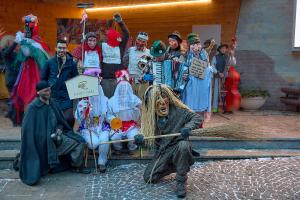
Rölar, Kheirar and Rikè - The ritual masks of Sauris-Zahre (UD) - Italy
The archaic masquerade is a product of the culture and history of a German-speaking community that settled there around the 13th century. Propitiatory rituals were once repeated several times a week, from Epiphany onward, while today the celebration focuses particularly on the "Night of the Lanterns." The main masks of this rite are the Rölar and the Kheirar.The Rölar wears dark clothing, his face covered in soot, and shouts and shakes the bells around his waist to announce the start of Carnival and drive away evil spirits with their din.The Kheirar, or King of Masks, has his face covered by a wooden mask and in the past would knock on the doors of homes with a broom made of sorghum. Once inside, he would sweep the floor, performing a propitiatory rite to sweep away the burdens of winter and make way for the arrival of spring.Spring is represented in the procession by the "beautiful mask" of the Rikè, whose face is covered by a veil and adorned with bells, which awaken the spirits, and colorful ribbons that o
04-30-2026
-
INVENTORIES
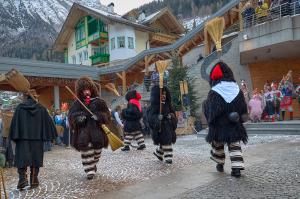
Ròllate - The ritual masks of Sappada-Plodn (UD) - Italy
The Rollate is a totemic zoomorphic character even if by now he appears more human because of his typical large moustached wooden face. Armed with a broom (and once also accompanied by Clowns), he goes around the streets of the hamlets, rhythmically shaking his large rattle, the rollen that gives him his name. He visits the houses and brings good fortune with his cumbersome presence in fur and the particular and affected use of his voice which is believed to be that of the ancestors. The Sappada Carnival is also distinguished by the fact that it celebrates the period for a greater length over three Sundays dedicated specifically to the peasants, the poor and the gentry.Text by Gianluigi Secco
04-30-2026
-
INVENTORIES
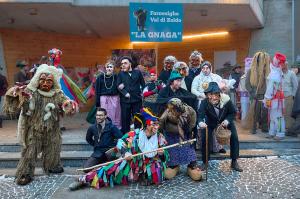
La Gnaga - The ritual masks of Fornesighe di Val di Zoldo (BL) - Italy
The 'historical' masquerade at Fornesighe is the only remaining one in the Val Zoldana where the elderly still remember others. The figure of the Matazin, who opens the parade accompanied by a fiery black devil, has been dying out in favour of that of the 'gnaga' who is, therefore, the fruit of a recent tradition even if there is evidence of similar characters in Italy, at least in the eighteenth century. It regards the allegory of the 'Old' who makes way for the 'New', namely the Power that passes on to the new adult generation represented by the Conscript who, as such, acquired the rights and obligations arising out of his new social condition28. In practice, the youth seems to be carried in a pannier by an old woman which, in reality, is tacked on later on the front of the figure. Other typical characters in the parade are the Doctor and the Wet nurse with an infant, the Woman from Ampezzo with the Gentleman, the Godfather and the Godmother and the 'Coco' charged with collecting eggs in the customary colle
04-30-2026
-
INVENTORIES
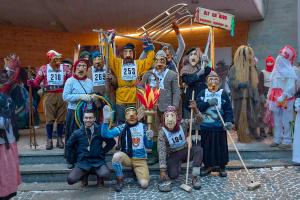
Olt da Riva - The ritual masks of Rivamonte Agordino (BL) - Italy
The heart of this masquerade are the wooden faces of the handsome and the ugly, which are common throughout the Dolomites, but here they stem from a unique story: in the early 1900s, in the hamlet of La Spia di Rivamonte, Crispino Selle lived. He carved grotesque, disturbing, and highly realistic faces. These soon became known throughout the Agordino valley, and many people began to go see them.In 1947, a group of young people met in a local carpenter's workshop and decided to continue the tradition, following in Crispino's footsteps, creating less frightening, more colorful, and certainly technically inferior faces to Selle's artistic works. In honor of tradition, the masks were called Olt da Riva, and the young people of Rivamonte began wearing them during the Carnival season.In 2020, this masquerade was officially revived for Carnival, again by the town's young people, with more or less recent masks, but always with a traditionalist spirit.Text by Antonio Gheno
04-30-2026
-
INVENTORIES
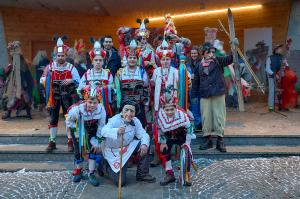
Marascons, Laché e Bufon - The ritual masks of Val di Fassa (TN) - Italy
Traditionally, in the Fassa Valley, "the carnival is unleashed" on January 17th, the feast of Saint Anthony the Abbot. The leading masks of the procession are the Laché, the Bufon, and the Marascons, followed and surrounded by masks or faceres (faces) representing beauty and ugliness, the positive and negative aspects of the collective imagination or the most deeply rooted and specific popular imagination of the area. During the carnival, the Laché lead the way for the Marascons, who, with a skipping step, make three counterclockwise turns for good luck. Meanwhile, the Bufon, who is the only mask allowed to speak, acts as a jester, comically embarrassing those present.The masks/faceres are all strictly wooden, unique pieces, usually carved from Swiss pine and painted with oil paints. Some time ago, only a few mask makers were able to consistently and imaginatively produce Ladin carnival masks, but in recent years, thanks to the willingness and sensitivity of some local sculptors or decorators/artists, the sch
04-30-2026
-
INVENTORIES
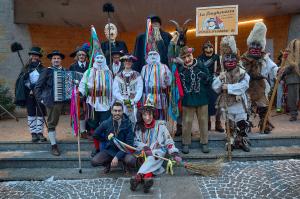
Žinghenésta - The ritual masks of Canale d'Agordo (BL) - Italy
On Shrove Tuesday in the Canale d'Agordo area of the Alto Agordino they celebrated the Zinghenésta (Gipsy), an innovative female character of good omen for abundance who appeared in the middle of the second half of the nineteenth century. The other characters in the procession on the other hand seem to be orthodox and original and are completely similar to types found elsewhere (Matiéi, Laché, Paiazi and Puster). Of interest is the final part of the rite when some youths, dressed as murderers, carried out robberies and sacked the houses, but at the end they were released and allowed to keep what they stole. It is highly probable that these would be conscripts whose freedom of action corresponded to a form of recognition that they were the new power force in the community. Also present and well described are masks of the ugly type whose behaviour is similar to those of the Pagliacci and included the Puster, the Spazzacamin and the Ber who beat cowbells and sticks rhythmically to 'call the grass'. Then in the a
04-30-2026
-
INVENTORIES
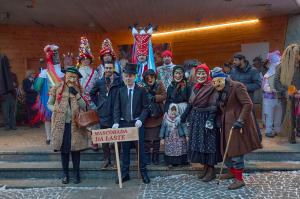
Matacink e Laké from Laste and Matazin from sottoguda - The ritual masks of Rocca Pietore (BL)
The Matacink in this area differ substantially because of the form of the tall hat that also identifies the natural area they belong to.The Matacink from Laste travel in pairs with their own Laké who do not wear tall hats and who are also responsible for collecting and offering grappa to those visited. Pairs of characters are formed for every hamlet. The Matacink were able to ask the parents of the girls to let them go to the ball under their own responsibility and in this case refusal was not allowed. The Matazin from Sottoguda also had a retinue of Sfrofignatori (soot throwers) or similar characters who contaminated anyone found outside or in the houses during visits with black, and they were accompanied by a chief mask character who presided over and commanded the dances.Text by Gianluigi Secco
04-30-2026
-
INVENTORIES
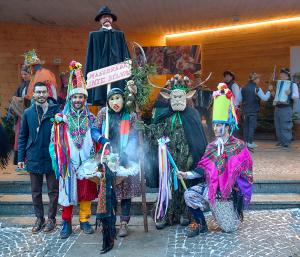
Matazin e Laché - The ritual masks of Selva di Cadore (BL) - Italy
The great masquerades are also remembered in Val Fiorentina and direct recollections of the local Mata have been obtained from old people. Of significance, however, is an old photograph that encapsulates the soul of all the characters mentioned and where we can also see the use of a hat-veil instead of a black or white mask.Text by Gianluigi Secco
04-30-2026
-
INVENTORIES
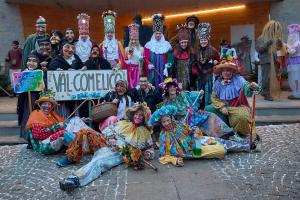
Matazin, Laché e Matazère - The ritual masks of Comelico Superiore (BL) - Italy
The group of archaic masks is guided by Matazin and Laché who are equal characters with gaudy (regal) clothes, rich in bright veils and coloured ribbons. They wear a high tube made annually, richly adorned with precious stones, pearls, mirrors and gold which were once collected from the families to whom they were returned at the end of the holiday. They carry the sceptre of their authority in one hand and sweets for the bystanders in the other. They wear sweet-sounding rattles and must stay in motion by walking or dancing together. They leap face to face during the dance and this pairing is their most significant action. The Matazins are accompanied by Clowns who soil the bystanders with ashes and control them with a staff.During the ball in the square, the 'Mata' dance with women among the public as a good omen for fertility and sometimes accept the invitation of some man who yearns even more for luck. The group of old characters travel separately from the rest of the procession with the group of musicians w
04-30-2026
-
INVENTORIES
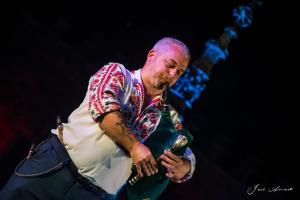
The Breath of Tradition: Digital Preservation and Social Transmission of the Bulgarian Gaida
The focus of this candidacy is the Bulgarian bagpipe tradition, specifically the "gaida" – a traditional woodwind instrument that has been a cornerstone of Bulgarian identity for centuries. This element belongs to the domain of "performing arts" and "traditional craftsmanship," as it encompasses not only the mastery of performance but also the specialized knowledge of constructing the instrument and maintaining its authentic repertoire.In Bulgaria, the gaida is more than a musical instrument; it is a symbol of communal life, present in every ritual, celebration, and social gathering. The specific focus of my work is the Strandja bagpipe style, known for its deep, melodic ornamentation and its unique role in the preservation of the folklore of Southeastern Bulgaria.It is important to note that "Bagpipe playing and musical knowledge in Bulgaria" was officially inscribed on the UNESCO Representative List of the Intangible Cultural Heritage of Humanity in December 2025. This heritage is characterized by a complex
04-28-2026
-
INVENTORIES

Ła Comedia Veneta - The Venetian Comedy
The Venetian Comedy as a cultural means of expression, entertainment, learning and socialization done in the Venetian language as a vehicle and an essential element of the plays.Dating back to the XV century, with high-ranking periods, it is currently a vast phenomenon in Venetian-speaking communities in the Veneto region and where venetophone stable, ample and long-standing communities are present abroad for historical reasons (mainly: Slovenia, Croatia, Brasil).It is studied by Academias (as a performing art and as to the language and culture) and currently very active thanks to hundreds of acting companies, both professional and amateur, with dozens of playwirghts.
05-05-2024
-
INVENTORIES

The Eel Coast Cultural Heritage
The Eel Coast Cultural Heritage refers to the more than 3000 years old eel fishing tradition in the Southeastern Sweden. At least since the Scandinavian Bronze Age, eel has been fished for its meat and richness of healthy proteins, Omega 3 and D-vitamines. The traditions along the so called Eel Coast between Åhus and Kivik on the East coast of the landscape Scania, Sweden, are collected by the Eel Coast Cultural Heritage NGO and consist of knowlegde of tools, nets, boats, boat houses, craftmanship, mending of nets and tools, the currents and sea, songs, cooking, oral storytelling.
04-21-2024
-
INVENTORIES

Beer Culture in Belgium
Belgium and beer is synonymous as the culture holds high demand for it. Until the 1960s children eating lunch at school had the choice of beer (called table beer low in alcohol) as their drink. Consumption and demand for beer is a tradition and the range of different kinds of beer in Belgium is constantly growing. Although statistically Belgium has fewer breweries than that of some states in the US, Belgium has more diversity when it comes to beer styles and their brewing processes. There are some 1500 types of beer, all using different fermentation methods. Many local Belgian beers are brewed in micro-breweries. These beers having their own brands reach many locals who consume the beer with any kind of social gatherings or events. Master brewers will often teach courses in universities and other venues in order to help transmit their skills to aspiring brewers and amateurs alike. Beer culture in Belgium was inscribed in 2016 to the representative list of the Intangible Cultural Heritage of Humanity. Referenc
11-06-2019
-
INVENTORIES

The oldest sport in Ireland: Hurling
The oldest sports in Ireland is Hurling. It predates Christianity as there are records of it being played in 1200 BCE. This ancient game is some what unknown to the rest of the world. Hurling is a team sport that involves 15 players on each side, chase and try to score on the opponents’ goal with a ball known as Sliotar (leather covered cork centered ball). Much like sports that have two halves consisting of 25-35minute time frame, the team with the most goals win the match. Hurling resembles field hockey, lacrosse and soccer how it is played out. The sport promotes good health, wellbeing, and team spirit. Today Hurling is preserved and transmitted through coaching and games in schools and clubs. Hurling was inscribed in 2018 to the list of the Intangible Cultural Heritage of Humanity by UNESCO. References: ICH UNESCO, WIKIPEDIA
10-30-2019
-
INVENTORIES

The Carnival of Basel: Three best days in the year of Switzerland
The Carnival of Basel is the biggest carnival in Switzerland and has been listed as one of the top fifty local festivities of Europe. Taking place on Monday after Ash Wednesday at precisely 4:00 am, Carnival of Basel otherwise known as Basler Fasnacht turns the city upside down for 72 hours. The locals call it “Three best days” in the year. All the lights in the city center are turned off and over 200 painted lanterns fill the streets along with hundreds of drummers and piccolo players marching together showing cohesiveness. This is known as Morgestraich that fill the streets. Participants in the parading is required to remain in incognito, parades are often disguised behind political, celebrity, satirical figures. This brings social cohesion through social criticism, making this unique carnival inclusive and overall great for the social dynamic of the city. The Carnival of Basel in Switzerland has been inscribed to the list of the Intangible Cultural Heritage of Humanity in 2017. You can watch "The Carnival
09-25-2019
-
INVENTORIES

Kolo: Serbian circle dance
Kolo is a Serbian circle dance that involves the dancers holding each other’s hands or each other’s waist, forming a chain of dancers that revolve in circle. Kolo has different but similar forms throughout Southeastern Europe and phonetically ~oro or ~olo maintains in calling this art of circular dance. Kolo is mainly performed at weddings, religious ceremonies, and any other social gatherings. The participants are both male and female, although there are parts to the dance where it requires one gender to take over as the main role. Traditional attire of Kolo involoves the men having to wear caps, loose blouse tucked into their pants that balloon around their thighs and eventually tightening from the knee down to the ankles. The women have to wear king white embroidered dresses with velvet aprons tied at their waist. The sustainability and transmission process of Kolo is both protected and processed on a national and regional level as it is not only a symbol of national identity but also has regional and loca
08-26-2019
-
INVENTORIES

Flamenco of Spain: Andalusia Region State of Mind in motion
Andalusia of Spain is a hotbed for multicultural assets as it borders the Iberian Peninsula. Cross cultural interchanges between the native Andalusians, Romani, Castilians, Moors, and Sephardi Jews have made this region rich in unique art. Flamenco is one of them. This complex set of motions able to express joy, fear, triumph, and sadness is quite an unique set of motions. The performers differ in style and techniques depending on the sex; as males use more of their steps aggressively and profoundly in motion, as females use much more sensual movements often suggesting their vulnerability with more grace in their movements. Toque or the art of guitar playing is the choice of music accompanying the Flamenco, as well as the castanets along with hand clapping and foot stamping. Flamenco has become a staple in community fairs, religious festivals, as well as in private groups in a more casual setting. Flamenco is inscribed to the 2010 list of representing Intangible Cultural Heritage. The transmission process is
08-05-2019
-
INVENTORIES

Kurenti: Door to Door custom of Slovenia
From Candlemas to Ash Wednesday Kurenti practices of going from house to house to perform dances and form circles around the owners happen. The practice helps strengthen interpersonal bonds and is key to the regional identity of the communities concerned as it is believed that the noisy bell-ringing and brandishing of their wooden sticks chase everything evil away and bring happiness to those they visit. The Kurenti costume consists of sheep skins, girded with chains that hold huge cow bells, leg warmers and a headgear with horns or feathers, a pointed nose and a bright red tongue. It is the most distinctive among some 150 traditional costumes preserved in Slovenia. Kurenti was inscribed to UNESCO’s Intangible Cultural Heritage list in 2017. Kurenti has been in transmission through regional communities, schools, workshops, and Federation of Kurenti Associations which oversees all of the processes. Kurenti knowledge and skills are most commonly transmitted within the family, but youngsters also learn from elde
07-09-2019
-
INVENTORIES

The Lithuanian folk dance revival by the Lithuanian Ethnic Culture Society
Ethnic dance of Lithuanian folk dances were widely popular among the general population before World War II. Due do the suppression of traditional heritage during the Soviet occupation of Lithuania, the folk dancing took a down turn in popularity. Many decades later the folk dance tradition is back thanks in large part due to the Traditional Dance club established in Vilnius in 2002 by the Lithuanian Ethnic Culture Society, The clubs are run mainly to spread and promote the almost lost social function of folk dancing. The suppression during the Soviet occupation has not deterred the main spirit of the performance, as it has now spread all over Lithuania and other European countries as well. What started out in small clubs in cafes, small restaurants, and halls have moved into much larger venues and have become a festival surrounding the folk dance itself. The Clubs are open to everyone and participants are able to learn dances from various Lithuanian ethnic regions and musicians perform live music with accord
06-10-2019
-
INVENTORIES

Good practice from Finland: On Crafting – Discussion cards
The crafting discussion cards of Taito Group Finland promote interesting discussions about the art of crafting in the local community. Since 2016, Taito Group in Finland held these crafting meetings and made the initiative for the card series by hobbyists and professional crafters. The common bond amongst the group is about craft, and to talk about crafting as it cross section into its local culture. They published the On Crafting discussion cards in early 2018. The meetings along with the help of the crafting discussion cards make it a very useful meeting. The culture of crafting is discussed along with traditional ways and the modern changes that are coming to crafts. Not only do they make process but also help develop for open dialogue being able to improve their beloved traditions.“they enable comprehensive consideration and verbalising of the significance of handicrafts and crafting culture” which is the main purpose of On Crafting discussion cards. The discussion cards will give a new perception to craf
04-03-2019
-
INVENTORIES

Bistritsa Babi, archaic polyphony, dances and rituals from the Shoplouk region
Bistritsa Babi are an elderly/multi-generational female vocal ensemble carrying on the traditional dances and polyphonic singing of the Shopluk region of Bulgaria. Bistritsa Babi has been part of the Intangible Cultural Heritage since 2005. The Bistritsa Babi sing at two or three voices, and in different pitches. “Izvikvat” – lead the song while “Buchat krivo” – keep a continuous sound. This makes the harmonic music of Bulgaria a unique sound. People dance the “Horo” dance holding each other the belts of their traditional costumes when they hear the songs. You can see people performing these songs and dances at the ritual of “Lazaruvane” when young girls go around the village collecting eggs. See the video on Youtube: https://www.youtube.com/watch?v=embqg-yKHNQ Reference Treasure quest https://heriquest.com/?p=37&l=2&c=9&id=288
02-13-2019
-
INVENTORIES

Good practice from Norway: Dual-language, multi-ethnic storytelling
Good practice from Norway: Dual-language, multi-ethnic storytelling Oral traditions from Norway. Oral myths, fables, fairy-tales, legends are being told in Norwegian and in Sami. Because of the rapid pace of immigration leading to much more cultural diversity the oral tradition is changing. There are multiplicity of new story telling traditions. However these traditions are being looked over and their influence is not part of the larger schooling curriculum. Fortellerhuset, the storytelling house, was invited to the storytelling festival in Iran. It was told in English then translated by an interpreter. Audiences could understand oral traditions in a more playful and dramatic way by the performers with two languages. The storytelling was continued in Norway. Fortellerhuset had developed the performances, techniques and new two-language productions and it is being performed at libraries, schools and kindergardens. The aims of the storytelling begin to help people with non-Norwegian backgrounds to reconnect to
01-25-2019
 PREV
PREV- …
- …
- NEXT
