

EVENT
2026 JIAPICH Finalists Announcement
INVENTORIES
Circles of Light: Garba and the Living Heritage of Gujarat
ICHGRAM
Daksha | Crafting Voices - Celebrating living heritage of eastern India
-
INVENTORIES
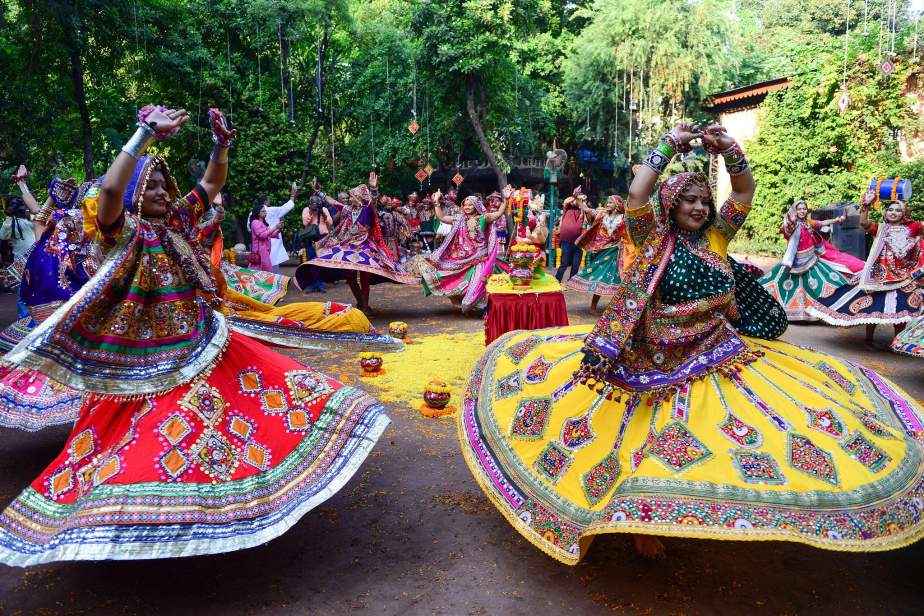
Circles of Light: Garba and the Living Heritage of Gujarat
Garba is a devotional and participatory dance tradition practiced throughout Gujarat, particularly during Navaratri, the nine-night festival associated with the worship of feminine divine energy, or Shakti. At the centre of the traditional dance space is a perforated earthen pot containing an oil lamp, known as a garbha-deep, or an image of the goddess Amba. Dancers form one or more circles around this centre, moving counter-clockwise while singing and clapping together. The dance begins with measured circular movements and gradually develops into faster, more energetic patterns of movement and whirling.Garba is much broader than the movement performed in the circle. The tradition brings together dancers, singers, instrumentalists, religious figures, costume and ornament makers, potters, organizers and audiences. Traditional neighbourhood Garbas continue alongside large contemporary gatherings in cities and towns, allowing the practice to move between intimate community spaces and major public celebrations. T
09-28-2026
-
INVENTORIES
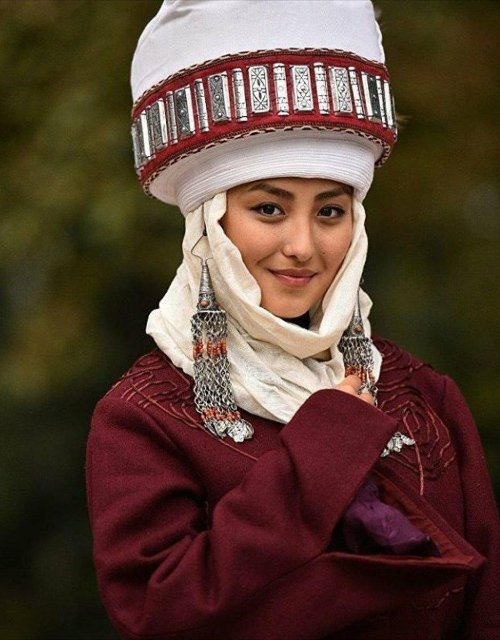
White Threads of Passage: Elechek and the Living Heritage of Kyrgyz Women
Elechek is a traditional Kyrgyz women's headdress consisting of a hair cap and a very long piece of white fabric wrapped around the head in many layers like a turban. The fabric may extend to around 40 metres and is finished with embroidery, ribbons and jewellery. Its most significant ceremonial use is the wrapping of a bride's first elechek at her family's home before she leaves to join the groom. The ritual marks a major transition in a woman's life and is accompanied by blessings, rhyming chants and good wishes for her future.Elechek is not a single fixed design. Communities across Kyrgyzstan have developed different ways of wrapping and decorating it, reflecting local knowledge and aesthetic traditions. A married woman may wear the headdress at important occasions throughout her life, changing its form according to the occasion. In some mountainous communities, elechek has also remained part of everyday dress, demonstrating that the practice extends beyond the wedding ceremony into ordinary life.
09-21-2026
-
INVENTORIES
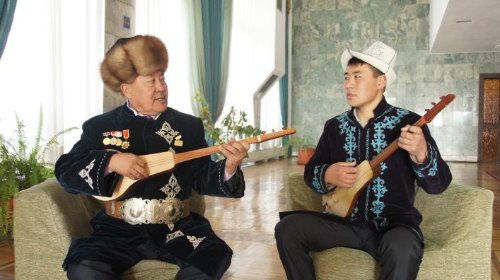
Aitysh and the Improvising Poets of Kyrgyzstan
Aitysh is a living tradition of improvised oral poetry in which two akyns sit opposite one another and compose verses spontaneously in response to a topic, a question or the words of their counterpart. In Kyrgyzstan, the tradition is closely associated with the tokmo akyn, the poet-improviser who accompanies the performance on the komuz, Kyrgyzstan's traditional three-stringed instrument. The exchange can move rapidly between humor, satire, praise, philosophical reflection and observations about everyday life, requiring the performer to combine poetic language, musical rhythm, memory, wit and immediate judgment. UNESCO inscribed Aitysh/Aitys on the Representative List in 2015 as a shared element of Kyrgyzstan and Kazakhstan.Within Kyrgyz communities, Aitysh has long been part of gatherings and celebrations, from family occasions to larger public events. The audience is not simply a passive observer: subjects may be proposed by those present, and the performers respond to the social atmosphere around them. Thi
09-18-2026
-
INVENTORIES
Dragon Boat Traditions: Community, Waterways and Collective Heritage in Foshan
In Foshan, the Dragon Boat Festival is not defined only by the moment a race begins. Each year, communities prepare their boats, renew relationships with waterways, gather crews and carry out ceremonies that connect the arrival of Duanwu with village identity and collective memory. Across areas such as Nanhai and Shunde, dragon boats become the focus of a wider cultural life involving ritual, craftsmanship, food, music, competition and cooperation. The waterways themselves become temporary cultural spaces in which communities gather to celebrate traditions that have been maintained across generations.Foshan's dragon boat culture is especially distinctive because of the diversity of its local practices. In Diejiao, long boats race through narrow and winding village canals, requiring crews to coordinate extraordinary movements around sharp bends. In Yanbu, the centuries-old Yanbu Old Dragon is brought from its resting place beneath the riverbed and awakened through annual rituals before returning to the water.
09-04-2026
-
INVENTORIES
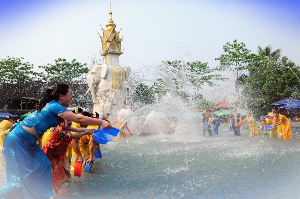
The Water-Splashing Festival: Renewal and New Year Traditions among the Dai People of Xishuangbanna
Each spring, the Dai New Year transforms Xishuangbanna into a period of renewal, gathering and collective celebration. Known internationally as the Water-Splashing Festival, the celebration is rooted in the Dai understanding of the transition from one year to another. Water carries wishes for purification, happiness and good fortune, and the act of splashing another person is traditionally understood as offering a blessing for the year ahead. The festival is therefore much more than the public spectacle for which it has become famous: it marks the beginning of a new annual cycle through a combination of ritual, social relationships and collective celebration.The relationship with water begins with practices that carry a more intimate and ceremonial meaning. Festival activities include the collection of water, the bathing of Buddha images and the use of water to express respect and blessings. One traditional form of blessing involves elders gently sprinkling younger people with water, while the more energetic
09-04-2026
-
INVENTORIES
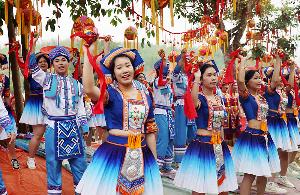
Sanyuesan: The Spring Song Fair and Cultural Traditions of Wuming
Each year, on the third day of the third lunar month, Sanyuesan brings together some of the most important folk traditions of Wuming's Zhuang communities. The festival is rooted in the collective cultural life of the people, creating a shared space in which folk songs, ancestral remembrance, food preparation, games, social interaction and seasonal celebration come together. Rather than being defined by a single ceremony or performance, Sanyuesan is formed through the participation of the community and the many folk practices that people continue to share and renew each spring.Folk singing occupies a central place within this cultural space. Through the tradition of the song fair, people gather to exchange songs, respond to one another and demonstrate their creativity and cultural knowledge through spontaneous expression. Singing traditionally creates opportunities for people to meet, form friendships, express affection and interact through a shared language of melody and poetic verse. A song is not simply per
09-03-2026
-
INVENTORIES
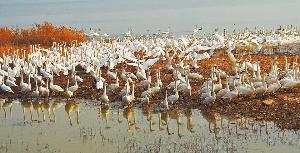
The Living Culture of the White Swan and Yellow River Wetlands of Sanmenxia
Every winter, the arrival of white swans along the Yellow River wetlands gives Sanmenxia a distinctive seasonal rhythm. The birds return to wetlands, shallow waters and riverbanks where local communities have become accustomed to observing their movements and sharing the landscape with them. Over time, this seasonal relationship has developed into an important part of Sanmenxia's contemporary identity, reflected in the city's designation as the “Swan City” and in the many cultural, educational and community activities that accompany the winter season. The relationship is therefore understood not simply through the presence of the birds, but through the knowledge and practices that have developed around their return.People in Sanmenxia have learned to recognize the importance of keeping the wetlands quiet, clean and suitable for the birds. During the principal protection period, from October to March, activities that may disturb the swans, such as approaching them, feeding them, flying drones or making loud no
08-25-2026
-
INVENTORIES
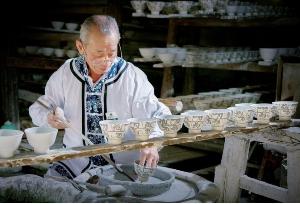
Jingdezhen Handicraft Porcelain-Making Techniques
Jingdezhen's porcelain-making heritage is built upon a highly specialized body of knowledge that brings together raw materials, manual skills, decorative practices, kiln knowledge and generations of experience. The craft begins with the preparation of porcelain materials and continues through forming, trimming, decoration, glazing, firing, selection and finishing. These processes are not isolated techniques: they depend on one another and require practitioners to understand how materials and techniques respond at every stage of production. This interconnected knowledge is what gives Jingdezhen's handicraft porcelain-making its distinctive character.The tradition developed over many centuries. Important forming techniques were already established during the Song period, while the Yuan period brought the development of the combination of porcelain stone and kaolin known as the “binary formula” and the refinement of blue-and-white underglaze decoration. During the Ming and Qing periods, the production system bec
08-25-2026
-
INVENTORIES
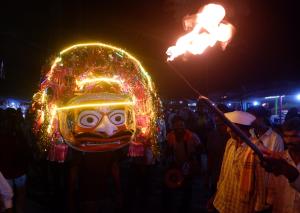
Bohada: Masks, Myths and Community Rituals of Tribal Maharashtra
Bohada is a masked ritual theatre practiced by tribal communities living in Palghar, Thane and Nashik districts of Maharashtra state in western India. The tradition is sustained by the Kokna, Warli, Mahadev Koli, Malhar Koli, Dhor Koli, Thakar and Katkari communities. living in villages like Pimpalsond, Barhe, Mokhada and many others. The festival occurs after harvest , usually between the months of March to May. It lasts for three days in most villages, extending up to a fortnight in some. Ritually, Bohada is performed to please Goddess Adimata or Bhavani to protect the village from calamities, to invoke auspiciousness, ensure good rains and harvest, and to reaffirm collective well-being. The core performance re-enacts the victory of Goddess Jagdamba over Mahishasura, embodying the triumph of protective forces. Her mask is venerated on the third day and presented with a grand feast. Through night long processions, music, oral narration and stylised movement, the village becomes a shared ritual space whe
07-17-2026
-
INVENTORIES
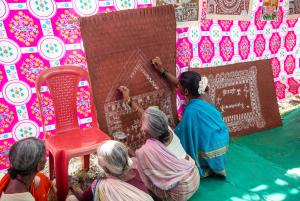
Warli Painting of Maharashtra, India
Warli painting is a traditional visual art practice of the Warli indigenous community inhabiting the western coastal region of India, particularly in the Palghar district of Maharashtra. In the tribal belts of Palghar, Warli extends beyond art; it is a way of life. The community’s folklore, rich with deities such as Palghat Devi, the goddess of fertility and the protector of the community, and Waghoba—the tiger god—finds expression through both painting and storytelling. Village scenes—depicting farming, dancing, and communal life—form central themes within this practice. Using a vocabulary of basic geometric shapes, the paintings reflect everyday routines, where each figure can signify fertility, harvest, or celebration.Rituals are central to Warli identity, and their visual language brings these sacred moments to life. The sacred Chawk, a ritual square composition, is created to invoke the happiness and harmony of conjugal life. Marriage ceremonies are marked by the Chawk, featuring Palghat Devi, surrounded
07-16-2026
-
INVENTORIES
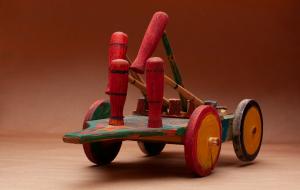
Toy culture in Türkiye
Established in 2002, the Cultural Research Foundation (KAV) is a pioneering non-governmental organization dedicated to safeguarding a vast spectrum of Turkey’s Intangible Cultural Heritage (ICH), ranging from culinary traditions and handicrafts to rituals and toy culture. Driven by a core mission to defend cultural rights and cultivate heritage awareness—particularly among the youth—KAV has established a formidable international presence. Recognizing its rigorous scientific methodologies, KAV was granted official advisory status to the Intergovernmental Committee under the 2003 UNESCO ICH Convention in 2012, and holds esteemed accreditations from global institutions including WIPO and FAO. The "Toy Research Program," which was formalized and intensified in 2005, stands as a crown jewel in KAV's historical trajectory.
05-01-2026
-
INVENTORIES
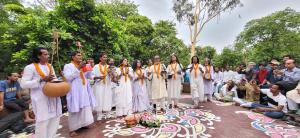
Revival of Songs of Charyapada by the Spiritual Devotees
The Revival of Songs of Charyāpada by the Spiritual Devotees refers to a community-based safeguarding initiative that re-establishes the performative tradition of the Charyāpada—one of the earliest extant corpora of Bengali language, esoteric poetry, and spiritual music dating from approximately the 7th to 12th centuries CE. Historically composed by Tantric Buddhist siddhācāryas, these songs embody symbolic, experiential, and philosophical knowledge expressed through coded poetic language.While the Charyāpada survived in manuscript form, its embodied musical and performative practice had long disappeared from the Bengali cultural landscape. The present revival, led by the Vabnagar Foundation in collaboration with Baul-Fakir spiritual practitioners (bhāva-sādhakas), reactivates this tradition as a living cultural expression. The initiative integrates ethnographic field research, study of medieval musicological treatises, and reconstruction of rāga–rāginī frameworks to restore performance practices.Central to t
04-20-2026
-
INVENTORIES
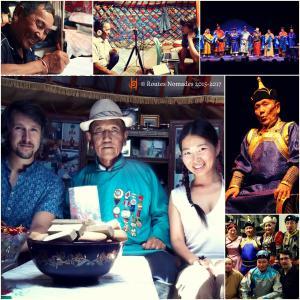
Mongolian Traditional Art of Khöömii
‘Khöömii’, literally meaning pharynx, refers to the vocal technique in which one person intentionally superimposes multiple and simultaneous sounds with his/her voice, where appear two distinct partials: a harmonic melody ‘overtones’ over a fundamental tone ‘drone’, accompanied by many resonances.Practiced by the Mongolian and Turkic peoples throughout the area of Altai mountain chain (at national level in Mongolia; the regions of Altai Republic, Khakassia and Tuva in Russia, as well as the north of Xinjiang and Inner Mongolia in China), khöömii is an ancestral vocal technique. Its origins are difficult to date precisely. Legends say that khöömii comes from the imitation of the sound of the wind, the water, and birds singing. It is practiced by men in most cases, but also by women since two generations. A living and dynamic tradition, khöömii is a rich and multifaceted cultural heritage of the Mongols.Regarding the technical aspect of khöömii, emitted from the vocal drone, the overtones are produced by a simu
04-10-2026
-
INVENTORIES
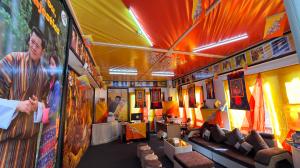
Temple of Monarch
Title of Intangible Cultural HeritageLiving Cultural Values and Practices of Reverence for Compassionate Leadership — Temple of Monarch (Bhutan)Short DescriptionThe Temple of Monarch embodies a unique living cultural heritage where reverence, gratitude, unity, compassion, humility, and service are practiced daily as active cultural expressions. It reflects Bhutan’s living tradition of honoring leadership that serves with integrity and devotion, and transforms these values into ongoing, participatory practices that connect communities, generations, and global audiences.Detailed DescriptionThe Temple of Monarch preserves and transmits Bhutan’s intangible cultural heritage by safeguarding living cultural expressions that articulate a deep emotional bond between the people and their compassionate leadership. Unlike traditional monuments or archival preservation, the heritage safeguarded here is lived, shared, and reflected in daily practices, storytelling, visual expressions, and communal participation.This herit
02-10-2026
-
INVENTORIES
.jpg)
The Oral Tradition as Cultural Heritage from Kumbasa Village
The oral traditions in Kumbasa Village represent a valuable aspect of Indonesia’s cultural heritage, passed down from generation to generation. As a cultural practice, oral tradition is an integral part of the community and continues to live alongside its people. The values embedded within oral traditions—religious, moral, and cultural—serve as guiding principles in daily social life.In Kumbasa Village, oral tradition is closely linked to customary rituals. During these rituals—such as balia, mompaura, novatiaka, novunja, and others—oral narratives are recited as an essential component. In the past, oral traditions were not limited to traditional ceremonies but were also performed during communal celebrations such as weddings, thanksgiving events, and more. However, with the dynamic changes in modern society, these traditions are now predominantly preserved within the context of customary rituals.Customary rituals and oral traditions are deeply interconnected. Although oral traditions in Kumbasa are primarily
05-01-2025
-
INVENTORIES
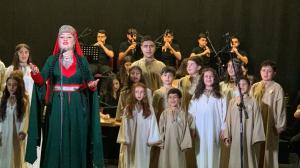
Artsakh Beckons: Preservation of Nagorno-Karabakh Folk Music
"Artsakh Beckons" is an urgent cultural preservation initiative launched by Naregatsi Art Institute (NAI) following the September 2023 exodus of ethnic Armenians from Nagorno-Karabakh. The project addresses the imminent threat to the region's unique musical heritage, characterized by its distinctive local dialect and traditional folk songs that form a cornerstone of cultural identity for displaced communities.This comprehensive preservation effort focuses on documenting, archiving, and transmitting the endangered folk music traditions that represent one of the brightest cultural expressions of Nagorno-Karabakh Armenians. The project is particularly critical as these musical traditions weren't previously documented in Armenia's major cultural institutions, including the Komitas State Conservatory and the Art Institute of the Academy of Sciences.Working directly with displaced musicians and cultural bearers, NAI employs professional ethnomusicological methods to create high-quality audio-visual recordings, musi
05-01-2025
-
INVENTORIES
.jpg)
JAMU WELLNESS CULTURE
Inscribed in 2023 (https://ich.unesco.org/en/18com) on the Representative List of Intangible Cultural Heritage, Jamu is a wellness culture in the form of herbal medicine and traditional treatment heritage of the Indonesian people. Jamu culture has existed in Indonesia/Nusantara since the 8th Century CE. This is proven from relief carvings on Borobudur Temple (8TH Century) and ancient manuscripts (eg. Ramayana Kekawin, sarga 1-9, pada 989 (910 CE), Serat Centini 1814 M, and palm leaf manuscripts. Jamu is not the same as ordinary medicine, being for health, beauty, happiness, Jamu increases the body's immunity, maintains health and helps treat diseases, according to a heritage system.The geographical location of jamu wellness culture encompasses the whole of Indonesia. Concentrations of jamu wellness culture are found in the provinces of Central Java, Yogyakarta Special Province and East Java. Jamu makers from Java have spread all over Indonesia. Traditional medicines are found in various regions in Indonesia w
05-06-2024
-
INVENTORIES

Korean bamboo screen/blind making: jukryeom/yeomjang
To separate and create interior and outside spaces, for privacy, to create cooling shade from the sun in the hot weather that retained breeze, for ritual and state use, and a myriad of other uses, Koreans made bamboo blinds or screens. Three-to-four-year-old bamboo (wangdae) is harvested by hand in climates and ecosystems that grow the strongest and most dense plants, and then processed in many steps to harvest the outer grain of each cylinder and splice them thin. The finest screens are made from splints drawn through metal drawplates, and woven with weights and, traditionally, silk thread, on a loom.
05-04-2024
-
INVENTORIES

Traditional skills of building and sailing Iranian Lenj boats in the Persian Gulf
Inscribed in 2011 (6.COM) on the List of Intangible Cultural Heritage in Need of Urgent SafeguardingIranian Lenj vessels are traditionally hand-built and are used by inhabitants of the northern coast of the Persian Gulf for sea journeys, trading, fishing and pearl diving. The traditional knowledge surrounding Lenjes includes oral literature, performing arts and festivals, in addition to the sailing and navigation techniques and terminology and weather forecasting that are closely associated with sailing, and the skills of wooden boat-building itself. The navigational knowledge used to sail Lenjes was traditionally passed on from father to son. Iranian navigators could locate the ship according to the positions of the sun, moon and stars; they used special formulae to calculate latitudes and longitudes, as well as water depth. Each wind was given a name, which along with the colour of water or the height of waves was used to help forecast the weather. Specific music and rhythms also constituted inseparable par
04-27-2024
-
INVENTORIES

Qālišuyān rituals of Mašhad-e Ardehāl in Kāšān
Inscribed in 2012 (7.COM) on the Representative List of the Intangible Cultural Heritage of HumanityQālišuyān rituals are practised in Iran to honour the memory of Soltān Ali, a holy figure among the people of Kāšān and Fin. According to legend, he was martyred, and his body found and carried in a carpet to a stream, where it was washed and buried by the people of Fin and Xāve. Today, Soltān Ali mausoleum is the site of a ritual where a carpet is washed in the holy stream by a huge gathering. It takes place on the nearest Friday to the seventeenth day of the month of Mehr, according to the solar-agricultural calendar. In the morning, people of Xāve gather at the mausoleum to sprinkle rosewater on the carpet. Having completed the wrapping rituals, they deliver it to the people of Fin outside, who rinse the carpet in running water, and sprinkle rosewater drops with neatly cut and beautifully decorated wooden sticks. The carpet is then returned to the mausoleum. People of Kāšān contribute a prayer-carpet and the
04-27-2024
-
INVENTORIES

Naqqāli, Iranian dramatic story-telling
Inscribed in 2011 (6.COM) on the List of Intangible Cultural Heritage in Need of Urgent SafeguardingNaqqāli is the oldest form of dramatic performance in the Islamic Republic of Iran and has long played an important role in society, from the courts to the villages. The performer – the Naqqāl – recounts stories in verse or prose accompanied by gestures and movements, and sometimes instrumental music and painted scrolls. Naqqāls function both as entertainers and as bearers of Persian literature and culture, and need to be acquainted with local cultural expressions, languages and dialects, and traditional music. Naqqāli requires considerable talent, a retentive memory and the ability to improvise with skill to captivate an audience. The Naqqāls wear simple costumes, but may also don ancient helmets or armoured jackets during performances to help recreate battle scenes. Female Naqqāls perform before mixed audiences. Until recently, Naqqāls were deemed the most important guardians of folk-tales, ethnic epics and I
04-27-2024
-
INVENTORIES

Nawrouz, Novruz, Nowrouz, Nowrouz, Nawrouz, Nauryz, Nooruz, Nowruz, Navruz, Nevruz, Nowruz, Navruz
Inscribed in 2016 (11.COM) on the Representative List of the Intangible Cultural Heritage of HumanityNew Year is often a time when people wish for prosperity and new beginnings. March 21 marks the start of the year in Afghanistan, Azerbaijan, India, Iran (Islamic Republic of), Iraq, Kazakhstan, Kyrgyzstan, Pakistan, Tajikistan, Turkey, Turkmenistan and Uzbekistan. It is referred to as Nauryz, Navruz, Nawrouz, Nevruz, Nooruz, Novruz, Nowrouz or Nowruz meaning ‘new day’ when a variety of rituals, ceremonies and other cultural events take place for a period of about two weeks. An important tradition practised during this time is the gathering around ‘the Table’, decorated with objects that symbolize purity, brightness, livelihood and wealth, to enjoy a special meal with loved ones. New clothes are worn and visits made to relatives, particularly the elderly and neighbours. Gifts are exchanged, especially for children, featuring objects made by artisans. There are also street performances of music and dance, publi
04-27-2024
-
INVENTORIES

Jiseung
Jiseung, or Korean paper basketry, is an indigenous art form practiced in Korea for centuries and is sometimes referred to as noyeokgae. It involves twisting and twining lengths of hanji (Korean paper) into objects needed in households. Beyond using long lengths of corded hanji for rope, which were turned into mesh bags and undergarments, hanji twists were woven into vessels, mats, tea tables, pillowcases, shoes, quivers, brush holders, baskets, wallets, backpacks, purses, lanterns, chamber pots, bowls, and teapots.
04-17-2024
-
INVENTORIES

Tornohan
“In some places, exchange-labor relationships may not be structured as a network (with fuzzy boundaries) but may be quite elaborately organized, as is the case in Luisiana, Laguna (Duhaylungsod, 1981 in Olofson, 1983, p. 169). Here the arrangement is called tornohan, and a group of farmers democratically elect a facilitator (kabisilya), (whose) office rotates among them. They have a set term of agreement for a period of work, meet on the same two days of every week, always hold a festivity at the end of every turn and rotation, and have regular meetings to analyze problems encountered in the work and to decide on the remaining schedule. Besides the expansion and cultivation of upland and wet-rice parcels, the tornohan involves work in coconut plantations and in making fishponds in damming streams” (Olofson, 1983, p. 169). Text submitted by Raizel Albano, Founder and Director of Anthro on Foot Audio Walking Tours
04-12-2024
-
INVENTORIES

Harmonic Swiddens
“Harmonic swiddens (are) precursors to indigenous agroforestry” (Olofson, 1983, p. 154). “Swiddens—clearings made in the forest by shifting cultivators—may be of two types, depending on the cultural traditions of the farmer. Harmonic swiddens are simultaneous polycultures that have the characteristics listed above for AFS*. Disharmonic swiddens may have evolved from harmonic ones, with the farmer learning to specialize to the point of monoculture or near-monoculture, with one species such as sweet potato, upland rice, or corn dominating in the field… The harmonic swidden is much more capable than the disharmonic of regenerating into natural forest during the fallow period” (ibid.). “The Tiruray of Mindanao have been described as having another kind of what I call resonance between the forest and the cultivated areas. This involves a virtual exchange of planting materials between the two sites. Four bamboo species, the fruit trees Averrhoa carambola, narra, and Gendarussa vulgaris are taken from the forest and
04-12-2024
-
INVENTORIES

Primus Occupantis
“The general pattern in the establishment of rights to land in the Cordillera is primus occupantis (i.e., the first to occupy the land by clearing and using it). Titles are embedded in rituals and are orally transmitted. The various groups have different land-use systems and different kinds of rights attached to land—for foraging, swiddening, wet-rice agriculture, mining, and grazing cattle and water buffalo. It is not uncommon for some ethnic groups to have multiple land-use systems, each governed by different rules” (Prill-Brett, 1994, p. 689). Text submitted by Raizel Albano, Founder and Director of Anthro on Foot Audio Walking Tours
04-12-2024
-
INVENTORIES

Subsistence (or Kinship) Mode of Production
“Indigenous communities are generally subsistence production societies… Because forests are a highly diversified environment, they provide opportunities for a variety of productive activities such as forest resource extraction, horticulture, hunting and fishing. Traditionally, the exploitation of the natural environment is carried out on a small scale because the fundamental goal is simple production to maintain the household and not production of surplus for the market. By its nature, this mode of production tends not to over-exploit the available resources. Such a level of resource exploitation does more to assure long-term sustainability of production, although it is considered underproductive from the standpoint of formal economics” (Duhaylungsod, 1998; Duhaylungsod & Hyndman, 1995 in Duhaylungsod, 2001, p. 612).“This subsistence mode of production of indigenous peoples is largely based on an ideology of reciprocal exchange. As in access to land use, the entire production system of indigenous peoples is s
04-12-2024
-
INVENTORIES

Baybayin
Baybayin is one of the Philippines’ most widely used ancient scripts, as used in the Laguna Copperplate (shown in the photo) codifying the payment of a certain debt.Stemming from the Tagalog word “baybay,” meaning “to spell,” archaeological and historical records suggest that the Baybayin was used between the 14th to 16th centuries, coinciding with the Filipinos’ active trade with their Malaysian and Indonesian neighbors, who were then using the Kawi script. The emergence of the Baybayin and Kawi scripts testify to maritime Southeast Asia’s interactions with Indian traders as both scripts appear to descend from the Brahmic or Indic script, a script widely used in India during the reign of Emperor Ashoka.As of this writing, only four indigenous groups are known to be using this script (Brookes, 2021; Griffiths, 2018; Hartmann, 1986; Kuipers & Bhaskararao, 2003; Postma, 1992; Wade, 1993). Text by Raizel Albano, Founder and Director of Anthro on Foot Audio Walking Tours
04-08-2024
-
INVENTORIES
_(31711258567).jpg)
Mayvanuvanua
“The term mataw refers to the method of hook-and-line fishing for dorado (Coryphaena hippurus) and to the fisher using this method” (Mangahas, 2008, p. 380).“Traditionally in Batanes the mataw method of fishing has a collective aspect: before the fishing season begins fishers must first get together to “make the port” (Mayvanuvanua). Presently there are only four mataw ports or vanua in Batan Island: Chanpa-n, Manichit, Maratay, and Diora, located on the Valugan (roughly the east) side of Batan Island” (ibid.). “By making the vanua (Mayvanuvanua), the mataw transform the vanua, which is a natural geological feature of the landscape, into a sacred and sensitive place” (ibid., p. 380-382). Text submitted by Raizel Albano, Founder and Director of Anthro on Foot Audio Walking Tours
04-08-2024
-
INVENTORIES

Payuhwan
“The general term for cooperative work among the Ivatan is payuhwan, wherein the group extends or rotates the cooperative work to its members. The sound of the vudyadong or Triton’s trumpet shell signals the start and end of the cooperative work and the time to rest among the payuhwan” (Tabios, 2020). “In case one member cannot attend the payuhwan on the scheduled date, the member must send a representative or substitute” (ibid.), reflecting the community's deeply rooted regard for harmony and unity. Text submitted by Raizel Albano, Founder and Director of Anthro on Foot Audio Walking Tours
04-08-2024
-
INVENTORIES

Solbeg
The Kankana-eys, an indigenous group from the northern Philippines, resort to a sharing system called solbeg.As the baknang (a member of a wealthy household) entrusts one cattle head to his/her caretaker, the latter ensures that the cattle head produces three offspring: two of which, along with the original head, are given back to the baknang, while the remaining head is to be kept by the caretaker.Through the solbeg sharing system, the baknang and the caretaker share in the responsibility of growing more cattle (Bagamaspad and Pawid 1985), benefitting their respective families and the community. Text by Raizel Albano, Founder and Director of Anthro on Foot Audio Walking Tours
04-08-2024
-
INVENTORIES

Tongtong
The tongtong is the primary justice system used by indigenous communities in the Cordillera Administrative Region in the Philippines for conflict resolution. With customary laws serving as its basis, the tongtongan (or the “council of elders”) serves as judges, mediators, and counselors.As outlined by Rice (1974), the tongtongan follows these basic principles: (1) Judgment is immediate, final, and executory; (2) All hearings are held in public; (3) Restoration is immediate and accomplished through a celebration involving the entire community; (4) The kin of the guilty party is involved in the payment of fines, while the kin of the offended party is the recipient of a portion of the fine; and, (5) Pig, which is a portion of the fine, is butchered for the celebration.After settlement, a member of the tongtongan pours water on both parties’ hands to symbolize the cleansing of past hurts. They also drink tapey/tapuey/tapuy, a traditional rice wine, from the same glass, to embody friendship and camaraderie from he
04-07-2024
-
INVENTORIES

Cañao
“Cañao is a festival or ceremony, a liturgy or service, a rite or ritual and offering. It is a celebration for productive economic activities where animals are offered in thanksgiving known as Iya-ey (the term used among the Kankana-eys). Th(i)s is also done during marriages, healing, birth, burial, and voyage where prayer plays a significant role. They invoke spirits with offerings of animals, food, and other material things prescribed by (local) priests” (Igorot Cordillera BIMAAK Europe, 2013).“Dancing is also part of Cañao. There is this two-person dance of a man and a woman. The man hangs blankets woven in an indigenous pattern or design over each shoulder while the woman wraps a single similar blanket around her waist. The man leads the woman, and they dance in a circular motion with a hop-skip tempo to the beat of sticks and gongs. The dancing continues until a member of the audience decides to honor the dancers with a shout, “Ooo wag, Hoy! Hoy,” ending the dancing" (ibid.).Text submitted by Raizel Alba
04-07-2024
-
INVENTORIES

Mangejing
Mangejing is one of the most significant socio-cultural rituals of the Marapu Indigenous Religion community of Kanatang district, East Sumba, East Nusa Tenggara Province, Indonesia. This ritual used to be undertaken on an annual basis synchronised to the agricultural harvest, but in recent decades has only been performed around once every decade. Mangejing takes place over a period of one week and at a series of set locations which have historic and religious significance in and around a clan village. Although many aspects of the event are undertaken by specialists in oral tradition, music, song and ritual, the entire village and representatives from surrounding clans also take part. Mangejing incorporates a wide range of intangible and tangible cultural expressions including ritual parallel speech, song, music, dance, traditional games, weaving, carving, goldsmithing and the performative aspects of ritual. Marapu ritual specialist Umbu Timbu Wohangara explains the purpose of the ritual: “There are several re
03-21-2024
-
INVENTORIES

Angkuoch (Cambodian Jew's Harp)
Although the musical instrument popularly known as the “Jew’s Harp” is found in many countries around the world, the Cambodian version is unique. Called Angkuoch, it is a precious part of Cambodia’s living cultural heritage.Nowadays, Angkuoch and its associated practices require urgent safeguarding actions. Due to social and cultural shifts in Cambodia over the last half-century, including the devastation of the Khmer Rouge era in the 1970s, only a handful of people still know how to make and play Angkuoch. In Cambodia, Angkuoch is (or has been) found in several provinces both among the majority Khmer people and some ethnic minorities.Angkuoch was once a popular local pastime in village communities. Traditional social functions for playing Angkuoch include as a rural pastime, young men, and to accompany simple folk songs. Players and makers of Angkuoch are typically men, though there appear to be no cultural restrictions on women playing or making the instruments.There are at least three types of Cambodian An
03-07-2024
-
INVENTORIES

Kimchi / Kimjang
Kimchi, a fermented vegetable dish in Korean cuisine, symbolizes the country's identity and heritage, showcasing the importance of cultural preservation. Apart from its rich cultural significance, kimchi is also prized for its nutritional value, abundant in vitamins A and C, and beneficial bacteria from fermentation, promoting gut health. Kimjang, the communal tradition of making and sharing kimchi before winter, fosters community unity and cooperation, reinforcing the significance of food in nurturing social bonds and preserving cultural practices.
10-20-2023
-
INVENTORIES

Ssireum
Ssireum, Korean traditional wrestling, holds several meanings and importances within Korean culture. It embodies a rich historical legacy, promoting physical strength, discipline, and camaraderie. Beyond its physical aspects, Ssireum symbolizes the preservation of Korean heritage and serves as a medium for fostering a sense of national identity and pride. As a sport deeply rooted in tradition, it promotes sportsmanship, cultural exchange, and a strong sense of community, emphasizing the values of respect and perseverance. Furthermore, Ssireum plays a role in promoting health and well-being, encouraging a balanced lifestyle and the pursuit of physical fitness.
10-20-2023
-
INVENTORIES

ARIRANG
"Arirang" is one of the best-known traditional folk songs of South Korea, representing a symbolic and cultural hallmark of the country. The song holds deep historical and emotional significance for the Korean people. "Arirang" is used musically to express themes of longing, separation, pain, and hope, resonating with Koreans as an embodiment of their homeland and collective sentiments.The song has also been employed during Korea's independence movement and, post the Korean War, as a symbol of hope for reunification. Consequently, "Arirang" plays a vital role in providing emotional solace and fostering a sense of unity while evoking profound emotions about their homeland and history. Koreans use this song to share their feelings about their homeland, family, love, and aspirations.Furthermore, "Arirang" is considered a significant representation of Korean culture. The song serves to preserve and propagate traditional music and folklore, playing a crucial role in strengthening Korea's cultural identity and intro
10-20-2023
-
INVENTORIES

HANJI
Korean Hanji, also known as Hanji or Korean traditional paper, is a unique and culturally significant material that has played a central role in Korean history, art, and craftsmanship for centuries. It is made from the inner bark of the paper mulberry tree (Morus alba), which is native to Korea. Hanji is renowned for its exceptional durability, texture, and versatility, and it holds a special place in Korean culture for several reasons.Historical Significance: Hanji has a long and storied history in Korea, dating back over a millennium. The paper-making tradition in Korea predates the invention of printing, and Hanji was used for a wide range of purposes, including writing, painting, calligraphy, and preserving important documents. This historical significance has made it a symbol of Korean heritage.Cultural Heritage: Hanji is deeply intertwined with Korean culture. Its production and use are closely associated with Korean traditions and customs, including the making of traditional clothing (hanbok), umbrella
10-20-2023
-
INVENTORIES

2019 JIAPICH Finalist- Contact Base of India
Secretary: Ananya Bhattacharya (Ms) Country: India NGO Region: Asia & the Pacific Main Domain: Traditional art, craft skills / revitalize ICH as a shared resource for community based creative enterprise. Art for Life (AFL) Contacts Address: 188/89, Prince Anwar Shah Road, Kolkata – 700045, India E-mail: ananya@banglanatak.com Website: www.banglanatak.com Tel: +91 9830173382 * About Contact Base Contact Base is a not for profit working under the trading style of banglanatak dot com. The organization was set up by social entrepreneurs working for inclusive and pro-poor development. Owing to rapid changes in lifestyle, much of our intangible cultural heritage is getting lost owing to lack of audience. The skills in art and craft, traditional knowledge on nature are not recognized as employable skills in conventional developmental paradigm. It was realized that loss of opportunity to perform and practice was resulting in loss of skills and the tradition bearers were becoming daily wage earners, triggering a vicio
08-24-2021
-
INVENTORIES
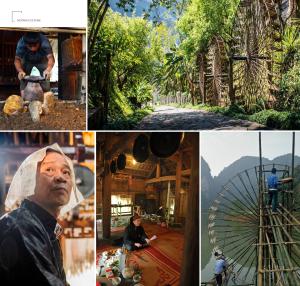
2020 JIAPICH Finalist- Mr. Hieu Duc Vu, Director of Muong Cultural Space Museum of Vietnam
The Muong people is one of among 54 ethnic groups in Vietnam living in the mountains with a population of over one million people. With Mr. Vu's interest in the Muong culture, he founded the first private in Vietnam called Museum of Muong Cultural Space in 2007 in Hoa Binh province. The process of developing museum halls and exhibitions, and deploying the activities, Mr. Vu collaborated with representatives of the Muong practitioners to revitalize their intangible cultural elements and support their practices and performances. i) Mr. Vu created and developed this museum in close collaboration with the Muong people. He thus communicated with diverse agents such as Muong community people, experts, artists, NGOs, local and central government authorities. The funding resources for the creation and development of the museum come from his personal resources gained from the sales of his artistic works. ii) Mr. Vu’s principal objective in his activities of the museum has been to ensure the viability of the traditiona
07-07-2021
-
INVENTORIES

Khaen music of the Lao people
Khaen music of the Lao is played through a mouth organ whose pipes, often made out of hollowed out bamboo and put together to be blown to make sound. The mouthpiece where the air is blown by the player acts as a free reed creating audible vibrations that are perceived by the listener. The player also uses his or her fingers to guide the Nup holes that allow for different sounds to be derived. Khaen music is popular in all regions of Lao and is an integral part of village festivals and can be found played in traditional customary practices of the Lao people. Traditionally, Khaen of Lao is transmitted within families and local communities where the Khaen player learns about the musical instrument. To allow for the proliferation of Khaen, several local communities, associations and groups have various initiatives to promote it through formal and non-formal education. Khaen music of the Lao people was inscribed to the UNESCO’s Intangible Cultural Heritage and the Register of good safeguarding practices in 2017.
02-16-2021
-
INVENTORIES

Ala-kiyiz and Shyrdak, art of Kyrgyz traditional felt carpets
Inscribed in 2012 (7.COM) on the List of Intangible Cultural Heritage in Need of Urgent Safeguarding Traditional felt carpets are one of the foremost arts of the Kyrgyz people and an integral part of their cultural heritage. The Kyrgyz traditionally produce two types of felt carpets: Ala-kiyiz and Shyrdaks. Knowledge, skills, diversity, the semantics of ornamentation, and the ceremonies of creating carpets are all important cultural components, providing Kyrgyz people with a sense of identity and continuity. The making of Kyrgyz felt carpets is inseparably linked to the everyday life of nomads, who used felt carpets to warm and decorate their homes. Creation of felt carpets demands unity among the community and fosters the transmission of traditional knowledge – as a rule by older women who are normally concentrated in rural and mountainous areas, to younger women within the family. The Ala-kiyiz and Shyrdak traditional art is in danger of disappearing, however. The number of practitioners is diminishing, wit
12-16-2020
-
INVENTORIES
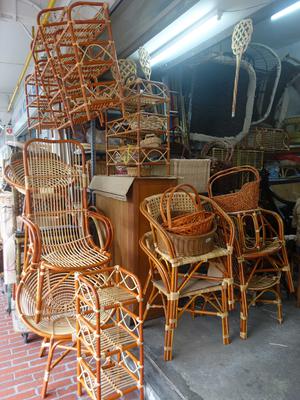
Making of Rattan Products
Rattan is a family of climbing palms found in tropical regions, and is used for a variety purposes, including the making of furniture and handicrafts, and as building materials. The name “rattan” refers to the stem of the climbing palm, and is believed to have originated from the Malay word “rotan”, meaning “to pare”. Rattan is also sometimes known as “cane”. In Singapore, the making of rattan products is closely tied with its economic history. Historically known as a centre for entrepot trade of rattan, the rattan industry in Singapore reached its peak in the 1960s and 1970s, when there was a rapid growth in the processing of rattan raw materials and making of rattan products, as driven by global trade and domestic development. Known for high-quality hand-made rattan products and technology in rattan processing, Singapore was also a centre for regional rattan research in the 1980s. Though the industry dwindled from the 1990s due to the global competition and economic and social factors, Singapore remains a k
06-02-2020
-
INVENTORIES

Mongolian Traditional Practices of Worshipping the Sacred Sites
Deeply rooted in the respect for their environment, Mongolians have been practicing the worshipping of sacred sites. Since the ancient times, Mongolia’s nomadic lifestyle has contributed to the ritual of worshipping sacred sites. The nomadic pastoralism and nomadic cultures have thrived in the vast lands of Mongolia. Humans living in harmony with nature is one of the features of nomadic culture; worshipping practices of sacred natural sites. It was discouraged to leave ashes or any kind of waste. The shamanic beliefs of Mongolians practices worshipping mountains. The peaks of these venerated mountain serves as an offering place where passersby worship for their endeavors. The procedural ceremony starts by monk chants and the villagers communing together to venerate the sacred sites. The importance of these events are for the solidarity and harmony of the community and groups. Mongolian traditional practices of worshipping sacred sites have been inscribed to the list of Intangible Cultural Heritage in 2017. Re
03-02-2020
-
INVENTORIES

Angklung: Indonesian Bamboo Musical Instrument
Angklung is a musical instrument made of Bamboo tubes and frame attached to one another by rattan cords. The tubes are carved to resonate pitch when struck and are tuned to octaves. The base of the frame is held in one hand, while the other hand shakes the instrument. Each Angklung players are responsible for one pitch making the collection of Angklung players to come together for an ensemble that produces the appropriate melodies. Angklung is closely related to traditional customs, arts, and cultural identity of Indonesia. Until recently, the Angklung was mainly played among children at schools. This changed in the last century when the Angklung has been reintroduced in local festivals as well as social gatherings. Angklung was inscribed in 2010 to the list of the Intangible Cultural Heritage of Humanity by UNESCO. References: ICH UNESCO, Wikipedia
12-04-2019
-
INVENTORIES

The King Hung Temple Festival of Phu Tho Vietnam
On the 8th to the 11th day of the third lunar month of the year, The King Hung temple festivals of Pho Tho attracts millions of people to the Nghia Linh mountains. The people commemorate their ancestors and pray for good weather, abundant harvests, good luck, and good health. The festival takes place over several days, the 10th day of the month considered the most important. The procession starts at the foot of the mountain and stops at every small temple before reaching the High Temple. The people offer prayers and incense to their ancestors. The festival features many folk games, rice cooking competitions, lion dance, human chess, and various other cultural activities. Many who visit the festivals can enjoy various unique art performances some of which were recognized by UNESCO as an Intangible Cultural Heritage of Humanity.References:ICH UNESCO, Wikipedia, Inside Vietnam Travel(www.toursinvietnam.com)
10-07-2019
-
INVENTORIES

Kumbh Mela: India’s pilgrimage to the holy waters
Kumbh Mela of India is considered the largest peaceful gathering in the world. In 2013 during the two months period of Kumbh Mela, an estimated 120 million people visited their holy waters, including 30 million people moving in a single day. Kumbh Mela can be defined as a mass Hindu pilgrimage of faith to one of four of these holy water sites: Allahaba, Haridwar, Nashik district, and Ujjain. The Kumbh Mela is held every 12 years, and around 3 years difference between the Haridwar and Nashik gathering. The origins of the festival is unknown, but according to Hindus, Lord Vishnu spilled drops of Amrita (drink of immortality) in the four places identified as the present day sites of the Kumbh Mela. The Kumbh Mela plays a vital role of spirituality and the beliefs of Hindus in India. The day includes all Hindus regardless of caste, creed, or gender to gather in the holy waters. The 12 year gap is calculated by astronomy, astrology, spirituality, and the tradition of Indian pilgrimage. Knowledge and skills related
09-16-2019
-
INVENTORIES

Knucklebone shooting: embodiment of folk Mongolian national folk game
The technique of Knucklebone shooting demands high accuracy as well as precision and might seem somewhat similar to bowling, with the object of the game being to knock down more of the ankle bones than your opponent. During the shooting tournaments shooters communicate with each other not with words, but in a specific manner of singing of traditional "Knucklebone Shooting" melodies. Each tournament last for 2-3 hours depending on the scale and type of the competition. It demands high tolerance and endurance from competitors as they sit and rise up to 50-60 times as they compete, as well as maximum precision of sight and accuracy of fingertips performance. It is also a magnificent tradition that, in respect of their seniority, some elder players of 60-90 years of age are allowed to use their "Chavkh" or "Shooting bow". Team members are tied by unbreakable internal bonds and follow clear ethical rules of mutual respect and dignity. No conflicts and contentions can be tolerated within or between the teams as cer
09-04-2019
-
INVENTORIES

The Big songs of Fergana Valley in Uzbekistan: Katta Ashula
The Fergana Valley of Uzbekistan is a diverse place, just as the songs of Katta Ashula reflects. Folk singers from Uzbeksitan, Kyrgyzstan, and Tajikistan have mastered the Katta Ashula. Two to five singers hold the performance in turns without music. The singers use small plates or trays to make sound hence being call Likobi Ashula (plate song). Katta Ashula requires special training, a strong voice and the ability to improvise. It is usually performed on special occasions such as wedding parties, new year parties, and other holidays. Katta Ashula is transmitted orally from master to pupil. This oral transfer of Katta Ashula has been the main method of preserving the music as well as its spiritual values. As Katta Ashula reflects the inner feelings, hopes, loves, and attitudes of the natives it is imperative that this spirit is transferred from one master to one pupil. Katta Ashula was inscribed in 2009 to the representative list of the Intangible Cultural Heritage of Humanity. You can watch "Katta Ashula" on
08-16-2019
-
INVENTORIES

Chogan: Horse Riding Sport and Cultural Ambassador of Iran
Chogan has its roots from ancient nomads of Iran dating back to 1st century BC. Chogan has since spread throughout the world and is played in over 100 countries. Chogan of Iran is considered a national treasure as well as a sport. Spectators of Chogan bring their whole families to the occasion often cheering, dancing, and listening to the narrator of Chogan, The sport it self is rather simple, two opposing teams go on horsebacks and try to hit the ball from their mounted horses into the opponent’s goal post with wooden sticks. The spectacles surrounding the sport enjoy music, handicrafts, and narration. This unique nature of Chogan combining all the cultural identity of Iran in the midst of a horseback sport happening for the crowd is fascinating. Chogan has historically been part of a noble activity but in recent years, it has become more of a national sport that everyone can take part. The transmission process of Chogan happens within families of in workshops. The government of Iran has also been in support
07-29-2019
-
INVENTORIES

Chidaoba: Art of Georgian Jacket Wrestling
As a Georgian proverb says: even a dog won’t bite a man who has fallen down. The wrestlers of Chidaoba learns about vulnerability and respect towards the fallen opponent. It is an old sport of Georgia as many in the country knows Chidaoba through social gatherings and festivals. Chidaoba is always accompanied by music, which is just as important as the distinctive jacket worn by the participants called “Chokha”. The participants can range from young kids all the way up to older folks who all participate in the hopes of defeating their opponent who are often similar in size and weight. Chidaoba is a form of martial arts but has lately become into an entertainment spectacle that is so often accompanied by crowds that gather for the festivities. The rules are simple, take down the opponent on their shoulders without over turning them. A single match lasts 5 minutes and if the clear winner is uncertain, judges decide on the winner on points they made throughout the match, usually giving the more aggressive partic
07-15-2019
-
INVENTORIES

Comedic Actors on the ropes: Jultagi
Jultagi is a Korean form of rope walking that consists of dancing, songs, and comedic dialogues by the rope walkers. What distinguishes this form of rope walking from others is that they do not just perform for the acrobatic nature of it, but rather the Jultagi performers make witty and comedic gestures as well as satire of world events as they do acrobatic moves. Although the exact dates of origin for this art form is unknown, Jultagi has been mentioned in historical documents as well as becoming one of pillars of traditional crowd gathering spectacle of Korea. Dating back to the 2nd century of Silla period in Korea, Jultagi has been associated with other crowd gathering spectacles, often times accompanying performers who would entertain the crowd with witty satire and masked in different forms of animals or folk heroes to garner the attention of the crowd. The transmission process of Jultagi is centered on Jultagi safeguarding association in Gyeonggi province, where masters and apprentices hone their skills
07-03-2019
-
INVENTORIES

Coming of age for Japanese youth, Raiho-Shin
Raiho-Shin is a tradition for Japanese households in Tohoku, Hokuriku, Kyushu, and Okinawa regions. The Raiho-Shin is deities from the outer world, often the local people dressed in costumes that look scary and intimidating, especially to children. As the western world have Santa Clause that requires the children to be good throughout the year to receive presents, Raiho-Shin deities requires them to be good from their frightening visits on ward. The children are given mocha cakes on their backs for good luck while the adults prepare food for the deities visiting their household. Raiho-Shin has different traditions from regions to regions because they have differing social and historical contexts. The diversity of the Raiho-Shin rituals have made the traditions unique to the local practitioners and those that participate grow a sense of identity and affliction towards their environment from it. The practitioners of Raiho-Shin have transmitted their knowledge from each generation to the next with pride. It was
06-24-2019
-
INVENTORIES

Love Ballad of Malaysia: Dondang Sayang
The traditional Malaysian folk music Dondang Sayang is a collaboration of both the worlds, as Dondang Sayang is influenced by traditional Portuguese folk music. The typical Dondang Sayang consists of violinists, rebana players, and gong or tetawak players. The violinist usually play the primary parts of the Dondang Sayang as they provide counter melody to the vocal melody. The slow playing music is often about love or advice about love and kindness one should have for others. Inscribed in 2018 to the Intangible Cultural Heritage of Humanity of UNESCO, Dondang Sayang is highly praised within Malaysia. Originally performed at the Royal Palace for ceremonial events, it has since carried over to local communities all through out Malaysia. Two singers of the opposite sex who perform in quatrains often perform this love ballad. The Dondang Sayang is open to everyone in the community regardless of age, sex, or gender as it conveys the message of being kind and loving each other. The Dondang Sayang art form is being
06-18-2019
-
INVENTORIES

Al Azi: Poetry of Arab Pride
Al Azi is a traditional poetry recital performed by a group of individuals without rhythmical or musical instruments. The Poems were first recited in battlefields after victory often citing the courage and generosity that exemplify the greatness of the poem’s subject. It consists of a full-rhymed poem based on traditional poetry and the lines of poetry are sometimes interposed with sayings and proverbs. Bearers and practitioners include the poet, performer, chorus and audience. The practice strengthens bonds and is connected with knowledge and practices related to nature. Al Azi was performed regularly by communities until the mid-1900s, when performances began to dwindle gradually. Due to development, thousands of inhabitants moved from the desert to urban areas, and the economic boom from 1970 to 1990 led to citizens abandoning employment in traditional sectors and the culture and arts associated with such activities. Al Azi was inscribed to the Intangible Cultural Heritage of United Arab Emirates in need o
06-11-2019
-
INVENTORIES

Khon, the art of Thai masked choreographed movements
Khon is a masked dance of Thailand that combines the art of music, storytelling, dance, and handcraftsmanship of Thailand. Khon was inscribed into UNESCO’s ICH of Thailand in 2018. The overall choreograph along with the narrations depict the story of Rama, the incarnation of the God Vishnu. Although the exact dates of the origin of Khon is not known, it is widely accepted as having been performed since the Ayutthaya Kingdom period of 15th century. The main principle characters are humans, ogres, and the monkeys. The monkey characters play a major role in the Khon performance as the epic tales of Ramakien derived from the hindu epic Ramayana. Thai animism has given the ogre and monkey characters a spiritual significance, as they become part of the Thai identity through their movements. Khon used to only be performed by the royal family and men were only allowed to play the role of the hero. However in recent years Khon is enjoyed by all spectators from different social backgrounds and women are depicted in all
05-21-2019
-
INVENTORIES

National inventory: places, rituals, practices
Aigine Curltural Research Center (Kyrgyzstan) continues the inventory of sacred sites and related practices under the project " Safeguarding of Practices and Rare Rituals Related to Sacred Sites in Kyrgyzstan: Preparation of an Inventory and Safeguarding Measures." At this stage, desk researches are conducted on the basis of the organization’s previous field materials. The purpose of this researches is to compile national lists of sacred places, practices and rituals performed on places of pilgrimage. In the course of the desk researches, the lists of sacred sites are clarified and the rituals of each region are described. Interviews are also held with spiritual practitioners. Interviews are held in the format of real and online meetings, telephone conversations. The stage of desk research precedes the work with regional teams. On 20 February 2019, Aigine CRC conducted a preliminary workshop in the framework of the project. The main goal of the workshop was to discuss ways and patterns of inventorying rituals
04-29-2019
-
INVENTORIES

Traditional Turkish Çini-making Craftsmanship
Turkish Çini are glazed tile and ceramic household items made from pulped clay are called Çini. This Çini-making craftsmanship dates back to the 12th century with its unique production methods such as ‘Minai’, Luster’, ’Polishing’, and ‘Underglaze’. Çini craftsmans can be described as having high ethical manners, knowledge of traditions, and the techniques in making Çini. The Turkish Çini-making has important cultural function in Turkey, as many of these ceramics are often baked in households. The next generation of Turkey can learn from the aesthetics of Çini, which are based on primarily the elements from the surrounding, such as geometric shapes, plants, and animal figures. The masters of Çini-making Craftsmanship must transmit their knowledge of supplying the raw materials, preparation and production of Çini-making, as well as general knowledge or significance of their art pieces. Çinis is a cultural process of making household items for the people of Turkey, it should be considered a national treasure. Y
04-29-2019
-
INVENTORIES

The Chhau dance: The symbolism in bodily motions of our surroundings
Chhau dance: The symbolism in bodily motions of our surroundings The Chhau dance is every bit of mesmerizing feat, as the dancers depict nature, acrobatics, martial arts, and their folklore surroundings. The Chhau dance annually practiced in three regions; the Purulia Chhau in Purulia district of West Bengal, the Mayurbhanj Chhaun in Mayurbhanj district of Odisha, and Seraikela Kharsawan district of Jharkhand. Masks are used in the Seraikela and Purulia Chhau dances but are not used in the Mayubhanj Chhau of Odisha. The Chhau dance of India was inscribed as one of the Intangible cultural heritages of the world by UNESCO in 2010. Many performers of the Chhau dance have special techniques and repertoires in their choreography, and transmits their dancing traditions orally. Many Chhau dances occurs during sun festivals, to honor and ritualize harvesting season. The Chhau dance draws in all the lifestyles during its festivities, resulting in the community and those surrounding it to come closer together. The Chha
04-16-2019
-
INVENTORIES

Chinese Shadow Puppetry
Chinese Shadow Puppetry: The earliest forms of animation Chinese shadow puppetry has been known in china as one of the formal traditions that have entertained and displayed the social and dramatic history though puppetry. It was known to have cured a grieving emperor of losing one of his favorite concubine. The performers were able to sooth the pain of the emperor by having the faces of the deceased concubine played out in the form of puppetry. As the case, Chinese shadow puppetry can move hearts and mind of those that watches them. Thus, making them the best medium in exhibiting cultural ceremonies, religious rituals, funerals, weddings, and any other forms of entertainment. A talented puppeteers can make their art form run, dance, fight, laugh, sleep, and even die. The Chinese shadow puppetry is articulated through cut out figures, which are held against a source of light and a translucent screen in-between or against them. Just as a musical instrument needs to be played, these shadow puppets need to be man
04-13-2019
-
INVENTORIES

Study on status and value of Seodang culture and study of utilization plan
Korean Seodang has been a self-created educational space since the Three Kingdoms era and has been linked to Korean history and tradition. As such, there are Korean history, culture, and traditions in the Seodang and Seodang culture. However, as the present day, the Seodang and its culture are disappearing. The purpose of this study is to understand the status of Seodang culture and to enhance intangible cultural asset values of Seodang culture. In order to investigate the current situation of Seodang cultural tradition as a research method, various examples were collected and compared in regards with the environment, career and operation of each Seodang. I interviewed the Hoonjang(masters or teachers), adult students and schoolchild students in the field survey. The Seodang had many difficulties in operation. We could classify the operations of Seodang under the village seo-dang, the boarding seodang, the academic seodang, and the camp-style seodang. In Gochang, they operate a traditional Seodang that has 21
03-18-2019
-
INVENTORIES

Baul songs of Bangladesh: Oral tradition of Bengalis mysticism
Baul had strictly been passed down in oral form as of the late 19th century. Their members consist mostly of Vaishnava Hindus and Sufi Muslims. The tradition was not written down until recent because many practicing Baul meant to leave literally nothing behind, including their practices of speaking of esoteric Bengali mysticism. The Bauls often live without family and wonder to practices of new approaches to divinity. From the outside, this can mean breaking the threshold of traditional religious ceremonies and beliefs. Since 2005, the Baul tradition of Bangladesh is listed as one of Masterpieces of the Oral and Intangible Heritage of Humanity by Unesco. The Baul songs represents the mind and body of the practitioner. Often times Baul musicians will have a single string instrument called Ektara on one hand and Bengalis style drum Duggi on the other enchanting about the human spirituality and the divine. Some have regarded Baul practitioners of having divine spirits, and others have interpreted them to be crud
03-07-2019
-
INVENTORIES

Traditional Musical Instrument Masters' Knowledge and Technique
A musical instrument master is a person who possesses the ability or skill to make traditional musical instruments such as Gayageum, Geomungo, Janggu, Buk, Danso.
11-16-2018
-
INVENTORIES

Falconry, a living human heritage
Falconry is the traditional activity of keeping and training falcons and other raptors to take quarry in its natural state. Originally a way of obtaining food, falconry is today identified with camaraderie and sharing rather than subsistence. It is mainly found along migration flyways and corridors, and is practised by people of all ages, men and women, amateurs and professionals. Falconers develop a strong relationship and spiritual bond with their birds, and great commitment is required to breed, train, handle and fly the falcons. Falconry is handed down from generation to generation as a cultural tradition by various means, including mentoring, learning within families and formal training in clubs. In the United Arab Emirates, Mongolia, Morocco, Qatar and Saudi Arabia, for example, falconers take their children to the desert and train them to handle the birds and build a relationship of trust with them. While falconers come from different backgrounds, they share common values, traditions and practices such
11-15-2018
 PREV
PREV- …
- …
- NEXT
